Side-by-Side Cognitive Profiles: A Deeper Dive
The Cosmic Pet Pet IQ Lab employs a five-dimensional framework, offering a nuanced view of canine intelligence. Let's examine how the Norwich Terrier and Norwegian Elkhound measure up.
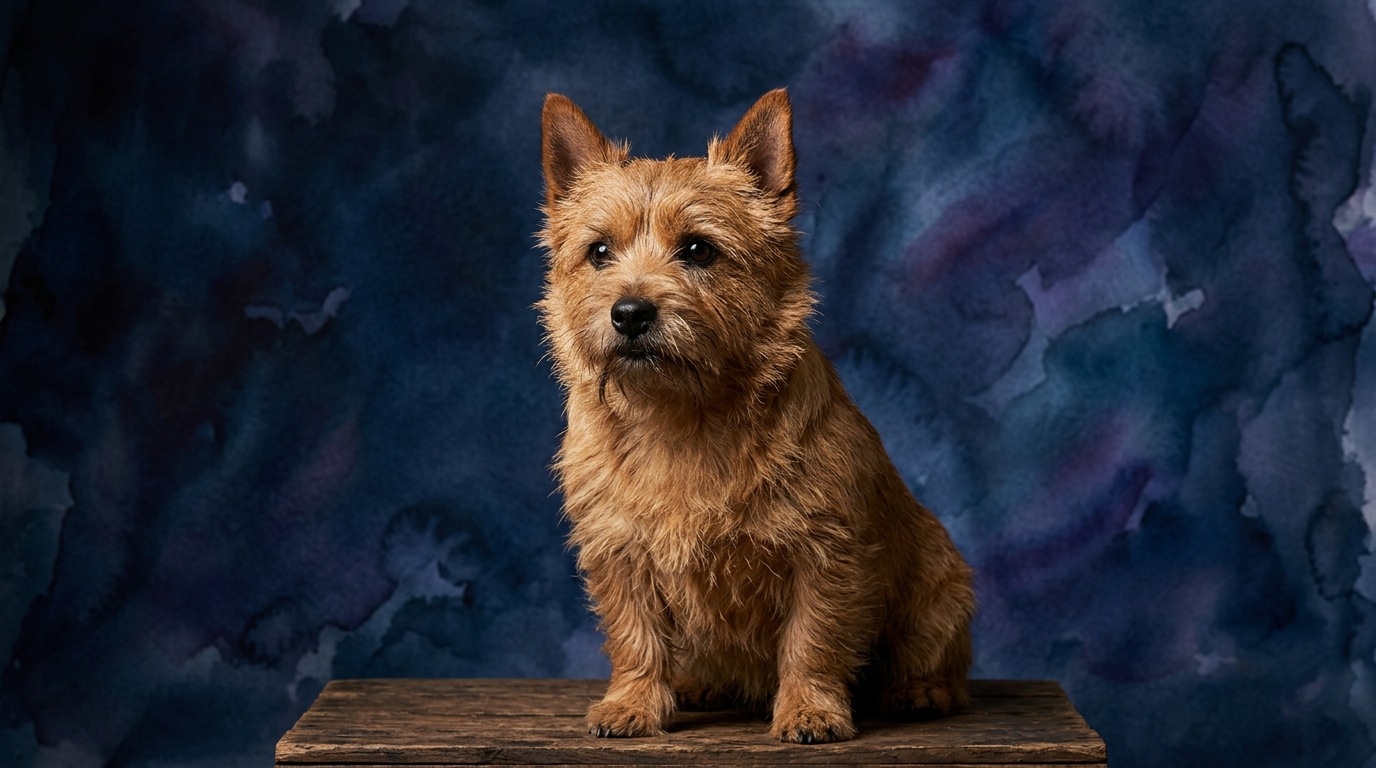
The Norwich Terrier, a compact and spirited Terrier, shows a consistent 3 out of 5 across all dimensions. Its Problem Solving at 3/5 suggests capability in moderate challenges, often using terrier tenacity. Training Speed also rates 3/5, indicating an average pace, requiring consistent, engaging methods for its independent attention. Social Intelligence at 3/5 means the Norwich can interpret human cues and interact appropriately. Its Instinctive Drive of 3/5 points to moderate innate behaviors like digging or chasing, manageable with proper outlets. Finally, Memory at 3/5 implies reasonable retention of experiences and commands.
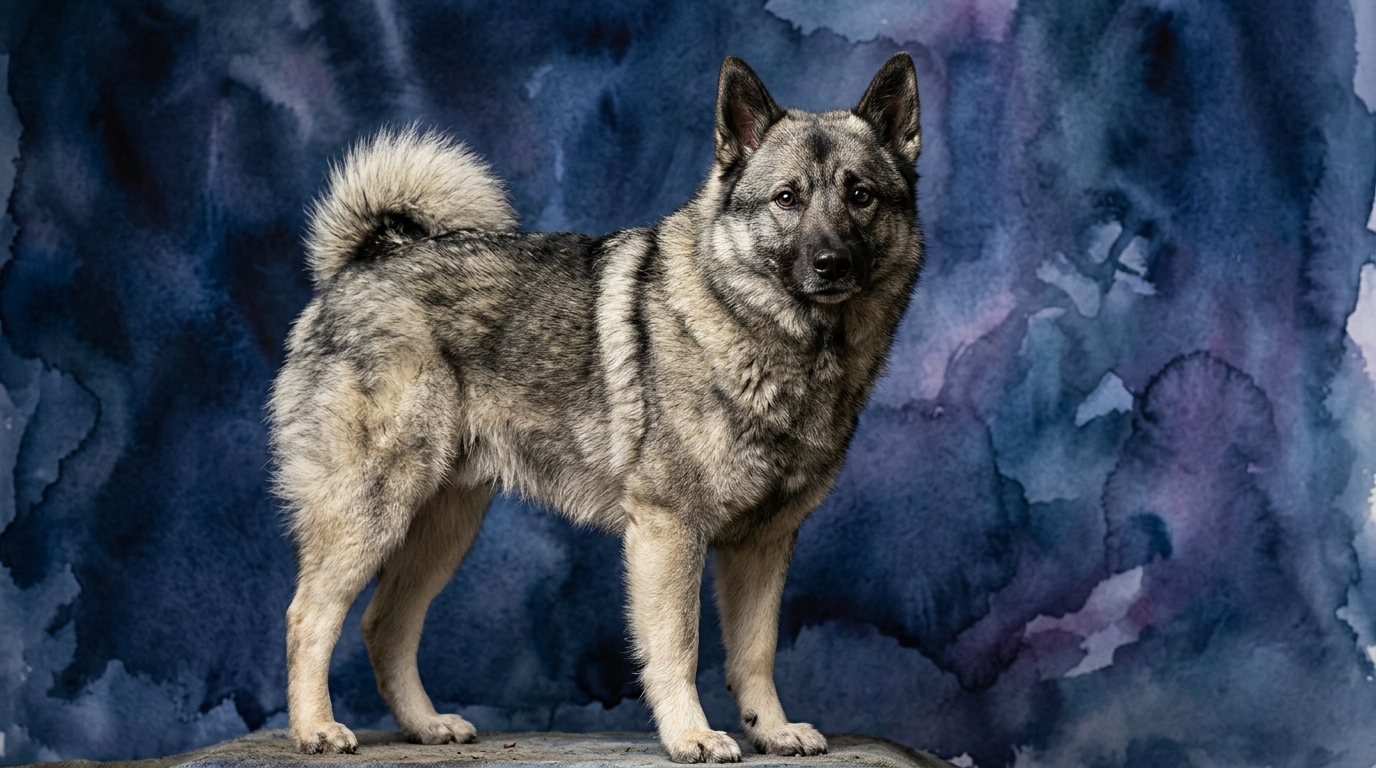
The Norwegian Elkhound, a sturdy Hound with a history as a big-game hunter, presents a different cognitive landscape. Its Problem Solving scores an impressive 4/5, indicating adeptness at complex situations, invaluable for tracking. This breed also excels in Training Speed with a 4/5, showing a quicker grasp of new commands and greater willingness to work. Like the Norwich, its Social Intelligence is 3/5, demonstrating solid capacity for understanding social cues. The Elkhound's Instinctive Drive stands at 3/5, reflecting its strong heritage for scenting and pursuit. Its Memory is another strong suit, scoring 4/5, meaning learned tasks and experiences are retained for extended periods. Notably, the Norwegian Elkhound holds a Coren rank of #36, placing it among breeds with above-average working and obedience intelligence.
Where the Norwich Terrier Cognitively Shines
While the Elkhound shows higher scores numerically, the Norwich Terrier possesses a unique cognitive resilience and adaptability. Its consistent 3/5 across all dimensions, combined with its terrier heritage, suggests a dog with exceptional grit and persistence. Their problem-solving, though rated 3/5, often manifests as unwavering determination to achieve goals, whether navigating obstacles or retrieving a toy. This isn't complex strategizing, but robust trial-and-error. Furthermore, their balanced instinctive drive means innate urges like chasing are present but generally more manageable than in breeds with very high drives, making them versatile companions. The Norwich’s moderate social intelligence and compact size often translate into a keen ability to integrate into diverse family dynamics, becoming a charming and involved, yet not overly demanding, companion. They learn household routines and emotional states with an intuitive understanding.
Where the Norwegian Elkhound Cognitively Excels
The Norwegian Elkhound clearly demonstrates a cognitive edge in areas requiring rapid learning, recall, and complex environmental navigation. Its 4/5 in Problem Solving makes it particularly adept at strategic tasks like advanced obedience, intricate scent work, or figuring out how to manipulate objects. This superior ability stems from its history as a hunting companion making independent decisions in challenging wilderness. The Elkhound's higher Training Speed (4/5) means it absorbs and executes new commands with fewer repetitions, making it an efficient learner. Coupled with its 4/5 Memory score, learned information tends to stick, leading to reliable command recall. For owners interested in dog sports or advanced training, the Elkhound's capacity for quick learning and strong retention provides a significant advantage, further supported by its Coren rank of #36, highlighting its aptitude for purposeful activities.
Ease of Training: A Tale of Two Temperaments
When comparing training ease, the Norwegian Elkhound generally offers a more straightforward path. Its higher Training Speed (4/5) means it picks up commands faster, requiring fewer repetitions. This is complemented by its superior Memory (4/5), ensuring learned commands are retained effectively for consistent responses. The Elkhound's historical role as a hunting partner required biddability and responsiveness, reflected in its scores. While its instinctive drive (3/5) for exploration is present, it can be channeled into productive activities like tracking.
The Norwich Terrier, with its 3/5 in Training Speed and Memory, presents a different dynamic. Terriers are renowned for independence, sometimes perceived as stubbornness. A Norwich will learn, but may require more patience, creativity, and consistency. Their problem-solving (3/5) often involves doing things on their own terms. Real-world differences manifest as the Elkhound's eagerness to please versus the Norwich's tendency to evaluate commands. Training a Norwich benefits from making it feel like a game, using positive reinforcement, and understanding its moderate instinctive drive needs appropriate outlets.
Matching Breeds to Owner Lifestyles: Active vs. Relaxed
The cognitive profiles offer clear indicators for matching lifestyles. The Norwegian Elkhound, with its higher problem-solving, training speed, and memory, and history as a robust hunting dog, thrives with active owners. It demands significant mental stimulation and physical exercise. Owners enjoying hiking, running, or dog sports will find a capable partner. Their ability to learn complex tasks means they benefit immensely from structured training. A relaxed owner unable to provide consistent outlets might find an Elkhound becomes bored, potentially leading to destructive behaviors.
The Norwich Terrier, while energetic, is generally a better fit for more relaxed owners, provided they commit to daily engagement. Its balanced cognitive scores (all 3/5) suggest adaptability without the intense demands of an Elkhound. Daily walks, interactive play, and moderate puzzle toys are usually sufficient. Their moderate instinctive drive is present but more manageable, suiting smaller spaces. A relaxed owner appreciating a charming, curious, and moderately independent companion will find the Norwich a delightful fit, given consistent positive reinforcement training.
The Verdict
To choose a Norwich Terrier means embracing a spirited, tenacious companion with a balanced cognitive profile, ideal for those who appreciate independence and can provide consistent, engaging training in a moderately active household.
Opting for a Norwegian Elkhound means welcoming a keen, trainable partner with superior learning and memory capabilities, best suited for active owners eager to engage in advanced training and outdoor adventures.
🧠 Find Your Pet's IQ Score
Our Pet IQ Lab assessment covers 25+ tests across 5 cognitive dimensions — personalized to your breed.
Take the Full IQ Test →Frequently Asked Questions
Is the Norwich Terrier difficult to train due to its independence?
The Norwich Terrier's independent spirit, typical of terriers, can make training require more patience and consistency. While not inherently difficult, their 3/5 training speed means they may take longer to grasp commands, benefiting from positive reinforcement and making training feel like a game.
Does the Norwegian Elkhound need a lot of mental stimulation?
Yes, the Norwegian Elkhound, with its 4/5 problem-solving and memory, thrives on mental stimulation. Its historical role means it possesses a keen mind that needs engagement through training, puzzle toys, and activities like scent work to prevent boredom.
Which breed is better for first-time dog owners?
For first-time dog owners, the Norwegian Elkhound might be slightly easier to train due to its higher training speed, provided its significant exercise and mental stimulation needs are met. The Norwich Terrier requires an owner who understands terrier independence and is prepared for consistent, patient training.