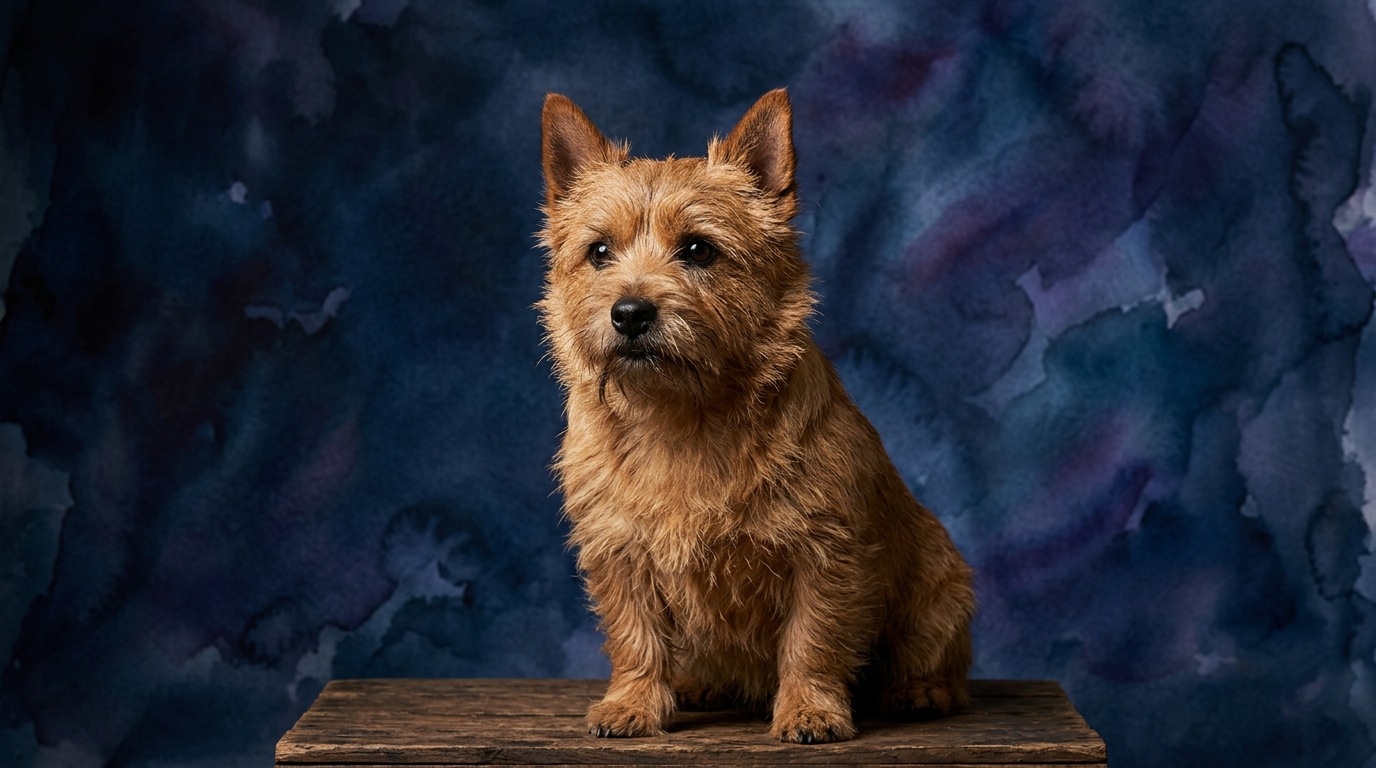
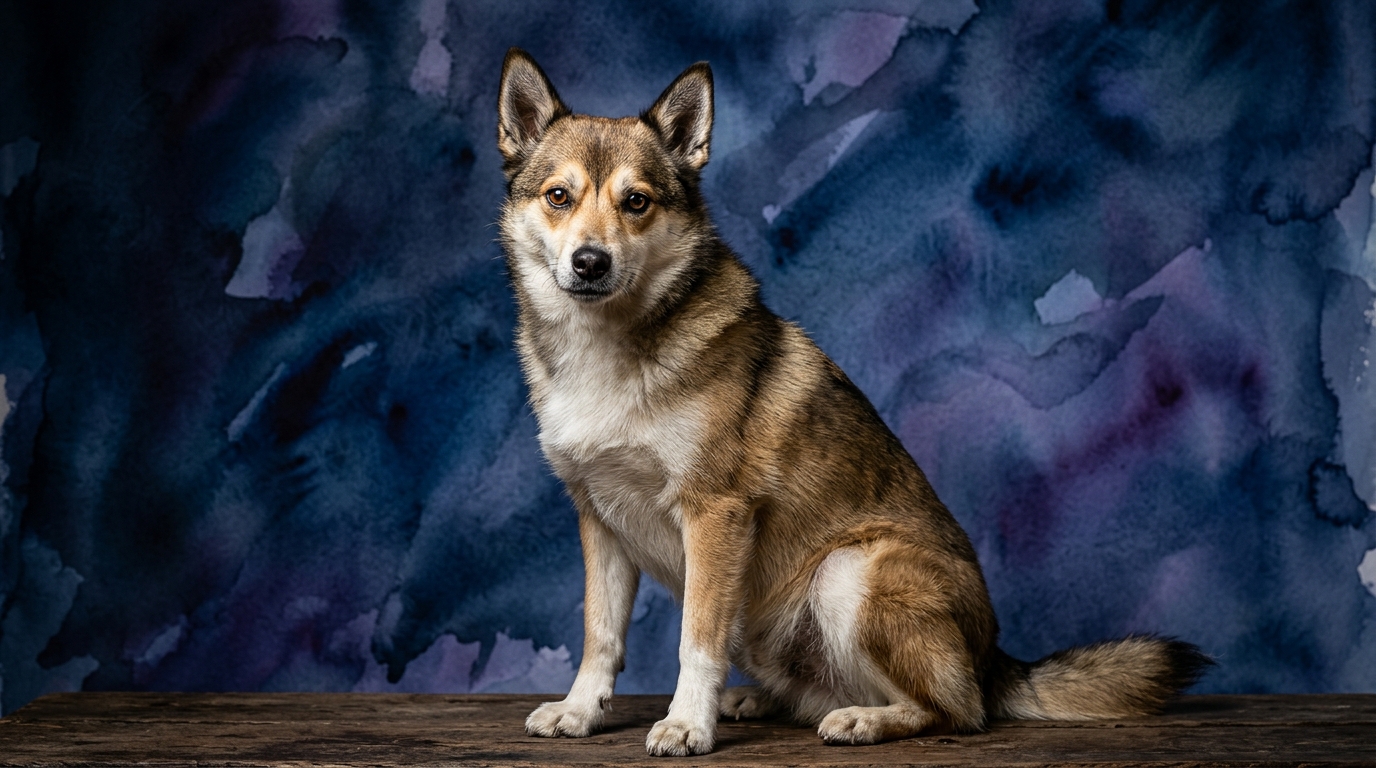
Side-by-Side Cognitive Profile
The Cosmic Pet Pet IQ Lab assesses canine intelligence across five key dimensions, each rated on a scale of 1 to 5. Interestingly, both the Norwich Terrier and the Norwegian Lundehund receive a consistent 3/5 across the board. While the numerical scores are identical, the manifestation of these cognitive aptitudes is uniquely shaped by each breed's history and inherent temperament.
For the Norwich Terrier, a member of the Terrier group, a Problem Solving score of 3/5 reflects a characteristic tenacity and resourceful approach to challenges. A Norwich will often persist with a puzzle, employing trial-and-error and a keen sense of their environment to achieve a goal, particularly if it involves a perceived 'prey' or a hidden treat. Their problem-solving is often self-directed and driven by inherent curiosity. Their Training Speed, also 3/5, indicates they generally pick up new commands and routines at a moderate pace. While they possess a desire to engage with their owners, their independent terrier spirit means they aren't always immediately compliant; effective training requires consistency, positive reinforcement, and engaging methods. Social Intelligence at 3/5 means these spirited dogs typically display a good capacity for reading human emotions and intentions within their immediate family circle, often attuned to their owner's mood. However, their social intelligence might be more selective, sometimes leading to a reserved or assertive stance with unfamiliar dogs or people if not well-socialized. An Instinctive Drive of 3/5 highlights a robust set of behaviors rooted in their vermin-hunting heritage, including a strong prey drive, an inclination to dig, and a tendency to bark. Lastly, their Memory, also 3/5, demonstrates a solid capacity for recalling established routines, learned commands, and the layout of their familiar territory, aiding in their daily navigation and anticipation of events.
The Norwegian Lundehund, a unique Non-Sporting breed, also earns a 3/5 in Problem Solving, but its expression is uniquely adapted to its historical role as a puffin hunter on steep, rocky coastlines. This involves an innate ability to navigate complex, three-dimensional environments, utilizing their extraordinary joint flexibility and extra toes to climb and squeeze into tight spaces. Their problem-solving tends to be highly spatial and physically oriented, focused on overcoming environmental obstacles. Their Training Speed of 3/5 suggests they learn at a moderate pace, but their independence and historical role as solitary hunters mean they can be less inherently motivated by human direction than some other breeds. They require patient, positive, and consistent training methods that respect their sensitive nature, as repetitive drills without clear purpose might lead to disengagement. Social Intelligence at 3/5 reveals Lundehunds form deep, loyal bonds with their families and are quite adept at understanding the nuances of their household's social dynamics, though they can be reserved or wary of strangers. Their Instinctive Drive, also 3/5, is characterized by a pronounced prey drive towards birds and small animals, coupled with an intrinsic desire to climb, explore high places, and investigate tight crevices, directly reflecting their specialized hunting instincts. Finally, their Memory, rated 3/5, is particularly strong for complex routes, specific locations, and environmental intricacies, critical for their historical hunting tasks across challenging terrains, alongside retaining learned behaviors and social cues within their family unit.
Where the Norwich Terrier Excels Cognitively
The Norwich Terrier's cognitive strengths shine in its assertive and direct approach to novel situations. While both breeds score 3/5 in problem-solving, the Norwich often brings a terrier's characteristic boldness and single-minded focus to bear. For instance, when confronted with a new puzzle toy, a Norwich is more likely to engage with it immediately and persistently, using its paws and nose with determination until a solution is found, often driven by a tangible reward. This proactive engagement, coupled with their moderate memory, allows them to quickly establish cause-and-effect relationships in their immediate environment, such as remembering which cabinet holds the treats or the sequence of events leading to a walk. Their social intelligence, while sometimes selective, often translates into a clear, albeit sometimes demanding, communication style with their owners, making their desires and needs relatively transparent. This directness in interaction can be a cognitive 'win' for owners seeking a dog whose reactions are often straightforward and unambiguous.
Where the Norwegian Lundehund Excels Cognitively
The Norwegian Lundehund's unique evolutionary path grants it cognitive advantages rooted in its unparalleled physical adaptability and environmental navigation skills. While also scoring 3/5 in problem-solving, the Lundehund's manifestation is profoundly spatial and physical. They excel at deciphering complex, three-dimensional landscapes, a cognitive feat directly tied to their need to traverse treacherous cliffs and access narrow puffin burrows. This means a Lundehund might outperform a Norwich in tasks requiring intricate body awareness, balance, and the ability to find unconventional routes through obstacles. Their memory, also rated 3/5, is particularly strong for spatial recall, allowing them to remember intricate paths and the specific locations of resources (or former puffin nests!) over long periods. This highly specialized cognitive mapping skill is a clear advantage. Furthermore, their social intelligence, while reserved with strangers, fosters an intense, nuanced bond with their family, enabling them to pick up on subtle cues from their trusted humans, sometimes displaying a quiet empathy that reflects deep observation and understanding of their inner circle.
Training Aptitude: Norwich Terrier vs. Norwegian Lundehund
When considering ease of training, both breeds present a moderate challenge, scoring 3/5 in Training Speed, yet their specific hurdles differ. The Norwich Terrier, with its terrier drive and independent streak, can sometimes be easily distracted by scents or sounds, and may exhibit selective hearing if a command doesn't align with its immediate interests. Their stubbornness, a hallmark of the terrier group, means that training requires consistent, engaging, and often playful methods to keep their attention and overcome their inherent self-reliance. They respond well to clear boundaries and positive reinforcement, but an owner must be prepared for moments where the Norwich decides its own agenda is more pressing.
The Norwegian Lundehund, conversely, while equally independent due to its solitary hunting history, often approaches training with a different temperament. They can be quite sensitive and do not respond well to harsh corrections, which can cause them to shut down or become withdrawn. Their strong prey drive and desire to explore can make off-leash reliability a significant undertaking. Lundehunds thrive on positive reinforcement, patience, and a training approach that makes sense to them, often needing to understand the 'why' behind a command rather than simply complying. Their reserved nature means building trust is paramount for effective training, and an owner must be attuned to their subtle cues of engagement or disengagement. Ultimately, neither is 'easy' in the conventional sense, but the Norwich's directness might feel more straightforward to some, while the Lundehund demands a more nuanced, relationship-based approach.
Lifestyle Match: Active vs. Relaxed Owners
The choice between a Norwich Terrier and a Norwegian Lundehund for active versus relaxed owners hinges on the type of activity sought and the owner's lifestyle. Norwich Terriers, despite their small stature, possess a robust energy level and a keen desire for engagement. They are well-suited for active owners who enjoy regular walks, interactive play sessions, and even some dog sports like agility or earthdog trials, which tap into their instinctive drives. Their moderate instinctive drive (3/5) means they need outlets for their energy and curiosity, otherwise, they might invent their own 'jobs,' such as digging in the garden or barking at every passerby. They thrive on mental stimulation and companionship, making them a good fit for owners who are consistently involved in their daily activities. A truly 'relaxed' owner who prefers minimal interaction and exercise might find a Norwich too demanding of attention and activity, as their social intelligence (3/5) means they crave interaction and their memory (3/5) means they recall when they've been overlooked.
Norwegian Lundehunds also require a significant amount of activity, but their needs are often more specialized and rooted in exploration. Their unique physical capabilities and strong instinctive drive (3/5) to climb and explore make them ideal for owners who enjoy hiking, exploring varied terrains, and providing opportunities for their dog to use its natural agility and problem-solving skills (3/5). They are not typically 'lounge around' dogs; their curiosity and desire to investigate can be relentless. While they form deep bonds with their families, their independence means they might not always be seeking constant direct interaction in the same way a Norwich might; instead, they might be happy exploring nearby while their owner relaxes. A relaxed owner might struggle with the Lundehund's need for mental and physical outlets that often involve navigating complex environments, potentially leading to boredom or destructive behaviors if these needs are unmet. Therefore, both breeds lean towards active ownership, but the Lundehund demands a more specific, exploratory type of activity.
The Verdict
Choose the Norwich Terrier if you appreciate a spirited, direct companion who is eager to engage in moderate daily activities and whose cognitive processes are often transparent and driven by immediate, tangible goals. They thrive with owners who enjoy consistent, interactive training and a dog that communicates its needs with terrier tenacity.
Choose the Norwegian Lundehund if you are an adventurous owner who values a unique, independent canine partner with specialized physical and spatial problem-solving skills, perfect for exploring varied outdoor environments. They thrive with patient, understanding individuals who respect their sensitive nature and provide outlets for their distinct exploratory drives.
🧠 Find Your Pet's IQ Score
Our Pet IQ Lab assessment covers 25+ tests across 5 cognitive dimensions — personalized to your breed.
Take the Full IQ Test →Frequently Asked Questions
Do Norwich Terriers and Norwegian Lundehunds learn tricks easily?
Both breeds, with a Training Speed of 3/5, learn tricks at a moderate pace. Norwich Terriers respond well to fun, consistent training, while Lundehunds need patience and positive reinforcement, often excelling when they understand the purpose of a trick.
Which breed is better with children, considering their social intelligence?
Both breeds have a Social Intelligence of 3/5. Norwich Terriers can be playful and affectionate with children, especially if raised together. Lundehunds form deep bonds with their family, including children, but can be reserved with new people, so proper socialization is key for both.
How do their instinctive drives impact their suitability for apartment living?
With an Instinctive Drive of 3/5, both breeds require regular mental and physical outlets to prevent boredom in an apartment. Norwich Terriers need consistent walks and play to manage their prey drive and digging tendencies, while Lundehunds need activities that satisfy their climbing and exploratory instincts.