Side-by-Side Cognitive Profiles
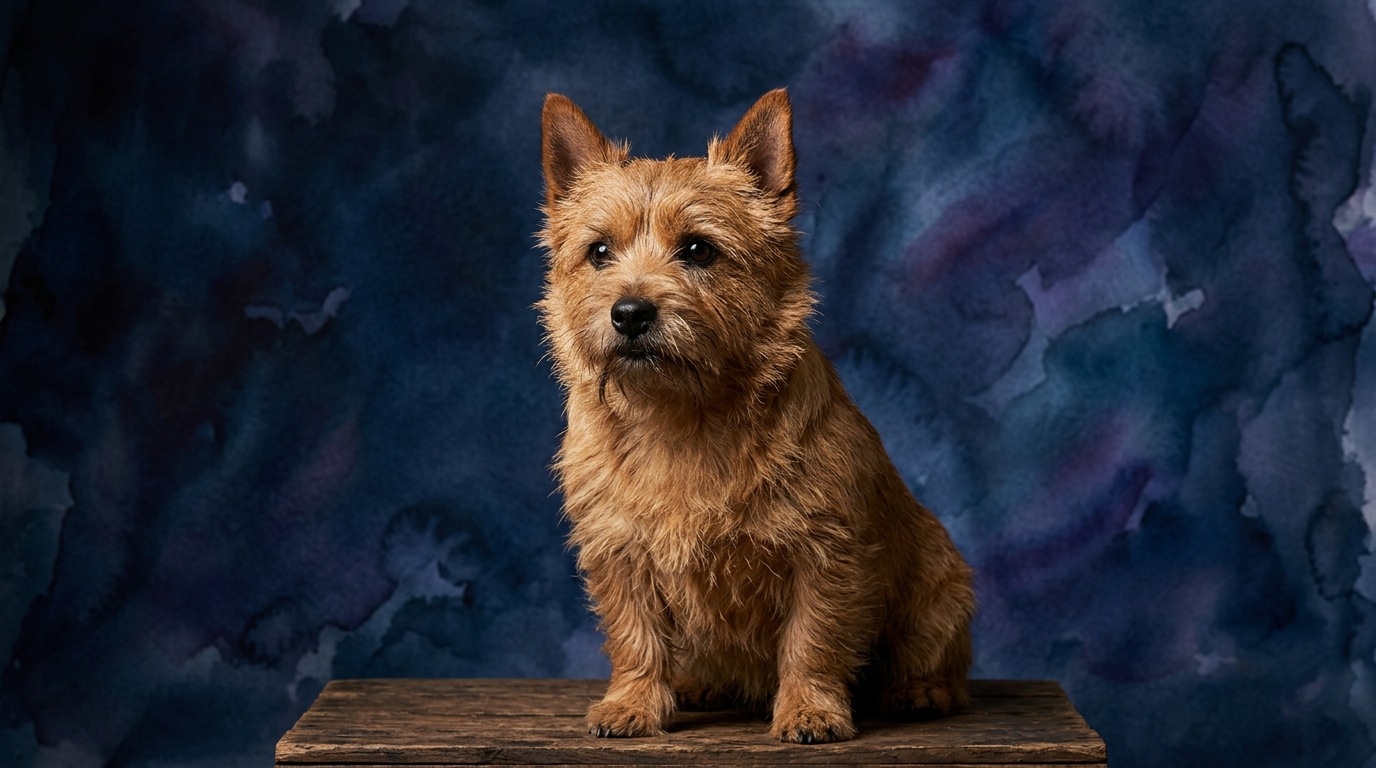
The Cosmic Pet Pet IQ Lab categorizes canine intelligence across five key dimensions. For the Norwich Terrier, a spirited and compact companion, its Problem Solving ability scores 3/5, indicating a clever approach to immediate, practical challenges, often involving resourcefulness in navigating tight spaces or pursuing perceived 'prey.' Its Training Speed, also 3/5, reflects a moderate learning pace, though their independent terrier spirit can require engaging and consistent methods. Social Intelligence at 3/5 means they are adept at reading human cues and forming strong attachments, understanding household dynamics. An Instinctive Drive of 3/5 highlights their inherent terrier tenacity for digging, barking, and pursuing small animals. Finally, their Memory at 3/5 ensures they retain learned behaviors, routines, and experiences with good recall.
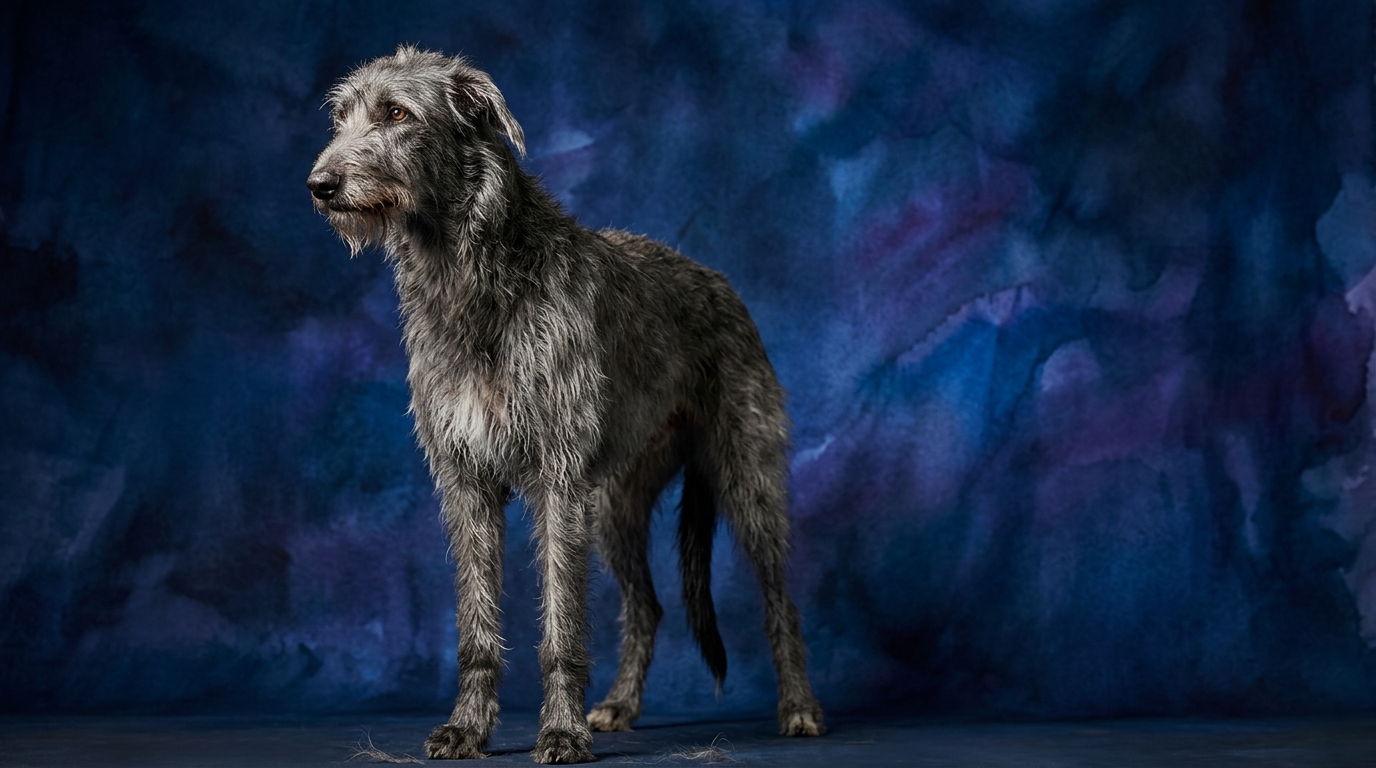
The Scottish Deerhound, a noble and gentle giant, shares these exact numerical scores, yet expresses them through a different lens. Its Problem Solving (3/5) often manifests in strategic thinking during pursuit, excellent spatial awareness, and navigating open landscapes rather than intricate puzzles. Training Speed (3/5) suggests they can learn new commands readily, but their sighthound independence and potential for distraction by movement mean application can be variable. Their Social Intelligence (3/5) is marked by a deep sensitivity and empathy, making them acutely aware of human emotions and forming profound bonds. A 3/5 Instinctive Drive is overwhelmingly focused on their powerful sighthound prey drive – the instinct to spot, chase, and capture. Their Memory (3/5) is solid for people, places, and learned commands, though a strong visual stimulus might temporarily override recall in specific situations.
Where the Norwich Terrier Excels Cognitively
The Norwich Terrier's cognitive strengths lie in its tenacious resourcefulness and robust adaptability within varied environments. Their 3/5 problem-solving isn't about grand strategies, but about practical, hands-on engagement with their immediate surroundings. They excel at figuring out how to access a hidden treat, navigate a complex indoor obstacle course, or persistently investigate an interesting scent. This terrier ingenuity is closely tied to their historical role as vermin hunters, requiring quick thinking and physical dexterity in confined spaces. Their social intelligence, while not overly effusive, allows them to integrate seamlessly into family life, often becoming keen observers of routines and expectations. They possess a remarkable ability to 'read the room,' understanding subtle shifts in human mood and responding with appropriate terrier charm or watchful alertness. Their memory serves them well in retaining these social cues and learned boundaries, making them consistent companions once trained.
Furthermore, the Norwich Terrier's instinctive drive, while requiring management, also fuels a keen observational intelligence. They are rarely oblivious to their surroundings, constantly processing sensory information about potential 'prey' or interesting novelties. This alertness, combined with their problem-solving, makes them adept at navigating urban environments, spotting intriguing details, and adapting to new situations with a spirited curiosity. Their compact size belies a formidable cognitive package designed for active engagement with the world, making them particularly effective at tasks requiring persistence and a hands-on approach to environmental manipulation.
Where the Scottish Deerhound Shines Cognitively
The Scottish Deerhound's cognitive brilliance is rooted in its sighthound heritage, particularly in its extraordinary visual processing and spatial reasoning over vast distances. Their 3/5 problem-solving often manifests as an innate understanding of physics in pursuit – calculating trajectories, anticipating movement, and using their impressive speed and agility to 'solve' the challenge of catching a fast-moving object. This isn't about intricate puzzles, but about dynamic, real-time environmental analysis. Their calm and dignified demeanor in repose belies a highly sensitive social intelligence; they are profoundly empathetic and intuitive, often picking up on subtle emotional cues from their human companions before overt expressions are made. This allows them to form exceptionally deep and nuanced bonds, providing quiet comfort and understanding.
Their memory, while scoring 3/5, is particularly strong for people and places, leading to a profound sense of attachment and familiarity with their home and family. They remember routines and favored spots with a quiet certainty. The Deerhound's instinctive drive, while centered on prey, also underpins an impressive capacity for focus when engaged in an activity that taps into this ancient instinct, demonstrating an intense, single-minded determination. This combination of visual acuity, strategic pursuit, and empathetic social understanding allows the Scottish Deerhound to navigate the world with a majestic grace and a deep, discerning perception.
Training: Which is Easier and Why?
Given that both breeds score 3/5 for Training Speed, neither is inherently 'easier' in the traditional sense, but they present different challenges. The Norwich Terrier's independent streak and strong instinctive drives mean that training requires consistency, patience, and engaging, positive reinforcement methods. They are clever and learn quickly, but their terrier tenacity can lead to selective hearing if a more interesting scent or movement captures their attention. An owner needs to be more persistent than the terrier, making training a partnership where the dog's spirited nature must be channeled rather than suppressed. Their compact size and desire for interaction can make them eager participants in structured training, but they'll test boundaries and require clear, firm, and fair guidance.
The Scottish Deerhound, while sensitive and eager to please those they love, possesses a strong sighthound prey drive that can make off-leash reliability a significant hurdle. They might learn commands quickly due to their intelligence and desire for companionship, but their 3/5 training speed is heavily influenced by their instinctive drive. A fleeting squirrel or distant movement can instantly override any learned command, making 'selective hearing' a common Deerhound trait. Training must be gentle, positive, and understand their independent nature. They are not dogs that respond well to harsh methods; instead, they thrive on trust and mutual respect. While they might appear more biddable indoors, their sighthound nature demands careful management in unsecured outdoor environments. Therefore, the 'easier' breed depends entirely on the type of challenges an owner is prepared to manage: the Norwich demands consistent engagement against spirited independence, while the Deerhound requires understanding and management of an overwhelming visual prey drive.
Suitability for Active vs. Relaxed Owners
The Norwich Terrier generally suits owners who are active in an engaging, rather than purely athletic, sense. While they enjoy brisk walks and structured play, they don't necessarily require marathon running partners. Their cognitive and physical energy is best channeled through interactive games, exploration of new environments, and perhaps dog sports like agility or earthdog trials that tap into their problem-solving and instinctive drives. They thrive on mental stimulation and consistent interaction, making them ideal for owners who enjoy spending quality time actively engaging with their dog's curious and spirited personality. A relaxed owner who isn't prepared to provide this regular mental and physical outlet might find a Norwich becoming bored and potentially destructive.
The Scottish Deerhound, conversely, presents a unique blend of activity and relaxation. They require intense bursts of exercise – full-speed sprints in a securely fenced area – but once these needs are met, they are largely contented, calm, and majestic 'couch potatoes' indoors. They are not suited for owners who expect a dog to be constantly active or to serve as a jogging partner for miles, as their exercise needs are about intensity over endurance. Therefore, they are ideal for owners who can provide ample, safe space for their powerful sprints but otherwise appreciate a gentle, quiet, and relaxed companion within the home. A truly 'active' owner might find their indoor demeanor too sedate, while a 'relaxed' owner must still be committed to facilitating those crucial, high-energy outdoor sessions.
The Verdict
Choose the Norwich Terrier if you seek a spirited, highly engaged companion who thrives on interaction and has a robust, curious nature, suitable for varied living environments where their compact size is an advantage.
Opt for the Scottish Deerhound if you appreciate a majestic, gentle, and sensitive giant, capable of impressive athletic bursts but primarily a calm presence indoors, requiring secure, open spaces for their unique exercise needs.
🧠 Find Your Pet's IQ Score
Our Pet IQ Lab assessment covers 25+ tests across 5 cognitive dimensions — personalized to your breed.
Take the Full IQ Test →Frequently Asked Questions
Are Norwich Terriers good apartment dogs?
Yes, their compact size and moderate exercise needs make them adaptable to apartment living, provided they receive regular walks, mental stimulation, and opportunities for indoor and outdoor play to satisfy their curious nature.
Do Scottish Deerhounds require a lot of grooming?
Their rough, wiry coat is relatively low maintenance, requiring weekly brushing to remove loose hair and prevent matting, along with occasional hand-stripping to maintain coat texture and health.
What is the biggest training challenge for a Scottish Deerhound?
Their strong sighthound prey drive is often the biggest challenge, as they can be highly distracted by moving objects, making off-leash reliability in unsecured areas difficult without extensive training and careful management.