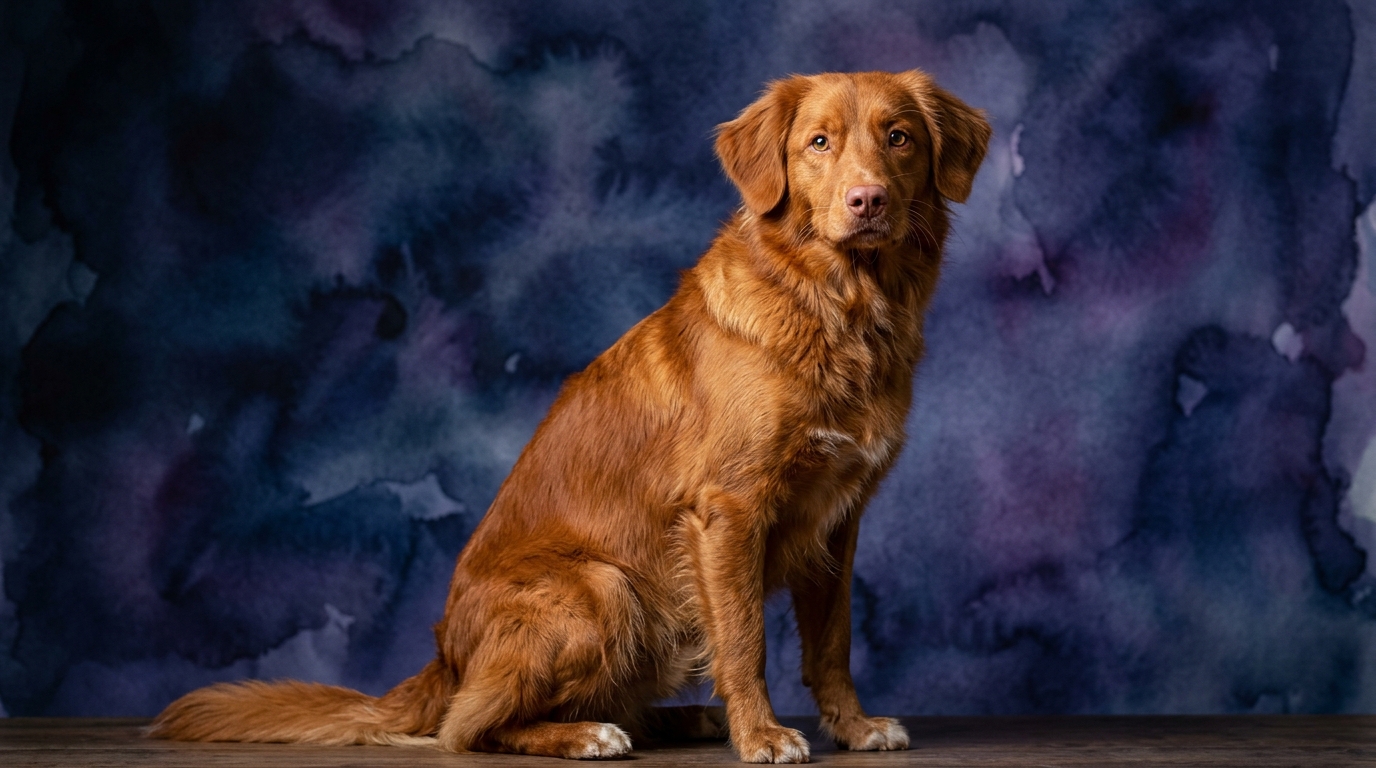
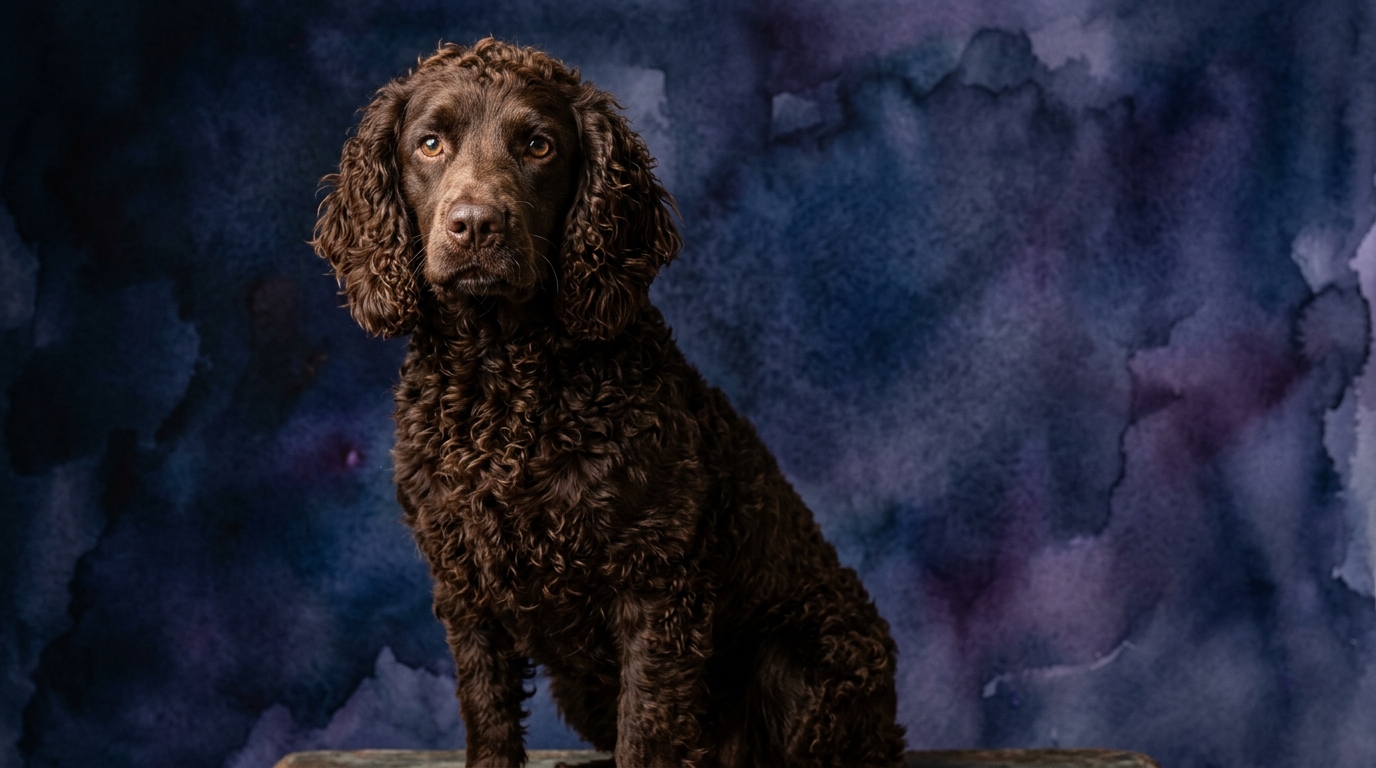
Side-by-Side Cognitive Profile: Toller vs. AWS
Delving into the specific cognitive dimensions for both the Nova Scotia Duck Tolling Retriever and the American Water Spaniel offers a clearer picture of their mental make-up. We evaluate them across five key areas: Problem Solving, Training Speed, Social Intelligence, Instinctive Drive, and Memory, as measured by The Cosmic Pet Pet IQ Lab.
Both breeds demonstrate a 3/5 rating in Problem Solving, indicating a good capacity for independent thought and adapting to new situations. The Toller often applies this in devising creative strategies for retrieving game, navigating complex terrains or outsmarting waterfowl through observation and action. Similarly, the AWS shows resourcefulness in flushing and retrieving in varied water environments, often figuring out the most efficient path to a target, relying on its keen senses and determination.
With a 3/5 Training Speed, both the Toller and AWS are receptive learners, though their approaches to acquiring new skills differ subtly. Tollers learn well with positive reinforcement and engaging, varied tasks to keep their active minds stimulated, sometimes needing patience due to their playful spirit. The AWS also picks up commands at a moderate pace, thriving on clear instruction and a strong bond, generally eager to please their handler without excessive repetition.
Both breeds score 3/5 in Social Intelligence, forming deep bonds with their immediate families. Tollers are perceptive to human moods within their circle but can be reserved with strangers, often observing before engaging. The AWS is similarly affectionate and loyal to their handler, showing sensitivity to emotional cues, though they too can be cautious or watchful in unfamiliar social settings, preferring the familiar.
A 3/5 rating for Instinctive Drive highlights both breeds' strong innate desire for their working roles. The Toller possesses a potent prey drive coupled with its unique luring behavior, demonstrating persistent focus in game retrieval and an inherent desire to work. The AWS also exhibits a robust hunting and retrieving instinct, particularly in water, showing tenacity and single-minded dedication when pursuing its quarry, often displaying remarkable endurance.
Here lies a key distinction: the Nova Scotia Duck Tolling Retriever shows a solid 3/5 capacity for recalling commands and past retrieves, competently remembering sequences and locations. However, the American Water Spaniel stands out with a 4/5 memory, allowing for exceptional retention of complex command sequences, specific scent trails, and precise locations of multiple retrieves over extended periods, significantly enhancing its working effectiveness and reliability.
Where the Nova Scotia Duck Tolling Retriever Excels Cognitively
While their core IQ scores are largely parallel, the Nova Scotia Duck Tolling Retriever exhibits a distinct cognitive edge in their specific application of problem-solving and instinctive drive, particularly in their namesake 'tolling' behavior. Their ability to independently strategize and execute complex retrieving tasks, often involving luring waterfowl into gun range, showcases a unique blend of observation and adaptive action. This isn't just about following commands, but about interpreting a situation and devising a path to success, which can demand a nuanced understanding of environmental cues and a degree of creative thinking. Their social intelligence, while rated 3/5, often manifests as a keen awareness of their surroundings and the subtle shifts required to engage prey, rather than solely focusing on direct human interaction. This specific cognitive package allows them to excel in dynamic, less structured working environments where self-directed initiative and ingenuity are paramount.
Where the American Water Spaniel Holds a Cognitive Advantage
The American Water Spaniel clearly distinguishes itself with a superior memory rating of 4/5, a cognitive advantage that underpins many of its working strengths. This enhanced recall allows them to remember complex sequences of commands, the precise location of multiple downed birds, and intricate scent trails with remarkable accuracy. This isn't merely rote memorization but a deep cognitive mapping that drastically improves their efficiency and effectiveness in demanding retrieving tasks, making them highly reliable partners. Furthermore, their instinctive drive, while rated 3/5, often presents with a focused earnestness and unwavering dedication to the task at hand, making them highly dependable in the field. Their social intelligence, also 3/5, frequently manifests as a deep attunement to their handler's intentions and emotions, fostering a tightly integrated working partnership. This combination of strong memory and handler-focused social awareness allows the AWS to process and retain information more efficiently for collaborative efforts.
Trainability: Which Breed is Easier?
Given their identical 3/5 rating for Training Speed, neither breed presents a significant hurdle for experienced trainers, yet their approaches to learning differ subtly. The American Water Spaniel, bolstered by its 4/5 memory, might demonstrate a slightly quicker grasp and retention of complex command sequences, requiring fewer repetitions to solidify new behaviors. Their Coren rank of #44 further suggests a strong capacity for obedience and working tasks, implying they process and internalize instructions efficiently for consistent execution. Conversely, the Nova Scotia Duck Tolling Retriever, while equally capable of learning, might require a more varied and engaging training approach to maintain focus, given their high energy and independent streak. Their training benefits from making tasks feel like a game or a puzzle, leveraging their problem-solving aptitude. Therefore, while both are trainable, the AWS might offer a slightly more straightforward path for trainers valuing consistent, precise execution of learned behaviors due to its superior recall and earnest temperament.
Best Fit: Active Owners vs. Relaxed Owners
Neither the Nova Scotia Duck Tolling Retriever nor the American Water Spaniel are suited for genuinely relaxed, sedentary owners; both are high-energy sporting breeds with substantial exercise and mental stimulation requirements. The Toller, with its persistent drive and need for diverse mental challenges, thrives with highly active owners who can provide daily vigorous exercise and creative training, excelling in dynamic dog sports. Their independent problem-solving demands outlets for both mind and body. The American Water Spaniel, while equally active, might suit owners who appreciate a slightly more focused and handler-oriented partner for activities like hunting, long hikes, or structured obedience. Its superior memory makes the AWS excellent for competitive activities demanding precision and strong working bonds, appealing to those who enjoy methodical training and close collaboration.
The Verdict
Choose the Nova Scotia Duck Tolling Retriever if you seek an independent, creative problem-solver for dynamic activities and can provide diverse mental and physical challenges.
Opt for the American Water Spaniel if you prioritize a highly trainable partner with exceptional memory, excelling in structured tasks and close handler collaboration.
🧠 Find Your Pet's IQ Score
Our Pet IQ Lab assessment covers 25+ tests across 5 cognitive dimensions — personalized to your breed.
Take the Full IQ Test →Frequently Asked Questions
Is the Nova Scotia Duck Tolling Retriever harder to train than the American Water Spaniel?
While both breeds have a 3/5 training speed, the Toller's independent nature and high energy might demand more varied and engaging training methods to maintain focus. The American Water Spaniel's superior memory (4/5) can make learning and retaining complex sequences slightly more efficient for trainers due to its enhanced recall.
Which breed has a better memory for commands and tasks?
The American Water Spaniel holds a clear advantage in memory, rated 4/5 compared to the Toller's 3/5. This means AWS dogs typically recall commands, routines, and the location of objects with greater accuracy and for longer durations, which is a significant asset in complex working scenarios.
Are these breeds good with children and other pets?
Both breeds, with a social intelligence of 3/5, can be good with children and other pets when properly socialized from a young age and supervised. Tollers can be playful but might be reserved with strangers, while AWS dogs are loyal to their family but can also be watchful in new social situations, requiring careful introductions.