Side-by-Side IQ Profile: Understanding the 3/5 Score
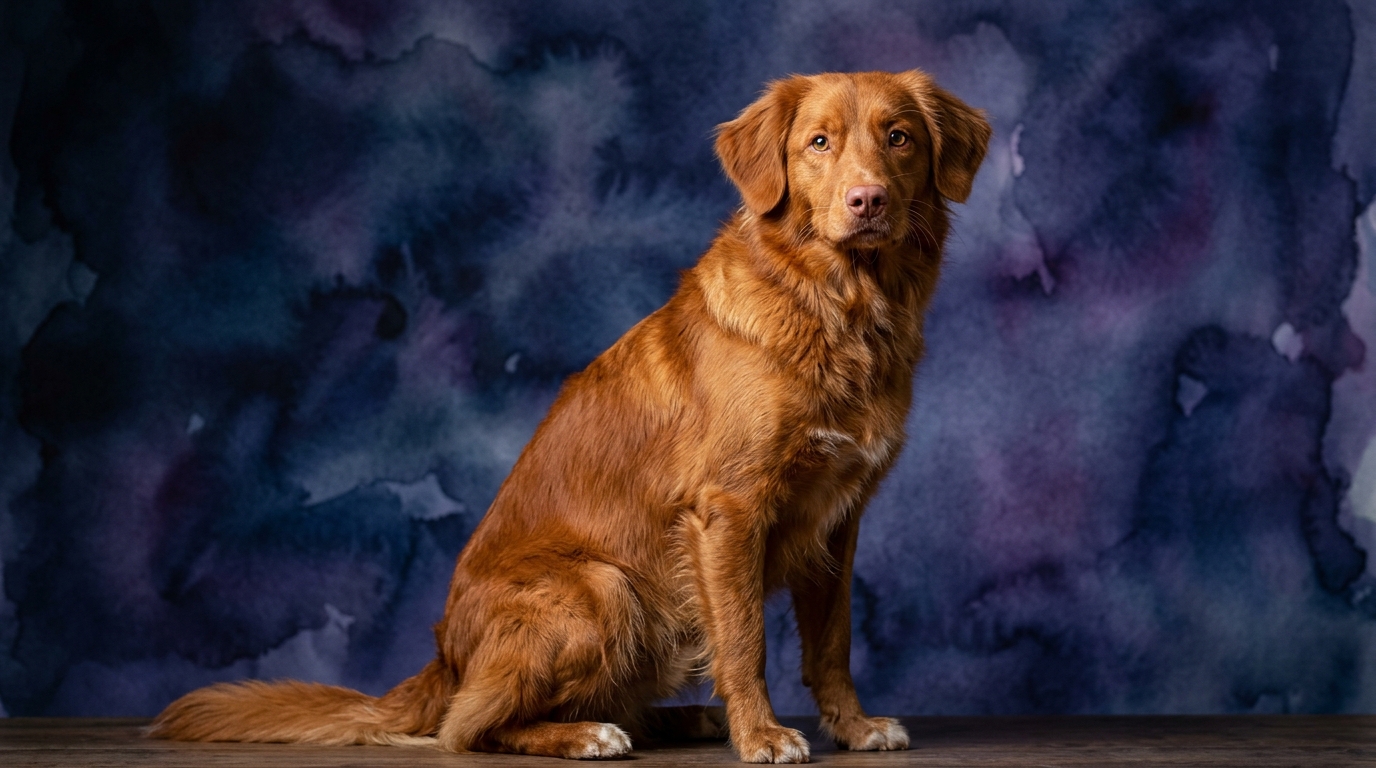
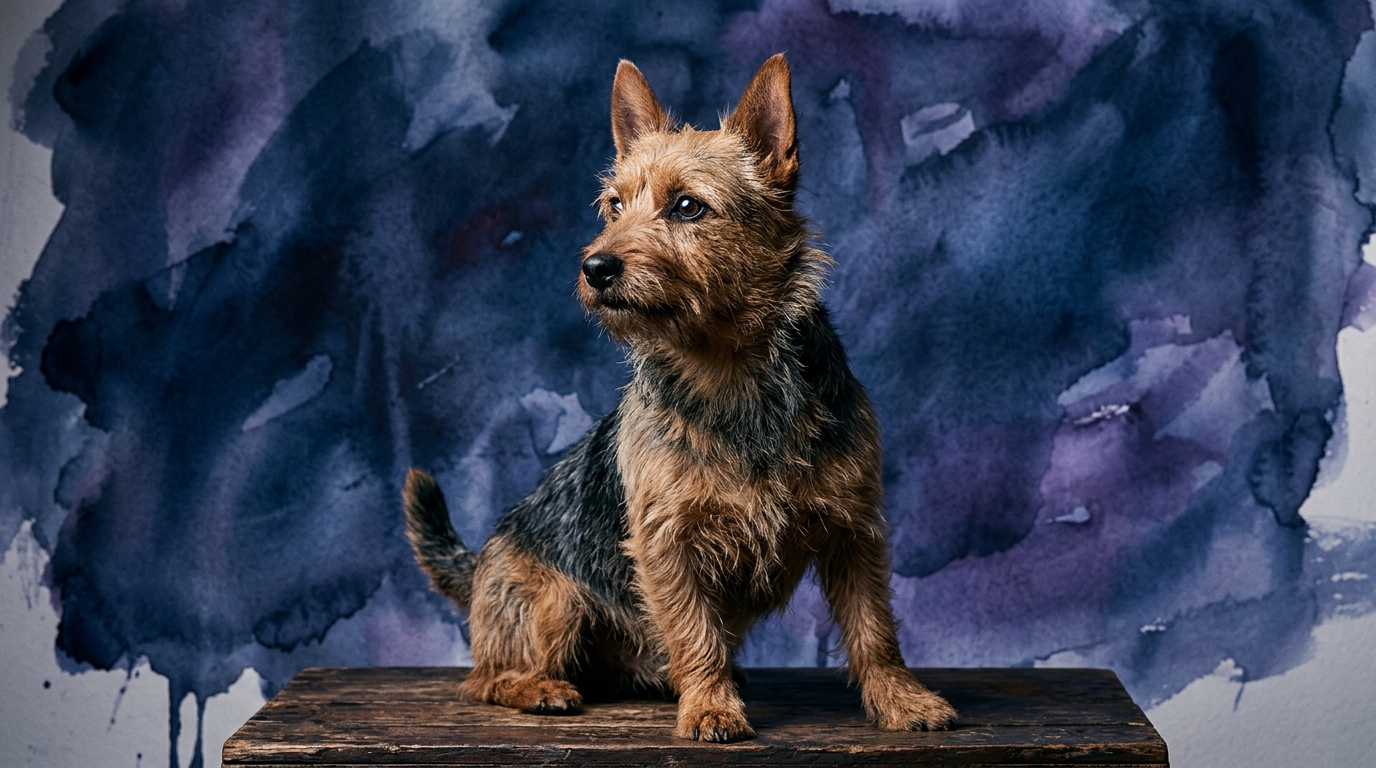
At The Cosmic Pet Pet IQ Lab, both the Nova Scotia Duck Tolling Retriever and the Australian Terrier achieve a consistent 3/5 across all evaluated cognitive dimensions. This score signifies a moderate, capable level of intelligence, but its expression is deeply rooted in each breed's historical purpose and inherent temperament. Understanding these nuances is key to appreciating their individual cognitive strengths.
For the **Nova Scotia Duck Tolling Retriever**, a Sporting dog, their **Problem Solving (3/5)** often manifests in deciphering complex retrieving scenarios, such as figuring out the most efficient path to multiple fallen objects or navigating obstacles to reach a target. Their solutions are typically practical and goal-oriented, reflecting their working heritage. Their **Training Speed (3/5)** indicates they learn new commands and routines at a steady pace, generally eager to please their handlers and responding well to consistent positive reinforcement. While not instant learners, they retain information effectively once grasped, making them capable students for various dog sports and obedience tasks. In **Social Intelligence (3/5)**, Tollers display a balanced understanding of cues from humans and other animals. They can read a handler's moods and intentions, often adjusting their behavior accordingly, and typically engage appropriately in group settings. Their **Instinctive Drive (3/5)** is primarily channeled towards their original purpose: luring and retrieving waterfowl. This translates into a natural inclination for fetching, swimming, and exploring with scent, a drive that is manageable and can be directed into productive activities. Finally, their **Memory (3/5)** is good for learned tasks, routines, locations, and individuals, enabling them to recall complex sequences of commands for retrieving or agility courses, influencing future interactions and learning.
The **Australian Terrier**, a Terrier breed, demonstrates its **Problem Solving (3/5)** through a tenacious and often independent approach. They are adept at figuring out how to access small spaces, locate hidden objects, or outsmart perceived 'prey,' often employing clever tactics driven by curiosity and a desire for a self-rewarding outcome. Their **Training Speed (3/5)** means they pick up basic commands with moderate speed, particularly when training is engaging and varied. However, their independent nature can make them challenging to motivate for repetitive tasks, requiring a handler skilled in making learning fun and rewarding. For **Social Intelligence (3/5)**, Australian Terriers show a respectable level of awareness, particularly within their family unit, being perceptive to household routines and their humans' emotional states. With strangers, they can be reserved but observant, assessing new situations carefully. Their **Instinctive Drive (3/5)** is pronounced in its terrier roots: hunting small vermin. This translates to a strong desire to dig, chase, and explore with their nose. While significant, this drive is generally manageable for pet owners, though it requires appropriate outlets. Their **Memory (3/5)** is good, especially for places where interesting scents were found or where they encountered something exciting, recalling specific routes, preferred hiding spots for toys, and household routines.
Where the Nova Scotia Duck Tolling Retriever Wins Cognitively
Despite identical 3/5 scores, the Toller's cognitive profile is uniquely suited for tasks requiring sustained focus and partnership in structured environments. Their problem-solving, though rated 3/5, often manifests as a collaborative effort, where they excel at interpreting complex handler cues to achieve a shared goal. For instance, a Toller might demonstrate its 3/5 problem-solving by efficiently mapping out the best path to retrieve multiple thrown objects in varying terrain, a task where their 3/5 memory for object placement and handler direction becomes a significant advantage. This collaborative aspect extends to their social intelligence, making them particularly adept at reading and responding to subtle human body language during performance tasks, leading to a fluid working partnership.
Their 3/5 instinctive drive, being oriented towards retrieving and working in water, allows for a more predictable and harnessable focus for activities like obedience, agility, or dock diving. This drive, combined with their 3/5 training speed, enables them to grasp multi-step commands and intricate sequences with a dedication that stems from their desire to perform their intended function. They are less likely to deviate from a task due to independent impulses, preferring to complete the 'job' alongside their human.
Where the Australian Terrier Wins Cognitively
Conversely, the Australian Terrier's 3/5 cognitive scores shine in areas demanding independent thought, tenacity, and adaptability in less structured scenarios. Their problem-solving, also 3/5, is often about overcoming obstacles with a resourceful, self-directed determination. An Australian Terrier might excel at figuring out how to unearth a buried treasure (a toy or scent), or how to navigate a complex, new indoor environment to reach a desired location, showcasing a 3/5 memory for spatial layouts and a persistent approach. This tenacity is a hallmark of their terrier nature, where their 3/5 instinctive drive for chasing and exploring translates into remarkable individual initiative.
Their 3/5 social intelligence, while strong within the family, often means they are more discerning in new social interactions, making them astute observers of their immediate surroundings and quick to identify potential changes or anomalies. This independent streak, combined with their 3/5 training speed, allows them to learn quickly when the task aligns with their self-motivated interests, such as scent games or digging-related activities. They often require less explicit instruction to initiate exploration or engagement with their environment, relying more on their innate curiosity and self-preservation instincts.
Which is Easier to Train and Why
Given their identical 3/5 training speed, the 'easier to train' distinction isn't about raw learning capacity but about *how* that capacity is best leveraged, and which breed's behavioral tendencies align better with typical training approaches. The Nova Scotia Duck Tolling Retriever, with its sporting dog background, generally exhibits a stronger desire to work *with* a human. Their 3/5 social intelligence makes them keen to please and receptive to handler feedback, while their 3/5 instinctive drive is readily channeled into cooperative tasks like retrieving or obedience. This means they often require less inventive motivation and are more inclined to follow instructions, making the training process feel more straightforward for many owners.
The Australian Terrier, while possessing the same 3/5 training speed, approaches learning with a more independent mindset. Their 3/5 instinctive drive leans towards self-initiated exploration and hunting, which can sometimes compete with a handler's directives. Training an Australian Terrier often requires more creativity, patience, and the ability to make learning feel like a game that benefits *them*. They might learn a command quickly but choose not to perform it if a more interesting scent or perceived 'prey' captures their attention. Therefore, while equally capable of learning, their inherent terrier tenacity means their training journey often demands a more nuanced and persistent approach from the owner.
Which Suits Active Owners vs. Relaxed Owners
Both breeds, despite their moderate 3/5 instinctive drive, thrive with active engagement, but the *type* of activity differs significantly. The Nova Scotia Duck Tolling Retriever is an ideal companion for owners who enjoy structured outdoor activities, such as long hikes, swimming, or dog sports like agility and dock diving. Their 3/5 problem-solving and memory excel when given tasks that involve multiple steps and require sustained focus, making them perfect for owners who want a partner in their active pursuits and are willing to dedicate time to training and mental stimulation. They are not content to be couch potatoes, needing regular physical and cognitive outlets to prevent boredom.
The Australian Terrier, while also active, might appeal to owners whose definition of 'active' involves more independent exploration or spontaneous bursts of energy. They enjoy brisk walks, digging in a designated area, and engaging in scent games. Their 3/5 instinctive drive means they will happily spend time 'hunting' in the backyard or exploring new trails, often with less direct instruction than a Toller might need. They still require mental engagement, but their problem-solving and memory are often applied to self-directed endeavors. While they enjoy cuddling, they are not suited for entirely relaxed owners; their terrier energy demands consistent outlets, even if those outlets are more about independent discovery than cooperative sport.
The Verdict
Choose the Nova Scotia Duck Tolling Retriever if you seek a dedicated, cooperative partner for structured activities and enjoy a dog that thrives on working closely with you to achieve shared goals.
Opt for the Australian Terrier if you appreciate a tenacious, independent companion with a spirited personality, and are prepared to engage their keen senses and self-directed problem-solving with creative, engaging activities.
🧠 Find Your Pet's IQ Score
Our Pet IQ Lab assessment covers 25+ tests across 5 cognitive dimensions — personalized to your breed.
Take the Full IQ Test →Frequently Asked Questions
Do Nova Scotia Duck Tolling Retrievers and Australian Terriers learn at the same pace?
While both breeds have a Training Speed score of 3/5, meaning they learn new commands at a moderate pace, their motivation differs. Tollers often learn quickly due to a strong desire to cooperate, whereas Australian Terriers learn well when tasks align with their independent, tenacious nature, requiring a more engaging approach.
Which breed is better at understanding human emotions and cues?
Both breeds score 3/5 in Social Intelligence, indicating a good capacity for reading social cues. Tollers often excel in understanding handler intentions during collaborative tasks, while Australian Terriers are perceptive to family dynamics and routines, though they can be more reserved with strangers.
How does their instinctive drive manifest differently, given both are 3/5?
The Toller's 3/5 instinctive drive is primarily for retrieving and water work, making them eager participants in fetching games and outdoor adventures. The Australian Terrier's 3/5 drive is rooted in hunting small vermin, leading to a strong desire to dig, chase, and explore independently, requiring outlets for these natural behaviors.