
Side-by-Side IQ Profile: Interpreting Identical Scores
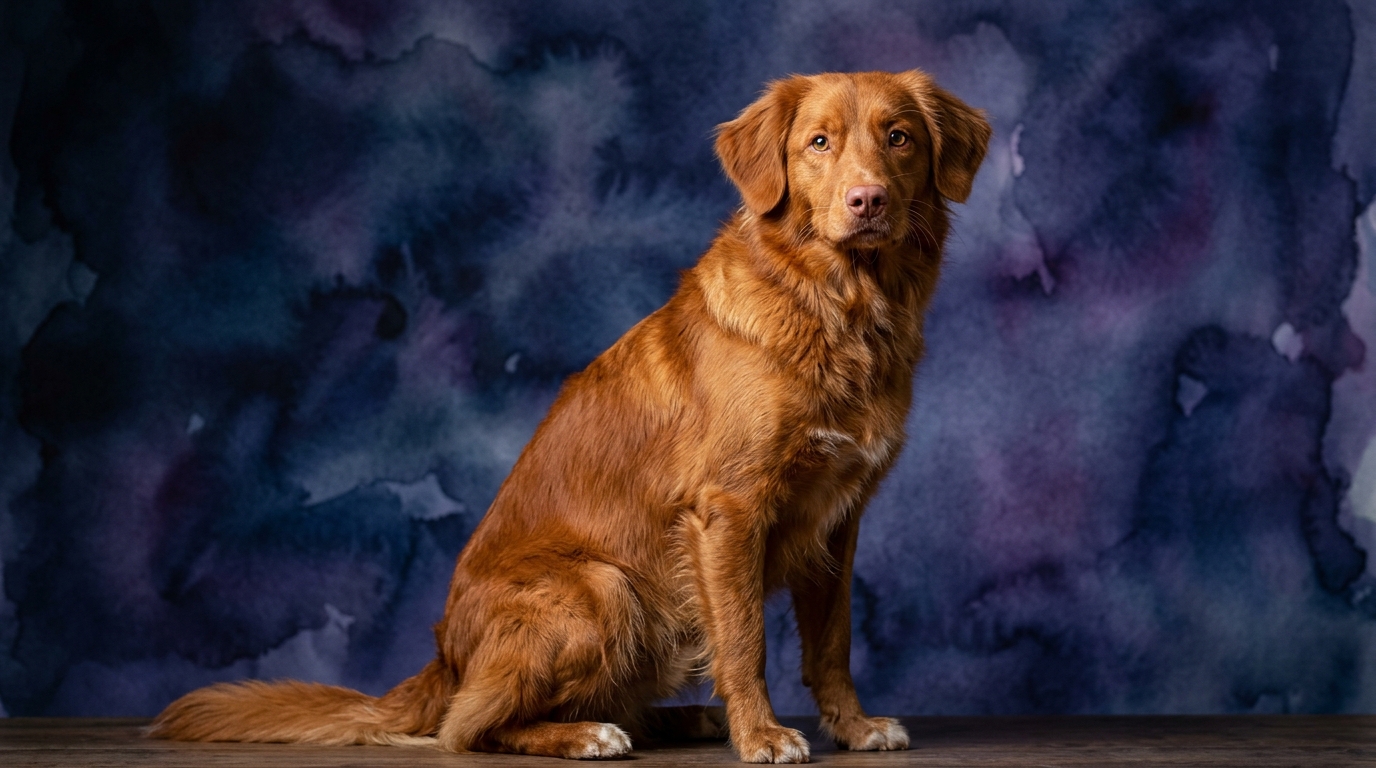
The Nova Scotia Duck Tolling Retriever (NSDTR), a breed sculpted for active collaboration, demonstrates its 3/5 Problem Solving capacity through practical, task-oriented thinking, such as strategizing the quickest retrieve path or understanding complex multi-step commands. Their 3/5 Training Speed indicates an eagerness to learn and a natural inclination to work alongside their handler, absorbing new cues efficiently when properly motivated. Social Intelligence at 3/5 highlights their attunement to human intent and cooperative spirit, crucial for their luring and retrieving duties. An Instinctive Drive of 3/5 points to a robust prey drive and a persistent desire to engage in work, particularly retrieving. Finally, their 3/5 Memory supports their ability to recall complex sequences, retrieve locations, and learned behaviors over time, essential for effective fieldwork.
The Basset Hound, a specialist in scent work, also scores 3/5 across the board, but these scores manifest differently within their unique cognitive framework. Their Problem Solving at 3/5 is centered on navigating intricate scent trails, discerning subtle changes in odor, and persistent tracking, requiring deep, independent focus rather than human collaboration. A 3/5 Training Speed means they are capable of learning, but their strong individualistic streak and susceptibility to scent distractions often make their learning process appear deliberate; they absorb information that aligns with their immediate interests or comfort. Their Social Intelligence at 3/5 suggests they are affectionate and aware of their family's presence but less driven by a need for constant cooperative engagement in tasks, often prioritizing their nose over human direction. The 3/5 Instinctive Drive is overwhelmingly dedicated to their powerful sense of smell and the relentless pursuit of a trail. Lastly, their 3/5 Memory is particularly strong for recalling scent patterns and the topography of their environment as it relates to tracking, rather than complex human-initiated sequences.
Where the Nova Scotia Duck Tolling Retriever Wins Cognitively
The Toller's cognitive strengths shine in scenarios demanding active partnership and adaptable problem-solving within a collaborative framework. Their 3/5 Problem Solving, intrinsically linked with their 3/5 Social Intelligence, makes them adept at quickly assessing novel situations within a shared context, such as figuring out how to retrieve a toy from an unusual spot or adapting to new training exercises on the fly. This practical intelligence is geared towards achieving a shared goal with their human partner. Their 3/5 Instinctive Drive, specifically for retrieving and luring, fuels a focused determination that translates into consistent performance in dog sports like agility or obedience, where quick decisions and handler responsiveness are paramount. The Toller's advantage lies in their ability to seamlessly integrate various cognitive functions – memory, problem-solving, and social cues – into a cohesive, goal-oriented performance that benefits directly from human direction and engagement.
Where the Basset Hound Wins Cognitively
The Basset Hound excels in a distinct realm of cognition, one defined by profound sensory specialization and independent persistence. Their 3/5 Problem Solving is a triumph of olfactory deduction; they are masters at unraveling complex scent puzzles, following faint trails over varied terrain, and maintaining deep focus on a single objective for extended periods. This is a form of deep, specialized intelligence that prioritizes internal drive over external human direction, allowing them to independently navigate intricate sensory landscapes. The Basset's 3/5 Instinctive Drive, almost entirely consumed by their nose, grants them an unmatched tenacity in tracking, allowing them to process and remember intricate scent data with remarkable precision (Memory 3/5). While often perceived as stubborn, this characteristic is, in fact, a dedication to their primary cognitive function – the relentless pursuit of scent – demonstrating a powerful, self-directed form of intelligence that makes them unrivaled in their historical role.
Training Dynamics: Toller's Cooperation vs. Basset's Independence
Despite both breeds scoring 3/5 in Training Speed, the experience of training them diverges significantly due to their distinct motivations and inherent drives. The Nova Scotia Duck Tolling Retriever, with its 3/5 Social Intelligence and a history of working collaboratively, generally presents as more straightforward to train for traditional obedience or task-oriented learning. They are often eager to please and respond well to positive reinforcement, viewing training as a joint activity. Their 3/5 Instinctive Drive often includes a desire to work *with* their handler, making them more amenable to learning and performing commands consistently.
In contrast, the Basset Hound's 3/5 Training Speed is heavily influenced by its profound 3/5 Instinctive Drive for scent. While capable of learning, their attention is easily hijacked by interesting smells, making sustained focus on human-initiated commands a challenge. Training a Basset often requires immense patience, creativity to make learning more rewarding than scent-following, and an understanding that their primary motivation lies in their nose, not necessarily in pleasing a handler. They learn best when the training aligns with their intrinsic interests, or when the reward is exceptionally high and consistent.
Matching Breeds to Lifestyles: Active Engagement vs. Relaxed Exploration
The cognitive profiles and historical roles of these breeds clearly delineate their suitability for different owner lifestyles. The Nova Scotia Duck Tolling Retriever is an ideal companion for active owners who relish participation in dog sports, outdoor adventures, or simply enjoy a highly engaged canine partner. Their 3/5 Problem Solving and 3/5 Instinctive Drive for work mean they thrive on mental and physical challenges, requiring consistent engagement to prevent boredom and channel their natural energy. Owners who can provide opportunities for retrieving, agility, or extensive hikes will find the Toller a joyful and cooperative companion.
Conversely, the Basset Hound, while requiring regular walks to satisfy their olfactory needs and prevent obesity, generally suits more relaxed owners. Their 3/5 Instinctive Drive for scent work is more about independent exploration than high-octane activity. While they appreciate companionship, their preferred mode of engagement often involves leisurely sniffing walks or comfortable lounging. Owners who value a calm, affectionate presence and are prepared for a dog whose primary "activity" involves deep, methodical scent investigation will find a rewarding bond with a Basset.
The Verdict
Choose a Nova Scotia Duck Tolling Retriever if you are an active individual or family seeking a highly engaged, collaborative canine partner eager for mental and physical challenges, from dog sports to adventurous hikes.
Opt for a Basset Hound if you appreciate an independent, affectionate companion who thrives on leisurely scent walks and comfortable lounging, and whose unique form of intelligence is expressed through persistent olfactory exploration rather than human-directed tasks.
🧠 Find Your Pet's IQ Score
Our Pet IQ Lab assessment covers 25+ tests across 5 cognitive dimensions — personalized to your breed.
Take the Full IQ Test →Frequently Asked Questions
How can two breeds have the same IQ scores but such different temperaments?
The Cosmic Pet Pet IQ Lab scores provide a quantitative measure of cognitive capacity, but how these capacities are applied and prioritized by each breed varies greatly due to their historical purpose and innate drives. While both score 3/5, the Toller applies its problem-solving and memory to collaborative tasks, whereas the Basset applies its to independent scent tracking, leading to distinct temperamental expressions.
Does the Basset Hound's Coren rank of #71 contradict its 3/5 IQ scores?
Not necessarily. Coren's ranking primarily assesses "working intelligence" or obedience, which gauges how quickly a dog learns and performs human-directed commands. A 3/5 Training Speed is an average score, and for a Basset, this learning is often slower in traditional obedience due to their independent nature and powerful scent drive, which aligns with a lower Coren rank for that specific type of intelligence.
Are Nova Scotia Duck Tolling Retrievers suitable for first-time dog owners?
Tollers can be suitable for first-time owners who are committed to providing consistent training, ample physical activity, and mental stimulation. Their cooperative nature and eagerness to learn (Training Speed 3/5) can make them rewarding partners, but their energy levels and need for engagement require a dedicated owner who understands their active requirements.