Side-by-Side IQ Profile: Toller vs. Chessie
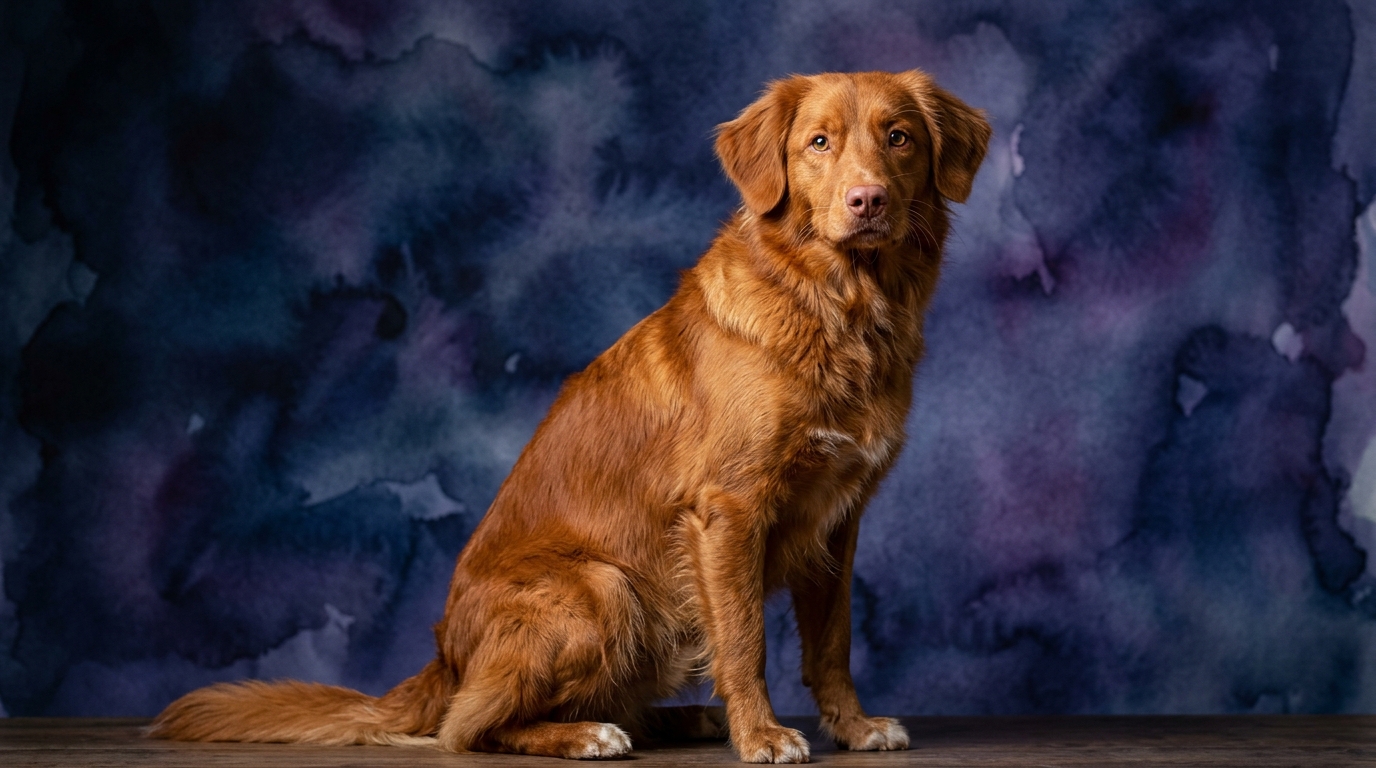
The Nova Scotia Duck Tolling Retriever, often simply called a Toller, presents a balanced cognitive profile. Their problem-solving ability is rated at 3/5, suggesting they can navigate familiar challenges effectively but might require more guidance when faced with novel situations. Training speed also sits at 3/5, indicating they are responsive learners who benefit from consistent, positive reinforcement rather than expecting immediate mastery of complex commands. Their social intelligence, at 3/5, means they are attuned to human cues and form deep family bonds, though they may not be overtly demonstrative with strangers. Instinctive drive is rated 3/5, reflecting a strong inherent desire for retrieving and activity, which requires regular outlets. Finally, their memory at 3/5 allows for solid retention of learned behaviors and routines, contributing to their reliability.
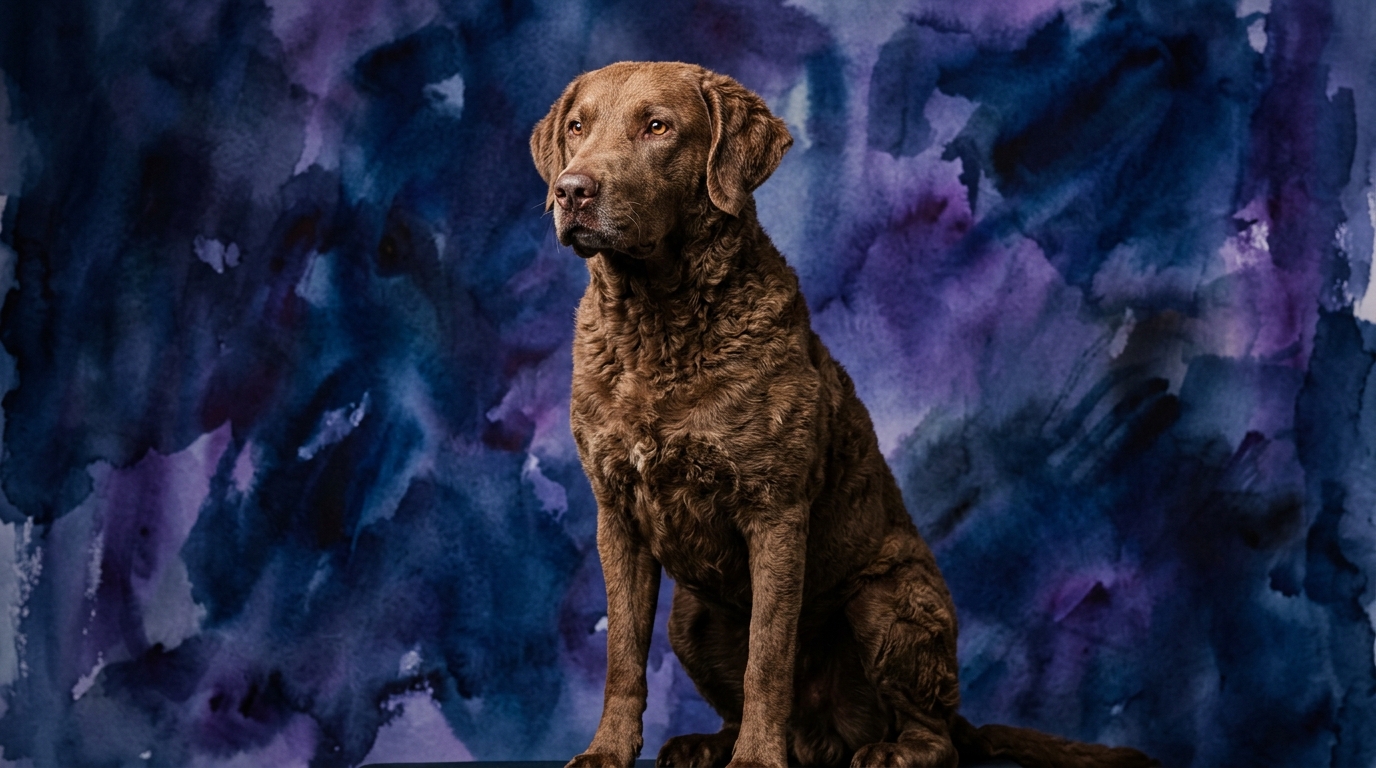
In contrast, the Chesapeake Bay Retriever, or Chessie, showcases a more pronounced aptitude in specific cognitive areas. Their problem-solving ability is strong at 4/5, indicating a capacity to independently strategize and overcome intricate obstacles, particularly in their working environment. This higher score extends to their training speed, also 4/5, meaning they typically grasp new commands and complex sequences with greater rapidity and efficiency. Like the Toller, their social intelligence is 3/5; they are loyal and perceptive with their trusted circle but often reserved or watchful around new people. Their instinctive drive also scores 3/5, pointing to a robust, enduring motivation for their retrieving duties. A notable strength is their memory, rated 4/5, which enables superior retention of detailed information, crucial for demanding field work and consistent performance over time.
Where the Nova Scotia Duck Tolling Retriever Wins Cognitively
The Toller's balanced cognitive profile, particularly its 3/5 scores in problem-solving and training speed, can be advantageous in certain contexts. While the Chessie might outpace them in raw learning speed, the Toller's slightly less intense drive to independently 'solve' every situation means they may be less prone to outsmarting novice handlers or becoming bored with structured, repetitive training. Their cognitive approach often translates to a more cooperative demeanor in general obedience, where they are eager to please and respond well to clear, consistent instruction without constantly seeking to deviate or innovate. This makes them a wonderful partner for owners who enjoy a steady, progressive training journey.
Furthermore, the Toller's social intelligence at 3/5, combined with its overall temperament, allows it to integrate smoothly into diverse family dynamics. They typically display an appropriate level of discernment with strangers, being neither overly gregarious nor excessively aloof, which can be a desirable trait for a family companion. Their instinctive drive at 3/5, while robust, often feels more manageable for active families, providing ample motivation for games and outdoor adventures without the relentless, singular focus that can characterize some high-drive working breeds. This blend allows them to be both capable working dogs and adaptable household members.
Where the Chesapeake Bay Retriever Wins Cognitively
The Chessie's superior problem-solving (4/5) and memory (4/5) truly set it apart in demanding working scenarios. Their ability to independently assess complex retrieving situations, such as navigating dense cover or marking multiple falls over water, reflects a profound strategic capacity. This cognitive strength allows them to devise efficient routes and overcome environmental challenges with remarkable self-reliance. This isn't just about speed; it's about the depth of their understanding and their capacity for independent thought in the field, making them exceptionally effective in roles requiring ingenuity and perseverance.
Coupled with their rapid training speed (4/5), the Chessie excels in mastering intricate sequences and advanced commands quickly. This makes them formidable competitors in dog sports like obedience, agility, or competitive retrieving, where precision, speed, and complex pattern recognition are paramount. Their excellent memory ensures that once a task or command is learned, it is retained with high fidelity, contributing to consistent, high-level performance even after breaks or in varied conditions. For owners seeking a partner capable of achieving mastery in specialized fields, the Chessie's cognitive architecture provides a distinct advantage.
Which is Easier to Train and Why
When evaluating ease of training, the Chesapeake Bay Retriever, with its 4/5 training speed, generally picks up new commands and concepts faster than the Toller (3/5). This means a Chessie might progress through basic obedience and advanced skills more rapidly, requiring fewer repetitions to achieve proficiency. However, the Chessie's higher problem-solving (4/5) and independence can also present a training challenge; they may question commands or attempt to find alternative, 'smarter' ways to complete a task if not adequately motivated or if the trainer isn't firm and consistent. Their strong will necessitates a confident, experienced handler who can provide clear direction and mental engagement.
The Nova Scotia Duck Tolling Retriever, while having a slightly slower training speed (3/5), often presents a more straightforward training experience for many owners due to their eager-to-please nature and less pronounced tendency for independent problem-solving in obedience contexts. They thrive on positive reinforcement and clear routines, responding reliably to consistent methods. While they may take a bit longer to solidify new behaviors, their willingness to cooperate and focus on the handler makes the training journey a rewarding process. For those who value a dog that readily accepts guidance and enjoys collaborative learning, the Toller can feel 'easier' to train despite the Chessie's faster acquisition rate.
Active Owners vs. Relaxed Owners: Which Breed Suits Best?
Both the Nova Scotia Duck Tolling Retriever and the Chesapeake Bay Retriever are sporting breeds with an instinctive drive of 3/5, meaning neither is suited for a truly 'relaxed' owner who prefers minimal activity. Both require substantial daily exercise and mental engagement to thrive. However, the nuances in their cognitive profiles and historical roles suggest different levels of intensity and specific types of activity. The Toller, with its slightly more balanced problem-solving and social intelligence, might be a better fit for active families who enjoy regular outdoor adventures like hiking, swimming, or retrieving games, but also appreciate a dog that can settle calmly indoors after its needs are met. They flourish with consistent engagement and varied activities.
The Chesapeake Bay Retriever, while sharing the same instinctive drive score, combines this with superior problem-solving and memory, making them adept at more rigorous and sustained work. Their heritage as relentless retrievers in challenging conditions means they often require more intense and focused outlets for their energy and intellect. They are ideal for highly active, experienced owners who are passionate about dog sports, hunting, or long, challenging outdoor excursions. Chessies thrive when given a 'job' that engages both their physical stamina and their formidable cognitive abilities, making them less suitable for owners seeking a more moderately active companion.
The Verdict
Choose the Nova Scotia Duck Tolling Retriever if you seek a spirited, eager-to-please companion who thrives on consistent engagement and offers a rewarding, collaborative training experience for active families.
Opt for the Chesapeake Bay Retriever if you are an experienced, highly active owner who desires a tenacious, independent partner for demanding dog sports, hunting, or rigorous outdoor adventures, capable of exceptional problem-solving and memory.
🧠 Find Your Pet's IQ Score
Our Pet IQ Lab assessment covers 25+ tests across 5 cognitive dimensions — personalized to your breed.
Take the Full IQ Test →Frequently Asked Questions
Are Tollers or Chessies better for first-time dog owners?
The Nova Scotia Duck Tolling Retriever is generally considered more adaptable for first-time owners due to its slightly more cooperative nature and less intense independent streak during training, compared to the Chessie's strong will and higher problem-solving capacity.
Which breed requires more mental stimulation?
While both require significant mental engagement, the Chesapeake Bay Retriever, with its 4/5 problem-solving and memory, generally demands more complex and varied mental challenges to prevent boredom and destructive behaviors. Their minds are constantly seeking tasks.
Do both breeds get along well with children?
Both breeds can be excellent family dogs with proper socialization and training. Tollers are often more overtly playful and outgoing, whereas Chessies tend to be more reserved and protective, requiring careful introduction and supervision with children.