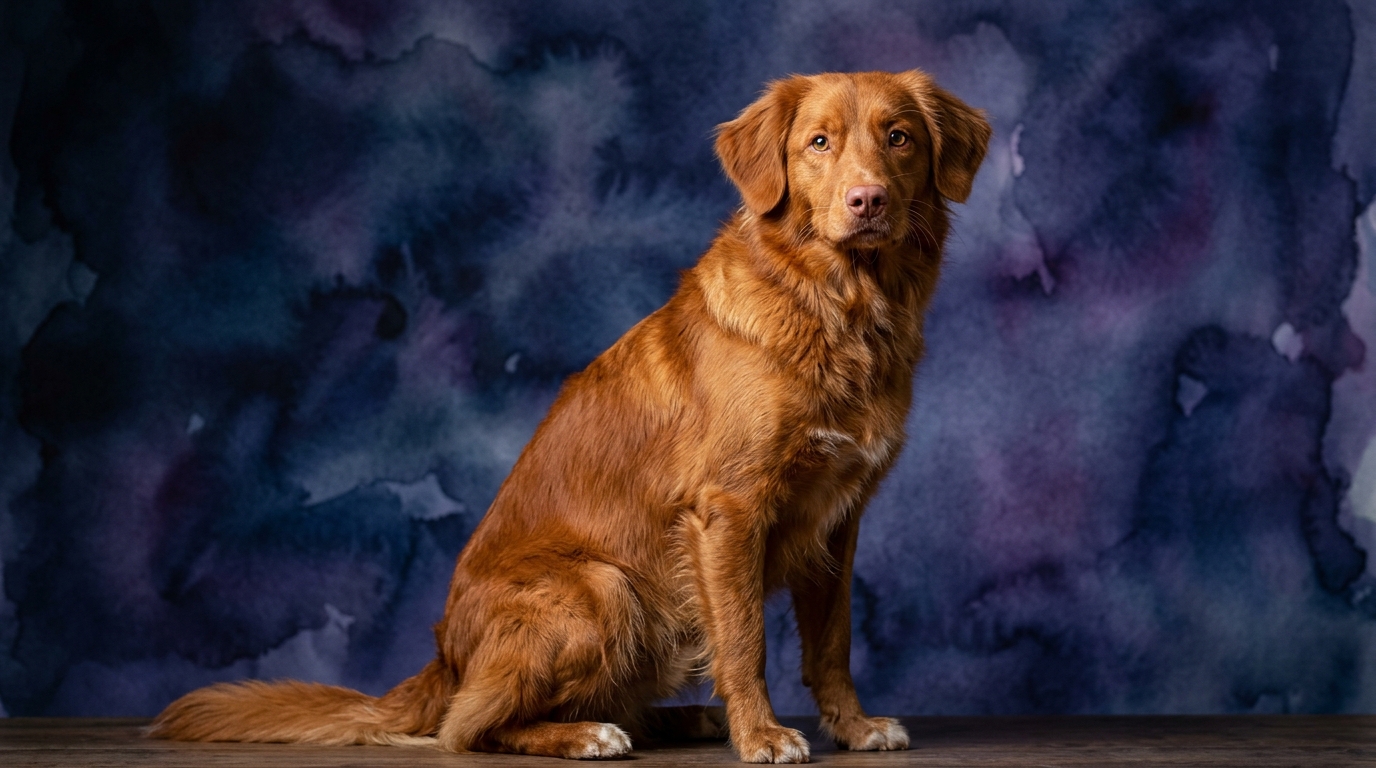
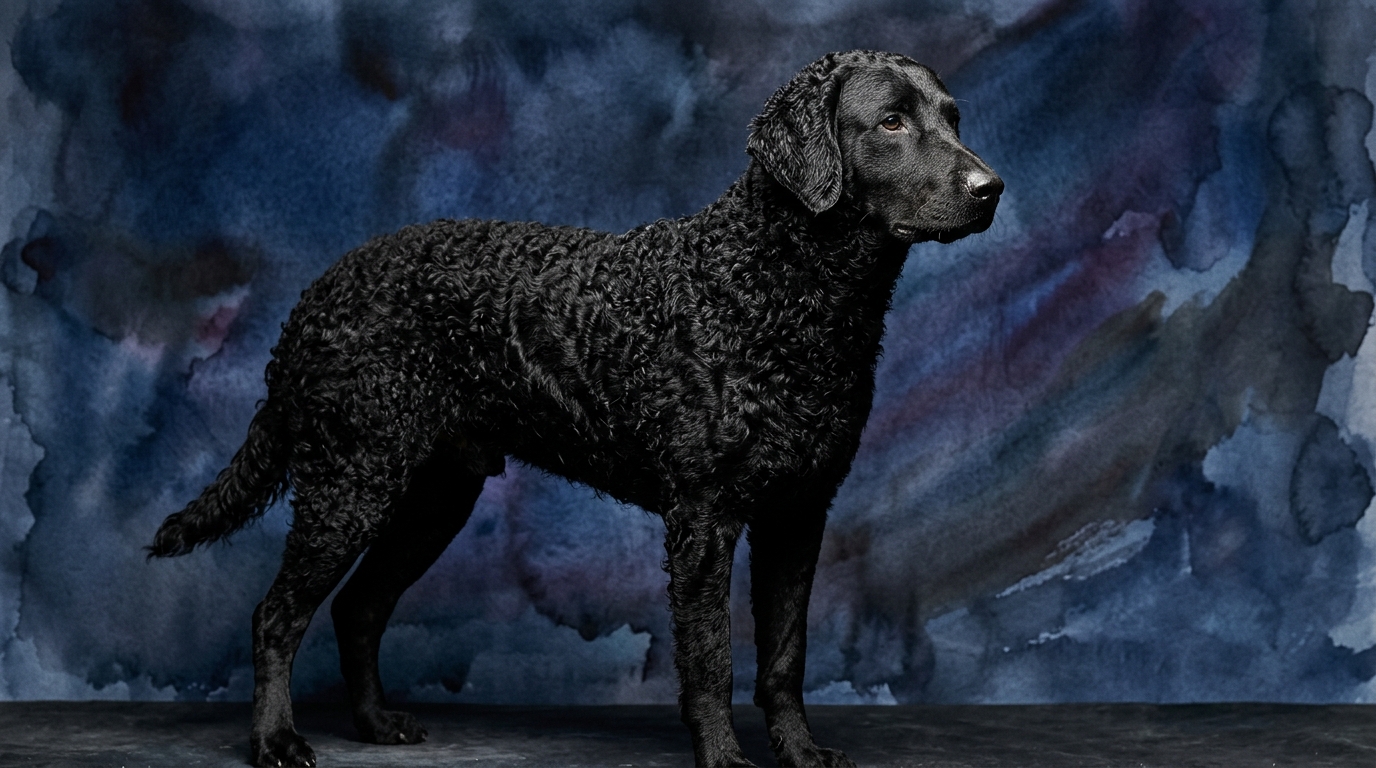
Side-by-Side IQ Profile: Toller vs. Curly-Coat
The Cosmic Pet Pet IQ Lab employs five key dimensions to evaluate canine cognition, providing a granular view of how each breed processes the world. For the Nova Scotia Duck Tolling Retriever, every dimension registers a balanced 3/5, indicating a consistently capable yet not overtly specialized cognitive makeup. Their Problem Solving at 3/5 suggests an aptitude for navigating moderately complex situations, adapting their approach as needed, without consistently demonstrating exceptional ingenuity. Training Speed, also at 3/5, implies they learn new commands and routines at a steady, manageable pace, requiring consistent reinforcement but generally responding well to clear instruction. Social Intelligence, scoring 3/5, indicates a good capacity for understanding human cues and interacting appropriately within various social contexts, showing awareness without being overtly sensitive. Their Instinctive Drive, a 3/5, reflects a reliable and purposeful inclination towards their retrieving tasks, present without being overwhelming. Finally, their Memory, also 3/5, means they possess a solid ability to retain learned behaviors and recall past experiences, though not with extraordinary precision over extended periods.
The Curly-Coated Retriever presents a largely similar cognitive blueprint with one significant distinction. Like the Toller, their Problem Solving is rated at 3/5, signifying a practical ability to tackle moderate challenges and learn from experience. Their Training Speed also stands at 3/5, suggesting a learning pace comparable to the Toller, where consistent, positive reinforcement yields steady progress. Social Intelligence, at 3/5, shows they are equally capable of reading environmental and human signals, responding in a generally appropriate and aware manner. The Instinctive Drive of the Curly-Coat also registers 3/5, reflecting a strong, consistent motivation for their retrieving work, characteristic of their sporting heritage. However, where the Curly-Coated Retriever truly distinguishes itself is in Memory, scoring an impressive 4/5. This higher rating indicates a superior capacity for information retention, allowing them to recall learned commands, complex sequences, and specific details with remarkable accuracy and over longer durations, a notable advantage in many practical scenarios.
Where the Nova Scotia Duck Tolling Retriever Excels Cognitively
While the Toller's IQ scores are uniformly 3/5, their cognitive strength lies in the unique application of these abilities, particularly in their namesake 'tolling' behavior. This isn't just a generic problem-solving capacity; it's a specialized, instinct-driven form of cleverness. Tolling involves a complex sequence of luring waterfowl by playing at the water's edge, disappearing, then reappearing, a behavior that requires sustained focus, strategic thinking, and an understanding of cause and effect to entice prey. This sophisticated 'game' for a purpose demonstrates their 3/5 problem-solving and social intelligence working in concert in a very specific, nuanced way. Their balanced profile across all dimensions suggests a consistently adaptable mind, capable of engaging reliably across various tasks without a pronounced cognitive 'weak spot.' This even keel can make them exceptionally versatile in environments that demand a broad range of moderate cognitive demands rather than a single, highly specialized one.
Where the Curly-Coated Retriever Holds a Cognitive Edge
The Curly-Coated Retriever's clear cognitive advantage resides in its superior Memory, rated at 4/5. This enhanced capacity for retention translates into practical benefits, particularly in training and complex tasks. A Curly-Coat is more likely to remember intricate command sequences, multi-step routines, or specific locations for extended periods, reducing the need for constant refreshers. In field work, this means a more reliable recall of fall locations for retrieves, or a better ability to follow complex scent trails. This strong memory also contributes to their Coren ranking of #41, indicating a solid aptitude for obedience learning and consistent performance of learned tasks. While their initial training speed is similar to the Toller, the Curly's enduring memory ensures that once a lesson is learned, it is likely to be retained with greater fidelity, making them exceptionally reliable partners for tasks demanding precise and consistent recall over time.
Training Ease: Toller vs. Curly-Coat
Both the Nova Scotia Duck Tolling Retriever and the Curly-Coated Retriever share a Training Speed rating of 3/5, indicating that neither is exceptionally quick nor particularly slow to grasp new commands. They both benefit from consistent, positive reinforcement and clear instructions. However, the Curly-Coated Retriever's superior Memory (4/5) gives it a distinct advantage in terms of long-term training retention. While a Toller might learn a command at the same initial pace, the Curly-Coat is more likely to remember it accurately after a break in training, requiring fewer refreshers to maintain proficiency. This difference can be significant for owners who engage in complex dog sports or field work where remembering intricate sequences or multiple commands is crucial. The Toller, with its 3/5 memory, might require more frequent practice sessions to keep less-used commands sharp. Therefore, while both are trainable and responsive, the Curly-Coat often proves easier to train for lasting results and complex behavioral chains due to its enhanced recall, making the training journey potentially more efficient in the long run.
Matching Breeds to Lifestyles: Active vs. Relaxed Owners
Given their Sporting Group heritage and a consistent Instinctive Drive of 3/5 for both breeds, neither the Nova Scotia Duck Tolling Retriever nor the Curly-Coated Retriever is suited for a truly relaxed, sedentary owner. Both require substantial daily exercise and mental engagement to thrive. The Toller, with its unique 'tolling' instinct, often thrives when given opportunities for interactive, game-like play that mimics its original purpose. They enjoy activities that involve problem-solving and sustained engagement, making them excellent companions for active owners who enjoy hiking, retrieving games, or dog sports that tap into their cleverness and agility. They generally possess a keen desire to work with their human partners, making them engaging companions for those who can provide varied physical and mental stimulation.
The Curly-Coated Retriever, with its equally robust 3/5 Instinctive Drive, also demands an active lifestyle. Their strong retrieving instincts mean they excel in activities like fetch, swimming, and field work. Their superior memory makes them particularly well-suited for structured dog sports such as obedience, rally, or agility, where remembering complex courses and sequences is a significant advantage. While sometimes described as more independent or reserved than some other retriever breeds, they are still deeply devoted to their families and require consistent interaction and exercise. Therefore, both breeds are best suited for active owners who are committed to providing daily physical exertion and consistent mental challenges, ensuring their cognitive and physical needs are met.
The Verdict
Choose the Nova Scotia Duck Tolling Retriever if you seek a clever, highly engaging companion who thrives on interactive, problem-solving play that mimics their unique tolling behavior, appreciating a balanced and adaptable cognitive profile. They are an excellent choice for owners who can provide consistent, varied mental and physical stimulation and enjoy a dog that actively participates in their activities.
Opt for the Curly-Coated Retriever if your priority is long-term retention in training and you seek a capable partner for complex dog sports or field work requiring strong recall and memory. They are ideal for individuals who can offer structured training and physical activity, valuing their independent yet dedicated nature and their ability to master and remember intricate tasks.
🧠 Find Your Pet's IQ Score
Our Pet IQ Lab assessment covers 25+ tests across 5 cognitive dimensions — personalized to your breed.
Take the Full IQ Test →Frequently Asked Questions
Are Tollers or Curly-Coats better for first-time dog owners?
Neither breed is typically recommended as an 'easy' first dog, as both require consistent training, socialization, and significant exercise due to their sporting heritage. However, a Curly-Coated Retriever's superior memory might make the long-term retention of learned behaviors slightly more forgiving for a novice trainer committed to consistency, while Tollers require an owner who can channel their unique drive.
Do Tollers or Curly-Coats require more exercise?
Both breeds have an Instinctive Drive of 3/5, indicating they require substantial and consistent daily exercise and mental stimulation. There isn't a significant difference in their overall exercise needs; both thrive with active owners who enjoy outdoor activities like hiking, swimming, and retrieving games. They are not suited for a sedentary lifestyle.
How does the Coren ranking affect the comparison between these two breeds?
The Curly-Coated Retriever's Coren rank of #41 primarily reflects its capacity for obedience learning and its ability to consistently perform learned commands, which aligns with its 4/5 memory score. The Nova Scotia Duck Tolling Retriever's non-ranking by Coren does not imply a lack of intelligence but rather suggests its cognitive strengths might be expressed differently or are less focused on traditional obedience measures, possibly emphasizing its specialized tolling behaviors.