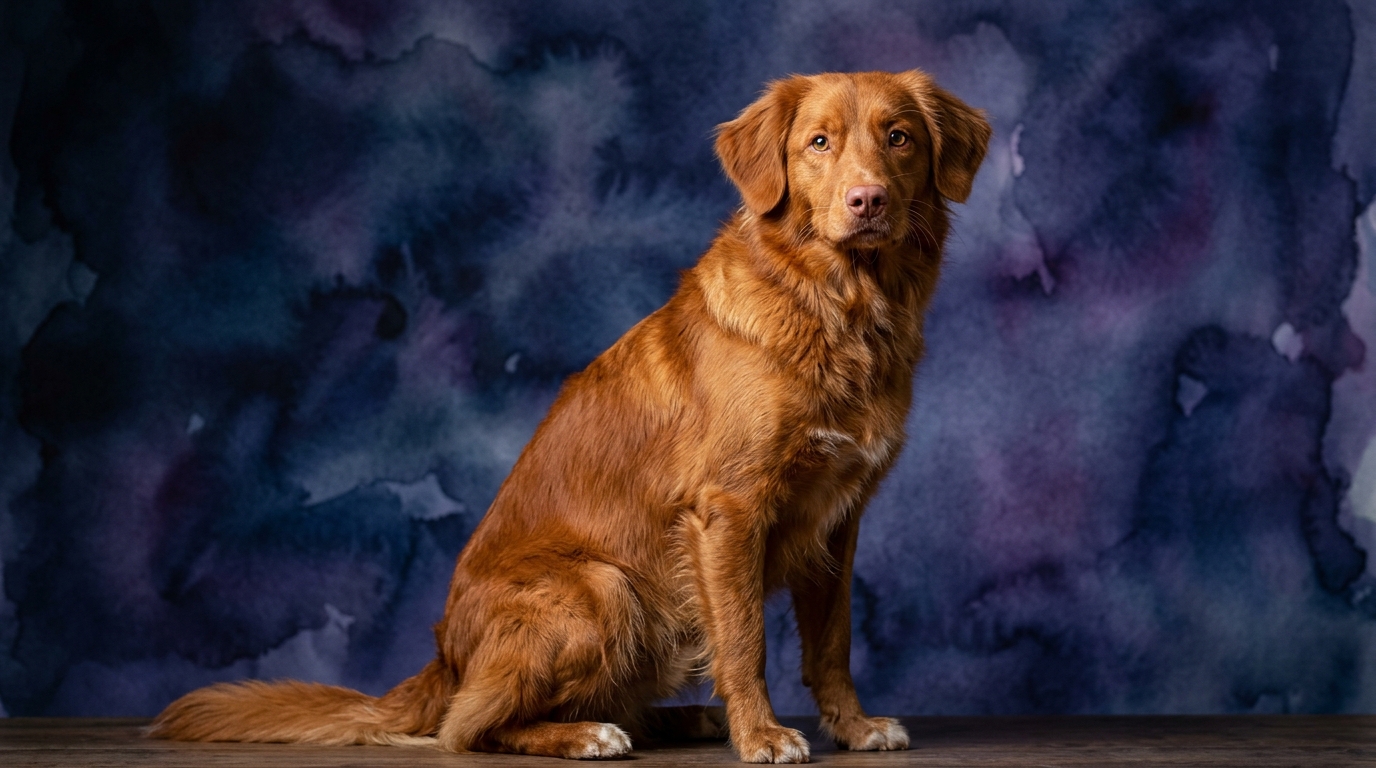
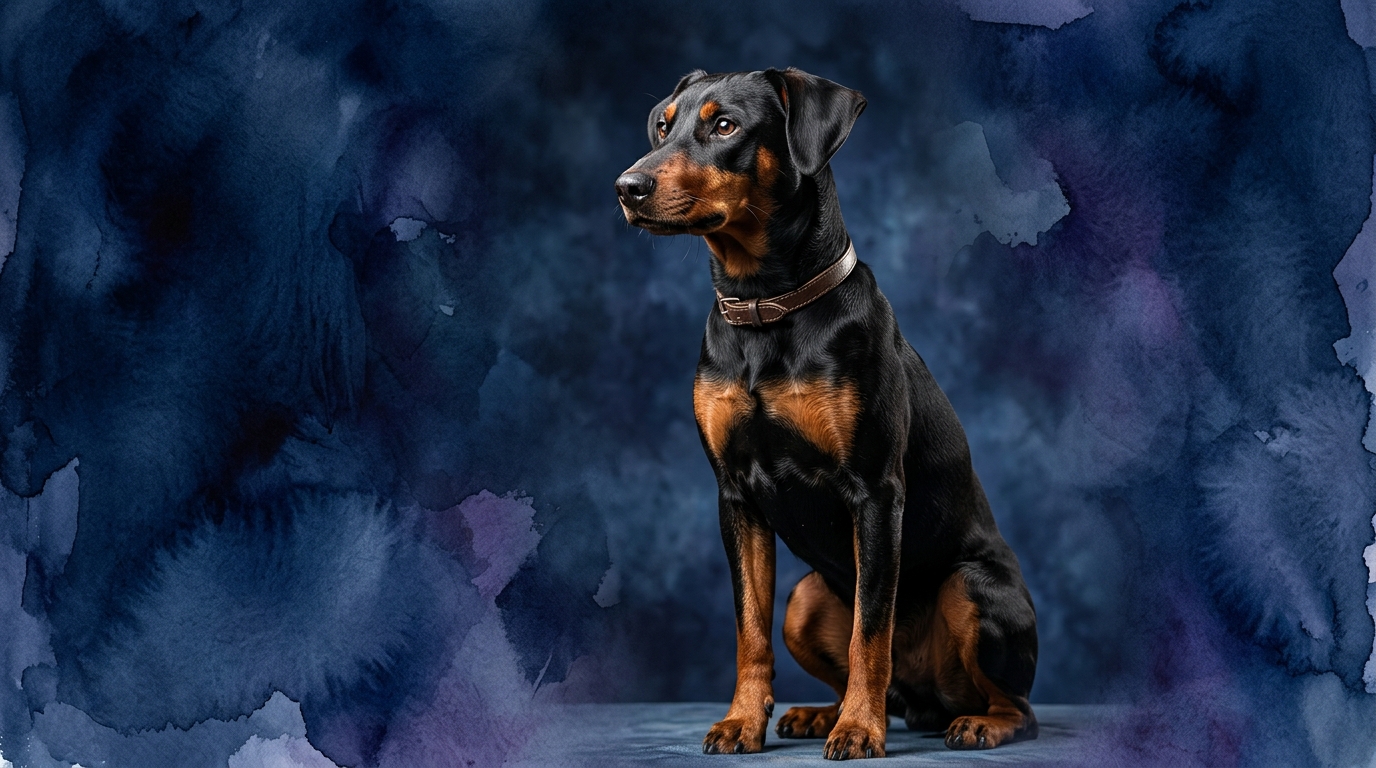
Side-by-Side IQ Profile: Toller vs. German Pinscher
At The Cosmic Pet Pet IQ Lab, both the Nova Scotia Duck Tolling Retriever and the German Pinscher register a consistent 3/5 across all five measured cognitive dimensions. This identical scoring suggests a comparable baseline capacity for learning and adaptation, yet the manifestation of these traits differs significantly due to their distinct breed purposes and temperaments. Understanding these nuances is key to appreciating their individual cognitive strengths.
Problem Solving (3/5): For the Nova Scotia Duck Tolling Retriever, a 3/5 in problem-solving often manifests in their keen ability to strategically track and retrieve game, navigating varied terrain, water conditions, and obstacles with purposeful efficiency. They excel at figuring out the most efficient path to a fallen bird or adapting their retrieving technique based on environmental changes, such as currents or dense cover, demonstrating practical, task-oriented ingenuity. Their problem-solving is intrinsically collaborative, often involving interpreting subtle handler cues to inform their approach and execute complex multi-step retrieves, showing a cognitive flexibility geared towards achieving a shared objective. Conversely, for the German Pinscher, a 3/5 indicates a robust capacity for independent thought in assessing and responding to situations, particularly concerning the security of their home and family. They might problem-solve by determining the quickest and most effective way to alert their owner to an unusual sound or by devising methods to outsmart small pests that intrude on their perceived territory. Their solutions tend to be more self-directed and driven by an inherent need for vigilance, order, and protection within their domain, often requiring quick decisions without direct human instruction.
Training Speed (3/5): A 3/5 means Tollers generally grasp new commands and routines with moderate repetition, eager to engage in activities that mimic their retrieving heritage and provide mental stimulation. Their inherent willingness to work alongside their handler, coupled with a strong desire for reinforcement (like a thrown toy, a successful retrieve, or enthusiastic praise), contributes to their notable responsiveness in structured training sessions. They learn quickly when the task aligns with their natural drives and offers an opportunity for partnership, making them rewarding students for dedicated trainers. German Pinschers also show a 3/5 training speed, indicating they learn efficiently and possess the mental acuity to understand complex instructions. However, their intelligence is often coupled with an independent and sometimes willful streak, meaning they require a clear purpose, consistent methods, and often more creative engagement to maintain focus. While they can be quick studies and grasp concepts rapidly, their compliance often hinges on whether they perceive value in the interaction or if the training is engaging and presented with confident leadership. They are not inherently 'people-pleasers' in the traditional sense, but highly capable learners when motivated correctly.
Social Intelligence (3/5): A Toller's 3/5 in social intelligence manifests in their precise ability to read handler cues during fieldwork, anticipating next steps and adapting their behavior accordingly. They also exhibit a generally amiable, though sometimes reserved, demeanor with familiar people, understanding pack dynamics within their family unit. They often gauge social situations to determine appropriate interaction levels, being polite and observant rather than overly boisterous or immediately familiar with strangers. Their social understanding is often geared towards harmonious coexistence and effective partnership. German Pinschers, with a 3/5, exhibit social intelligence through their acute awareness of their family's emotional states and their immediate environment. They are remarkably adept at discerning friend from foe, quickly assessing new people or situations for potential threats or unusual behaviors. Their social interactions are often characterized by unwavering loyalty to their inner circle and a watchful, protective stance towards outsiders, demonstrating a keen understanding of social boundaries and a nuanced ability to interpret social cues related to safety and security.
Instinctive Drive (3/5): The 3/5 instinctive drive in Tollers is profoundly tied to their retrieving and 'tolling' behaviors—the unique practice of luring waterfowl into gun range. They possess a persistent and intense drive to chase, retrieve, and carry objects, often displaying a high level of focus and endurance when engaged in these natural activities. This drive is a powerful motivator in their work, play, and training, making them tireless partners in field sports and highly enthusiastic about games involving fetch. For the German Pinscher, a 3/5 instinctive drive manifests as a strong prey drive for small vermin and a pronounced protective instinct for their home and family. They are naturally vigilant, quick to react to perceived intrusions, and possess a robust desire to patrol and maintain order within their territory. This inherent drive fuels their alert nature, their quick reflexes, and their self-appointed role as guardians, making them sensitive to their surroundings and highly attuned to potential disturbances.
Memory (3/5): Tollers' 3/5 memory allows them to retain complex retrieving patterns, scent trails, and multi-step commands over extended periods. They remember specific locations where objects were dropped, can recall intricate sequences learned during training for various dog sports, and learn routines quickly, making them highly efficient and reliable working partners in demanding environments. German Pinschers also exhibit a 3/5 memory, remembering routines, boundaries, and past experiences with people or other animals with remarkable clarity. This strong recall supports their guarding tendencies, as they precisely remember who belongs and who doesn't, and helps them learn and adapt to their environment quickly. Their ability to retain lessons, both positive and negative, makes consistent training and early socialization particularly important for shaping their behavior.
Where Nova Scotia Duck Tolling Retriever Wins Cognitively
The Nova Scotia Duck Tolling Retriever truly shines in tasks requiring collaborative problem-solving and a nuanced understanding of handler communication within a dynamic, outdoor setting. Their cognitive strength lies in their ability to interpret subtle cues—gestures, whistles, or voice commands—and apply them to complex retrieving scenarios. A Toller's superior capacity for pattern recognition in waterfowl behavior, coupled with their ability to adapt their luring dance to attract birds, demonstrates a specialized cognitive flexibility. They excel at mapping out efficient retrieval paths in varied terrain, remembering multiple fall points, and maintaining focus amidst distractions. This breed’s mental agility is particularly evident in their capacity to switch between high-energy luring and calm, patient waiting, requiring a sophisticated form of self-regulation and situational awareness that is deeply ingrained in their working heritage. Their cognitive strengths are geared towards partnership and purpose-driven activity.
Where German Pinscher Wins Cognitively
Conversely, the German Pinscher demonstrates distinct cognitive advantages in areas requiring independent judgment, environmental vigilance, and swift assessment of novel situations. Their cognitive prowess is most apparent in their innate ability to act as a discerning guardian, quickly evaluating unfamiliar sounds, sights, or individuals to determine if a threat exists. A Pinscher's memory for boundaries and routines, combined with their sharp observational skills, allows them to maintain a constant, low-level surveillance of their surroundings, often detecting subtle changes before their human companions. Their problem-solving in this context is self-initiated, focused on maintaining order and security within their home. They excel at discerning intentions and reading the energy of visitors, often making quick, decisive judgments based on limited information. This breed's cognitive strengths lean towards self-reliance and proactive protection, making them astute observers and formidable, albeit independent, decision-makers in their domain.
Which Is Easier to Train and Why
When considering ease of training, both the Nova Scotia Duck Tolling Retriever and the German Pinscher score a 3/5, suggesting they are capable learners. However, the *approach* required and their underlying motivations diverge significantly. The Toller, with its strong desire to please and inherent drive for retrieving, often appears 'easier' to train for tasks that align with its sporting instincts. They thrive on positive reinforcement, eager to engage in activities that involve toys, food, or active partnership. Their focus on the handler during work makes them highly receptive to direction, and they typically maintain enthusiasm for repetitive training sessions when the reward is clear and engaging. This collaborative spirit means they often seek to understand and execute commands as part of a shared goal.
The German Pinscher, while equally intelligent, presents a different training dynamic. Their 3/5 training speed is coupled with a more independent and self-assured temperament. They learn quickly but may not always see the immediate value in complying with every command, especially if it seems arbitrary to them. Training a Pinscher requires consistency, firm yet fair leadership, and a deep understanding of their innate desire to make their own decisions. They are not as inherently eager to please as the Toller; instead, they respond best to clear expectations, varied training routines to prevent boredom, and methods that respect their intelligence without being overly permissive. While they grasp concepts efficiently, motivating consistent compliance often demands more creativity and patience from the trainer, focusing on building a relationship based on mutual respect rather than solely on enthusiastic cooperation.
Which Suits Active Owners vs. Relaxed Owners
Neither the Nova Scotia Duck Tolling Retriever nor the German Pinscher are suited for truly 'relaxed' owners who prefer minimal engagement. Both breeds require significant mental and physical stimulation to thrive. However, the *type* of activity they excel in and prefer varies. The Toller is an ideal companion for owners who embrace structured outdoor activities and dog sports, particularly those involving retrieving, agility, or scent work. They thrive on long hikes, swimming, and engaging in repetitive, purpose-driven tasks that tap into their innate drives. Their energy is often channeled into focused, collaborative endeavors, making them perfect for active individuals or families committed to canine sports and outdoor adventures.
The German Pinscher also demands an active lifestyle, but their energy is often expressed through watchful patrolling, vigorous play, and opportunities for independent exploration within a secure environment. They are excellent for owners who enjoy brisk walks, interactive games that challenge their minds (like puzzle toys), and consistent training to channel their protective instincts. While they enjoy family time, their activity needs lean towards vigilant engagement and vigorous, often self-directed, bursts of energy rather than prolonged, repetitive tasks. They suit owners who appreciate a confident, spirited companion and are prepared to provide varied mental and physical challenges, ensuring their sharp minds and bodies remain occupied without necessarily requiring a specific 'job' like retrieving.
The Verdict
Choose the Nova Scotia Duck Tolling Retriever if you seek a highly engaged, collaborative partner for outdoor adventures and dog sports, valuing a canine companion whose cognitive strengths are geared towards working harmoniously alongside you in dynamic environments.
Opt for the German Pinscher if you appreciate an independent, vigilant companion with a sharp mind for assessing surroundings and a strong protective instinct, thriving with owners who can provide consistent guidance and varied mental stimulation.
🧠 Find Your Pet's IQ Score
Our Pet IQ Lab assessment covers 25+ tests across 5 cognitive dimensions — personalized to your breed.
Take the Full IQ Test →Frequently Asked Questions
Are Nova Scotia Duck Tolling Retrievers good with children?
Tollers are generally good with children, especially if raised with them. Their amiable nature and playful energy can make them wonderful family companions, though early socialization and supervision are always key to ensure positive interactions.
How much exercise does a German Pinscher need daily?
German Pinschers require substantial daily exercise, typically an hour or more of vigorous activity. This can include brisk walks, running, interactive play, and mental challenges to keep their sharp minds and energetic bodies well-stimulated.
Do Toller Retrievers bark a lot?
Tollers are not excessive barkers by nature, but they will use their voice to alert or express excitement, especially during play or when engaged in their retrieving work. Consistent training can help manage any potential for nuisance barking.