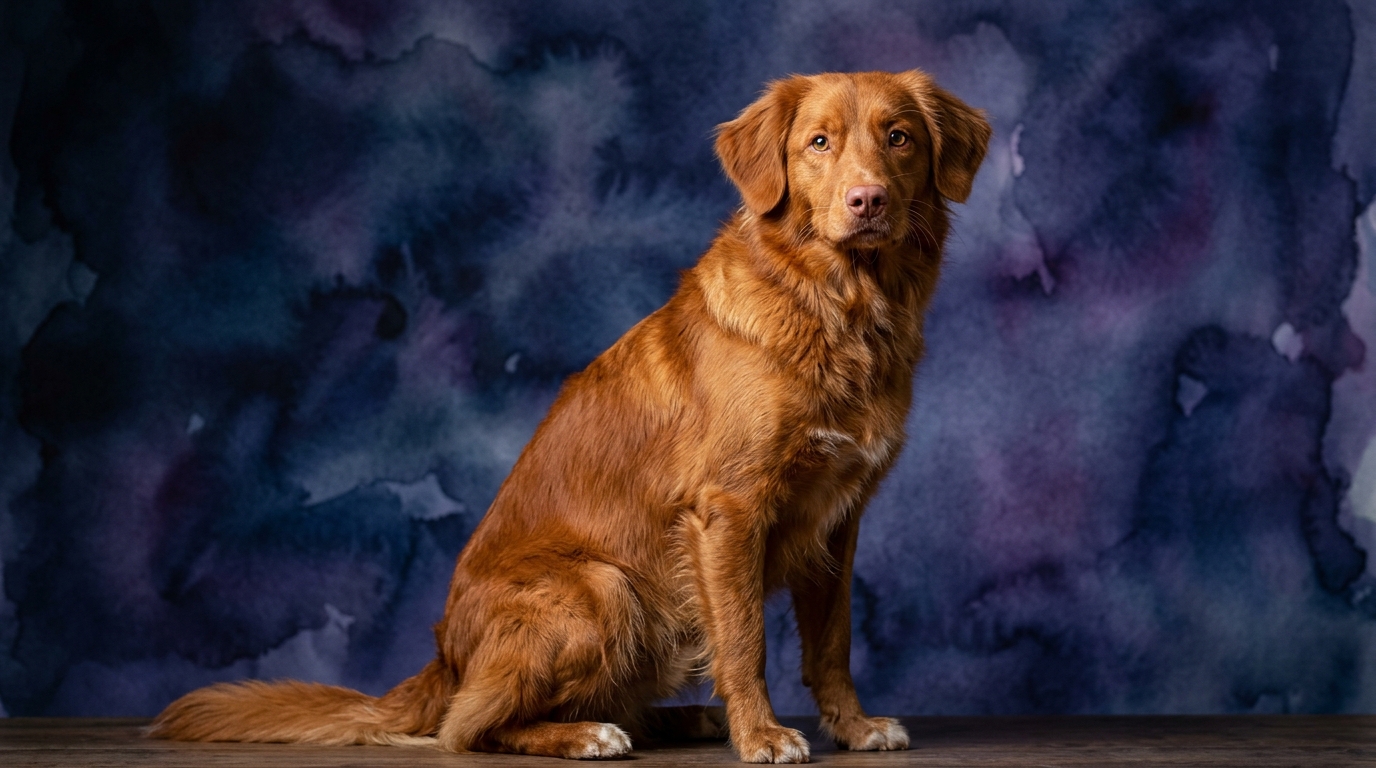
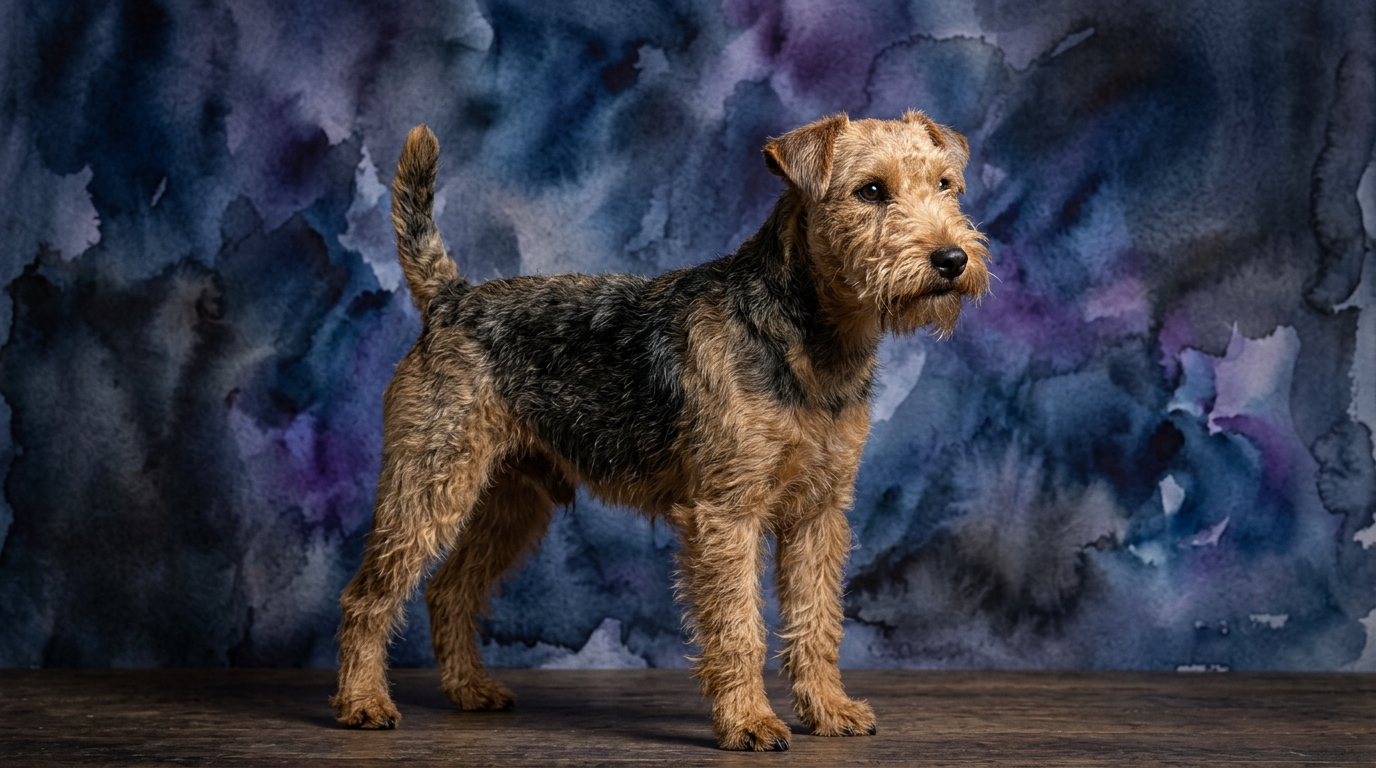
Side-by-Side Cognitive Profile: Toller vs. Lakeland Terrier
Despite their numerical parity in The Cosmic Pet Pet IQ Lab scores, the practical application of their cognitive abilities reveals breed-specific differences. Let's explore how each breed manifests its 3/5 rating across the five intelligence dimensions.
**Problem Solving (3/5):** For the Nova Scotia Duck Tolling Retriever, problem-solving often manifests in strategizing how to retrieve objects, navigating complex cover to find downed birds, or figuring out how to get a favorite toy from a challenging spot. It is a practical, goal-oriented problem-solving, intricately tied to their working drive to bring items back to their human partner. In contrast, the Lakeland Terrier's problem-solving typically involves figuring out how to access a compelling scent, outsmart a small critter, or bypass an obstacle to reach a perceived 'prey.' Their solutions are often direct, tenacious, and sometimes involve a bit of independent mischief to achieve their own objective.
**Training Speed (3/5):** Nova Scotia Duck Tolling Retrievers pick up new commands at a moderate pace, often eager to please and motivated by collaborative engagement. Repetition with positive reinforcement helps solidify new behaviors efficiently, especially when tasks align with their retrieving instincts and desire to work alongside their owner. Lakeland Terriers also learn at a moderate speed, but their independent nature and strong will mean they might require more consistent, engaging, and often creative methods to maintain focus. They might grasp a concept quickly but choose when and if to apply it based on their assessment of the situation or if their independent interests are more compelling.
**Social Intelligence (3/5):** The Toller's social intelligence shines in their ability to read human cues and work cooperatively as part of a team, often seeking interaction and guidance. They understand social hierarchies within their family unit and can adapt their behavior to different social contexts, displaying a clear desire for harmonious interaction. Lakeland Terriers exhibit social intelligence through their discerning nature, often forming strong, loyal bonds with their immediate family while being more reserved, watchful, or even aloof with strangers. They understand social dynamics but may not always be inclined to participate if it doesn't align with their independent temperament.
**Instinctive Drive (3/5):** The Nova Scotia Duck Tolling Retriever's drive is primarily focused on retrieving, swimming, and working alongside their human partners in a collaborative manner. This manifests as a strong desire to fetch, chase thrown objects, and engage in water-based activities, often with considerable stamina and focused intent. The Lakeland Terrier's drive is deeply rooted in their terrier heritage – hunting small game with fearless determination. This means a powerful instinct to dig, chase, and investigate scents, often with a singular focus on an independent pursuit of a goal, sometimes oblivious to human direction.
**Memory (3/5):** Tollers show good recall for learned commands, routines, and the location of favorite items or retrieves, which supports their ability to perform complex sequences in dog sports or field work, remembering specific cues and patterns. Lakeland Terriers also possess a good memory, particularly for routes, scents, and past experiences. They remember past interactions and learned behaviors, but their application of this memory might be influenced by their independent streak or the overwhelming pull of current environmental stimuli.
Where the Nova Scotia Duck Tolling Retriever Wins Cognitively
While both breeds score identically, the Toller's cognitive strengths lean towards cooperative engagement and sustained, human-directed tasks. Their natural inclination to retrieve and work as part of a team means they are often more adept at understanding and executing multi-step commands that involve a shared objective, such as navigating complex agility courses or performing intricate field work. They actively seek cues and adjust their approach based on human direction, demonstrating a collaborative problem-solving style.
Furthermore, the Toller's drive to please and work *with* their owner means they typically maintain focus on human-initiated training sessions for longer periods. This translates to more consistent performance in obedience or sporting events where sustained attention and responsiveness to a handler are key for success. Their cognitive energy is channeled into effective partnership.
Where the Lakeland Terrier Wins Cognitively
The Lakeland Terrier's cognitive prowess shines in scenarios demanding self-reliance and independent action. Faced with an unknown or challenging situation, they are more likely to devise their own solution, especially if it involves investigating a compelling scent, navigating a tight space, or outmaneuvering a perceived 'prey.' Their problem-solving is often less about following instructions and more about creative, independent strategy to achieve their own objective, showcasing a tenacious and resourceful mind.
Their strong instinctive drive for hunting small game also grants them a refined cognitive edge in understanding and interpreting their environment, particularly through scent. Lakelands can process and track complex scent trails with remarkable precision, demonstrating a nuanced understanding of their surroundings that might surpass a Toller's typical focus on visual and auditory cues related to retrieving. This makes them exceptional at independent exploration and tracking tasks.
Which is Easier to Train and Why?
Generally, the Nova Scotia Duck Tolling Retriever is considered more straightforward to train. Their inherent desire to work with people, combined with their strong retrieving drive, makes them highly responsive to positive reinforcement, particularly when it involves a 'job' or a fetch game. They are less likely to question a command or become easily diverted if a more interesting scent or sight presents itself, making them more predictable and eager participants in a structured training context. Their cooperative nature reduces training friction significantly.
The Lakeland Terrier, while certainly capable of learning, can be more challenging due to their independent nature and strong, ingrained prey drive. Their attention can be easily diverted by environmental stimuli, and they possess a distinct 'what's in it for me?' attitude. Training a Lakeland requires significant consistency, creativity, and patience; owners often need to convince the terrier that cooperating with their human is more rewarding than pursuing their own agenda. They might understand a command perfectly well but choose not to execute it if their terrier instincts are engaged by a more compelling distraction.
Suitability for Active vs. Relaxed Owners
Both the Nova Scotia Duck Tolling Retriever and the Lakeland Terrier decidedly lean towards owners who embrace an active lifestyle. Neither breed is suitable for truly relaxed owners, as both possess significant energy and cognitive needs that require consistent engagement to prevent boredom and potential behavioral issues.
The **Nova Scotia Duck Tolling Retriever** is ideal for owners who enjoy structured, high-energy activities like dog sports (agility, flyball, dock diving), long hikes, running, and especially water-based activities. Their energy is substantial and requires an outlet that engages both their body and their collaborative mind, often through interactive play or goal-oriented tasks performed with their human. They thrive on being a working partner.
The **Lakeland Terrier** also requires active engagement, but perhaps in a different style. They thrive with owners who appreciate energetic walks, opportunities for digging (perhaps in a designated sandpit), Earthdog trials, or engaging chase games that tap into their robust terrier instincts. Their activity needs are often more about exploration, independent pursuit, and vigorous play rather than sustained, directed work, though they can excel in many dog sports with the right motivation.
The Verdict
Select a Nova Scotia Duck Tolling Retriever if you seek a highly collaborative canine partner for dog sports, retrieving work, or extensive outdoor adventures that often involve water. They thrive with consistent, positive training and enjoy being an integral, working member of a family team.
Opt for a Lakeland Terrier if you admire a spirited, independent companion with a keen mind for exploration and problem-solving, and you are prepared for a consistent, engaging training approach. They suit owners who appreciate a dog with a strong personality and an adventurous spirit, ready for walks, sniffaris, and interactive play.
🧠 Find Your Pet's IQ Score
Our Pet IQ Lab assessment covers 25+ tests across 5 cognitive dimensions — personalized to your breed.
Take the Full IQ Test →Frequently Asked Questions
Do Tollers and Lakelands behave similarly despite identical IQ scores?
While their IQ scores are numerically identical in our lab, their behavioral expressions of intelligence differ significantly due to their breed purposes. Tollers exhibit more cooperative and task-oriented behaviors, whereas Lakelands display more independent, tenacious, and instinct-driven problem-solving.
Is one breed more prone to destructive behavior if not adequately stimulated?
Both breeds, if under-stimulated physically and mentally, can develop destructive habits. Tollers might become anxious, excessively vocal, or engage in repetitive behaviors, while Lakelands might channel their energy into digging, chewing, or excessive barking, driven by their strong terrier instincts for exploration and pursuit.
How do their social intelligence scores manifest differently in daily life?
A Toller's social intelligence often appears as a desire to interact and please their human family, readily adapting to social cues and seeking to be involved. A Lakeland's social intelligence might be seen in their discerning nature, forming deep bonds with their family but often being more reserved or selective in their interactions with outsiders, preferring their inner circle.