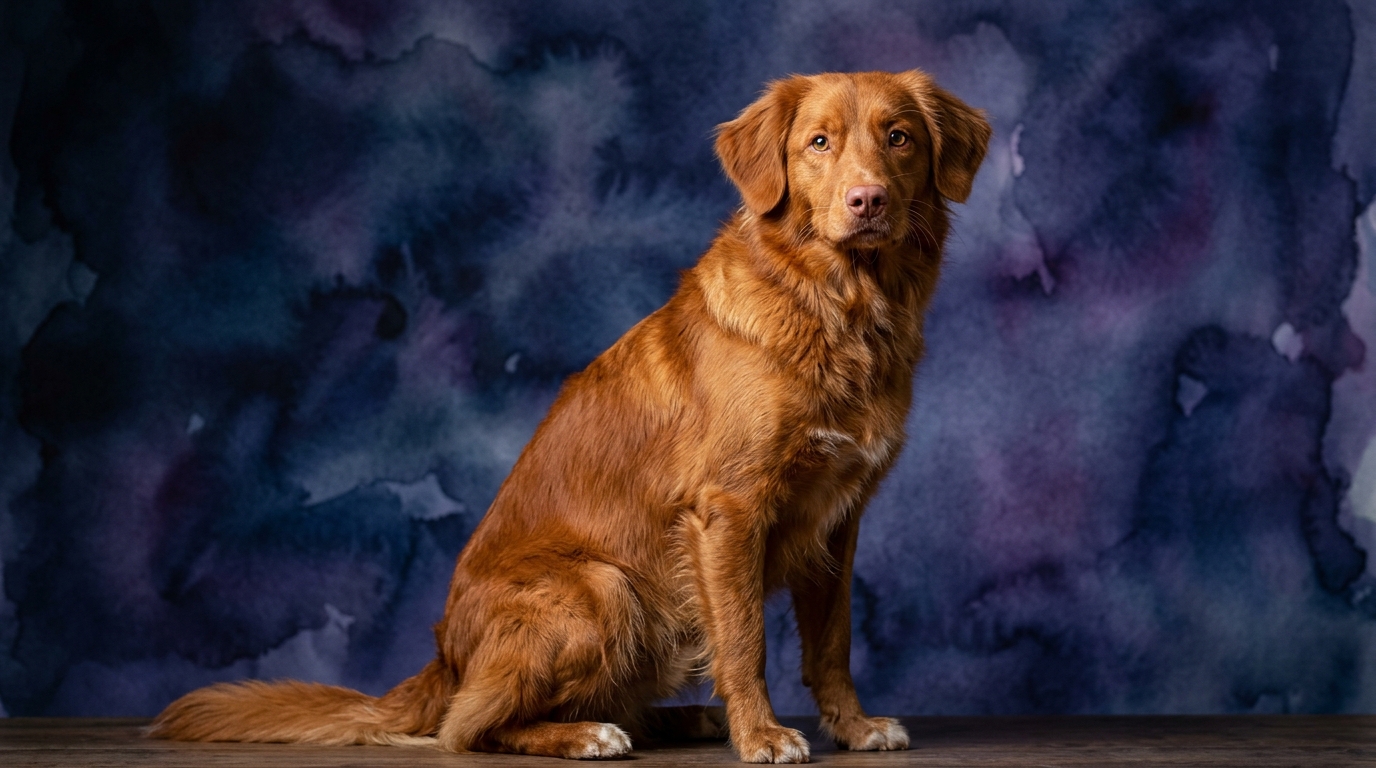
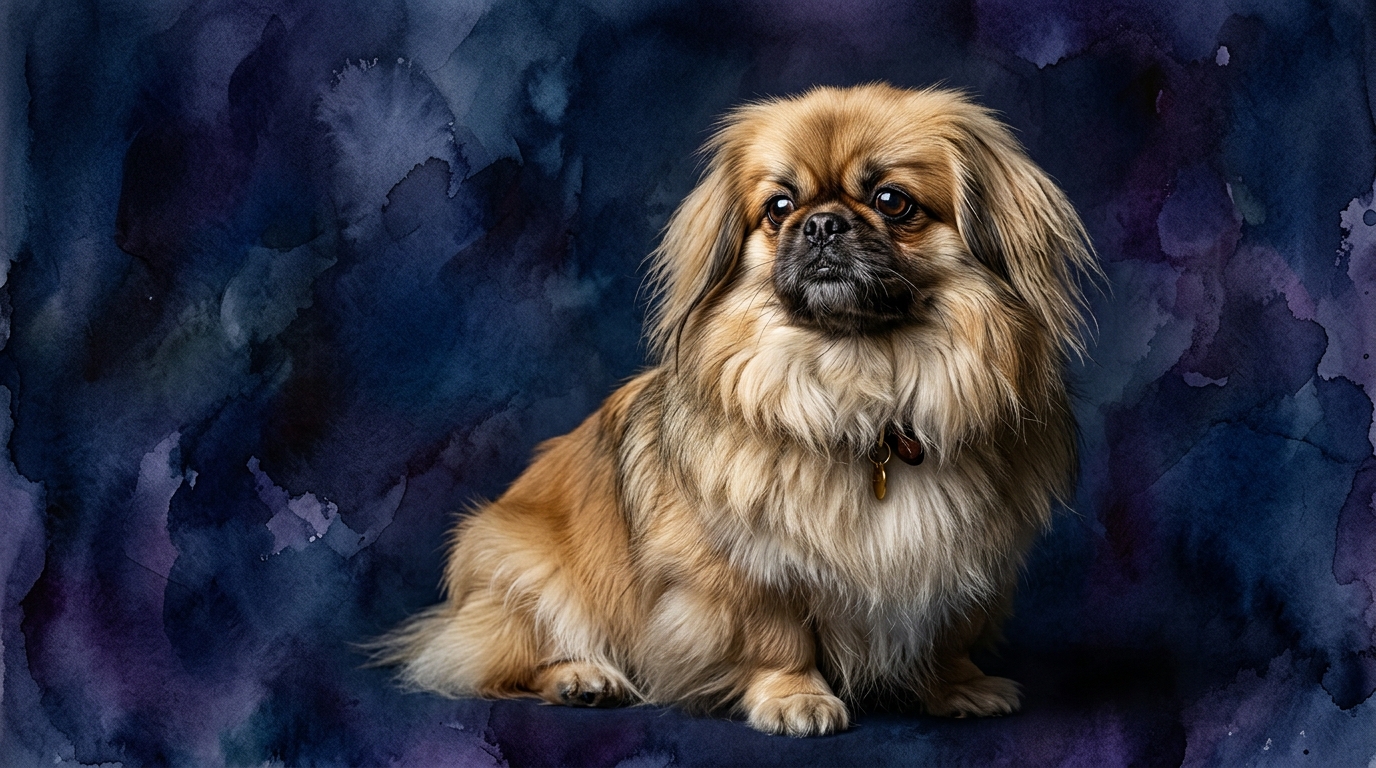
Side-by-Side Cognitive Profile: Nova Scotia Duck Tolling Retriever vs. Pekingese
Despite their divergent histories and physical forms, both the Nova Scotia Duck Tolling Retriever (Toller) and the Pekingese register a consistent 3/5 across all five cognitive dimensions in The Cosmic Pet Pet IQ Lab. This shared scoring doesn't suggest identical mental processes, but rather that each breed applies its moderate cognitive capacities in ways highly relevant to its specific purpose and lifestyle.
For the **Nova Scotia Duck Tolling Retriever**, a sporting dog by nature, their cognitive scores manifest as practical intelligence geared towards activity:
- **Problem Solving (3/5):** Tollers exhibit practical problem-solving, particularly when it involves achieving a goal like retrieving. Their ingenuity often shines in navigating complex terrain or overcoming obstacles to reach a target, rather than abstract puzzles.
- **Training Speed (3/5):** These dogs generally pick up new commands and routines at a moderate pace. Their enthusiasm for work and desire to please can make training sessions engaging, though consistency is key to solidifying learned behaviors.
- **Social Intelligence (3/5):** Tollers are attuned to human cues and social dynamics within their family unit. They can interpret moods and intentions, fostering strong bonds and responding cooperatively to their owners' directions.
- **Instinctive Drive (3/5):** Their drive is strongly rooted in their retrieving heritage. This manifests as a moderate but persistent urge to fetch, chase, and engage in activities mimicking their original purpose, requiring appropriate outlets.
- **Memory (3/5):** Tollers possess a good capacity for remembering learned commands, routines, and locations. This aids in their ability to perform multi-step tasks and recall past experiences relevant to their daily lives and training.
The **Pekingese**, a companion breed with a Coren rank of #77, applies its identical 3/5 scores in a more domestically focused, yet equally effective manner:
- **Problem Solving (3/5):** Pekingese demonstrate problem-solving in a more domestic context. They might cleverly figure out how to get attention, manipulate their environment to their comfort, or navigate household challenges, often with a touch of independent thought.
- **Training Speed (3/5):** While capable of learning at a moderate rate, the Pekingese's independent and sometimes stubborn nature can influence the perception of their training speed. They learn best with positive reinforcement and clear, consistent methods.
- **Social Intelligence (3/5):** Pekingese are highly perceptive of their human companions' emotions and routines. They form deep attachments and can communicate their needs and desires effectively through subtle body language and vocalizations, thriving on close interaction.
- **Instinctive Drive (3/5):** Their drive is primarily social and territorial. This manifests as a moderate desire for companionship, guarding their space and people, and sometimes a propensity for vocalizing when sensing perceived threats or changes in their environment.
- **Memory (3/5):** Pekingese remember their preferred routines, people, and boundaries with good recall. They can retain learned behaviors and associate specific events with outcomes, contributing to their adaptability within a structured home environment.
Where the Nova Scotia Duck Tolling Retriever Excels Cognitively
The Nova Scotia Duck Tolling Retriever's cognitive strengths distinctly emerge in scenarios demanding purposeful activity and physical engagement. Their 3/5 score in problem-solving, when paired with their inherent instinctive drive, allows them to excel at tasks requiring sequential steps and environmental navigation. For instance, a Toller might instinctively assess the most efficient path to retrieve an object from water or through dense underbrush, demonstrating practical application of their cognitive capacity. Their memory serves them well in remembering complex retrieve patterns or agility courses, allowing for consistent performance in structured sporting activities. This combination of moderate problem-solving and drive means they are often more self-motivated to engage with tasks that have a clear objective, making them adept at learning and executing complex routines for a perceived reward or purpose.
Where the Pekingese Excels Cognitively
Conversely, the Pekingese showcases its cognitive prowess in the nuances of domestic life and social interaction. Their 3/5 social intelligence score, combined with their 3/5 problem-solving, translates into a keen ability to navigate human-centric environments. A Pekingese might cleverly employ various vocalizations or body language signals to communicate specific needs or desires to their owner, demonstrating an astute understanding of household dynamics. Their memory is particularly effective in recalling preferred routines, comfort zones, and the specific behaviors that elicit desired responses from their human companions. This breed's unique blend of cognitive attributes allows them to master the art of companionship, subtly influencing their environment and interactions to ensure their comfort and social connection, often with a charming assertiveness.
Training Dynamics: Toller vs. Pekingese
While both breeds share a 3/5 training speed rating, the approach to training and the perceived ease can differ significantly due to their distinct motivations and temperaments. The Nova Scotia Duck Tolling Retriever, with its sporting background, often possesses a strong desire to work alongside its human, channeling its instinctive drive into cooperative tasks. This means that while they learn at a moderate pace, their inherent enthusiasm for fetching, tracking, and engaging in structured activities can make them seem more responsive to formal obedience and task-oriented training. They thrive on clear direction and purpose, often viewing training as a fulfilling outlet for their energy and cognitive engagement.
The Pekingese, on the other hand, approaches training with a more independent and sometimes discerning mindset. Their 3/5 training speed is present, but it's often tempered by their self-assured and companion-focused nature. They may not inherently see the value in performing repetitive obedience commands for a distant goal. Training a Pekingese often requires more patience, creativity, and a focus on positive reinforcement, making it feel like a negotiation rather than a direct instruction. They are more likely to respond when the training benefits them directly, such as earning a treat, a comfortable spot, or desired attention, rather than for the sake of the task itself. Therefore, while both can learn, the Toller's intrinsic motivation for teamwork often makes the training process feel more streamlined for complex behaviors, whereas the Pekingese requires a more tailored, relationship-based approach.
Matching Breed to Owner Lifestyle
The choice between these two breeds for active versus relaxed owners is quite clear, dictated by their historical roles and inherent energy levels. The Nova Scotia Duck Tolling Retriever is decidedly suited for active individuals or families who embrace an outdoor lifestyle. Their moderate instinctive drive and need for physical and mental engagement mean they thrive with regular, vigorous exercise, such as long hikes, runs, swimming, or participation in dog sports like agility, dock diving, or retrieving trials. Owners who can provide consistent outlets for their cognitive and physical energy will find a well-adjusted and engaging companion.
The Pekingese, by contrast, is an ideal match for relaxed owners or those living in smaller spaces, where extensive outdoor adventures are not a daily priority. Their moderate instinctive drive is primarily directed towards companionship and guarding their immediate territory, rather than prolonged physical exertion. While they enjoy short, leisurely walks and indoor play, their exercise needs are modest. Owners who appreciate a devoted, calm, and sometimes regal companion who is content with indoor activities and close proximity will find the Pekingese a perfect fit.
The Verdict
Choose the Nova Scotia Duck Tolling Retriever if you lead an active lifestyle, enjoy outdoor activities, and seek a cooperative partner for dog sports or purposeful work.
Opt for the Pekingese if you prefer a more relaxed pace, value a devoted and independent companion for indoor living, and appreciate a dog with a charmingly assertive personality.
🧠 Find Your Pet's IQ Score
Our Pet IQ Lab assessment covers 25+ tests across 5 cognitive dimensions — personalized to your breed.
Take the Full IQ Test →Frequently Asked Questions
Do Nova Scotia Duck Tolling Retrievers require a lot of mental stimulation?
Yes, their 3/5 problem-solving and instinctive drive mean Tollers benefit significantly from mental challenges. Activities like puzzle toys, scent work, and learning new tricks help channel their cognitive energy constructively and prevent boredom.
Are Pekingese difficult to socialize with other pets or strangers?
Pekingese have a 3/5 social intelligence, meaning they are capable of forming bonds, but their territorial instincts can make them discerning. Early and consistent positive socialization is crucial to help them comfortably interact with new people and other animals.
Can a Pekingese participate in dog sports despite being a toy breed?
While not built for endurance sports, a Pekingese can certainly participate in certain dog sports that suit their size and temperament, such as obedience, rally, or even some forms of trick training. Their 3/5 memory and training speed enable them to learn and enjoy these activities.