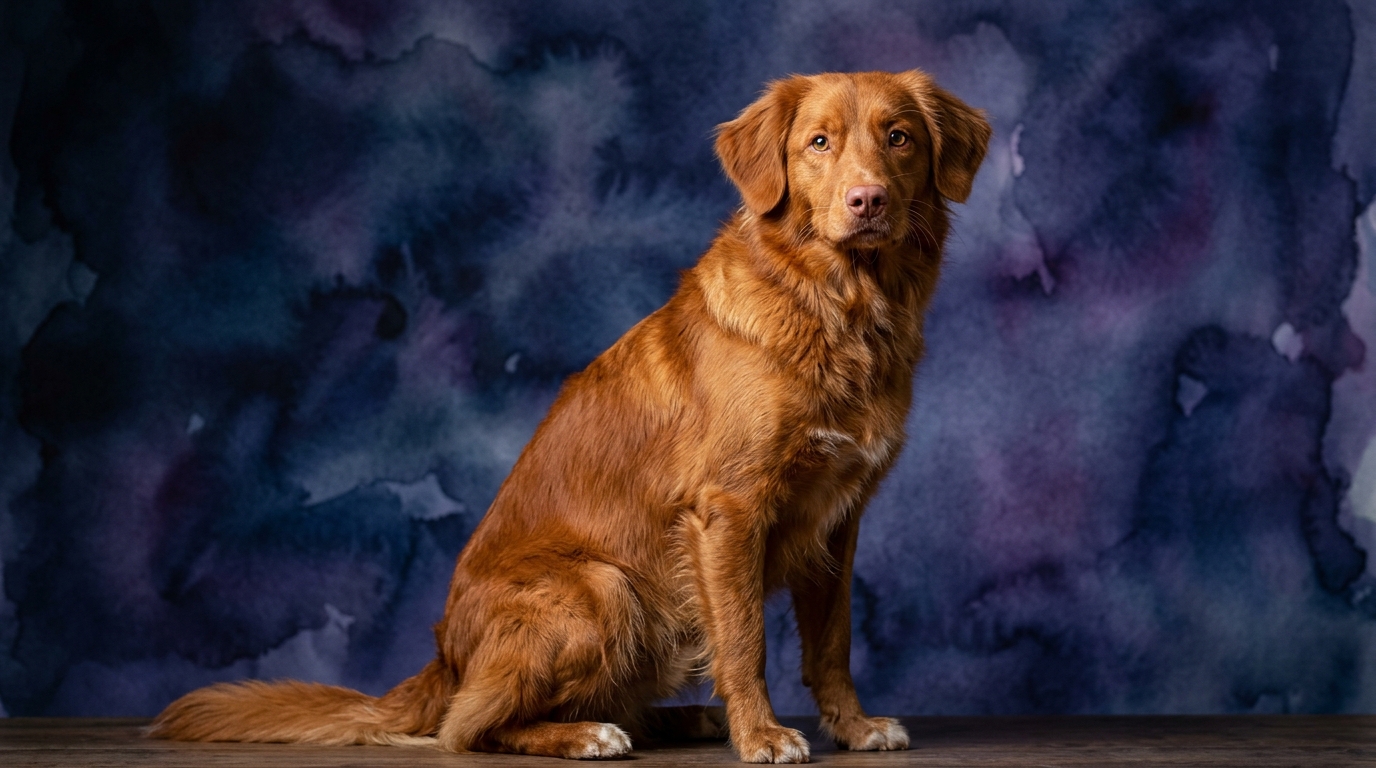

Side-by-Side IQ Profile: Unpacking the 3/5 Scores
The Cosmic Pet Pet IQ Lab assesses canine intelligence across five critical dimensions: Problem Solving, Training Speed, Social Intelligence, Instinctive Drive, and Memory. Intriguingly, both the Nova Scotia Duck Tolling Retriever (NSDTR) and the Rat Terrier (RT) register a consistent 3/5 on every single one of these metrics. While numerically identical, the practical application and behavioral expressions of these scores diverge significantly due to their fundamental breed characteristics and original working roles.
For the **Nova Scotia Duck Tolling Retriever**, a Sporting group dog, a 3/5 in **Problem Solving** typically translates to effective strategies for retrieving fallen game, navigating complex terrains, and understanding multi-step commands within a cooperative hunting context. Their **Training Speed** at 3/5 reflects a responsive nature, eager to learn new tasks and cues when taught with positive reinforcement, making them generally willing partners. Their **Social Intelligence** score of 3/5 highlights an ability to read handler body language and intentions, fostering a strong working bond, and often extending to appropriate interactions within a family unit. The 3/5 **Instinctive Drive** is heavily geared towards their retrieving heritage—a powerful urge to chase, 'toll' (lure), and bring back objects, particularly birds, often coupled with a love for water. Finally, a 3/5 in **Memory** means they are adept at retaining learned commands, remembering specific retrieves, and recalling routines associated with their work or daily life.
Conversely, for the **Rat Terrier**, a member of the Terrier group, the 3/5 score for **Problem Solving** manifests more as independent strategizing—figuring out how to access small spaces, outwit vermin, or overcome obstacles on their own terms. Their **Training Speed** at 3/5 indicates they can learn quickly, but often require engaging and varied methods to maintain focus, as their independent streak can sometimes lead to selective hearing. A 3/5 in **Social Intelligence** for a Rat Terrier often means a keen awareness of their environment and the people within it, quickly assessing situations and reacting with alertness, though perhaps with less of the handler-centric cooperation seen in a Sporting dog. Their 3/5 **Instinctive Drive** is profoundly tied to their heritage as vermin hunters—a relentless drive to dig, chase, and pursue small creatures with single-minded determination. Their **Memory** score of 3/5 allows them to remember the locations of perceived 'prey,' effective hunting routes, and the patterns of their human companions, especially when those patterns involve activity or food.
Where the Nova Scotia Duck Tolling Retriever Excels Cognitively
Despite identical scores, the Toller's cognitive strengths shine in areas demanding cooperative engagement and sustained focus on handler-directed tasks. Their 3/5 Problem Solving, when paired with their Sporting group temperament, enables them to excel at complex retrieving scenarios, such as 'marking' multiple falls or executing blind retrieves based on precise handler signals. This collaborative problem-solving, where the dog actively works *with* the human to achieve a shared goal, is a hallmark of the Toller's cognitive application. Their 3/5 Social Intelligence leans heavily into forming a deep, communicative bond with their primary handler, allowing them to anticipate cues and maintain alignment during demanding activities like agility or competitive obedience, where nuanced communication is paramount. The Toller’s memory for sequences and routines, also a 3/5, is particularly robust when those routines involve working alongside a human partner towards a specific objective, making them highly predictable and reliable in structured environments.
Where the Rat Terrier Excels Cognitively
The Rat Terrier's 3/5 cognitive profile truly shines in independent action and persistent, resourceful problem-solving. Their Problem Solving score manifests in a tenacious ability to strategize on their own, whether it's figuring out how to get to a perceived 'intruder' (a squirrel in the yard) or navigating a complex environment to achieve a self-motivated goal. This is a dog that can often find a way around, under, or through obstacles with impressive ingenuity. Their 3/5 Instinctive Drive is a powerful asset in situations requiring swift, decisive action and unwavering focus on a target, allowing them to remain undeterred by distractions when their prey drive is engaged. Furthermore, their Social Intelligence, while perhaps less focused on handler cooperation than a Toller's, excels in environmental awareness and quick assessment of novel situations, making them exceptionally alert and adaptable to changing circumstances, a crucial trait for a solo hunter.
Trainability: Nuances of the 3/5 Training Speed
Both breeds score a 3/5 in Training Speed, but their inherent temperaments dictate different training approaches. The Nova Scotia Duck Tolling Retriever, a Sporting dog, generally possesses a strong desire to please its handler and thrives on working in partnership. Their 3/5 Training Speed is coupled with an eagerness to comply and a responsiveness to positive reinforcement, making them relatively 'easier' to train for obedience and complex tasks when the trainer is consistent and engaging. They typically enjoy the process of learning and performing commands for their person, often displaying a joyful enthusiasm for training sessions. Their strong retrieving drive can be channeled effectively into various forms of cooperative work.
The Rat Terrier, conversely, brings a distinct Terrier independence to the training arena. While they are quick to grasp concepts (hence the 3/5 Training Speed), their natural inclination is often to make their own decisions. This means that while they learn rapidly, they might not always choose to *comply* if a more compelling instinct (like chasing a scent) intervenes. Training a Rat Terrier requires patience, creativity, and a deep understanding of their terrier nature. Trainers must make learning highly rewarding and fun, often incorporating games and puzzles, to keep their attention and overcome their independent streak. Their 3/5 Instinctive Drive, particularly their prey drive, needs careful management and redirection in training to prevent it from overriding learned behaviors.
Active Owners vs. Relaxed Owners: Matching Energy and Purpose
Both the Nova Scotia Duck Tolling Retriever and the Rat Terrier are energetic breeds requiring substantial physical and mental stimulation, making them unsuitable for truly 'relaxed' owners in the sense of minimal daily engagement. However, the *nature* of their activity requirements differs. The Toller, with its Sporting heritage, thrives with owners who enjoy structured outdoor activities, such as long hikes, swimming, fetching games, or participating in dog sports like agility, dock diving, or obedience. They need a 'job' to do and excel when their physical and mental exercise is purpose-driven and often involves their human partner. An active owner who enjoys a canine companion for shared adventures and cooperative tasks would find a Toller a deeply fulfilling partner.
The Rat Terrier, while equally energetic, has a different kind of drive. Their energy often manifests as bursts of intense activity, digging, chasing, and exploring. They need outlets for their formidable prey drive and enjoy opportunities to sniff, explore, and 'hunt' in a safe environment. While they can participate in dog sports, they might bring a more independent approach than a Toller. An active owner for a Rat Terrier is one who appreciates a dog with a strong will and provides ample opportunities for vigorous play, secure off-leash exploration, and mental challenges that tap into their problem-solving and hunting instincts. While both breeds demand active engagement, the Toller seeks cooperative partnership in activity, while the Rat Terrier often seeks independent exploration and chase.
The Verdict
Choose the Nova Scotia Duck Tolling Retriever if you seek an enthusiastic, cooperative partner for active, structured outdoor pursuits and enjoy a strong, communicative bond centered around shared activities and training.
Opt for the Rat Terrier if you appreciate an independent, tenacious companion with a sharp wit and boundless energy, and are prepared to engage their keen hunting instincts with varied, stimulating activities and clever training methods.
🧠 Find Your Pet's IQ Score
Our Pet IQ Lab assessment covers 25+ tests across 5 cognitive dimensions — personalized to your breed.
Take the Full IQ Test →Frequently Asked Questions
Do Nova Scotia Duck Tolling Retrievers and Rat Terriers have the same intelligence?
According to The Cosmic Pet Pet IQ Lab, both breeds score an identical 3/5 across all five cognitive dimensions; however, how this intelligence is applied and observed in their behavior differs significantly due to their distinct breed purposes and temperaments.
Which breed is easier to train for a first-time dog owner?
The Nova Scotia Duck Tolling Retriever generally proves more straightforward for a first-time owner due to their cooperative nature and eagerness to please, responding well to consistent positive reinforcement. Rat Terriers, while quick learners, require a more experienced hand to manage their independent streak and strong prey drive effectively.
Are these breeds suitable for apartment living?
Both breeds possess high energy levels, making them challenging for apartment living unless their owners are committed to providing extensive daily physical exercise and mental stimulation outside the home. Neither is truly a 'couch potato' and requires significant engagement to thrive.