
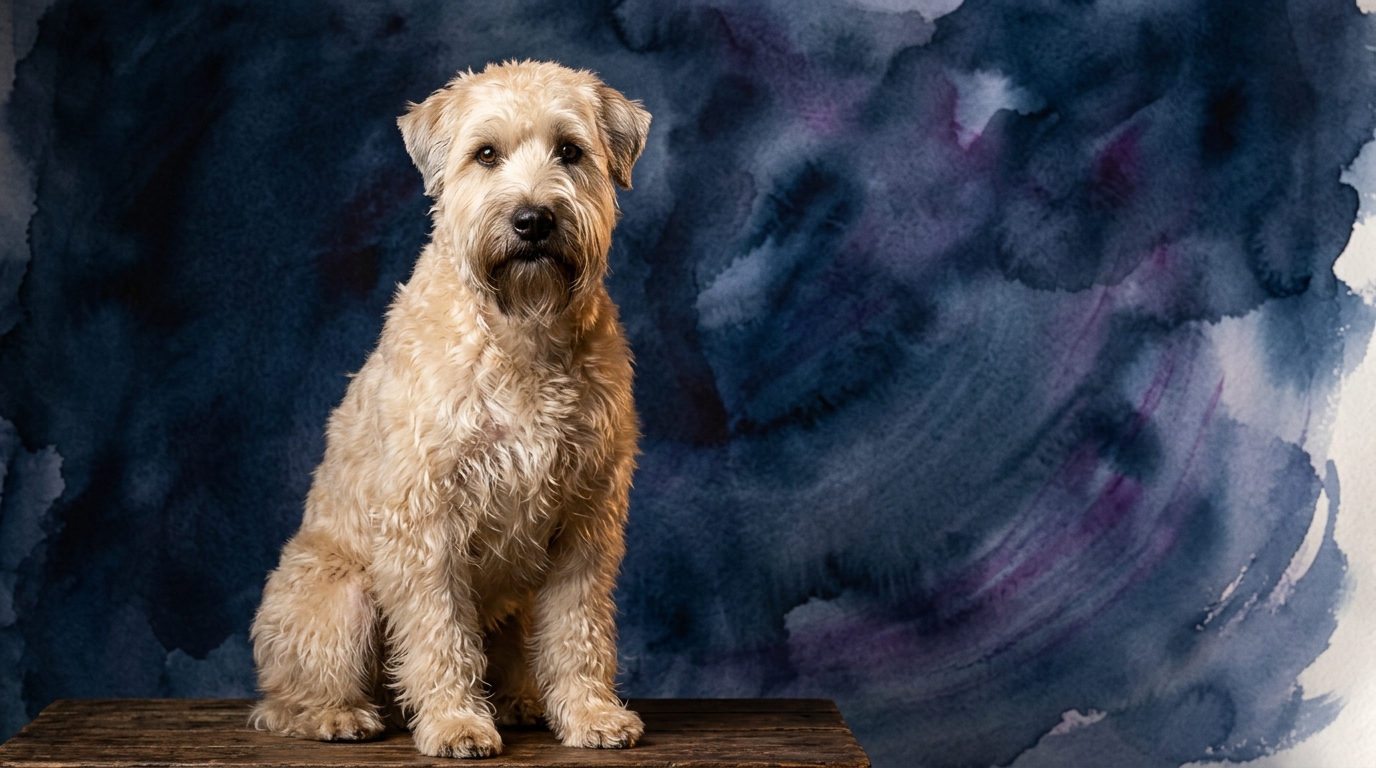
Side-by-Side IQ Profile: Toller vs. Wheaten
**Problem Solving (3/5):** For the Nova Scotia Duck Tolling Retriever, a 3/5 in problem-solving often manifests in their methodical approach to retrieving tasks. They can assess the most efficient path to a fallen decoy, navigate complex cover, or determine how to best signal a hidden retrieve to their handler, with solutions typically oriented towards cooperation. The Soft Coated Wheaten Terrier's 3/5 in problem-solving leans towards independent resourcefulness. This might involve figuring out how to access a forbidden treat, bypassing an obstacle to investigate an interesting scent, or devising strategies to engage family members in play, with solutions often serving their own curiosity or immediate desires.
**Training Speed (3/5):** Tollers exhibit a functional 3/5 in training speed, often picking up new commands and routines with a moderate number of repetitions. Their eagerness to engage with their handler and their breed's historical role in cooperative work means they generally process and integrate new information efficiently, especially when it aligns with their working drives. Wheatens also show a 3/5 in training speed, capable of learning new behaviors and commands at a comparable pace. However, their terrier independence means that while they grasp concepts quickly, their application might be more selective; they learn rapidly, but whether they choose to perform depends on their motivation and the perceived value of the task at that moment.
**Social Intelligence (3/5):** A Toller's 3/5 in social intelligence is often directed towards understanding their human companions' cues and intentions, particularly in a working context. They are adept at reading body language and vocal tones, adjusting their behavior to maintain harmony and achieve shared goals during activities like training or retrieving, generally responsive and attuned to their handler's emotional state. The Wheaten's 3/5 social intelligence is evident in their affectionate nature and "wheaten greetin'," where they actively seek engagement and connection with people. They are skilled at interpreting social dynamics within the family unit, often discerning moods and preferences, and using charming tactics to get attention or comfort, with their social interactions being more overtly expressive.
**Instinctive Drive (3/5):** The Toller's 3/5 instinctive drive is profoundly rooted in their retrieving heritage. This manifests as a strong prey drive for birds, an inherent love for water, and an innate desire to "toll" or lure waterfowl, with their drive often channeled into specific, productive tasks. For the Wheaten, a 3/5 instinctive drive encompasses a varied terrier toolkit. This includes a notable prey drive for small vermin, a historical inclination for guarding and herding on farms, and a general zest for life that translates into energetic play and exploration, with their drives often more broadly expressed and requiring careful management.
**Memory (3/5):** Tollers exhibit a 3/5 memory, particularly strong for sequences, locations, and learned commands. They can recall complex retrieving patterns, remember specific scent trails, and retain training cues over long periods, which is crucial for their specialized work, making their memory practical and task-oriented. The Wheaten's 3/5 memory is also robust, allowing them to remember routines, people, and past experiences with clarity. They can recall where forbidden items are stored, remember specific interactions with various individuals, and retain both positive and negative associations effectively, with their memory often serving their social interactions and independent pursuits.
Where the Nova Scotia Duck Tolling Retriever Wins Cognitively
While both breeds share a similar cognitive capacity rating, the Toller often demonstrates a subtle advantage in scenarios demanding sustained, cooperative focus and precise application of learned behaviors. Their historical role as a decoy and retriever instilled a cognitive framework that prioritizes working with a human towards a common goal. This translates into a more consistent application of their 3/5 problem-solving in handler-directed tasks, where they are more inclined to follow multi-step instructions and maintain attention on a singular objective over extended periods. Their social intelligence is exceptionally attuned to human cues, allowing for seamless communication during complex activities, making them appear more 'in sync' with their handler's intentions.
Where the Soft Coated Wheaten Terrier Wins Cognitively
The Wheaten Terrier, conversely, often shines in situations that call for independent initiative and adaptable, on-the-fly problem-solving. Their farm dog lineage fostered a cognitive style that values self-reliance and quick decision-making in varied, unpredictable environments. This means their 3/5 problem-solving might be more readily applied to novel situations without direct human guidance, such as figuring out a new way to interact with an object or navigate an unfamiliar space. Their instinctive drive, while potent, is also versatile, enabling them to transition between different types of engagement—from playful interaction to focused exploration—with a dynamic flexibility that can be a cognitive asset in diverse settings.
Which is Easier to Train and Why
Despite both breeds scoring 3/5 in training speed, the Nova Scotia Duck Tolling Retriever is generally perceived as easier to train for traditional obedience and cooperative tasks. This isn't due to a superior learning capacity, but rather their inherent biddability and strong desire to please their handler, which are hallmarks of many sporting breeds. Tollers find intrinsic reward in working alongside their human, making them highly motivated to engage in structured training and readily accept direction. The Soft Coated Wheaten Terrier, while equally capable of learning quickly, possesses the characteristic terrier independence. They learn rapidly but often require more compelling motivation and consistent reinforcement to ensure compliance, especially when their innate drives or personal preferences conflict with a command. Their cognitive process might include an 'is it worth it?' evaluation, leading to moments of selective deafness that require a more patient and persistent training approach.
Which Suits Active Owners vs. Relaxed Owners
Neither the Nova Scotia Duck Tolling Retriever nor the Soft Coated Wheaten Terrier are suitable for truly relaxed, sedentary owners; both require substantial mental and physical engagement. However, they suit different types of active lifestyles. The Toller thrives with owners who enjoy structured activities like retrieving games, dog sports such as agility or flyball, long hikes, and water-based adventures. Their cognitive satisfaction comes from having a 'job' and working cooperatively, needing an owner who can channel their significant instinctive drive into productive outlets. The Wheaten, while equally energetic, leans towards owners who appreciate playful, interactive engagement and can provide varied mental stimulation. Their activity needs are often met through vigorous play, challenging puzzle toys, consistent training sessions that appeal to their curiosity, and opportunities for independent exploration in secure environments. They need an owner who understands their tenacious nature and can provide outlets for their diverse drives without constant direct instruction.
The Verdict
Choose the Nova Scotia Duck Tolling Retriever if you seek a highly cooperative companion for structured activities, who thrives on working closely with you and excels in tasks requiring focused attention and biddability.
Opt for the Soft Coated Wheaten Terrier if you appreciate an independent, spirited companion with a playful streak, who learns quickly but applies their intellect with a discerning, self-reliant approach.
🧠 Find Your Pet's IQ Score
Our Pet IQ Lab assessment covers 25+ tests across 5 cognitive dimensions — personalized to your breed.
Take the Full IQ Test →Frequently Asked Questions
Do Nova Scotia Duck Tolling Retrievers bark a lot?
Tollers are known for their distinctive "Toller scream," a high-pitched vocalization of excitement or frustration, especially when anticipating a retrieve or during intense play. While not constant barkers, they are expressive and will use their voice to communicate their feelings and needs.
Are Soft Coated Wheaten Terriers good with children?
Soft Coated Wheaten Terriers can be wonderful family companions, often displaying great affection and patience with children, especially those they grow up with. Their playful and energetic nature makes them engaging playmates, though supervision is always recommended with any dog-child interaction due to their spirited energy.
How much exercise do these breeds need daily?
Both breeds are energetic and require significant daily exercise. A Toller typically needs at least an hour to 90 minutes of vigorous activity, often involving retrieving, swimming, or running. Wheatens also need an hour or more of energetic play, walks, or training to satisfy their mental and physical demands and prevent boredom.