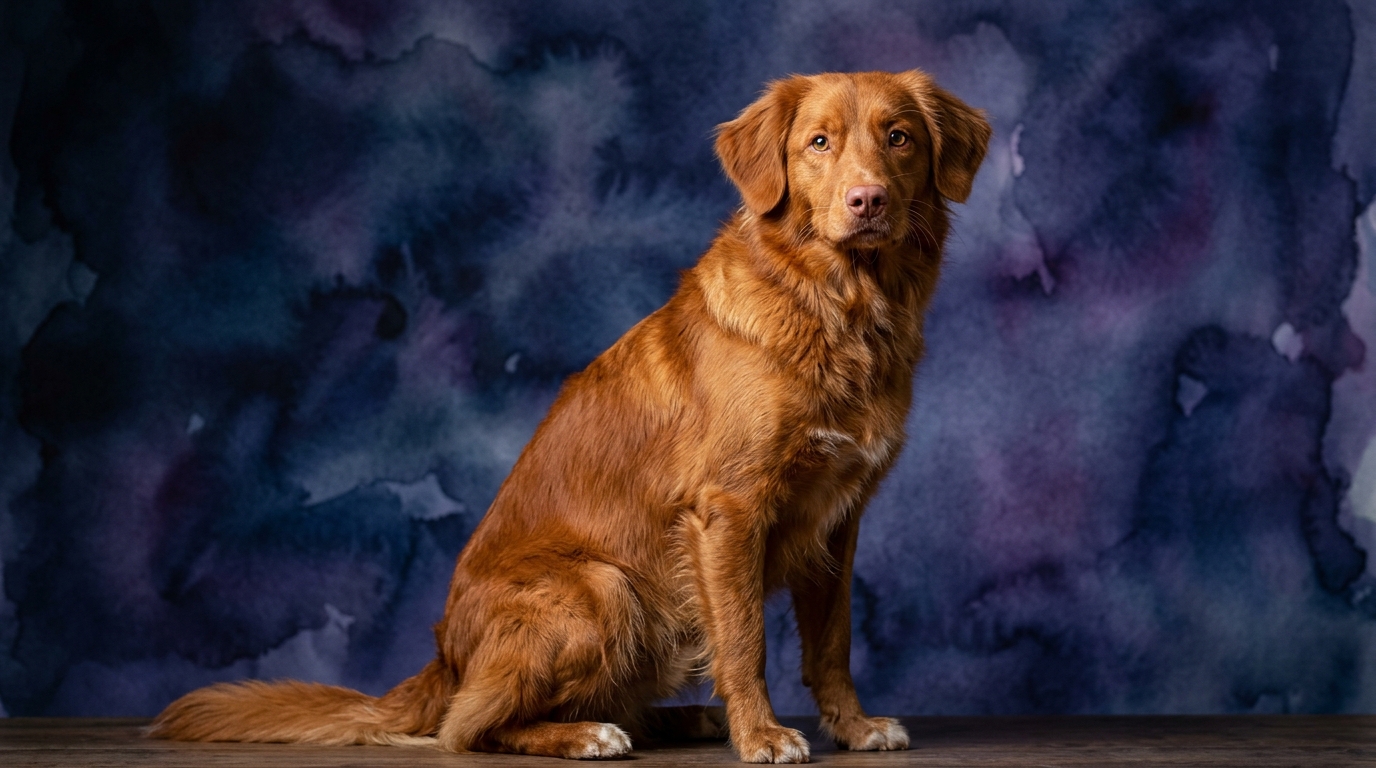
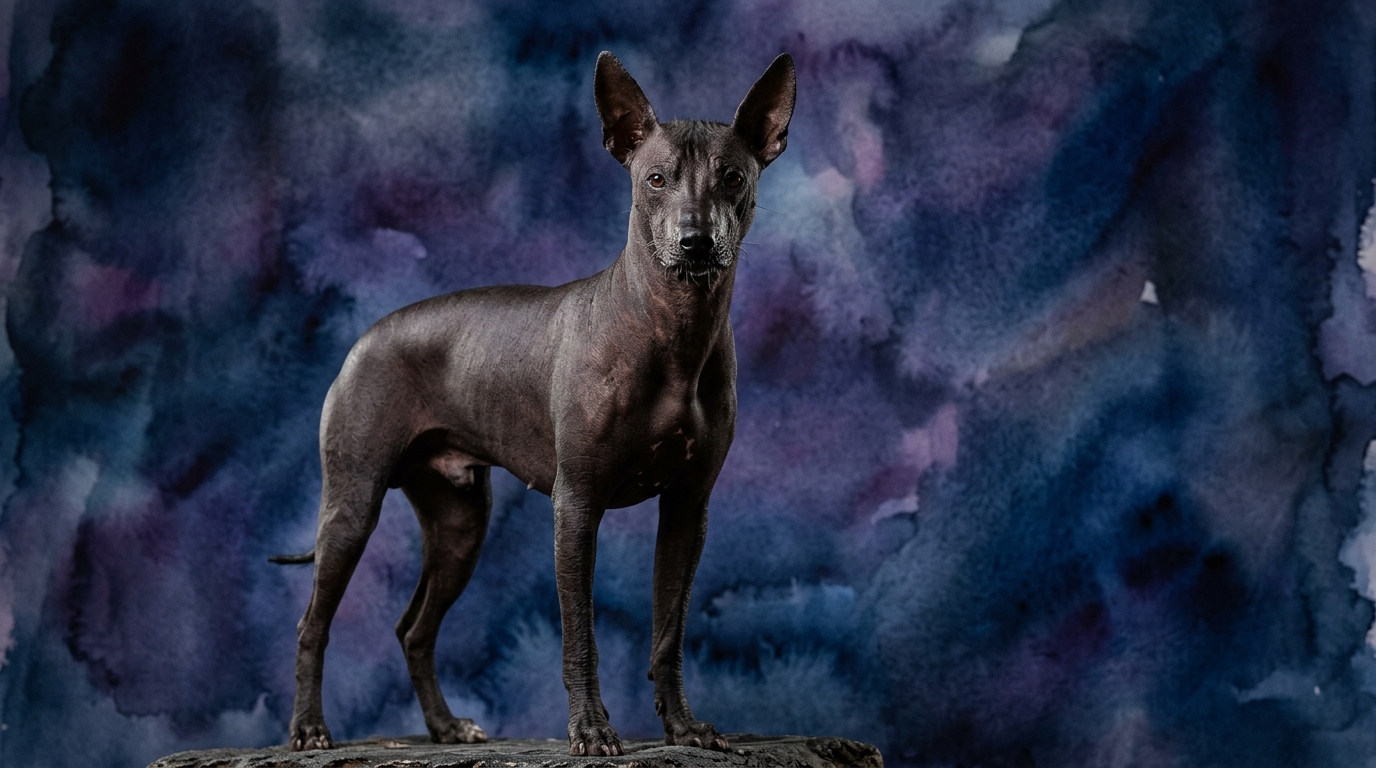
Side-by-Side IQ Profile: Toller vs. Xolo
The Cosmic Pet Pet IQ Lab assesses canine intelligence across five key dimensions, and for both the Nova Scotia Duck Tolling Retriever and the Xoloitzcuintli, each dimension is rated at 3/5. This identical numerical score, however, belies the distinct ways their cognitive strengths manifest, deeply influenced by their breed purposes and ancestral roles.
For the **Nova Scotia Duck Tolling Retriever**, a sporting dog, their Problem Solving (3/5) is evident in their ability to strategize the unique “tolling” behavior—luring waterfowl by playful movements, adapting to the birds' reactions and environmental shifts. Their Training Speed (3/5) reflects a moderate responsiveness to commands, particularly when tasks involve a clear objective and reward, such as retrieving. Social Intelligence (3/5) centers on their collaborative relationship with a handler, accurately interpreting cues during a hunt, though they are generally amicable. Their Instinctive Drive (3/5) is strongly rooted in prey drive, a keen desire to retrieve, and a natural affinity for water. Memory (3/5) is crucial for recalling specific marks, retrieving sequences, and handler instructions over extended periods in the field, making them effective working partners.
The **Xoloitzcuintli**, an ancient companion and guardian breed, exhibits its Problem Solving (3/5) in discerning complex social dynamics within the family unit, strategizing for comfort or attention, or assessing potential threats in their environment. Their Training Speed (3/5) indicates they learn at a moderate pace, yet their independent nature means compliance isn't always immediate; they require patient, positive reinforcement to build trust and cooperation. Social Intelligence (3/5) for a Xolo is characterized by profound loyalty and emotional attunement to their core family, coupled with a distinct wariness towards strangers. Instinctive Drive (3/5) leans towards guarding, a strong pack mentality within their human family, and sometimes an independent hunting instinct for small vermin, rather than cooperative retrieving. Memory (3/5) is robust for remembering routines, people, and past experiences, contributing to their discerning and sometimes cautious nature.
Where the Nova Scotia Duck Tolling Retriever Wins Cognitively
The Toller's cognitive strengths are deeply intertwined with its working heritage, specifically its unique “tolling” behavior. This involves a complex sequence of playful movements along the shoreline, designed to mimic a fox and lure curious ducks within range of a hunter. This isn't a simple instinct; it requires adaptive problem-solving (3/5) to adjust movements based on the ducks' reactions and environmental factors, demonstrating a sophisticated understanding of cause and effect in a dynamic, natural setting. Their strong instinctive drive (3/5) for retrieving, combined with a willingness to work collaboratively, allows them to excel in tasks requiring sustained focus and repetition, such as competitive obedience or agility. Toller memory (3/5) shines in its ability to recall multiple “marks”—the precise locations where birds have fallen—and execute a systematic retrieve, often navigating challenging terrain and water. This specific application of memory, integrated with their physical prowess and handler communication, provides a distinct cognitive advantage in tasks demanding sequential processing and environmental navigation for a defined goal.
Where the Xoloitzcuintli Wins Cognitively
The Xoloitzcuintli's cognitive advantages stem from its ancient role as a discerning companion and protector, leading to a nuanced social intelligence (3/5) that is less about broad friendliness and more about deep, selective bonding. They excel in reading the subtle emotional cues of their immediate family, often anticipating needs or moods with remarkable accuracy. This translates into a sophisticated form of problem-solving (3/5) within the domestic sphere, such as finding creative ways to initiate comfort or alert family members to perceived anomalies in their environment. Their instinctive drive (3/5) for guarding is not merely reactive; it involves a cognitive assessment of strangers and situations, demonstrating a capacity for independent judgment rather than blind obedience. Xolos possess a remarkable memory (3/5) for past interactions, both positive and negative, which informs their approach to new people and experiences, making them highly attuned to safety and social boundaries. This combination of deep familial attachment, discerning judgment, and a memory for social history gives the Xolo an edge in complex domestic and protective roles where nuanced social understanding is paramount.
Training Dynamics: Toller's Eagerness vs. Xolo's Independence
When considering ease of training, the Nova Scotia Duck Tolling Retriever generally presents a more straightforward path for the average owner. Their sporting background has instilled a moderate training speed (3/5) coupled with a strong desire for engagement, particularly when tasks involve retrieving or movement. Tollers are often eager to please their handlers, finding satisfaction in successful completion of tasks and positive reinforcement. Their instinctive drive (3/5) is readily channeled into structured activities like obedience, agility, or scent work, making them responsive to command and willing to repeat behaviors for a reward. This inherent biddability means that while consistency is still vital, Tollers are often more forgiving of minor training inconsistencies and generally quicker to offer desired behaviors.
In contrast, the Xoloitzcuintli, with its equally rated training speed (3/5), approaches training with a different mindset. Their ancient, independent spirit means they learn quickly but may not always see the immediate benefit in complying with every command. Training a Xolo requires exceptional patience, understanding of their sensitive nature, and a focus on building a strong, trusting relationship. They are less driven by a desire to please and more by their own internal motivations, meaning an owner must make training rewarding and engaging from the Xolo's perspective. Their social intelligence (3/5) makes them highly attuned to their handler's emotions, so harsh methods are counterproductive; positive reinforcement and a gentle approach yield the best results, albeit sometimes at a slower pace for consistent, reliable responses in varied environments.
Lifestyle Match: Active Companion vs. Discerning Guardian
For the active owner seeking a canine partner for adventures and structured activities, the Nova Scotia Duck Tolling Retriever is typically the more fitting choice. Their inherent energy levels and strong instinctive drive (3/5) demand significant physical exercise and mental engagement. Tollers thrive on activities like long hikes, swimming, retrieving games, and dog sports such as agility, flyball, or dock diving. Their problem-solving (3/5) and memory (3/5) capabilities are best utilized when given complex tasks or training challenges that tap into their natural abilities. An owner who can dedicate time to daily vigorous exercise and consistent, engaging training will find a Toller to be a joyful and fulfilled companion.
Conversely, the Xoloitzcuintli can adapt better to a more relaxed owner, provided their unique social and psychological needs are met. While capable of bursts of activity, Xolos do not typically require the same intensity or duration of exercise as a Toller. Their social intelligence (3/5) and strong memory (3/5) mean they flourish in a home environment where they receive ample affection, consistent routines, and deep social bonding with their family. They are content with moderate daily walks and interactive play, but truly thrive on mental stimulation that comes from being an integral part of family life and having their discerning nature respected. Relaxed owners who appreciate a dog's independent spirit, value quiet companionship, and are prepared to manage a protective, sometimes reserved temperament will find a devoted Xolo.
The Verdict
Choose the Nova Scotia Duck Tolling Retriever if you desire an active, task-oriented companion eager to engage in structured training and outdoor adventures, thriving on purpose and cooperative work.
Opt for the Xoloitzcuintli if you seek a deeply loyal, discerning companion who offers quiet companionship and protection, valuing a strong family bond and nuanced social interactions over constant activity.
🧠 Find Your Pet's IQ Score
Our Pet IQ Lab assessment covers 25+ tests across 5 cognitive dimensions — personalized to your breed.
Take the Full IQ Test →Frequently Asked Questions
Do Nova Scotia Duck Tolling Retrievers bark a lot?
Tollers can be quite vocal, using barks, whines, and their characteristic 'Toller scream' to express excitement or alert their owners. This is part of their expressive nature and can be managed with consistent training.
Are Xoloitzcuintli good with children?
Xolos can be excellent with children within their own family, often forming strong, protective bonds, but their sensitive and discerning nature means they may be reserved or wary of unfamiliar children. Early socialization and supervision are crucial.
Which breed is more adaptable to apartment living?
The Xoloitzcuintli is generally more adaptable to apartment living due to their moderate exercise needs and preference for close family proximity, provided they receive regular walks and mental enrichment. Tollers, with their higher energy and drive, typically require more space and outdoor access.