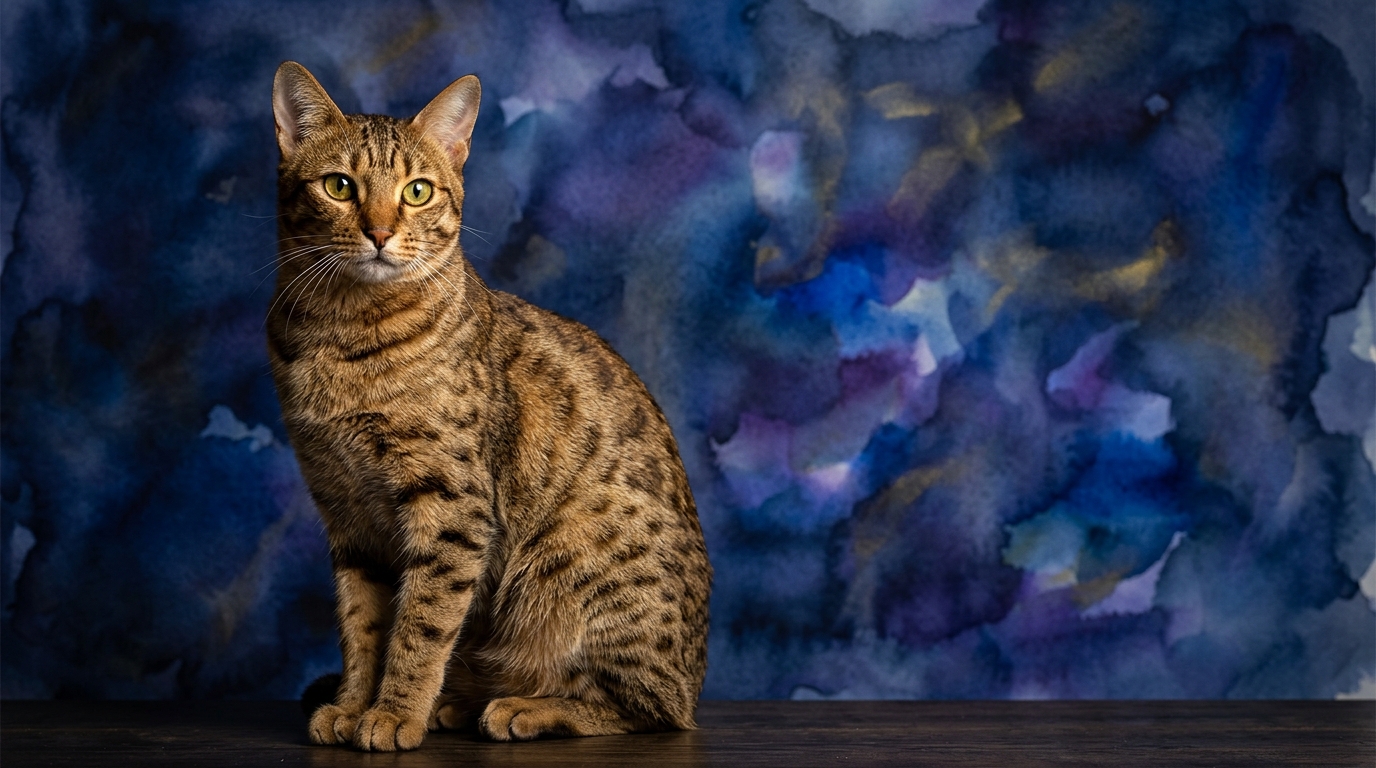
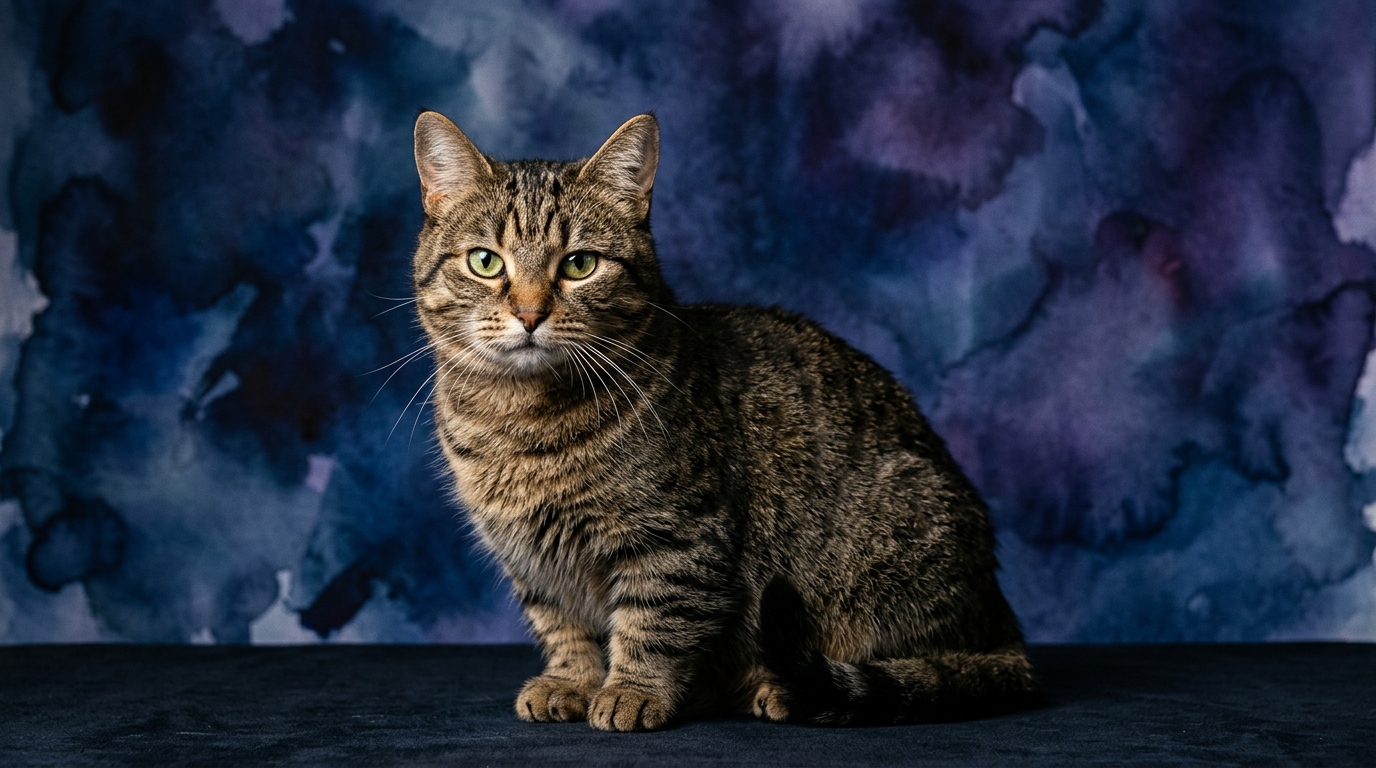
Side-by-Side Cognitive Profiles: Ocicat vs. Munchkin
The Cosmic Pet Pet IQ Lab offers a detailed look into the cognitive dimensions of various breeds, and the Ocicat presents a profile marked by agility and engagement. For the Ocicat, Problem Solving registers at 4/5, indicating a cat adept at navigating complex environments, figuring out how to access desired objects, or understanding cause-and-effect relationships in their surroundings. Their Training Speed, an impressive 5/5, suggests a remarkable capacity for learning new commands, tricks, or routines with minimal repetition. Social Intelligence, at 4/5, points to a feline that keenly understands human cues and social dynamics, often seeking interaction and forming strong bonds. An Instinctive Drive of 4/5 means they possess a robust natural inclination for hunting, exploring, and engaging with their environment, which translates into an active and curious disposition. Finally, their Memory, also 4/5, allows them to retain learned behaviors, recognize individuals, and recall experiences effectively over time.
In contrast, the Munchkin displays a consistently moderate cognitive profile across all dimensions, pointing to a balanced and generally adaptable demeanor. Their Problem Solving ability rates 3/5, suggesting they can tackle straightforward puzzles and adapt to routine changes, though they may not actively seek out complex mental challenges. Training Speed, at 3/5, indicates they are receptive to learning and can master new behaviors with consistent, positive reinforcement, albeit at a more relaxed pace than some more driven breeds. Social Intelligence at 3/5 means they are generally affable and enjoy companionship, capable of reading basic human emotions and responding appropriately, without necessarily demanding constant deep interaction. An Instinctive Drive of 3/5 implies a healthy interest in play and exploration, but without the intense focus or relentless energy seen in cats with higher scores. Their Memory, also 3/5, is sufficient for everyday recognition of people, places, and routines, ensuring a reliable and predictable companion.
Where the Ocicat Demonstrates Cognitive Advantage
The Ocicat's cognitive profile distinctly outperforms the Munchkin in areas demanding higher mental agility and drive. With a Problem Solving score of 4/5, Ocicats are more likely to manipulate objects, open cabinets, or strategize to reach high places, showcasing a persistent intellectual curiosity. Their 5/5 Training Speed means they absorb information rapidly, making them exceptionally responsive to clicker training for complex tricks or even leash walking, a feat that might require significantly more patience with other breeds. This rapid learning extends to understanding household rules and boundaries with impressive speed. Furthermore, their 4/5 Social Intelligence allows them to pick up on subtle human emotional shifts, often responding with comforting purrs or playful nudges, indicating a deeper understanding of social cues than a cat with a moderate score. Their robust 4/5 Instinctive Drive fuels their engagement with interactive toys and environmental enrichment, ensuring they are always seeking out new experiences and challenges, rather than passively observing their surroundings.
Where the Munchkin's Cognitive Traits Offer Unique Benefits
While the Munchkin's cognitive scores are consistently moderate, this balanced profile offers its own distinct advantages, particularly for owners seeking a less demanding intellectual presence. A 3/5 in Problem Solving means Munchkins are less likely to become frustrated by complex puzzles, preferring straightforward interactions and predictable routines; they are content with simpler enrichment that doesn't require intricate planning or persistent manipulation. Their moderate 3/5 Instinctive Drive translates to a less intense need for constant 'hunting' simulations or exhaustive play sessions, making them well-suited to calmer indoor environments where extreme athleticism or relentless exploration might be overwhelming. This balanced drive often results in a more placid demeanor, reducing the likelihood of boredom-induced mischief that can sometimes arise from a highly driven cat needing constant mental stimulation. Moreover, their consistent 3/5 across all dimensions suggests a predictable and agreeable companion, one whose cognitive needs are met with relatively standard interaction and enrichment, fostering a harmonious household without the constant need for advanced engagement.
Training Efficacy: Ocicat's Rapid Learning vs. Munchkin's Steady Pace
When it comes to training, the Ocicat clearly holds an advantage with its exceptional 5/5 Training Speed compared to the Munchkin's 3/5. Ocicats possess a keen desire to engage with their human companions and a quick grasp of new concepts, often requiring only a few repetitions to master a command like 'sit' or 'stay.' This rapid assimilation makes them highly rewarding subjects for trick training, agility courses, or even complex behavioral shaping. Their higher Problem Solving and Social Intelligence further enhance this, as they actively try to understand what is being asked of them and delight in the interaction. The Munchkin, while trainable, approaches learning at a more deliberate pace. They will respond to consistent positive reinforcement and clear cues, but owners should anticipate a longer learning curve and more frequent practice sessions. Their moderate drive means they may not always be as eager to participate in extended training sessions, requiring a more patient and adaptable approach from their human counterparts.
Matching Feline Intellect to Owner Lifestyle
The distinct cognitive profiles of the Ocicat and Munchkin make them suitable for different owner lifestyles. The Ocicat, with its high Problem Solving, Training Speed, and Instinctive Drive, thrives with active owners who enjoy engaging their pets in mentally stimulating activities. These cats benefit from interactive play, puzzle feeders, and opportunities to learn new tricks or explore safe outdoor spaces. Owners who appreciate a cat that actively participates in household life, often initiating play or seeking interaction, will find a fulfilling companion in an Ocicat. Their cognitive makeup demands consistent mental engagement to prevent boredom and channel their considerable energy constructively. Conversely, the Munchkin, with its uniformly moderate cognitive scores, is an excellent match for relaxed owners seeking a more laid-back companion. These cats are content with simpler play, routine interactions, and a generally predictable home environment. They don't typically demand intense mental challenges or constant stimulation, making them ideal for individuals or families who prefer a quiet presence that is affectionate without being overly demanding. Their moderate social intelligence means they enjoy companionship without needing to be the constant center of attention, fitting seamlessly into a calmer rhythm of life.
The Verdict
Choose an Ocicat if you are an active, engaged owner eager to provide consistent mental stimulation and enjoy a highly trainable, interactive feline companion.
Opt for a Munchkin if you prefer a more relaxed lifestyle and desire a predictable, affectionate cat whose moderate cognitive needs are easily met with standard enrichment and routine.
🧠 Find Your Pet's IQ Score
Our Pet IQ Lab assessment covers 25+ tests across 5 cognitive dimensions — personalized to your breed.
Take the Full IQ Test →Frequently Asked Questions
Do Ocicats require significant mental enrichment?
Yes, with a 4/5 Problem Solving and 4/5 Instinctive Drive, Ocicats thrive on consistent mental enrichment. They benefit from puzzle toys, interactive play, and opportunities to learn new skills to keep their minds engaged and prevent boredom.
Are Munchkins difficult to train due to their lower scores?
Munchkins are not difficult to train, but their 3/5 Training Speed means they learn at a more moderate pace than some breeds. Patience, consistency, and positive reinforcement methods are highly effective for teaching them new behaviors.
Which breed is more likely to engage in complex play?
The Ocicat, with its 4/5 Instinctive Drive and 4/5 Problem Solving, is significantly more likely to engage in complex, interactive play that mimics hunting or requires strategic thinking. Munchkins enjoy play, but typically prefer simpler, less demanding activities.