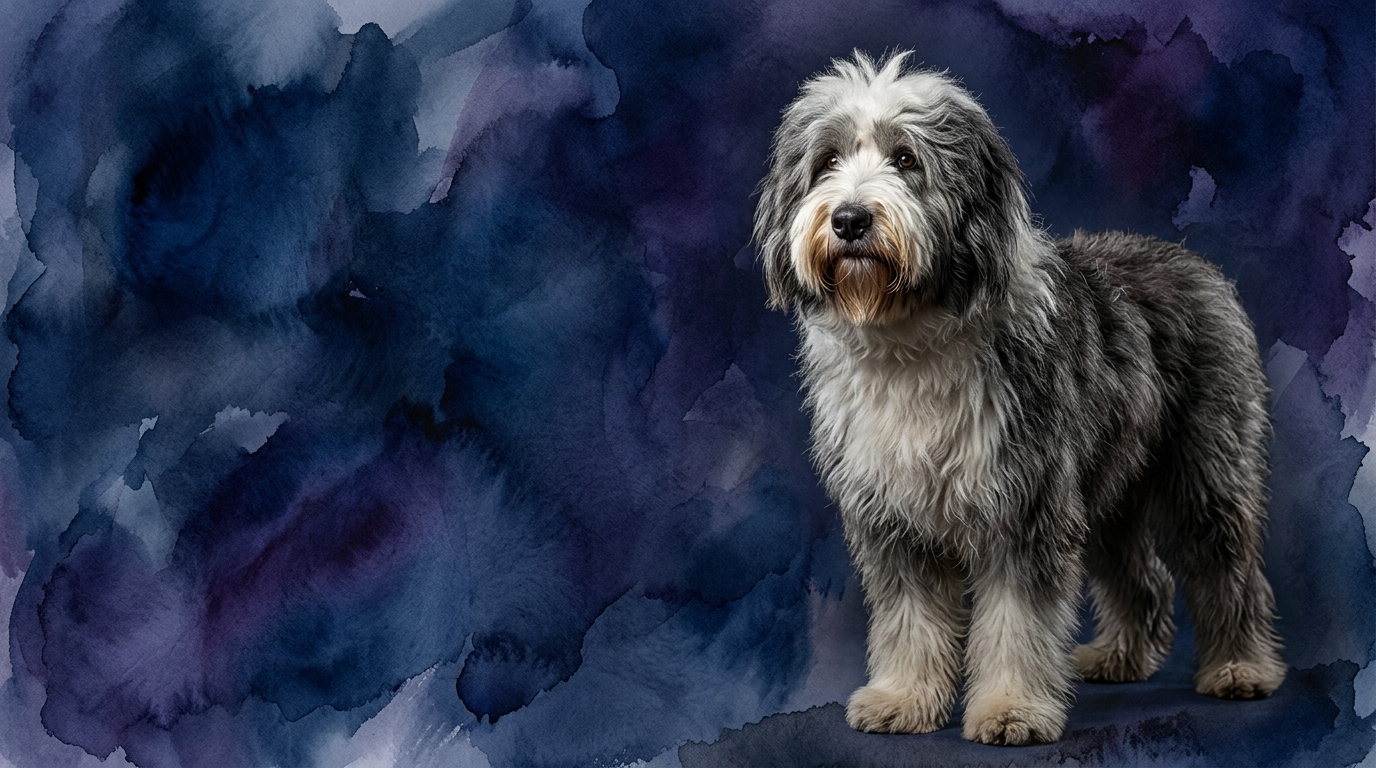
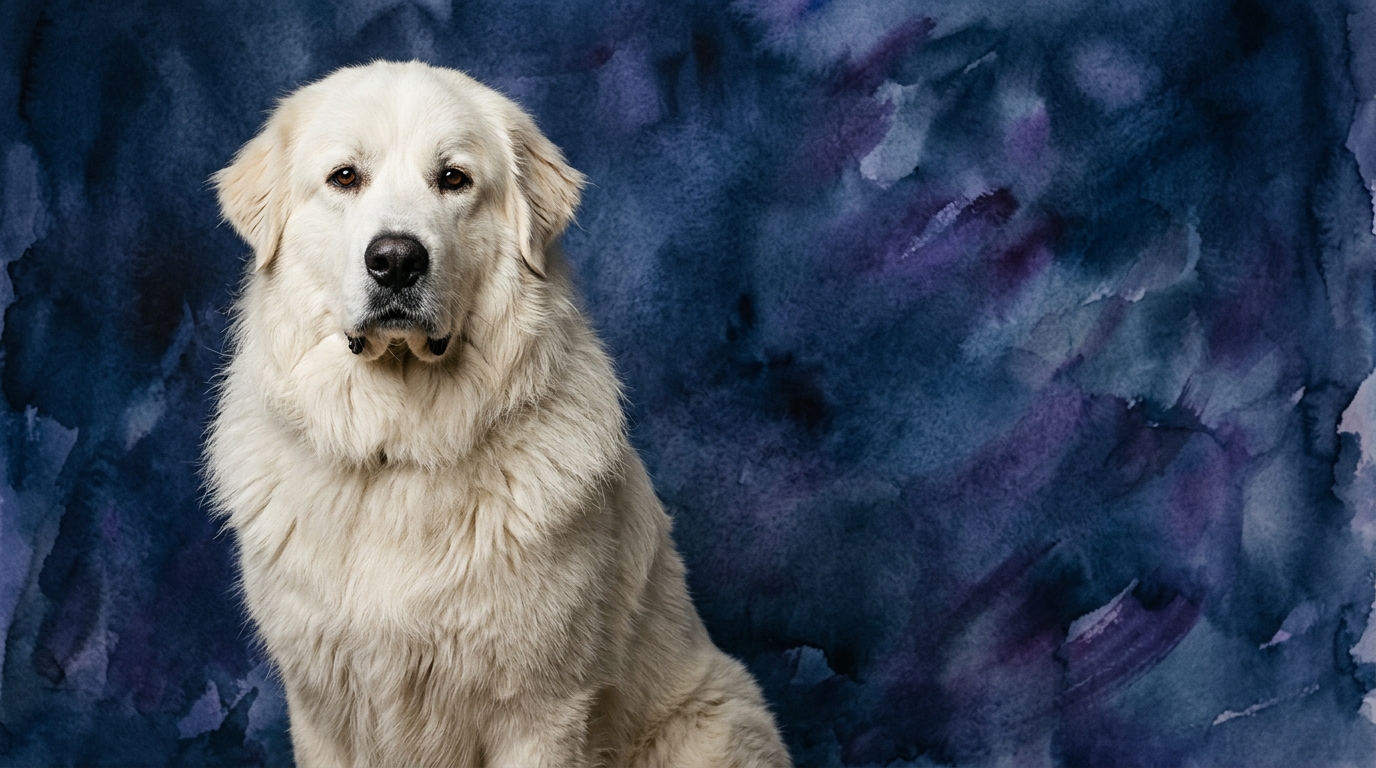
Side-by-Side IQ Profile: OES vs. Great Pyrenees
The Cosmic Pet Pet IQ Lab employs a five-dimensional framework to assess canine cognition, offering a granular view beyond simple obedience. For the Old English Sheepdog (OES), ranking #44 in Coren's hierarchy within the Herding group, their Problem Solving score of 3/5 reflects an ability to figure out complex tasks, particularly those involving movement and management of livestock. Their Training Speed is 3/5, indicating a good capacity for learning new commands, though they possess an independent streak. Social Intelligence is 3/5, fostering strong family bonds and an awareness of group dynamics, while their Instinctive Drive, also 3/5, is geared towards gathering and controlling. Crucially, their Memory shines at 4/5, allowing for excellent recall of learned patterns and sequences.
In contrast, the Great Pyrenees (GP), positioned at #64 within the Working group, shows a Problem Solving capacity of 3/5, characterized by independent decision-making when assessing threats to their charges. Their Training Speed is 3/5, meaning they can learn, but often at their own pace due to their self-reliant nature. Social Intelligence registers at 3/5, reflecting a deep, protective bond with their immediate family or flock, alongside a watchful demeanor towards strangers. Their Instinctive Drive, also 3/5, is primarily focused on territorial guarding and vigilance. Their Memory stands at 3/5, sufficient for retaining critical protective behaviors and recognizing familiar faces, but perhaps requiring more repetition for abstract concepts.
Where the Old English Sheepdog Wins Cognitively
The Old English Sheepdog holds a distinct cognitive edge in memory retention, scoring 4/5 compared to the Great Pyrenees' 3/5. This translates into a more rapid and robust recall of learned commands, routines, and specific boundaries, making them particularly adept at sequential tasks and multi-step obedience. Their herding background necessitates remembering complex patterns of movement and anticipation, fostering a cognitive structure that excels in retaining information over time. This superior memory allows for faster consolidation of new information and a more consistent application of learned behaviors in various contexts.
Furthermore, while both breeds share a 3/5 in training speed, the OES's inherent inclination to work in partnership with humans towards a shared goal, a hallmark of herding breeds, often makes them more receptive to structured learning environments. They tend to absorb and consolidate information from training sessions more efficiently, potentially allowing for the mastery of a broader repertoire of commands and tricks. Their cognitive architecture is geared towards cooperative problem-solving and remembering the 'rules' of engagement, making them highly adaptable within a structured learning framework.
Where the Great Pyrenees Wins Cognitively
The Great Pyrenees, while sharing a 3/5 in problem-solving with the OES, excels in a different facet of this dimension: autonomous threat assessment and protective decision-making. Their ancestral role as a livestock guardian required them to operate independently for extended periods, making critical judgments about potential dangers without human direction. This translates into a nuanced ability to survey their environment, distinguish routine from anomaly, and act decisively in defense of their territory or family. Their cognitive strengths lie in constant situational awareness and the self-initiated application of their guarding instincts.
This isn't about following complex commands but rather about independent vigilance and a deep understanding of their protective duties, allowing them to make intelligent, context-specific decisions in real-time. Their problem-solving is less about intricate puzzles and more about practical, self-directed security. They demonstrate a profound understanding of their perceived 'flock' and territory, exhibiting an innate ability to prioritize safety and act with strategic independence, a cognitive trait honed over centuries of solitary guardianship.
Which is Easier to Train and Why
For an owner seeking direct obedience and engagement, the Old English Sheepdog generally proves to be a more straightforward training partner. Their herding lineage instills a desire to work cooperatively and respond to human direction, thriving on interaction and a sense of purpose. Coupled with their superior memory (4/5), they tend to grasp and retain commands more efficiently, making training sessions feel productive and rewarding. They often enjoy the challenge of learning new behaviors and performing tasks, responding well to positive reinforcement and consistent guidance, seeing training as a collaborative effort.
In contrast, the Great Pyrenees, with its independent guarding mindset, approaches training with a different perspective. Their 3/5 training speed is coupled with a tendency to evaluate commands against their own perceived importance or comfort, rather than simply complying. This means an owner must demonstrate patience, consistency, and often creative motivation to make training appealing. They are not unwilling to learn, but they are more likely to perform a task if it aligns with their protective instincts or if they perceive it as their own idea, requiring a nuanced approach that respects their self-reliant nature. Their deep-rooted independence, essential for their historical role, means they are not inherently driven to please in the same way a herding dog might be.
Which Suits Active Owners vs. Relaxed Owners
For the active owner seeking a canine companion to share in various pursuits, the Old English Sheepdog is often the more suitable choice. Their herding background equips them with a significant need for both physical activity and mental stimulation. They thrive on having a 'job,' whether that involves participating in dog sports like agility or obedience, engaging in long, dynamic walks with varied routes, or tackling interactive puzzle toys. An owner who can consistently provide outlets for their cognitive drive and physical energy will find a deeply fulfilled and responsive partner, as their cognitive engagement directly correlates with their overall well-being and positive behavior.
Conversely, the Great Pyrenees typically aligns better with a more relaxed owner, though they certainly require regular exercise to maintain health. Their historical role as a livestock guardian often involved prolonged periods of watchful stillness, interspersed with patrolling their territory. They are generally content to observe their surroundings, survey their domain, and then settle into a relaxed, vigilant state. While they enjoy a good walk and need space to move, they are not typically characterized by the ceaseless energy of a herding breed. An owner who appreciates a calm, independent, and watchful presence, and who can provide a secure, spacious environment for their patrolling instincts, will discover a loyal and steady companion in the Great Pyrenees.
The Verdict
Choose the Old English Sheepdog if you seek an engaged, cooperative partner eager for shared activities and consistent interaction, valuing their strong command retention and responsive nature.
Choose the Great Pyrenees if you desire an independent, watchful guardian with a calm, self-reliant demeanor, valuing their autonomous protective instincts and a less intensely structured daily engagement.
🧠 Find Your Pet's IQ Score
Our Pet IQ Lab assessment covers 25+ tests across 5 cognitive dimensions — personalized to your breed.
Take the Full IQ Test →Frequently Asked Questions
Do Old English Sheepdogs need a "job" to be content?
Yes, their herding ancestry means they are happiest when given a purpose, which can be formal dog sports, daily training, or even tasks around the home. Channeling their innate drive constructively helps prevent boredom and undesirable behaviors, ensuring their cognitive and physical needs are met.
Are Great Pyrenees difficult to train because of their independence?
While their independence (a core trait for livestock guardians) means they often assess commands, they are not untrainable; they simply require a different approach. Training demands patience, consistency, and understanding their motivations, often focusing on making tasks seem like their own idea or part of their protective role rather than arbitrary commands.
How do their social intelligence scores of 3/5 manifest differently?
For the Old English Sheepdog, 3/5 social intelligence often means strong family bonds and responsiveness to known human cues, though they might be reserved with strangers until trust is established. For the Great Pyrenees, 3/5 means deep devotion to their "flock" (human family), coupled with a discerning, often wary approach to outsiders, driven by their inherent protective instincts and vigilance.