Side-by-Side IQ Profile: Unpacking Cognitive Dimensions
At The Cosmic Pet Pet IQ Lab, we evaluate canine intelligence across five key dimensions, offering a granular view beyond simple obedience. Let's examine how the Old English Sheepdog and the Irish Wolfhound measure up.
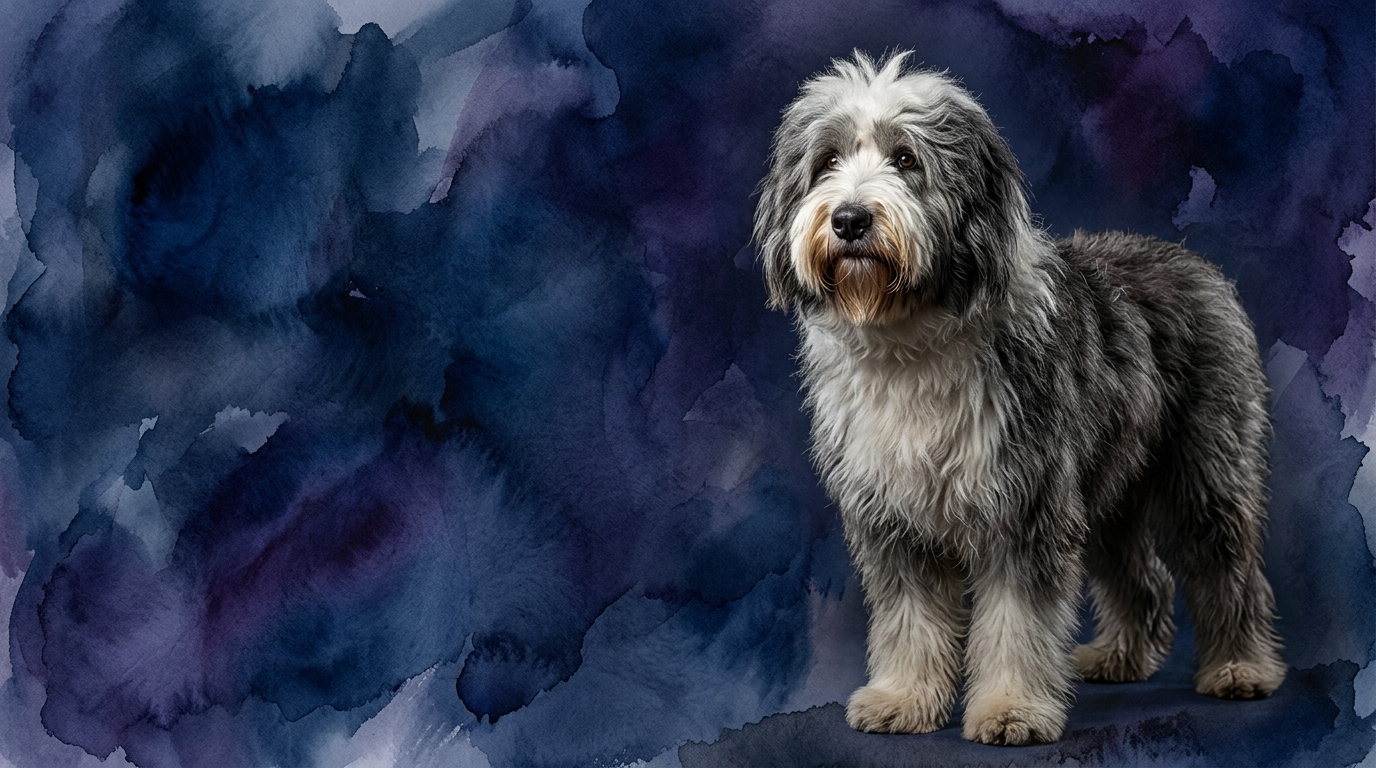
For the Old English Sheepdog (OES), a Herding group member with a Coren rank of #44, their profile is as follows: Problem Solving scores 3/5, indicating an ability to navigate moderate environmental challenges and figure out practical solutions, often involving spatial reasoning or resource access, within their perceived "domain." Training Speed is 3/5; while capable of learning, they aren't always the quickest to grasp new concepts, often requiring repetition and clear, consistent communication, as their independent herding mind needs to understand the "why." Social Intelligence is 3/5, showing deep bonds with their human families and an understanding of routines and individual moods, sometimes attempting to "herd" family members gently. Their Instinctive Drive registers 3/5, a moderate herding instinct manifesting as an inclination to gather, organize, or gently nudge family members or other pets. Memory is a standout at 4/5, exhibiting strong long-term recall for learned commands, routines, and the layout of their environment, aiding in retaining complex sequences.
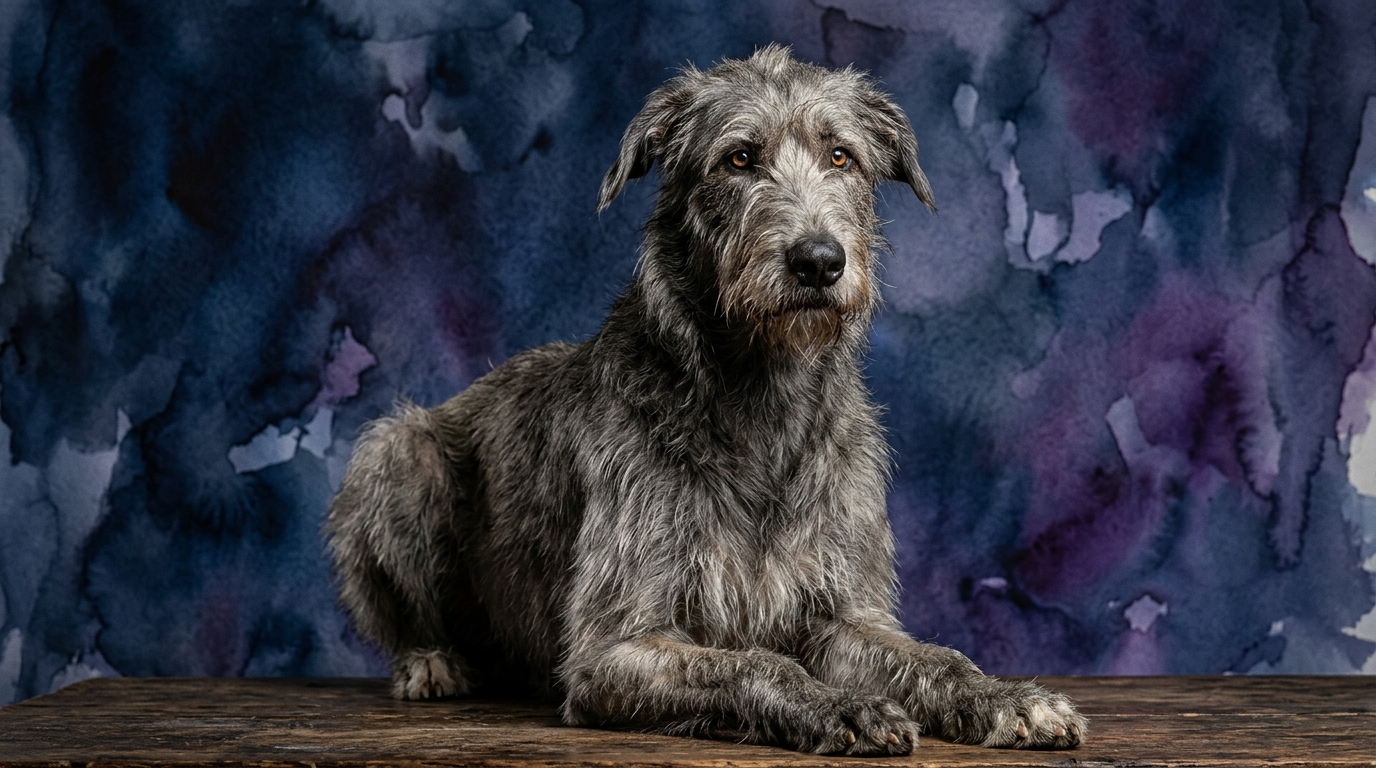
The Irish Wolfhound (IW), a majestic Hound, does not hold a Coren rank but presents a distinct cognitive makeup: Problem Solving is 3/5, where these giants approach issues with a calm, observant demeanor, often assessing situations and navigating obstacles with surprising grace for their size, practical thinkers not easily flustered. Training Speed is 3/5; Wolfhounds learn at a steady pace, but their independent sighthound nature means they respond best to patient, positive reinforcement, sometimes appearing slow as they process information. Social Intelligence is 3/5, reflecting their deeply affectionate and sensitive companionship, attuned to their human family's emotional states and offering comfort or companionship subtly. Their Instinctive Drive is 3/5, a moderate sighthound prey drive primarily visual, leading to a strong desire to chase fast-moving objects in open spaces, balanced by their generally gentle temperament. Memory scores 3/5, indicating a good capacity for remembering commands, routines, and people, though perhaps not with the same tenacity for intricate detail or long-term retention of complex sequences as breeds with higher scores in this dimension.
Where the Old English Sheepdog's Mind Shines
The Old English Sheepdog demonstrates a particular cognitive advantage in the dimension of Memory, scoring 4/5 compared to the Irish Wolfhound's 3/5. This superior recall is not just about remembering a few tricks; it's a fundamental aspect of their working heritage. An OES can retain complex sequences of commands and environmental patterns over long periods, a critical asset for a breed historically tasked with managing dynamic flocks across varied terrain. They remember routes, boundaries, and the nuances of their human's expectations, making them reliable partners in established routines.
Furthermore, the OES's Coren rank of #44, which places them among breeds considered to have a good working and obedience intelligence, hints at a general aptitude for structured learning that the Irish Wolfhound, as a non-ranked breed in this specific metric, doesn't share. This implies a cognitive framework that, while not necessarily "smarter" across the board, is more readily adaptable to human-directed tasks and sequential learning, a distinct strength born from centuries of collaborative work.
Where the Irish Wolfhound's Intellect Excels
While many of their IQ scores align, the Irish Wolfhound's intelligence manifests with a unique flavor, particularly in how their Problem Solving and Social Intelligence operate. Their 3/5 Problem Solving isn't about herding; it's about navigating their large bodies gracefully through varied environments, assessing situations with a calm, unhurried observation. They often solve practical issues with a quiet ingenuity, such as figuring out the most comfortable spot in a room or subtly communicating their needs without overt displays, showcasing a practical, self-reliant form of cognitive skill.
Similarly, their 3/5 Social Intelligence, while matching the OES in score, often translates into a profound emotional depth and sensitivity. Wolfhounds are renowned for their gentle, empathetic nature, capable of understanding human moods and offering quiet companionship. Their instinctive drive, also 3/5, is a specialized form of intelligence – the sighthound's ability to visually track and react with incredible speed to distant movement. This visual acuity and burst of athletic prowess are highly specialized cognitive and physical skills, quite different from the OES's herding focus, demonstrating a distinct and equally valuable form of canine intellect.
Training Ease: A Tale of Two Temperaments
Both the Old English Sheepdog and the Irish Wolfhound score 3/5 in Training Speed, suggesting a moderate pace of learning. However, the *approach* to training and the *ease* of achieving consistent results can differ significantly due to their inherent temperaments and historical roles. The OES, with its herding background and Coren ranking, often possesses a stronger desire to engage in cooperative tasks and please its human. Their moderate herding drive, while needing management, can be channeled into structured training, making them generally responsive to positive reinforcement and clear directives.
The Irish Wolfhound, conversely, embodies the independent spirit of a sighthound. While capable of learning, their motivation often stems from their own perceived interest rather than an inherent eagerness to please. They might require more patience, understanding, and highly engaging, reward-based methods to maintain focus. A Wolfhound might learn a command perfectly but choose not to execute it if they don't see the immediate benefit or if a more interesting visual stimulus presents itself. This independence means while they learn at a moderate pace, consistent, enthusiastic compliance might require a deeper understanding of their unique motivations and a less rigid training style.
Lifestyle Match: Active Companion vs. Relaxed Observer
When considering which breed aligns with your lifestyle, both physical activity and cognitive engagement play crucial roles. The Old English Sheepdog, despite its shaggy appearance, is a working breed with a moderate need for physical exercise and significant mental stimulation. Their herding background means they thrive when given a "job," whether it's participating in dog sports, engaging in complex puzzle toys, or even "managing" their human family. Owners who enjoy structured activities, consistent training, and are prepared for regular grooming will find a fulfilling partnership with an OES. They are best suited for active owners who can provide consistent engagement and an outlet for their inherent working drives.
The Irish Wolfhound, despite its imposing size, is often described as a "gentle giant" who appreciates comfort and relaxation. While they require bursts of intense exercise – secure, spacious areas for galloping are essential to satisfy their sighthound instincts – they are not typically high-energy dogs that demand constant activity. They are more suited to owners who appreciate a calm, dignified presence in the home, enjoy quiet companionship, and can provide ample space for their large frame to lounge. Owners who are prepared for substantial grooming and feeding needs, and can offer secure outdoor areas for their sprints, will find a devoted and serene companion in the Irish Wolfhound, ideal for a more relaxed home environment that can accommodate their occasional bursts of speed.
The Verdict
Choose the Old English Sheepdog if you desire a highly engaged, cooperative companion with excellent memory for tasks, thriving on structured activity and a strong bond forged through mutual work.
Opt for the Irish Wolfhound if you seek a calm, independent giant who offers deep emotional companionship, appreciates quiet comfort, and requires space for occasional, powerful bursts of activity.
🧠 Find Your Pet's IQ Score
Our Pet IQ Lab assessment covers 25+ tests across 5 cognitive dimensions — personalized to your breed.
Take the Full IQ Test →Frequently Asked Questions
Are Old English Sheepdogs good family dogs?
Yes, Old English Sheepdogs are typically excellent family dogs, known for their affectionate nature and patience with children. Their herding instinct can sometimes lead them to gently 'herd' family members, but they are generally devoted and protective companions who thrive on being part of the family unit.
What kind of exercise does an Irish Wolfhound need?
Irish Wolfhounds require a balance of moderate daily walks and opportunities for vigorous, short bursts of running in a securely fenced area to satisfy their sighthound instincts. Despite their size, they are not suited for constant, high-impact exercise but rather need space to stretch their powerful legs.
How do the grooming needs compare between these two breeds?
Both breeds have significant grooming needs, but for different reasons. The Old English Sheepdog requires extensive regular grooming to prevent matting in their long, dense double coat, often needing daily brushing and professional trims. The Irish Wolfhound has a wiry, rough coat that needs regular brushing and hand-stripping a few times a year to maintain its texture and minimize shedding, though it is generally less intensive than the OES's coat.