
Side-by-Side Cognitive Profile
The Old English Sheepdog, a venerable member of the Herding group, registers at Coren rank #44, placing it in the category of above-average working and obedience intelligence. Its cognitive profile includes a Problem Solving score of 3/5, suggesting a practical, moderate aptitude for navigating daily challenges, often in a collaborative or routine-oriented manner. Training Speed is also rated 3/5, indicating that while they learn steadily, consistency and patience are key to embedding new commands. Social Intelligence, at 3/5, reflects their natural inclination to be part of a family "flock," understanding group dynamics and social cues. Their Instinctive Drive, also 3/5, points to a manageable herding instinct, manifesting as a desire to keep their family together. A standout feature is their Memory, scoring 4/5, enabling them to retain routines, commands, and familiar faces with impressive recall.
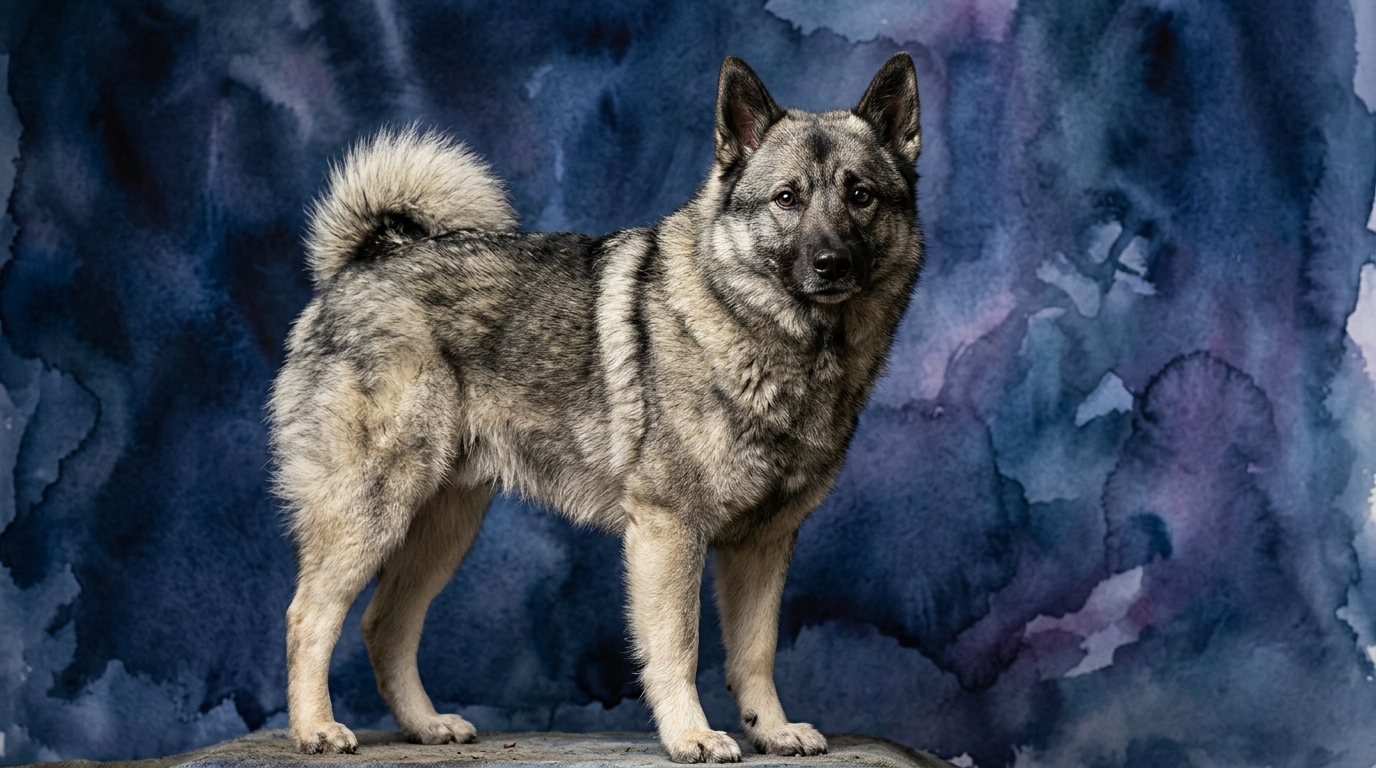
In contrast, the Norwegian Elkhound, a robust member of the Hound group, holds a Coren rank of #36, positioning it higher in working and obedience intelligence. This breed demonstrates a Problem Solving capacity of 4/5, indicative of a resourceful, independent mind capable of figuring out complex situations, often with a self-directed approach. Their Training Speed is 4/5, meaning they grasp new concepts quickly, though their independent streak can sometimes lead to selective obedience. Social Intelligence, matching the OES at 3/5, suggests loyalty to their chosen family but often a reserved demeanor with strangers, valuing their personal space. Instinctive Drive, also 3/5, is strongly tied to their hunting heritage, encompassing a keen prey drive and a profound interest in scent work. Like the OES, the Elkhound's Memory scores an impressive 4/5, crucial for tracking, recalling routes, and remembering significant experiences.
While both breeds share identical scores for Social Intelligence, Instinctive Drive, and Memory, the nuances of their application diverge due to their foundational purposes. The Elkhound's superior Problem Solving and Training Speed scores, coupled with its higher Coren rank, highlight a more agile and independently analytical cognitive style. The OES, while slightly slower in these two aspects, compensates with a memory that supports its role as a consistent, dependable companion, and a social intelligence geared towards harmonious group living. This side-by-side view emphasizes that cognition isn't a singular metric but a tapestry of strengths adapted for specific roles.
Where the Old English Sheepdog Wins Cognitively
The Old English Sheepdog's cognitive strengths truly shine in areas that foster connection and routine within a family unit. While its Problem Solving is rated 3/5, this capacity is often expressed in understanding complex household dynamics, anticipating family members' needs, or subtly guiding children away from perceived dangers. Their 4/5 Memory score, while shared with the Elkhound, is particularly effective in reinforcing consistent expectations and routines, making them dependable companions who thrive on predictability. They excel at remembering multi-step commands and long-term household rules, contributing to a stable home environment. Furthermore, their 3/5 Social Intelligence manifests as a deep attunement to human emotions and intentions, allowing them to offer comfort or solicit play at opportune moments, demonstrating a collaborative and empathetic form of cognition.
Where the Norwegian Elkhound Wins Cognitively
The Norwegian Elkhound's cognitive profile showcases an independent and resourceful intellect. Its Problem Solving score of 4/5 truly sets it apart, reflecting a breed that thinks strategically and can devise solutions to challenges without constant human guidance. This might involve figuring out how to access a coveted toy, navigate a complex trail, or outsmart a squirrel. Their Training Speed of 4/5 means they absorb new information rapidly, making them quick studies for advanced commands or complex tasks. While their 3/5 Instinctive Drive is shared, its manifestation in the Elkhound is often a powerful, sustained focus on scent and pursuit, requiring significant mental engagement to satisfy. This drive fuels their capacity for independent work, making them adept at tasks requiring self-direction and persistence in varied environments.
Which is Easier to Train and Why
Training an Old English Sheepdog typically involves a steady, consistent approach. With a Training Speed of 3/5, they require more repetition to solidify commands, but their strong desire to be part of the family "flock" and their inherent willingness to please make them generally responsive. They are less prone to independent decision-making during training sessions, preferring to follow direction, which simplifies the process for novice owners. Their 4/5 Memory ensures that once a command is learned, it is retained long-term, reducing the need for constant re-teaching. The key is to make training a positive, bonding experience, leveraging their social intelligence and memory for routines.
Conversely, training a Norwegian Elkhound, despite their 4/5 Training Speed, often presents a different set of challenges. While they quickly grasp concepts, their 4/5 Problem Solving and independent hound nature mean they might choose whether or not to comply based on their assessment of the situation or if something more interesting, like a compelling scent, captures their attention. Their strong Instinctive Drive (3/5, but focused on hunting) requires skilled redirection and motivation. Owners must employ engaging, varied training methods to keep them invested and prove that listening to commands is more rewarding than following their own independent pursuits. This requires an owner who understands hound psychology and can maintain a firm, yet fair and exciting, training regimen.
Which Suits Active Owners vs. Relaxed Owners
For active owners seeking a partner in adventure, the Norwegian Elkhound is often the more suitable choice. Their robust Problem Solving (4/5) and independent nature thrive on varied mental and physical challenges, from long hikes and scent work to agility courses. They possess the stamina and drive to keep pace with owners who enjoy exploring the outdoors, and their quick learning ability means they can master complex activities. Their reserved social intelligence also means they might be more content with their immediate family and less demanding of constant interaction with every stranger they meet on a trail.
The Old English Sheepdog, while still requiring regular exercise, often aligns better with owners who prefer a more relaxed, family-centric lifestyle. Their moderate Problem Solving (3/5) and Instinctive Drive (3/5) mean they are less likely to seek out intense, self-directed mental tasks compared to an Elkhound. They thrive on being included in daily family activities, enjoying walks and playtime but generally being content with a comfortable spot near their loved ones. Their strong memory and social intelligence make them wonderful, predictable companions for those who value routine, affectionate presence, and a dog that is deeply integrated into the household rhythm.
The Verdict
Choose the Old English Sheepdog if you value a loyal, affectionate family member who thrives on routine and collaborative interaction, and you are prepared for consistent, patient training that builds on their strong memory and desire to please.
Choose the Norwegian Elkhound if you are an active, experienced owner seeking a resourceful, independent partner for outdoor adventures and mental challenges, who appreciates a quick-witted canine capable of independent thought.
🧠 Find Your Pet's IQ Score
Our Pet IQ Lab assessment covers 25+ tests across 5 cognitive dimensions — personalized to your breed.
Take the Full IQ Test →Frequently Asked Questions
Are Old English Sheepdogs good at problem-solving?
Their problem-solving is rated 3/5, indicating a practical, moderate ability often geared towards understanding routines or family dynamics rather than complex, independent tasks. They can figure out how to get attention or navigate familiar environments, especially when it involves their family.
How quickly do Norwegian Elkhounds learn new commands?
Norwegian Elkhounds have a training speed of 4/5, suggesting they grasp new commands relatively quickly. However, their independent nature means consistent motivation and engaging training methods are crucial for reliable execution, as they may choose to follow their own instincts if not properly engaged.
Which breed has better memory, Old English Sheepdog or Norwegian Elkhound?
Both breeds share an impressive memory score of 4/5. Old English Sheepdogs often remember routines and family interactions well, while Norwegian Elkhounds excel at recalling routes, scents, and past experiences from their exploratory nature, making them excellent trackers.