
Side-by-Side Cognitive Profile
Delving into the individual cognitive profiles reveals the nuanced mental makeup of these two distinct breeds. The Old English Sheepdog, a classic herding dog, demonstrates a problem-solving capacity rated at 3/5, translating to an ability to navigate complex environmental scenarios, particularly those involving group dynamics. Their training speed also registers at 3/5, indicating a steady, responsive learning curve with consistent methods. Social intelligence stands at 3/5, reflecting their awareness of group interactions and human cues, while an instinctive drive of 3/5 points to their inherent desire to gather and protect. A notable strength is their memory, scoring 4/5, which allows them to retain complex sequences and routines exceptionally well.
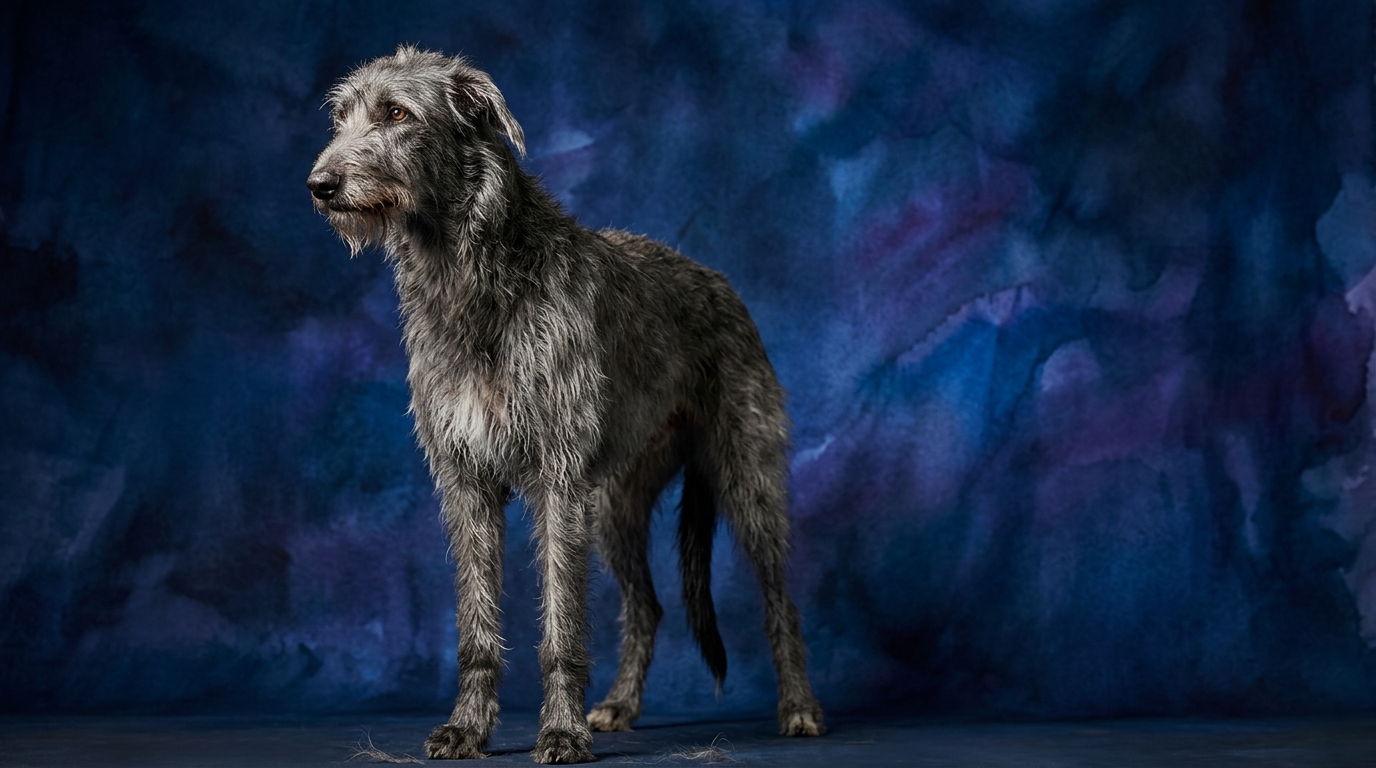
The Scottish Deerhound, a majestic sighthound, shares a problem-solving score of 3/5, though its application differs; this pertains more to strategic pursuit and navigating varied terrain during a chase rather than abstract puzzles. Their training speed is also 3/5, suggesting a moderate learning pace that benefits from engaging, positive reinforcement due to their independent nature. Social intelligence is 3/5, indicating deep bonds with their family but less emphasis on managing large groups. Their instinctive drive is 3/5, strongly oriented towards the chase and hunt. The Deerhound's memory registers at 3/5, sufficient for core commands and routines, yet perhaps not as finely tuned for intricate, multi-step tasks as the Old English Sheepdog.
While both breeds share several similar scores, the underlying cognitive mechanisms and their practical manifestation are deeply rooted in their historical purposes. The OES’s scores reflect a companion geared towards collaborative work and routine, whereas the SDH’s scores underscore an independent spirit honed for swift, decisive action in pursuit.
Where the Old English Sheepdog Excels Cognitively
The Old English Sheepdog’s standout cognitive advantage lies in its superior memory, scoring a 4/5 compared to the Deerhound's 3/5. This enhanced recall means an OES can more readily master and retain complex chains of commands, multi-step routines, and intricate patterns of behavior. This aptitude makes them particularly adept at advanced obedience, agility, or even roles requiring precise, remembered sequences, like service dog tasks, where consistency and recall are paramount.
Furthermore, the OES’s Herding group lineage provides a distinct edge in collaborative problem-solving. Their instinctual drive, even at 3/5, is geared towards working in partnership with a human to manage and organize. This translates to a natural inclination to engage with their handler to figure out tasks, whether it’s navigating an obstacle course or performing a choreographed routine. Their Coren ranking of #44 underscores a strong foundation in working intelligence, indicating a breed that generally understands and responds to human instruction with purpose.
This breed also exhibits a nuanced environmental awareness, honed by generations of monitoring flocks and surroundings. While not always apparent as overt problem-solving, this involves a continuous assessment of their immediate environment, anticipating changes, and reacting appropriately. This subtle form of cognitive processing allows them to adapt well to household routines and notice deviations, contributing to their reputation as reliable and observant companions.
Where the Scottish Deerhound Excels Cognitively
The Scottish Deerhound’s cognitive strengths are deeply intertwined with its sighthound heritage, particularly in independent problem-solving related to pursuit. While its problem-solving score is 3/5, its application is highly specialized: the Deerhound excels at swiftly assessing dynamic situations during a chase, optimizing routes, and making split-second decisions to intercept fast-moving targets over varied, often challenging terrain. This requires a unique blend of visual processing, spatial reasoning, and immediate reactive intelligence.
Their sensory acuity, especially sight, provides another cognitive advantage. As sighthounds, their visual processing capabilities are exceptional, allowing them to detect movement from significant distances and track objects with remarkable precision. This specialized sensory input forms the basis for their decision-making in the field, enabling them to react to environmental cues related to potential prey with unparalleled efficiency. While not a scent hound, their overall sensory awareness contributes to their effectiveness as hunters.
A notable trait of the Scottish Deerhound is its inherent self-reliance. Generations of hunting independently or in small packs fostered a degree of cognitive autonomy. This means they are capable of making decisions and executing actions without constant human direction when engaged in their primary drive. This independence, while sometimes perceived as stubbornness in training, is a cognitive strength that allows them to navigate and succeed in complex, unscripted outdoor scenarios, demonstrating a unique form of practical intelligence.
Training: Old English Sheepdog vs. Scottish Deerhound
When it comes to ease of training, the Old English Sheepdog generally presents a more straightforward path for the average owner. With a Coren rank of #44 and a memory score of 4/5, OES dogs are typically eager to learn and retain commands effectively. Their herding background instills a desire to work collaboratively with a handler, making them responsive to consistent, positive reinforcement methods. They often thrive on structure and derive satisfaction from performing tasks correctly, which translates into a more reliable and consistent obedience performance.
The Scottish Deerhound, while possessing a training speed of 3/5, can be a more nuanced challenge due to its independent nature and strong instinctive drive. Unlike the OES, which aims to please, the Deerhound might learn at a similar pace but requires more motivation and a deeper understanding of its sighthound characteristics. Their focus can be easily diverted by visual stimuli, and their strong prey drive means that off-leash reliability in unsecured areas can be a significant hurdle. Training must be engaging, varied, and reward-based to maintain their interest, as repetitive drills may lead to disengagement.
Ultimately, the OES's higher memory score and innate desire for partnership make it generally easier to teach complex sequences and achieve consistent obedience. The SDH, while capable of learning, demands a trainer who appreciates its independent spirit, understands its powerful drives, and can adapt methods to keep the training process stimulating and rewarding, rather than relying solely on compliance.
Ideal Owners: Active vs. Relaxed Lifestyles
For active owners seeking a companion that thrives on structured engagement, the Old English Sheepdog is often an excellent fit. An 'active owner' for an OES means someone who provides consistent mental stimulation through training, puzzle toys, and varied walks, potentially engaging in dog sports like agility or obedience. While they appreciate physical exercise, their cognitive needs for routine and collaborative tasks are equally important. They can adapt to a more relaxed owner, provided that owner is committed to providing consistent mental enrichment and maintaining a predictable daily schedule.
The Scottish Deerhound, by contrast, suits an active owner whose definition of 'active' involves significant opportunities for bursts of intense physical exertion. While they are famously calm and relaxed indoors, often described as 'couch potatoes,' their deep-seated instinctive drive demands regular, vigorous exercise, ideally including long, safe off-leash sprints in a securely fenced area. A truly relaxed owner who cannot provide these specific and substantial exercise opportunities would likely struggle to meet the Deerhound’s fundamental needs, potentially leading to an unfulfilled and restless companion.
Therefore, the choice largely depends on the *type* of activity an owner can provide. The OES benefits from an owner who enjoys collaborative mental and physical activities and values routine. The SDH requires an owner who can facilitate their need for extensive, high-speed running, appreciating their quiet dignity and independence between these intense exercise sessions. Neither breed is suitable for a sedentary lifestyle without significant thought given to their specific cognitive and physical requirements.
The Verdict: When to Choose Each Breed
The Verdict
Choose the Old English Sheepdog if you desire a companion who thrives on routine, excels at remembering complex sequences, and enjoys engaging in collaborative tasks. Their strong memory and desire to work alongside humans make them excellent partners for structured activities and family life.
Opt for the Scottish Deerhound if you appreciate a noble, independent spirit that values wide-open spaces and bursts of intense activity. Their innate drive for the chase and quiet dignity suit owners who can provide consistent, stimulating outdoor adventures.
🧠 Find Your Pet's IQ Score
Our Pet IQ Lab assessment covers 25+ tests across 5 cognitive dimensions — personalized to your breed.
Take the Full IQ Test →Frequently Asked Questions
Are Old English Sheepdogs good family dogs?
Yes, Old English Sheepdogs generally display good social intelligence within their family unit, forming strong bonds and often being patient with children. Their herding instincts can sometimes manifest as gentle nudging, but they are typically affectionate and loyal companions.
How much exercise does a Scottish Deerhound need?
Scottish Deerhounds require significant daily exercise, ideally including opportunities for long, safe off-leash sprints in a securely fenced area. While they enjoy lounging, consistent physical activity is crucial to satisfy their natural drive and maintain their physical and mental well-being.
Is the Old English Sheepdog truly ranked #44 in canine intelligence?
Yes, the Old English Sheepdog holds the #44 position in Stanley Coren's ranking of dog intelligence, placing them in the category of 'above-average working intelligence.' This indicates they are capable of learning new commands in 25-40 repetitions and obeying known commands 50% of the time or better.