
Decoding Canine Cognition: OES vs. Tibetan Spaniel IQ Profiles
The Cosmic Pet Pet IQ Lab provides a nuanced framework for understanding canine intelligence, moving beyond simple "smart" labels to assess specific cognitive dimensions. For the Old English Sheepdog (OES), a robust Herding group member, its profile shows Problem Solving at 3/5, Training Speed at 3/5, Social Intelligence at 3/5, Instinctive Drive at 3/5, and a notable Memory at 4/5. This breed also holds a Coren rank of #44, reflecting its aptitude for obedience and working intelligence.
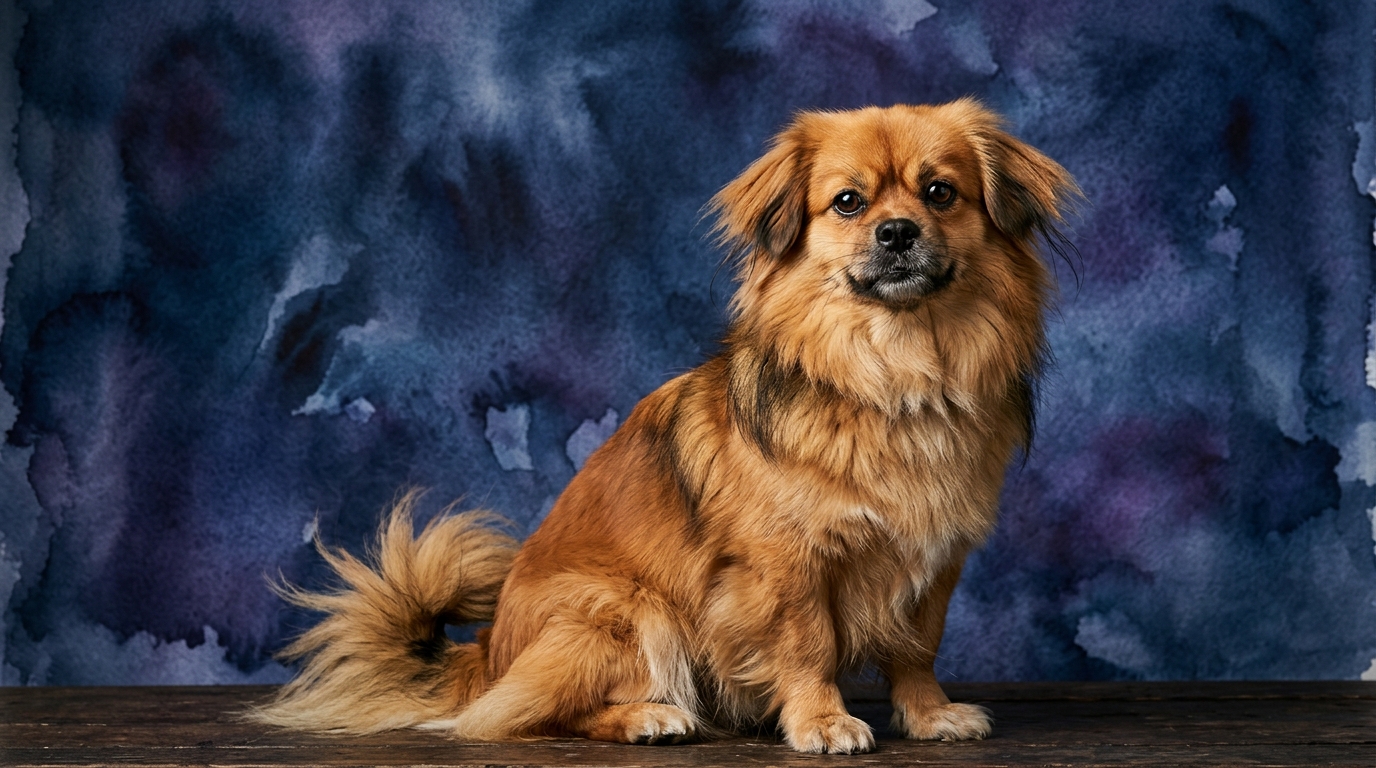
In contrast, the Tibetan Spaniel, a charming member of the Non-Sporting group, presents a slightly different picture. Its scores are Problem Solving 3/5, Training Speed 3/5, Social Intelligence 3/5, Instinctive Drive 3/5, and Memory 3/5. Notably, the Tibetan Spaniel is not included in Coren's ranking system, indicating its primary role historically was less about complex commands and more about companionship and alert barking. These scores, while appearing similar in many categories, hint at underlying cognitive styles shaped by centuries of selective breeding for specific roles.
The OES's Cognitive Edge: Memory and Purposeful Problem Solving
The Old English Sheepdog truly distinguishes itself in the realm of memory, earning a 4/5 rating compared to the Tibetan Spaniel's 3/5. This superior recall isn't merely about remembering where the treat jar is; it's a critical component of their herding heritage. A sheepdog relies on remembering complex routes, the locations of individual flock members, and a sequence of commands to effectively manage livestock over vast, dynamic landscapes. This translates into an ability to retain intricate routines and multiple-step instructions more readily than a breed without such a historical imperative.
While both breeds score 3/5 in Problem Solving, the OES's problem-solving often manifests with a goal-oriented, practical bent, honed by generations of task-specific work. Faced with an obstacle, an OES might employ learned strategies or recall past successful attempts to navigate it, whether it's figuring out how to re-gather straying "flock" (be it toys or family members) or maneuvering around physical barriers. Their herding instinct, rated 3/5, also underpins a drive to organize and manage, which can translate into a cognitive advantage when structure and order are required. This isn't just about raw processing power, but how that power is directed towards achieving a specific, often physical, outcome.
Tibetan Spaniel's Nuanced Strengths: Social Acuity and Independent Thought
While the Tibetan Spaniel shares a 3/5 rating with the OES across Problem Solving, Training Speed, Social Intelligence, and Instinctive Drive, its cognitive strengths emerge through the lens of its historical role as a companion and monastery guard. The Tibetan Spaniel's social intelligence, despite the identical score, often expresses itself with a refined perceptiveness towards human emotions and household dynamics. They are adept at reading subtle cues from their owners, often anticipating needs or moods, a trait invaluable for a close companion that spent centuries atop monastery walls, observing and alerting.
Their problem-solving, also rated 3/5, often leans towards navigating social situations or finding creative ways to achieve comfort or attention, rather than complex physical tasks. A Tibetan Spaniel might "problem-solve" by strategically positioning itself for optimal sunbathing, or by employing a varied repertoire of vocalizations and body language to communicate its desires. Their relatively lower instinctive drive (3/5, similar to OES, but without the herding context) means their minds aren't constantly engaged in managing a flock, freeing up cognitive resources for more nuanced observation of their immediate environment and human companions. This independence of thought, while sometimes perceived as stubbornness in training, allows for a unique brand of self-directed cleverness.
Training Dynamics: OES's Retention vs. Tibetan Spaniel's Independence
Both the Old English Sheepdog and the Tibetan Spaniel carry a Training Speed rating of 3/5, suggesting they absorb new commands at a moderate pace. However, the *ease* of training can differ significantly due to their other cognitive attributes and historical purposes. The OES's superior memory (4/5) is a substantial asset in training; once a command or routine is learned, it tends to be retained for longer periods. Their Coren rank of #44 further indicates a willingness and capacity for obedience work, driven by a desire to collaborate and fulfill a working role alongside their human. This means that while initial training might take consistent effort, the retention of learned behaviors is generally robust.
The Tibetan Spaniel, despite the same Training Speed score, can present a different set of challenges. Their historical role as independent watchdogs and companions meant they weren't primarily bred for intricate obedience routines. Their problem-solving often involves figuring out what *they* want to do, rather than strictly adhering to human directives. This independent streak, combined with a 3/5 memory, can mean that while they understand commands, their motivation to execute them consistently might fluctuate. Training a Tibetan Spaniel often requires more creative motivation, patience, and a deep understanding of their sometimes-sassy personality, making it feel less straightforward than training an OES focused on pleasing its "shepherd."
Lifestyle Compatibility: Matching Minds to Owners' Pace
Deciding between an Old English Sheepdog and a Tibetan Spaniel often comes down to an owner's lifestyle and activity level, which directly correlates with the breeds' cognitive and physical needs. The Old English Sheepdog, with its herding background and robust physical build, naturally suits more active owners. Their 3/5 instinctive drive, while not solely focused on herding, translates into a need for purposeful activity and mental engagement. They thrive on structured walks, opportunities for "work" such as advanced obedience, agility, or even herding games, which satisfy their cognitive need for problem-solving and memory recall in a dynamic environment. A relaxed owner might find an OES becomes bored and potentially destructive without sufficient outlets for its considerable energy and intelligence.
The Tibetan Spaniel, conversely, is an an ideal fit for more relaxed owners, though they certainly enjoy their daily strolls and playtime. Their historical role as a companion meant less emphasis on strenuous physical labor and more on vigilant observation and companionship. While they possess a 3/5 problem-solving ability, it's often applied to household dynamics or finding comfortable napping spots rather than navigating a vast pasture. Their social intelligence (3/5) makes them excellent at integrating into a family's routine, and their moderate energy levels mean they are content with shorter, regular walks and indoor games. A Tibetan Spaniel's cognitive needs are met through social interaction, puzzle toys, and being an integral part of family life, making them less demanding in terms of high-octane physical exercise.
The Verdict
Choose the Old English Sheepdog if you're an active owner seeking a dog capable of complex learning and consistent task engagement, thriving on purposeful activity and a strong desire to work alongside you.
Opt for the Tibetan Spaniel if you desire a perceptive, independent companion with a moderate energy level, who excels at social observation and thrives on close family interaction without demanding intensive physical or working tasks.
🧠 Find Your Pet's IQ Score
Our Pet IQ Lab assessment covers 25+ tests across 5 cognitive dimensions — personalized to your breed.
Take the Full IQ Test →Frequently Asked Questions
Do Old English Sheepdogs need a lot of mental stimulation?
Yes, their herding background and strong memory (4/5) mean Old English Sheepdogs benefit greatly from consistent mental challenges. They enjoy learning new commands, participating in dog sports, and engaging in puzzle toys to satisfy their cognitive needs and prevent boredom.
Are Tibetan Spaniels difficult to train because they are independent?
While Tibetan Spaniels have an independent streak, their 3/5 training speed indicates they can learn effectively. The key is using positive reinforcement, making training fun, and understanding that their motivation might stem more from personal reward than a strong desire to please, requiring patience and creative approaches.
How do their social intelligence scores (3/5 for both) manifest differently?
For the Old English Sheepdog, social intelligence often relates to understanding their handler's directives within a working context and interacting appropriately with "their flock." The Tibetan Spaniel's social intelligence, while rated similarly, typically focuses on a nuanced understanding of human household dynamics and emotional cues, making them highly attuned companions.