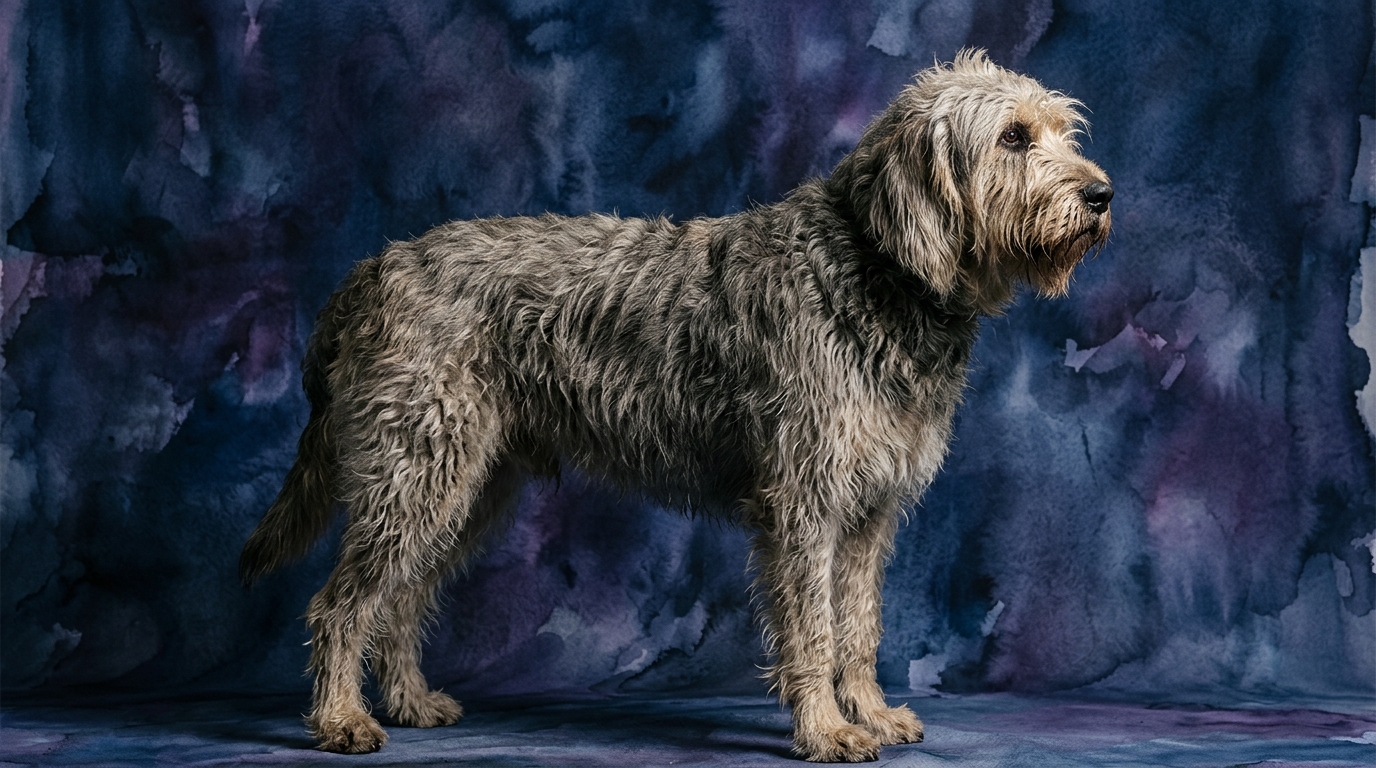
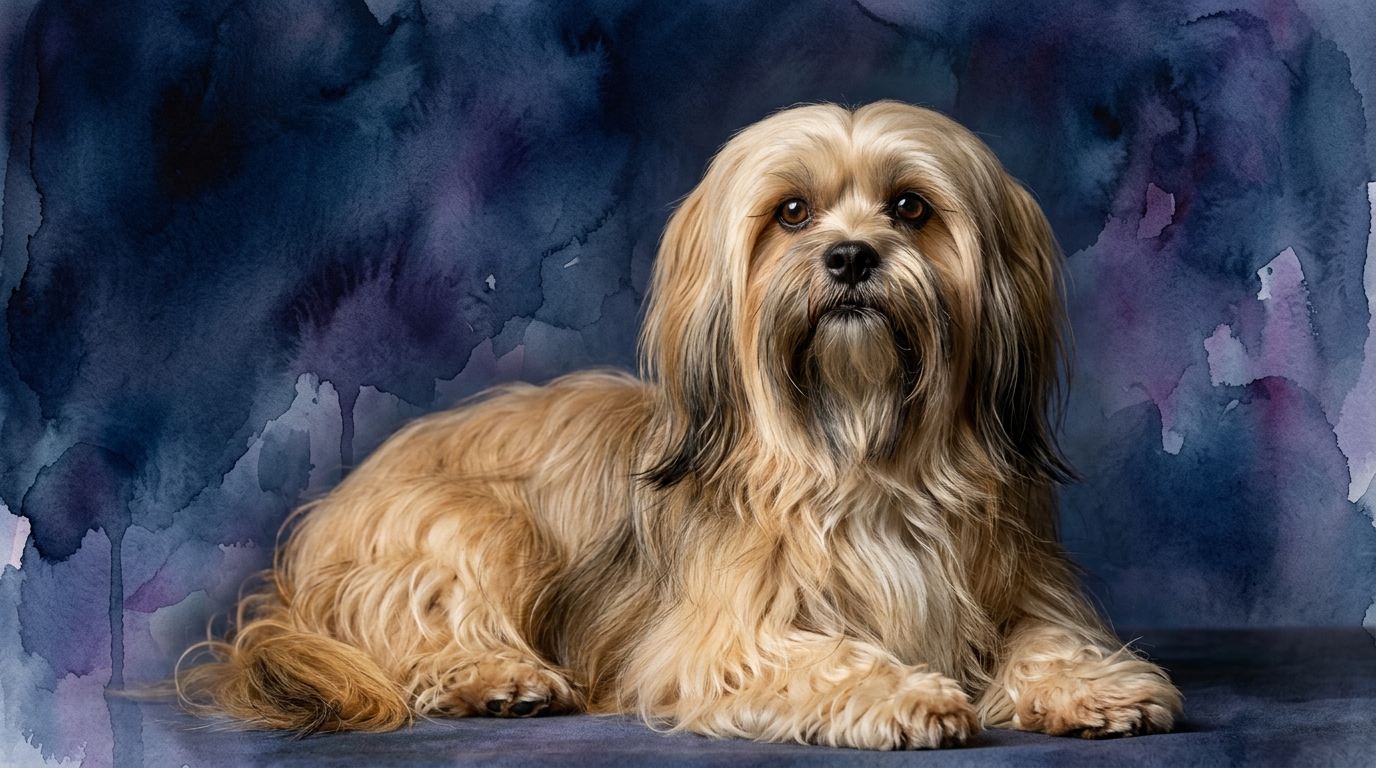
Side-by-Side IQ Profile: Understanding the '3/5' Score
At first glance, the Cosmic Pet Pet IQ Lab scores for both the Otterhound and the Lhasa Apso present a uniform picture: a consistent 3 out of 5 across all five cognitive dimensions. This identical numerical rating, however, belies the profound differences in how each breed's intelligence manifests, shaped by centuries of selective breeding for vastly divergent purposes. A 3/5 score, generally indicating a moderate level of ability, is interpreted through the lens of a breed's innate inclinations and historical responsibilities.
For the Otterhound, a 3/5 in Problem Solving translates to adeptness at navigating complex outdoor environments, deciphering tangled scent trails, and overcoming physical obstacles encountered during a hunt. Their Training Speed at 3/5 signifies they are moderate learners, but their engagement is often contingent on tapping into their powerful scent drive and desire for activity, rather than rote obedience. Their Social Intelligence, also 3/5, speaks to their capacity for understanding pack dynamics, cooperating within a hunting team, and reading handler cues in the field. The 3/5 Instinctive Drive is overwhelmingly dedicated to their profound scenting ability and stamina, driving persistent pursuit. Lastly, a 3/5 Memory indicates strong recall for scent patterns, familiar territories, and learned tasks related to their working purpose.
Conversely, the Lhasa Apso, despite the same numerical scores, applies its cognitive abilities in a distinctly different manner. Its 3/5 in Problem Solving is directed toward observing household dynamics, strategically finding the most comfortable spot, or subtly manipulating situations to gain attention or treats, all within a domestic setting. Their 3/5 Training Speed means they are moderate learners, often motivated by praise, comfort, and maintaining their preferred routine, though their independent streak can sometimes make them appear selectively deaf. The Lhasa's 3/5 Social Intelligence is marked by keen observation of human moods and routines, discerning friend from perceived foe, and understanding subtle household cues to establish their place within the family unit. A 3/5 Instinctive Drive in this breed is characterized by strong territorial guarding instincts, a deep desire for companionship, and an inherent self-preservation drive, making them alert sentinels. Their 3/5 Memory allows them to recall household rules, the location of favored people or objects, and past interactions with remarkable precision, remembering who is welcome and who is not.
Where the Otterhound Excels Cognitively
The Otterhound's cognitive strengths lie profoundly in its specialized field of work. Its 3/5 Problem Solving score shines brightest when confronting environmental challenges. Picture an Otterhound methodically working a cold scent trail through dense undergrowth, assessing terrain, and choosing the most efficient path; this is a complex cognitive task requiring sustained focus and adaptive decision-making far beyond simple obedience. This breed's intelligence is geared towards robust, physically demanding problem-solving in dynamic outdoor settings, where persistence and ingenuity in pursuit are paramount.
Furthermore, the Otterhound's 3/5 Instinctive Drive, coupled with its 3/5 Memory, creates an unparalleled capacity for scent-based work. Their ability to fixate on a scent, differentiate it from countless others, and follow it for extended periods demonstrates a highly specialized cognitive prowess. They remember specific scent profiles and the outcomes associated with them, making them tenacious and effective in tasks requiring sustained olfactory focus. This deep-seated drive also fosters a degree of independent work ethic; while collaborative, an Otterhound often makes critical decisions on the trail without constant human direction, showcasing a unique blend of autonomy and purpose-driven intelligence.
Where the Lhasa Apso Excels Cognitively
The Lhasa Apso's cognitive advantages are rooted in its historical role as a companion and sentinel within a domestic sphere. Their 3/5 Social Intelligence, combined with their 3/5 Problem Solving, makes them exceptionally astute observers of human behavior and household routines. They are masters at discerning subtle cues, understanding emotional states, and often devising clever strategies to achieve desired outcomes, whether it's securing a prime spot on the sofa or receiving extra attention. This isn't just about 'cuteness'; it's a sophisticated application of social cognition within their immediate environment.
Moreover, the Lhasa Apso's 3/5 Instinctive Drive for territorial guarding, supported by its strong 3/5 Memory, leads to superior situational awareness within the home. They excel at identifying potential threats, learning household boundaries with precision, and recalling who belongs and who doesn't. Their problem-solving is acutely tuned to the security and comfort of their living space, making them highly effective, albeit small, watchdogs. They remember routines, visitors, and the 'rules' of the house, applying their intelligence to maintain order and their own favored position within the family unit.
Training Dynamics: Otterhound vs. Lhasa Apso
When it comes to trainability, the identical 3/5 Training Speed scores for both breeds can be misleading without understanding their underlying motivations and behavioral tendencies. The Otterhound, while capable of learning, presents unique challenges due to its powerful scent drive and independent hound nature. In an outdoor setting, an enticing scent can easily override a verbal command, requiring an owner with patience and a strong recall foundation. They are not naturally inclined to perform repetitive obedience tasks without a clear 'why' that aligns with their instincts. However, if training is framed as a fun, active game involving scent work or exploring, their cooperative nature and problem-solving abilities shine, and they learn readily.
The Lhasa Apso, despite its Coren rank of #68 which indicates a respectable capacity for obedience intelligence, also possesses a strong independent spirit often described as 'cat-like.' They learn quickly when they perceive a benefit, whether it's a treat, praise, or maintaining their comfortable routine, but they are not inherently driven to constantly seek human approval for every action. Consistency and positive reinforcement are crucial; harsh methods will likely result in a stubborn refusal to cooperate. Their moderate training speed means they will learn a fair number of commands, but owners must appreciate their inherent willfulness and avoid expecting robotic obedience, instead focusing on building a partnership based on mutual respect and understanding of their desires.
Matching Breeds to Lifestyles: Active vs. Relaxed Owners
The choice between an Otterhound and a Lhasa Apso hinges significantly on an owner's lifestyle and activity level. For active owners who relish outdoor adventures, hiking, long walks, or even swimming, the Otterhound is an ideal match. Their 3/5 Instinctive Drive demands significant daily exercise and mental stimulation, particularly through scent games and exploration. They thrive with owners who can manage a large, boisterous dog and appreciate a companion whose intelligence is best engaged in dynamic, natural environments. A securely fenced yard is non-negotiable for an Otterhound, given their potent scent drive.
Conversely, the Lhasa Apso is far more suited for relaxed owners. While they enjoy regular walks and playtime, their exercise needs are moderate, making them content with indoor companionship and shorter strolls. Their 3/5 Instinctive Drive manifests more as territorial vigilance and a desire for comfort rather than a need for strenuous physical exertion. They excel as alert, affectionate companions who are happy to curl up on a lap, observe their surroundings, and engage in mental stimulation through interactive toys or simply monitoring household activities. Their smaller size and adaptability make them excellent apartment dwellers or companions for those with a less intensely active lifestyle.
The Verdict
Choose an Otterhound if you are an active, adventurous owner seeking a robust companion who thrives on outdoor exploration, scent work, and can manage a large, independent hound with significant exercise needs.
Opt for a Lhasa Apso if you desire a watchful, affectionate, and relatively low-energy companion content with indoor living and moderate exercise, appreciating their independent spirit and keen observation skills.
🧠 Find Your Pet's IQ Score
Our Pet IQ Lab assessment covers 25+ tests across 5 cognitive dimensions — personalized to your breed.
Take the Full IQ Test →Frequently Asked Questions
Do Otterhounds make good family pets despite their hunting instincts?
Yes, Otterhounds are generally good-natured, amiable, and tolerant with children, making them suitable family pets. However, their large size and boisterousness require supervision around very young children, and their powerful scent drive necessitates a securely fenced yard to prevent them from following an intriguing smell.
Are Lhasa Apsos difficult to train due to their independence?
While Lhasa Apsos possess a strong will and independence, they are certainly trainable with consistent, positive reinforcement methods. Their independence often means they require a clear 'what's in it for me' perspective during training, but they learn household routines and boundaries quickly when motivated by treats or praise.
How do their grooming needs compare?
Otterhounds have a coarse, water-resistant double coat that requires weekly brushing to prevent mats and occasional hand-stripping to maintain coat health. Lhasa Apsos, on the other hand, possess a long, flowing coat that demands daily brushing to prevent severe matting, and many owners opt for professional grooming or a 'puppy cut' to manage its high maintenance.