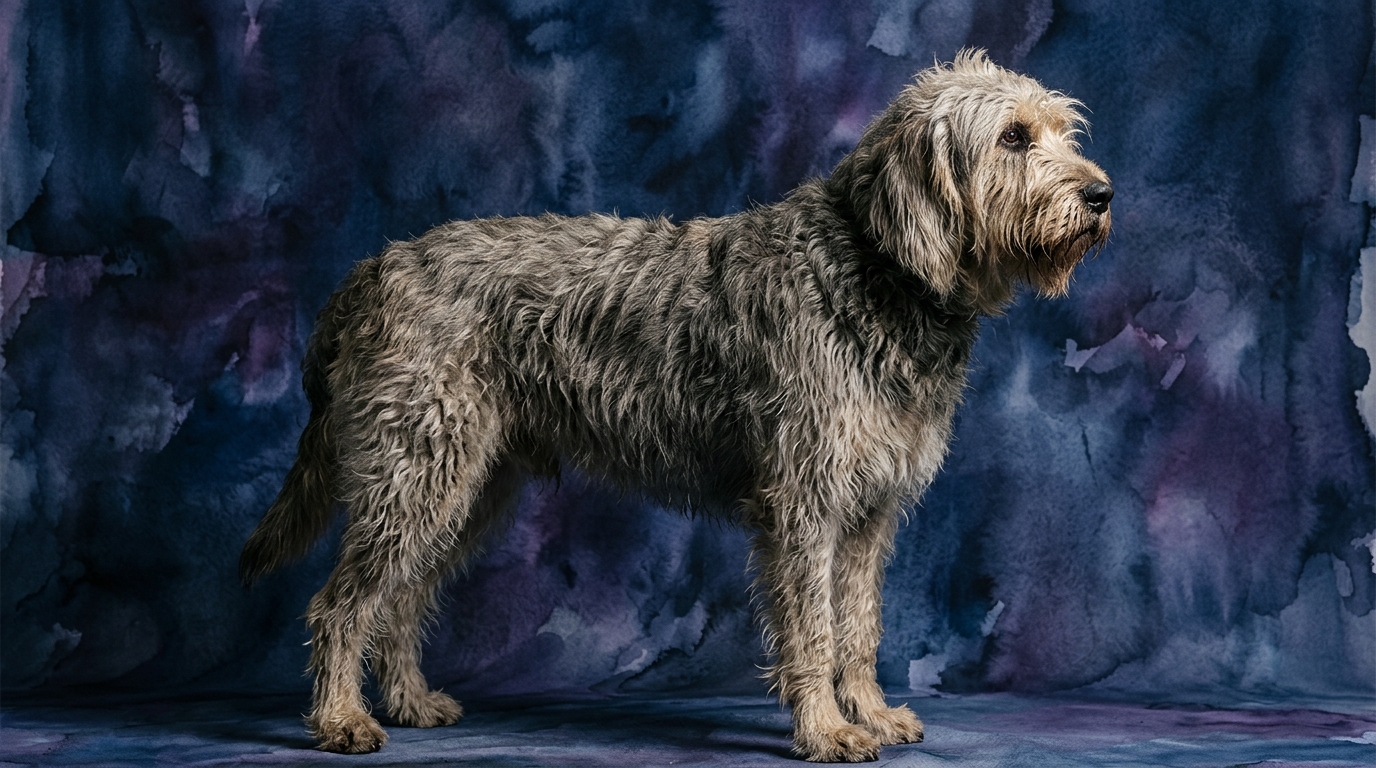
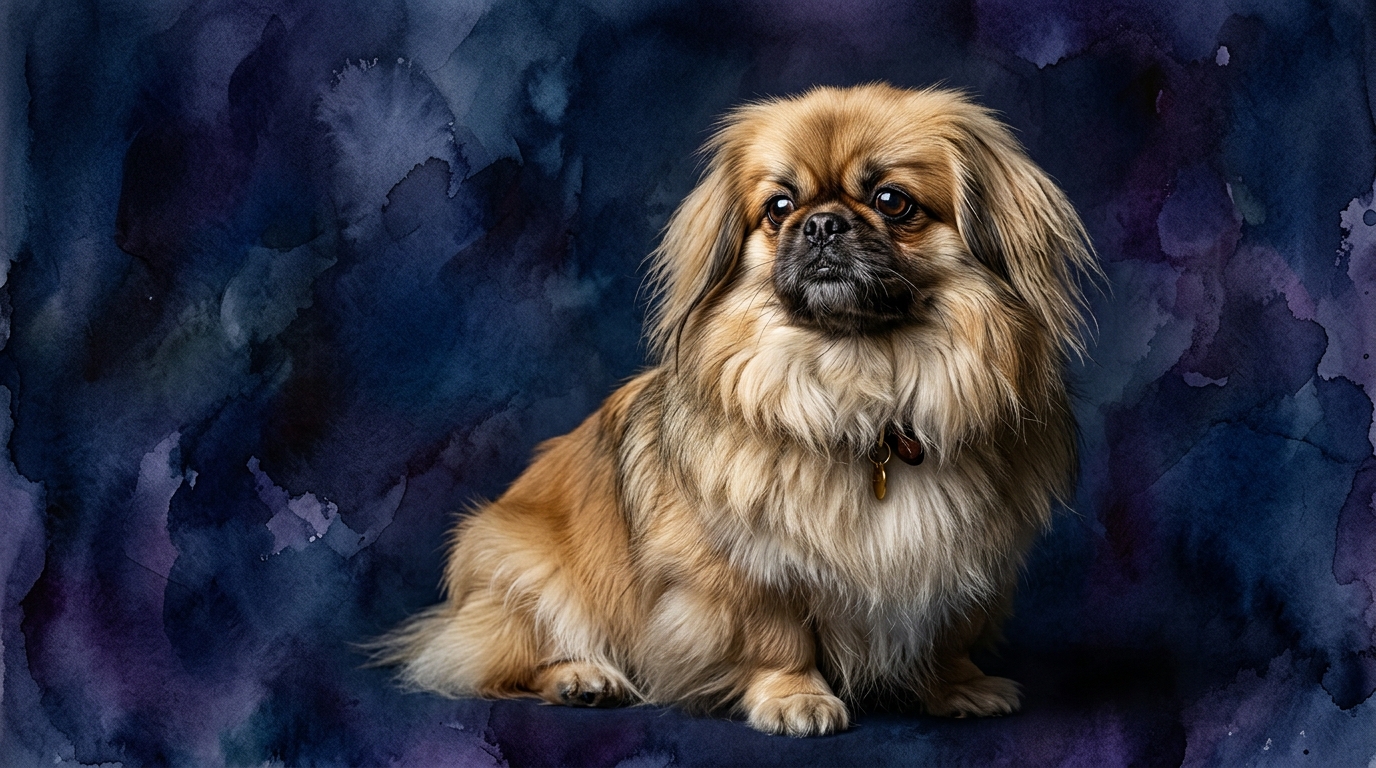
Side-by-Side IQ Profile
To truly understand the mental capabilities of the Otterhound and the Pekingese, we must look beyond their matching 3/5 scores in each category and consider how these attributes manifest within their distinct breed contexts.
For the Otterhound, a breed from the Hound group, their cognitive dimensions are deeply intertwined with their historical role as scent hounds. Their Problem Solving (3/5) is primarily practical, focused on navigating complex environments and overcoming physical obstacles while tracking a scent. This isn't about abstract puzzles, but rather real-world application of their senses to achieve a goal. Their Training Speed (3/5) reflects a moderate pace of learning, often influenced by their independent nature and powerful scent drive, which can sometimes divert their attention from commands. Social Intelligence (3/5) in an Otterhound means a capacity for strong family bonds and cooperative interaction within a 'pack' setting, understanding social cues among both humans and other canines. Their Instinctive Drive (3/5) is overwhelmingly centered around their olfactory prowess and the relentless pursuit of a trail, a foundational aspect of their mental makeup. Finally, their Memory (3/5) is particularly strong for recalling specific routes, scent patterns, and the details of past experiences, crucial for sustained tracking and navigation.
The Pekingese, a member of the Toy group, displays its cognitive strengths through a lens of companionship and domesticity. Their Problem Solving (3/5) is adeptly applied to their immediate environment, often figuring out the most effective ways to secure comfort, attention, or a desired outcome from their human companions. This might involve subtle manipulations or clever positioning rather than physical challenges. Their Training Speed (3/5) is moderate, but often tempered by a strong, independent will; they learn what benefits them and may disregard commands if unmotivated. Social Intelligence (3/5) in a Pekingese is highly refined towards human interaction, enabling them to read subtle emotional cues and form deeply devoted bonds with their chosen people, though they can be reserved with strangers. Their Instinctive Drive (3/5) manifests as a strong desire for comfort, companionship, and a vigilant, territorial nature, acting as keen observers and protectors of their home domain. Their Memory (3/5) is excellent for routines, familiar people, and the specific behaviors that lead to favorable outcomes, contributing to their consistent and responsive companionship within the household.
Where Otterhound Wins Cognitively
The Otterhound's cognitive strengths distinctly shine in areas requiring sustained focus, independent decision-making in complex environments, and the application of their profound sensory capabilities. Their problem-solving, while rated 3/5, is a robust, enduring process when faced with a challenge like deciphering a faint scent trail across varied terrain. An Otterhound will meticulously work through obstacles, utilizing their powerful nose and memory to piece together environmental information, demonstrating a practical intelligence that few breeds can match for sheer perseverance in the field. This isn't just about following; it's about interpreting nuanced olfactory data, recalling past successful strategies, and making autonomous choices about the most probable path forward. Their instinctive drive, equally rated 3/5, acts as a powerful, self-sustaining motivator for these tasks, allowing them to remain engaged and mentally stimulated for extended periods, making them truly exceptional at tasks requiring prolonged, self-directed exploration and navigation.
Where Pekingese Wins Cognitively
In contrast, the Pekingese excels in a different, yet equally complex, cognitive domain: nuanced social interaction and domestic adaptability. Their problem-solving, also a 3/5, is exquisitely tailored to the human-canine bond within a home environment. A Pekingese might cleverly figure out how to position themselves for maximum lap access, or how to use a specific vocalization to prompt a desired human action, like getting a treat or an extra cuddle. Their social intelligence, similarly rated 3/5, allows them to read subtle shifts in human mood and respond with appropriate, often comforting, behaviors. They are masters of silent communication, using glances and body language to convey their wishes, a skill developed over centuries of close companionship. This deep understanding of human social dynamics, combined with their memory for routines and preferences, grants them a distinct edge in fostering an intimate, responsive relationship with their owners, making them adept at navigating complex household dynamics and subtly influencing their human companions.
Which is Easier to Train and Why
Determining which breed is 'easier' to train is less about raw intellectual capacity and more about alignment with human objectives and inherent breed temperament, even with both scoring 3/5 in training speed. The Otterhound, with its strong instinctive drive and independent nature, often requires training that taps into its natural abilities, particularly scent work. They might learn a 'stay' command quickly if it means they get to resume an exciting trail, but can be easily distracted if a more compelling scent arises. Training an Otterhound demands patience, consistency, and a willingness to make learning feel like a game or a task that engages their nose and body. Their independence means they are less likely to be blindly obedient and more likely to question the purpose of a command if it doesn't align with their current interest.
The Pekingese, while equally capable of learning, presents a different set of training considerations. Their 3/5 training speed is often tempered by a strong, opinionated will. They learn quickly what benefits them, such as 'sit' leading to a treat, but may ignore commands if they don't see an immediate reward or if they prefer to do something else. Potty training can be a particular challenge due to their small size and sometimes stubborn nature, requiring diligent consistency. Their social intelligence, while high, means they are adept at training their humans as much as being trained themselves, using their charm and specific vocalizations to get their way. Therefore, while both can be trained, the Otterhound responds best to engaging, instinct-driven tasks, whereas the Pekingese requires consistent, positive reinforcement paired with an understanding of their inherent desire for comfort and companionship, along with a firm but gentle hand to navigate their strong will. Neither is inherently 'easy' in the conventional sense, but rather require trainers who understand their unique motivational levers.
Which Suits Active Owners vs Relaxed Owners
The Otterhound and Pekingese cater to vastly different owner lifestyles, a distinction that extends beyond their physical needs to their cognitive preferences. The Otterhound, with its robust physical presence and powerful instinctive drive (3/5), thrives with active owners who enjoy outdoor adventures. Their cognitive profile, marked by problem-solving related to exploration and a memory for detailed environments, makes them ideal companions for hiking, scent work, or long, meandering walks where they can engage their nose and body. They require significant mental and physical stimulation to prevent boredom and destructive behaviors, making them suitable for individuals or families who can integrate a curious, energetic canine into their active routine.
Conversely, the Pekingese, while possessing a comparable cognitive score, is perfectly suited for more relaxed owners. Their problem-solving and social intelligence (both 3/5) are geared towards navigating a comfortable home environment and fostering deep, intimate bonds. They are content with shorter, leisurely strolls and prefer indoor companionship, often curled up on a lap or observing their surroundings from a prime vantage point. Their alertness and memory make them excellent, albeit compact, watchdogs, but their primary desire is for comfort and close human interaction. They are a wonderful match for individuals who cherish a devoted, low-impact companion who offers subtle communication and a strong personality within a calm domestic setting.
The Verdict
Choose an Otterhound if you seek a robust, curious canine partner for outdoor adventures and are prepared to engage their powerful scent drive and independent spirit with consistent, engaging training.
Opt for a Pekingese if you desire a devoted, charming, and opinionated companion who thrives in a relaxed home environment and offers profound social interaction and subtle communication.
🧠 Find Your Pet's IQ Score
Our Pet IQ Lab assessment covers 25+ tests across 5 cognitive dimensions — personalized to your breed.
Take the Full IQ Test →Frequently Asked Questions
Do Otterhounds and Pekingese have similar learning capabilities despite their different sizes?
Yes, according to The Cosmic Pet Pet IQ Lab, both breeds score 3/5 in training speed, indicating a moderate learning capability. However, their motivations and preferred learning styles differ significantly based on their breed purpose and temperament.
How does their problem-solving ability differ if both are rated 3/5?
While numerically equal, an Otterhound's problem-solving often involves navigating physical environments or scent puzzles, whereas a Pekingese typically applies their problem-solving to social dynamics within a home, such as gaining attention or securing comfort. It's about context and application.
Which breed is more adaptable to new situations or people?
The Otterhound's social intelligence and natural curiosity (3/5 each) make them generally more adaptable to varied social settings and environments, especially if their scent drive is engaged. The Pekingese, while socially intelligent within their chosen circle, can be more reserved with strangers and prefers familiar routines and surroundings.