
A Side-by-Side Cognitive Profile
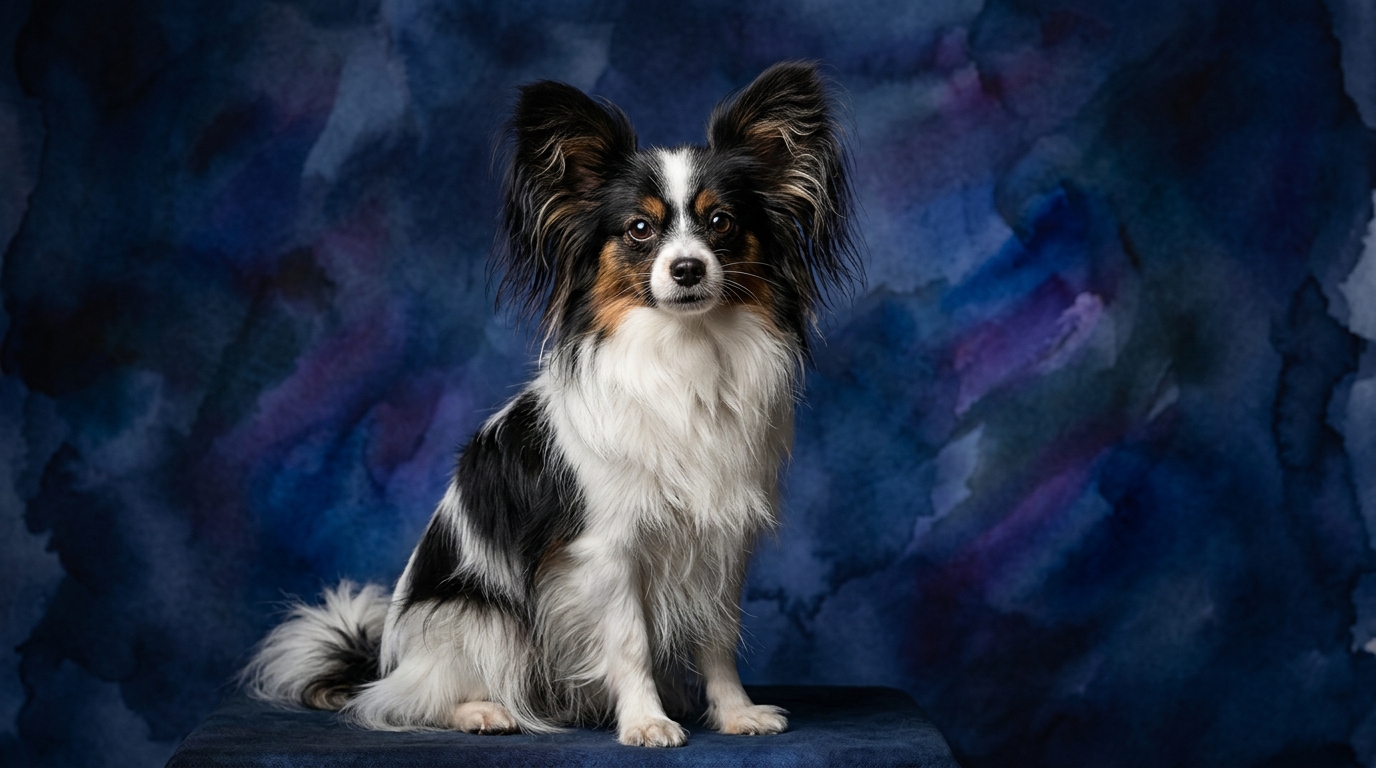
The Papillon, ranking an impressive #8 on the Coren scale, exhibits a cognitive profile geared towards rapid learning and social engagement. Their Problem Solving is rated 5/5, indicating a quick ability to assess and navigate novel situations, often finding creative solutions. Training Speed is also 5/5, reflecting their eagerness and capacity to grasp new commands and complex sequences with minimal repetition.
With a Social Intelligence of 4/5, Papillons are adept at reading human cues and forming strong, interactive bonds, often using their understanding to communicate needs or even subtly influence their owners. Their Instinctive Drive is 3/5, suggesting some natural inclinations but not an overwhelming one that supersedes learned behaviors. Crucially, their Memory is 5/5, allowing them to retain vast amounts of information, from complex tricks to long-term associations.
In contrast, the Basset Hound, positioned at #71 on the Coren scale, presents a different set of cognitive priorities, heavily influenced by their ancestral role as scent hounds. Their Problem Solving is 3/5, meaning they can navigate challenges, though often through persistence and their primary sense of smell rather than abstract reasoning. Training Speed is 3/5, indicating a moderate learning pace that requires patience and consistent motivation.
Social Intelligence for the Basset is 3/5; they are affectionate and loyal companions, yet can be more independent and less overtly focused on human directives compared to breeds with higher scores. Their Instinctive Drive is 3/5, which, for a Basset, is overwhelmingly directed towards scent work, often overriding other impulses. Their Memory is also 3/5, allowing them to recall routines and basic commands, but perhaps not with the same intricate detail or speed as a Papillon.
Where the Papillon Excels Cognitively
The Papillon's cognitive architecture shines in areas demanding versatility, speed, and abstract thought. Their top scores in Problem Solving (5/5) and Training Speed (5/5) mean they are exceptionally adept at learning new tasks, adapting to varied environments, and mastering intricate sequences of commands. For instance, a Papillon can quickly generalize a learned behavior from one context to another, or figure out how to manipulate puzzle toys designed for larger, more complex breeds.
Their superior Memory (5/5) allows them to accumulate a vast repertoire of tricks, agility courses, and obedience commands, retaining them over long periods without significant refresher training. This cognitive retention, combined with their 4/5 Social Intelligence, makes them highly responsive to subtle human cues and capable of complex communication, often initiating interactions or responding to unspoken expectations. They thrive on mental challenges, viewing learning as an engaging game rather than a chore.
Where the Basset Hound's Strengths Lie
While the Basset Hound's general cognitive scores might appear modest, their intelligence is profoundly specialized, particularly in their olfactory domain. Their 3/5 Instinctive Drive is not a weakness but a powerful, highly refined mechanism for scent detection and tracking. Bassets possess an unparalleled ability to follow faint, aged trails, discriminate between myriad odors, and maintain unwavering focus on a scent for hours, a feat of cognitive endurance and sensory processing that few breeds can match.
This specialized problem-solving through scent is a unique cognitive victory. A Basset's "problem" is often locating a hidden object or following a complex trail, and their methods are deeply ingrained and incredibly effective. Their 3/5 Social Intelligence, while not as overtly demonstrative as a Papillon's, supports their ability to work cooperatively in a "pack" setting for tracking, even if their primary focus remains on the scent rather than constant human interaction. Their persistence, often perceived as stubbornness, is a cognitive trait vital for successful trailing.
Training Dynamics: Papillon's Eagerness vs. Basset's Independence
Training a Papillon is generally a far more straightforward and rewarding experience for most owners, largely due to their exceptional 5/5 Training Speed and 5/5 Memory. They approach learning with enthusiasm, quickly grasping new concepts and remembering them. Their 4/5 Social Intelligence means they are often motivated by the desire to engage with and please their human companions, viewing training as a collaborative activity and a source of positive attention. Behavioral differences include their ability to learn abstract concepts like "stay" or "come" reliably in varied environments, and their quick recovery from distractions.
In contrast, training a Basset Hound, with its 3/5 Training Speed and 3/5 Memory, requires a significant investment of patience and understanding of their inherent nature. Their powerful 3/5 Instinctive Drive for scent work means that any intriguing odor can easily override commands, making recall or focus challenging in uncontrolled environments. Bassets learn, but often at their own deliberate pace, and their motivation is frequently internal—what's in for them, or what scent needs to be investigated. Real behavioral differences include their tendency to "tune out" during training sessions if a more compelling scent emerges, or their slow, methodical approach to executing a command, sometimes weighing the immediate gratification of a smell against a delayed reward. Consistency, high-value rewards, and short, engaging sessions are paramount for Bassets.
Matching Breeds to Owner Lifestyles
The Papillon is an ideal companion for active owners who relish mental engagement and structured activities. Their high problem-solving and training speed make them excellent candidates for canine sports such as agility, obedience, or rally, where they can channel their cognitive energy and physical nimbleness. Owners who enjoy teaching tricks, going on varied walks, and providing consistent mental stimulation will find a Papillon thrives in their care, remaining an interactive and responsive partner.
The Basset Hound, conversely, is better suited for more relaxed owners who appreciate a calm, affectionate presence indoors but understand the imperative of their unique drives. While they are not demanding of high-intensity physical activity, their profound scenting abilities mean they require purposeful outdoor exploration. This might involve leisurely, leashed walks where they can sniff to their heart's content, or structured scent games in a secure area. Owners must be patient with their independent streak and be willing to embrace their methodical pace, finding joy in their specialized focus rather than expecting a dog eager for fast-paced, complex obedience.
The Verdict
For owners seeking a highly engaged, quick-learning companion eager for interactive training, canine sports, and a dog that thrives on consistent mental challenges and social interaction, the Papillon is an excellent choice.
For individuals who appreciate a calm, affectionate, yet independent companion, understanding their profound scenting abilities and patient approach to training, who enjoy long, scent-driven walks, the Basset Hound will be a rewarding partner.
🧠 Find Your Pet's IQ Score
Our Pet IQ Lab assessment covers 25+ tests across 5 cognitive dimensions — personalized to your breed.
Take the Full IQ Test →Frequently Asked Questions
Are Papillons good for first-time dog owners?
Yes, their eagerness to learn, high social intelligence, and adaptability can make them a rewarding choice for new owners willing to invest in consistent positive reinforcement training and mental enrichment. They generally adapt well to various living situations and handler experience levels.
How much exercise does a Basset Hound need?
While seemingly laid-back, Basset Hounds require moderate daily exercise, typically 30-60 minutes of walking, often involving opportunities for controlled sniffing to satisfy their instinctual drive. Mental stimulation through scent games and exploration is as crucial as physical activity for their well-being.
Can Basset Hounds be trained for agility?
While possible to teach them some elements, their unique body structure (long back, short legs) and independent, scent-driven nature make them less naturally suited for traditional agility courses compared to more nimble breeds. They typically excel more in activities like tracking, scent work, or obedience that aligns with their specific cognitive strengths.