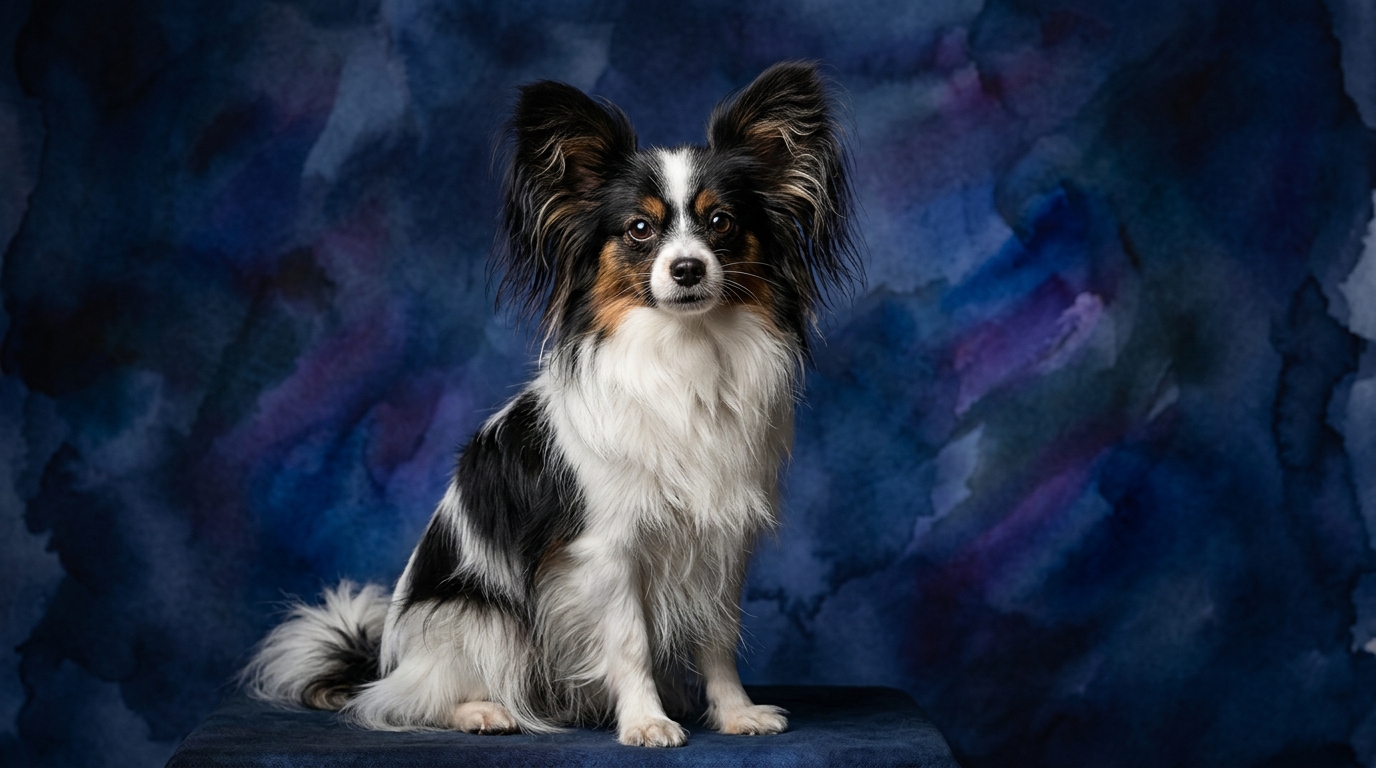
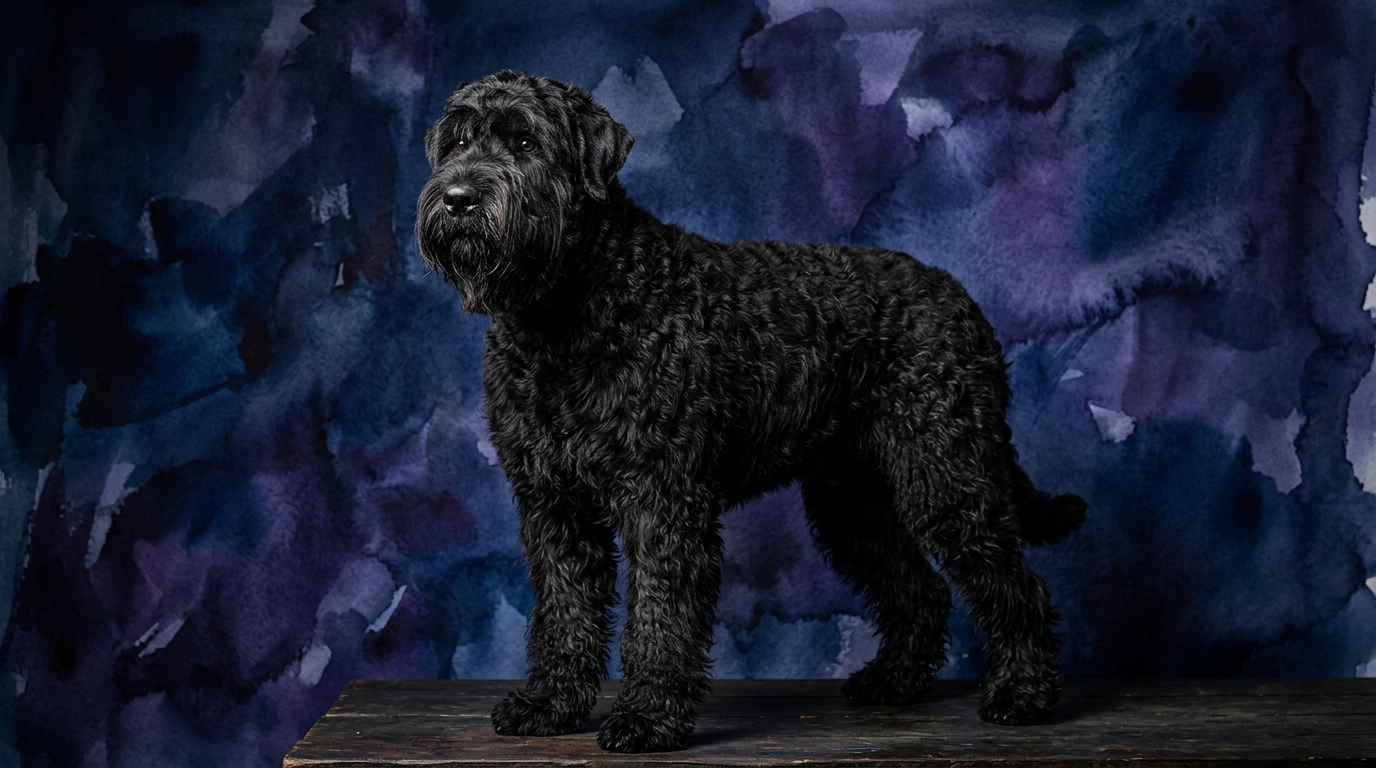
Side-by-Side IQ Profile: Papillon vs. Black Russian Terrier
The Cosmic Pet Pet IQ Lab provides a unique lens through which to examine breed-specific cognitive traits, moving beyond generalized notions of "smartness." For the Papillon, a Toy breed ranked #8 by Coren, its profile paints a picture of exceptional mental agility. It scores a perfect 5/5 in Problem Solving, indicating a remarkable capacity to navigate complex situations, figure out puzzles, and devise solutions to challenges, from opening latches to understanding intricate sequences. Its Training Speed is also 5/5, meaning new commands are often grasped in one or two repetitions, making them extraordinarily quick studies. Social Intelligence stands at 4/5, reflecting their adeptness at reading human emotions, anticipating cues, and understanding social dynamics within the household. An Instinctive Drive of 3/5 suggests a moderate level of inherent behaviors like chasing or herding, present but not overwhelming. Finally, a Memory score of 5/5 highlights their excellent recall of commands, routines, and experiences, whether positive or negative, contributing to their reputation as highly responsive companions.
In stark contrast, the Black Russian Terrier, a formidable Working breed not Coren-ranked, presents a profile geared towards different strengths. Its Problem Solving score of 3/5 indicates a practical, rather than abstract, intelligence. They are capable of assessing real-world scenarios pertinent to their duties, such as identifying potential threats or navigating their territory, but are less inclined towards solving complex, abstract puzzles. Their Training Speed, also 3/5, means they require more consistent repetition and patience during training, but once a command is learned, it is typically deeply ingrained and reliably executed. Social Intelligence at 3/5 reflects a focused loyalty to their immediate family, often reserved with strangers and prioritizing their role within the protective unit. An Instinctive Drive of 3/5 points to a strong, inherent guardian and protective nature, coupled with a moderate prey drive. Their Memory, rated at 3/5, is reliable for essential commands and established routines, ensuring they retain crucial information for their working role, though perhaps without the intricate detail of a Papillon.
Where the Papillon Excels Cognitively
The Papillon's cognitive strengths are evident in its exceptional capacity for intricate learning and nuanced communication. Their 5/5 in Problem Solving translates into a dog that isn't just following commands but actively thinking through situations. This might manifest as them strategically moving obstacles to reach a desired toy, figuring out how to manipulate a door handle, or even understanding multi-step commands in novel contexts. Their rapid Training Speed (5/5) means they thrive on variety in learning, quickly mastering complex agility courses, elaborate trick sequences, or advanced obedience cues that would challenge many other breeds. This quick uptake makes them stellar candidates for dog sports requiring precision and speed.
Furthermore, their high Social Intelligence (4/5) enables them to pick up on the most subtle shifts in human tone, body language, and mood. This allows for a deeply responsive companionship, where they can often anticipate their owner's needs or reactions, sometimes even appearing to 'read minds.' Their stellar Memory (5/5) ensures that once a concept or command is learned, it is retained for extended periods, even after breaks in training. This combination of swift learning, astute social awareness, and enduring recall makes the Papillon a marvel of canine adaptability, capable of excelling in environments that demand flexible thinking and precise execution.
Cognitive Strengths of the Black Russian Terrier
While the Black Russian Terrier's cognitive profile might appear less 'flashy' in abstract problem-solving, its strengths lie in a different, equally valuable domain: practical, steadfast working intelligence. Their 3/5 in Problem Solving, combined with their guardian instincts, translates into a dog that excels at real-world threat assessment and situational awareness. They are adept at recognizing patterns that signify potential danger, discerning unfamiliar presences, and understanding territorial boundaries. This isn't about solving a puzzle box, but about consistently assessing their environment for the safety of their family, a nuanced cognitive task requiring focused attention and discernment.
The Black Russian Terrier's Training Speed (3/5), though not as rapid as the Papillon's, leads to deeply ingrained and highly reliable behaviors once learned. This reliability is a critical cognitive asset for a working dog, ensuring that vital commands, especially those related to protection and control, are executed without hesitation, even under pressure. Their Memory (3/5) is robust enough to retain these critical commands and routines over time, supporting their consistent performance in their role. The BRT's cognitive profile is thus optimized for vigilance, unwavering loyalty to its family, and the consistent execution of duties that demand both physical and mental endurance, making them exceptional protectors rather than playful performers.
Which is Easier to Train and Why?
Based on their IQ profiles, the Papillon is unequivocally easier to train for a broader range of tasks, particularly those involving intricate commands or rapid sequence learning. Their 5/5 Training Speed means they pick up new cues almost instantly, often understanding the desired behavior after just a few repetitions. This eagerness to learn, coupled with their high Social Intelligence, makes them highly responsive to positive reinforcement and enthusiastic about engaging with their handlers. Papillons often thrive on training as a form of mental enrichment, readily participating in trick training, agility, or competitive obedience with minimal frustration for the trainer. Their problem-solving abilities also mean they can sometimes 'figure out' what you want before you even fully teach it.
The Black Russian Terrier, with a 3/5 Training Speed, requires a different approach. Training a BRT demands patience, consistency, and clear, firm communication. While they are capable learners, they will need more repetitions to solidify a command, and their focus might be more on understanding their role and boundaries rather than playful engagement. Their training is less about quick tricks and more about establishing a strong, respectful working relationship and clear expectations. Real behavioral differences include the Papillon's tendency to offer behaviors for rewards versus the BRT's more deliberate, sometimes stubborn, approach to learning. A Papillon might try ten different things to earn a treat; a BRT might wait for a very clear instruction before acting. For the BRT, consistency is key; for the Papillon, variety and challenge keep them engaged.
Suitability for Active vs. Relaxed Owners
The Papillon's cognitive profile makes them an excellent fit for owners who are active in a mentally stimulating way. While they appreciate physical exercise, their exceptional Problem Solving and Training Speed mean they truly thrive when their minds are regularly engaged with puzzles, learning new tricks, participating in dog sports like agility or rally, or even just engaging in complex interactive games. They are adaptable to various living situations, including apartments, but require consistent mental enrichment to prevent boredom and potential behavioral issues. Owners who enjoy teaching, exploring new activities, and providing nuanced social interaction will find the Papillon an incredibly rewarding and responsive companion.
The Black Russian Terrier, on the other hand, is best suited for experienced and committed owners who are active in a purposeful, structured manner. Their working breed heritage, coupled with their strong protective instincts and formidable physical presence, means they require substantial physical exercise, rigorous training, and consistent socialization from a young age. A relaxed owner who cannot provide clear leadership, consistent boundaries, and ample opportunities for purposeful activity would likely find a BRT overwhelming. They are not dogs for casual companionship; they thrive with owners who understand and respect their working drives, providing them with a 'job' through advanced obedience, protection sports, or extensive outdoor activities. Their steadfast nature requires an equally steadfast owner dedicated to their specific needs.
The Verdict
Choose the Papillon if you seek a highly responsive, adaptable, and quick-witted companion eager to learn tricks, excel in dog sports, and thrive on intricate mental stimulation.
Choose the Black Russian Terrier if you are an experienced owner prepared for a dedicated, powerful, and protective working dog that thrives on clear structure, consistent training, and purposeful activity, valuing steadfastness over playful wit.
🧠 Find Your Pet's IQ Score
Our Pet IQ Lab assessment covers 25+ tests across 5 cognitive dimensions — personalized to your breed.
Take the Full IQ Test →Frequently Asked Questions
Are Papillons good for first-time dog owners?
Yes, their eagerness to learn, high social intelligence, and adaptability often make them suitable for first-time dog owners, provided these individuals commit to consistent mental stimulation, socialization, and positive reinforcement training. They are highly communicative and responsive.
Do Black Russian Terriers require a lot of exercise?
Absolutely. As a large working breed, Black Russian Terriers need substantial daily exercise, including long walks, purposeful training sessions, and opportunities for mental challenges to prevent boredom and potential destructive behaviors. Their physical and mental stamina is considerable.
How do their protective instincts differ?
The Papillon's protective instinct is typically expressed through alert barking at perceived threats or strangers, often acting as a 'watchdog.' The Black Russian Terrier possesses a formidable, historically developed protective drive, making them serious and imposing guardians of their family and territory, capable of more direct intervention.