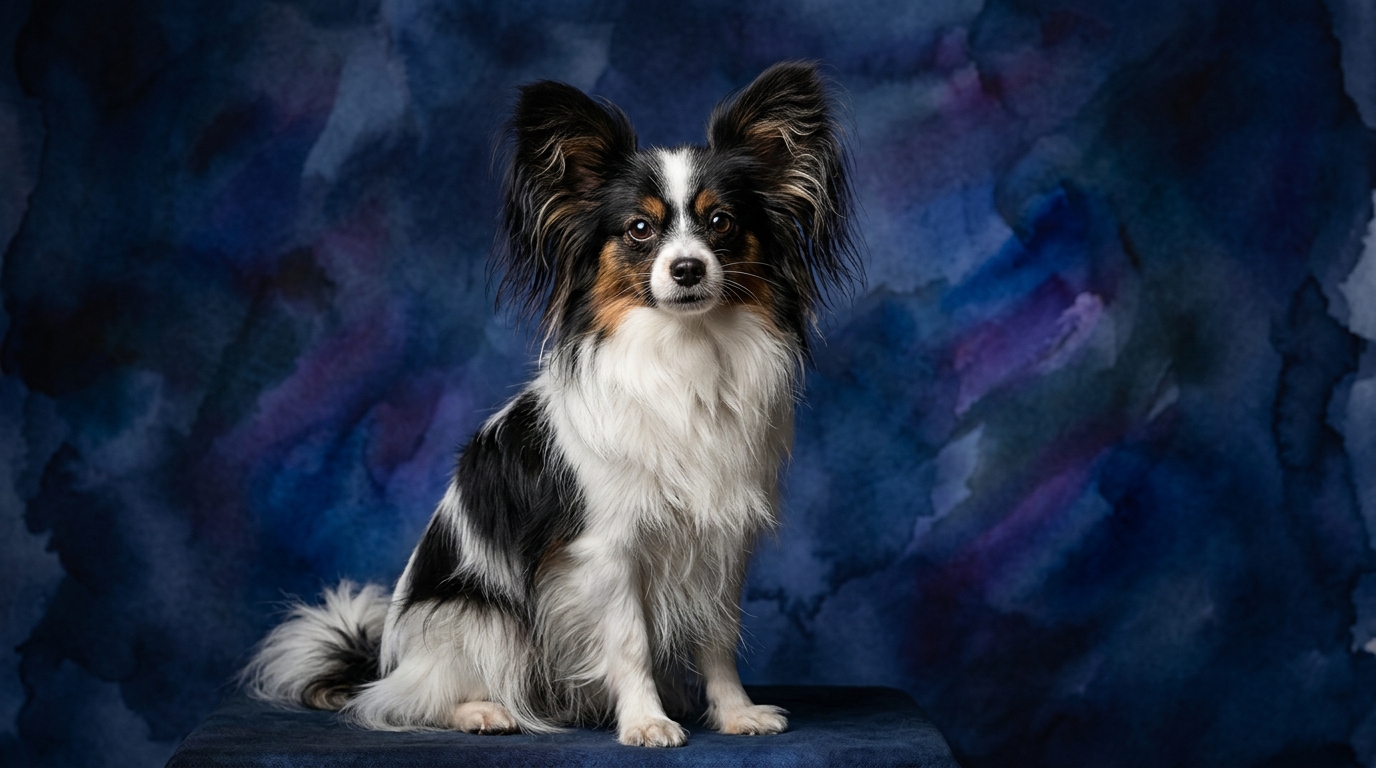
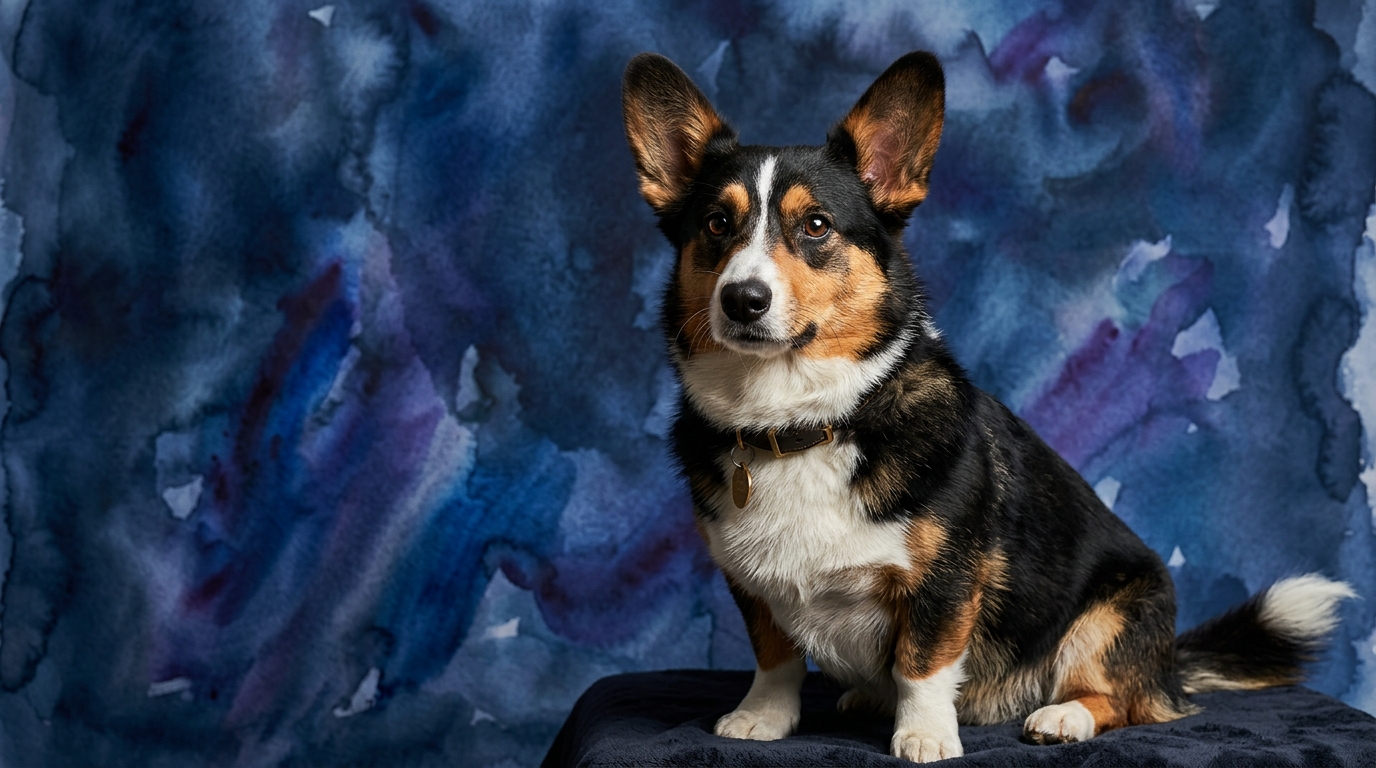
Side-by-Side IQ Profile: Papillon vs. Cardigan Welsh Corgi
The Cosmic Pet Pet IQ Lab employs five key dimensions to evaluate canine cognitive function, offering a detailed lens through which to view breed-specific aptitudes. For the Papillon, ranked #8 on the Coren scale, and the Cardigan Welsh Corgi, at #26, these dimensions illuminate their unique mental landscapes.
**Papillon IQ Dimensions:** The Papillon demonstrates exceptional cognitive agility across several areas. Their Problem Solving is rated 5/5, indicating an outstanding ability to quickly analyze novel situations, figure out complex mechanisms, and creatively adapt strategies to achieve desired outcomes. Training Speed also earns a perfect 5/5, reflecting their rapid grasp of new commands and sequences, often needing only a few repetitions to solidify learning. Social Intelligence stands at 4/5, meaning they are quite adept at interpreting human cues and intentions, often forming highly responsive and reciprocal bonds. Their Instinctive Drive is 3/5, suggesting a moderate influence of inherent behaviors like chasing or exploring, but less dominant than in working breeds. Finally, Memory is a remarkable 5/5, allowing them to retain vast amounts of information, including complex routines, names, and even past interactions, over extended periods.
**Cardigan Welsh Corgi IQ Dimensions:** The Cardigan Welsh Corgi, while possessing a different cognitive profile, exhibits robust and practical intelligence. Their Problem Solving is rated 4/5, showcasing a persistent and methodical approach to challenges, often employing a thoughtful, trial-and-error strategy rather than immediate, flashy solutions. Training Speed is 4/5, indicating a good capacity for learning new tasks, though they may require more consistent reinforcement and motivation than their Papillon counterparts. Social Intelligence is 3/5, suggesting they are aware of their human companions and pack dynamics, but might be more focused on their role or task rather than purely social nuances, sometimes appearing more independent. Instinctive Drive is 3/5, reflecting their herding heritage with a moderate urge to 'manage' their environment or family members, sometimes manifesting as heel-nipping. Their Memory is 4/5, allowing them to reliably recall learned commands, routines, and boundaries, essential for a working dog, though perhaps not with the same breadth or detail as the Papillon.
Where the Papillon Wins Cognitively
The Papillon’s cognitive strengths truly shine in areas demanding speed, precision, and intricate mental manipulation. With a 5/5 in both Problem Solving and Training Speed, they possess a remarkable capacity for rapid acquisition of complex behaviors and abstract concepts. This means a Papillon is more likely to quickly decipher a multi-step puzzle toy, string together a long sequence of agility obstacles, or learn a new trick involving multiple props in significantly less time than a Corgi. Their fine motor control and acute focus, combined with their eager-to-please temperament, make them champions of detailed obedience and specialized dog sports, where quick thinking and flawless execution are paramount.
Their superior Memory (5/5) also provides a distinct advantage, allowing them to recall an extensive repertoire of commands and experiences with impressive accuracy. A Papillon might remember a specific toy's location from months ago or a complex training routine after a long break, demonstrating a robust cognitive database. This recall, combined with their 4/5 Social Intelligence, allows for highly nuanced communication and responsiveness, enabling them to anticipate their handler's next move or mood with greater perceptiveness than the Corgi.
Where the Cardigan Welsh Corgi Wins Cognitively
The Cardigan Welsh Corgi's cognitive strengths lie in their practical, persistent application of intelligence, particularly rooted in their herding heritage. While their Problem Solving is rated 4/5, it manifests as a thoughtful, enduring approach. A Corgi might take longer to solve a puzzle, but they will often stick with it, trying different angles until they succeed, demonstrating a resilience that is invaluable. This persistence translates into effective resource management and boundary patrol, stemming from their instinctive drive to oversee and organize their surroundings.
Their 3/5 Social Intelligence, while lower than the Papillon's, doesn't imply a lack of awareness, but rather a more independent and purpose-driven interaction style. Corgis are adept at understanding the social structure of their family and often take on a 'supervisory' role, making independent decisions that benefit the 'pack' in their eyes, such as alerting to perceived threats or gently nudging family members into preferred locations. Their 4/5 Memory and Training Speed, though not as explosive as the Papillon's, are highly reliable for retaining practical tasks and routines, making them dependable partners in structured environments where consistency is key.
Which is Easier to Train and Why
Based on our IQ Lab metrics, the Papillon (Training Speed 5/5, Memory 5/5) presents as the generally easier breed to train. Their rapid acquisition of commands, coupled with an eagerness to engage and a strong desire to please their handler, means they often pick up new skills with minimal repetition. Their smaller stature also makes them physically easier to manage during early training stages, allowing for more precise shaping of behaviors. They thrive on the mental stimulation of learning and excel in activities like competitive obedience or rally, where quick thinking and a vast vocabulary of commands are rewarded.
The Cardigan Welsh Corgi (Training Speed 4/5, Memory 4/5) is certainly trainable, but their training journey may require more patience and consistency. Their innate herding instincts can sometimes lead to an independent streak or a tendency to 'herd' their owners, requiring clear boundaries and consistent reinforcement. While they learn reliably, they may not absorb new information with the same lightning speed as a Papillon. Owners will find success by making training engaging, rewarding, and demonstrating the practical value of a command from the Corgi's perspective, rather than relying solely on a desire to please. Their problem-solving persistence means they won't give up easily, which can be an asset in training if channeled correctly, but can also mean they'll persistently test boundaries.
Which Suits Active Owners vs. Relaxed Owners
For the truly active owner seeking a canine partner for demanding mental and physical pursuits, the Papillon often makes an ideal match. Their 5/5 Problem Solving and Training Speed mean they excel in dog sports such as agility, flyball, and advanced obedience, where quick decisions, precise movements, and complex sequences are routine. Owners who enjoy teaching an extensive array of tricks, engaging in daily puzzle toy challenges, and providing consistent, varied mental enrichment will find the Papillon a willing and enthusiastic participant. While small, they possess surprising stamina and require regular opportunities to expend their mental and physical energy; a relaxed owner who neglects this might find their Papillon inventing their own, less desirable, forms of entertainment.
The Cardigan Welsh Corgi, with their robust build and herding legacy, suits owners who appreciate a dog with a purposeful demeanor and a need for structured activity. While they don't demand the frantic pace of some working breeds, Corgis require consistent daily exercise and mental engagement to prevent boredom and channeling their instincts inappropriately. They are well-suited for owners who enjoy brisk walks, hiking, or participating in activities like scent work, herding trials, or rally obedience, which tap into their methodical problem-solving and memory skills. Relaxed owners can certainly accommodate a Corgi, provided they commit to a consistent routine of walks, playtime, and regular mental tasks, understanding that a Corgi is not content to be a mere lap decoration but thrives on having a 'job' or a role within the household.
The Verdict
Choose the Papillon if you seek a nimble, highly responsive companion eager for complex mental challenges, rapid learning, and a close, communicative partnership.
Opt for the Cardigan Welsh Corgi if you prefer a sturdy, purposeful partner who applies a thoughtful, persistent approach to tasks and appreciates a clear role within the family unit.
🧠 Find Your Pet's IQ Score
Our Pet IQ Lab assessment covers 25+ tests across 5 cognitive dimensions — personalized to your breed.
Take the Full IQ Test →Frequently Asked Questions
Are Papillons good for first-time dog owners?
Yes, their exceptional training speed and desire to please can make them excellent companions for novice owners, provided their mental stimulation and exercise needs are consistently met. Their manageable size also contributes to their suitability for those new to dog ownership.
Do Cardigan Welsh Corgis bark a lot?
Corgis can be quite vocal, often using barks to alert their family to perceived threats or to express their herding instincts when they feel things are out of order. Consistent training, early socialization, and managing their environment can help moderate this natural inclination.
What kind of mental stimulation do these breeds need?
Papillons thrive on puzzle toys, learning new tricks, and engaging in dog sports like agility or rally. Corgis benefit from consistent training, scent work, and activities that allow them to use their methodical problem-solving and 'supervising' instincts in constructive, purposeful ways.