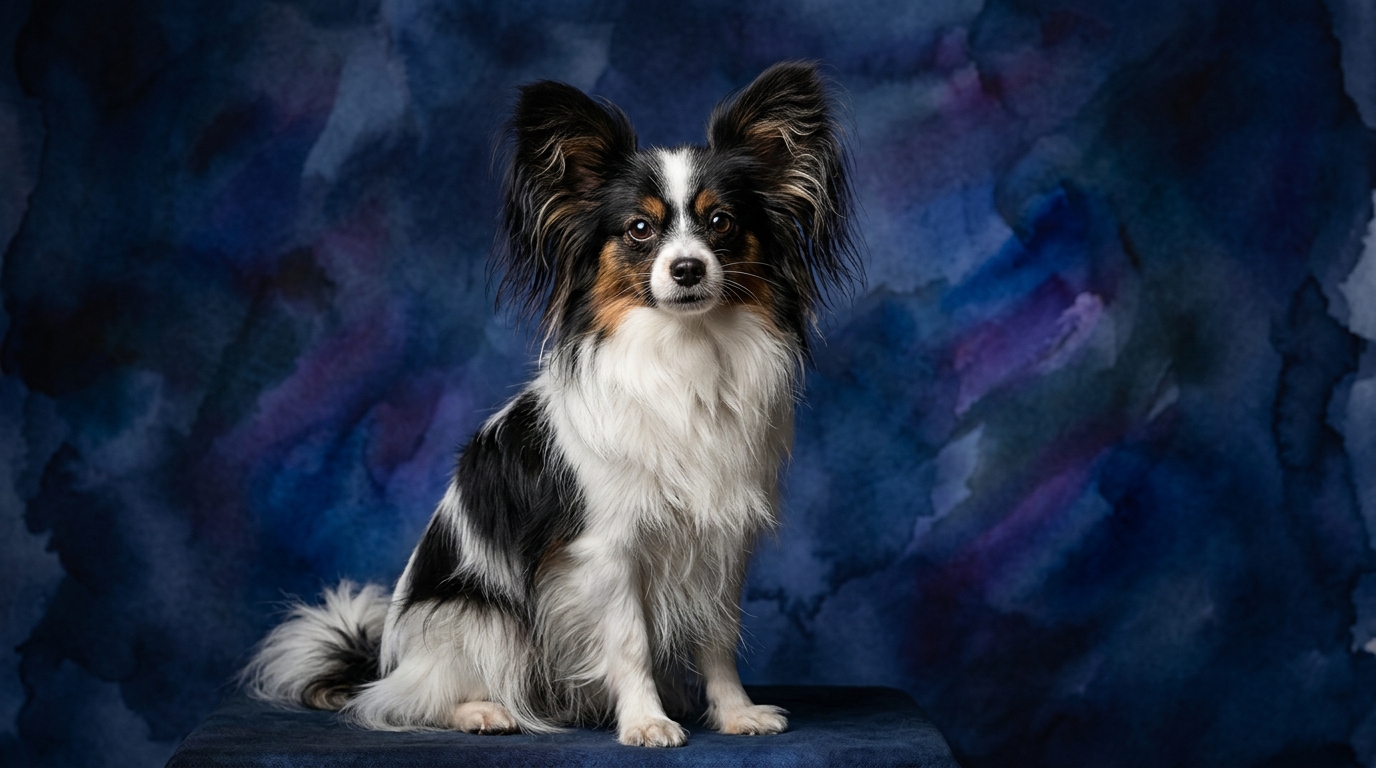
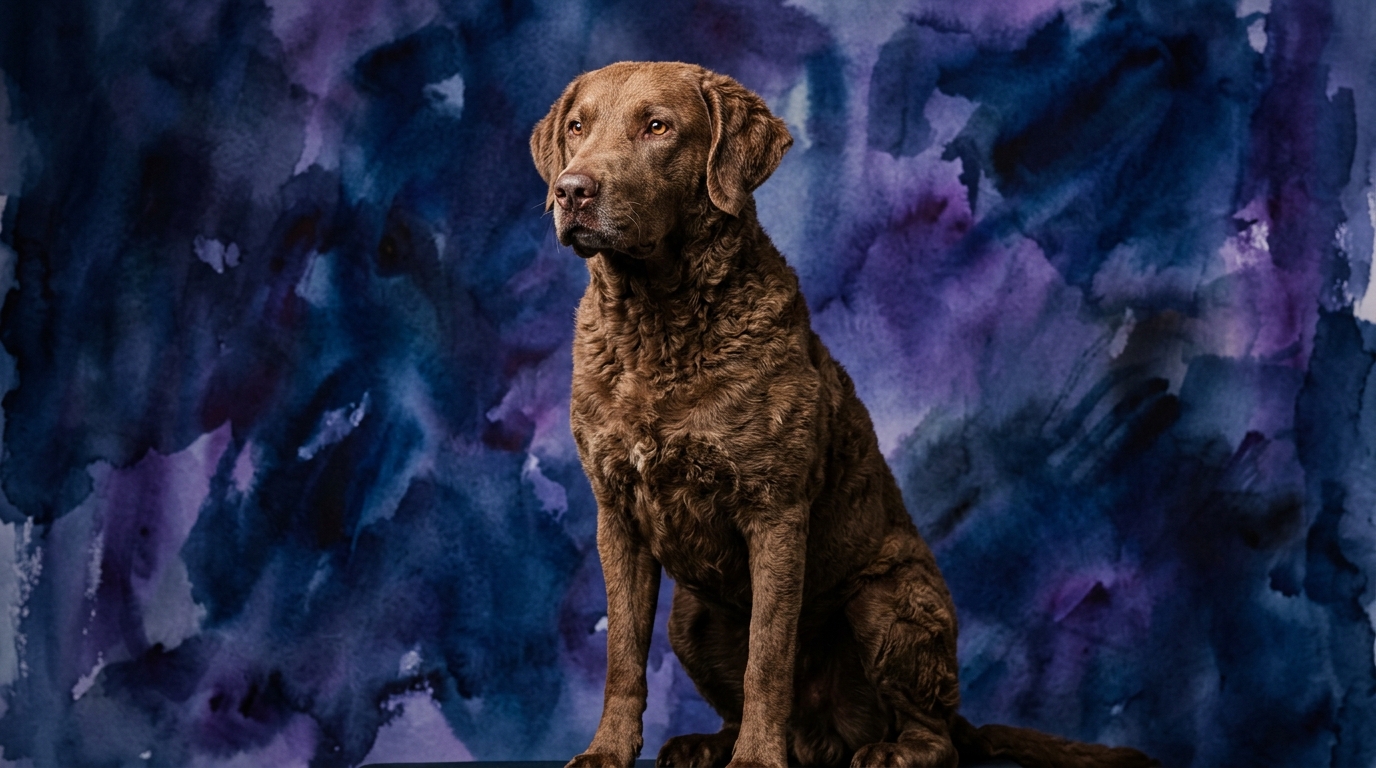
Side-by-Side IQ Profile: Papillon vs. Chesapeake Bay Retriever
The Cosmic Pet Pet IQ Lab assesses canine intelligence across five crucial dimensions, offering a nuanced view of each breed's cognitive architecture. The Papillon, ranking #8 on the Coren scale, demonstrates exceptional cognitive agility, scoring 5/5 in Problem Solving, 5/5 in Training Speed, 4/5 in Social Intelligence, 3/5 in Instinctive Drive, and an impressive 5/5 in Memory. This profile paints a picture of a quick-thinking, highly responsive companion.
In contrast, the Chesapeake Bay Retriever, holding Coren rank #27, presents a profile geared towards practical application and steadfastness. Its scores are 4/5 for Problem Solving, 4/5 for Training Speed, 3/5 for Social Intelligence, 3/5 for Instinctive Drive, and 4/5 for Memory. While slightly lower in some areas, these scores reflect a capable and purpose-driven intellect, distinct from the Papillon's more abstract cognitive strengths.
Where the Papillon Wins Cognitively
The Papillon consistently demonstrates a superior aptitude for abstract problem-solving, scoring a perfect 5/5. This isn't just about figuring out a treat puzzle; it extends to understanding complex multi-step commands or even devising novel ways to get what they want, such as opening a cabinet or manipulating objects to reach an out-of-reach toy. Their capacity for creative thought allows them to adapt quickly to new challenges, often surprising owners with their cleverness in unfamiliar situations. This cognitive agility makes them exceptional candidates for advanced trick training or canine sports requiring intricate sequences.
The speed at which a Papillon acquires new information is truly remarkable, reflected in their 5/5 Training Speed. They often grasp a new command or concept in as few as one or two repetitions, making training sessions incredibly efficient and rewarding. This rapid absorption allows owners to introduce a wider variety of skills and behaviors, from basic obedience to intricate dance routines, at an accelerated pace. Their eagerness to learn and their quick processing power mean they rarely get bored with repetition, instead thriving on the mental engagement of mastering new tasks.
A Papillon's memory is a standout cognitive strength, also rated 5/5. Once a behavior, a route, or even a specific person's scent is learned, it tends to be retained with exceptional clarity over long periods. This means that skills learned years ago can often be recalled with minimal prompting, and they rarely forget previous experiences, positive or negative. This robust memory contributes to their reliability in established routines and their ability to navigate complex social interactions based on past encounters.
Where the Chesapeake Bay Retriever Wins Cognitively
While the Papillon excels in abstract puzzles, the Chesapeake Bay Retriever shines in practical, real-world problem-solving, scoring a solid 4/5. They are masters at navigating challenging terrains, assessing water currents to retrieve a duck, or figuring out the most efficient path to an object through dense cover. This isn't just brute force; it involves a methodical approach, spatial reasoning, and an ability to learn from environmental feedback. Their problem-solving is often tied to achieving a tangible goal, demonstrating persistence until the task is complete, even if it requires multiple attempts or adapting their strategy.
The Chesapeake's instinctive drive, while rated 3/5, is intensely focused and enduring, particularly in tasks related to retrieving. This translates into a cognitive strength of sustained attention and perseverance. They can maintain concentration on a specific “job” for extended periods, ignoring distractions that would deter many other breeds. This unwavering focus is crucial for complex retrieving sequences, scent work, or any activity requiring prolonged mental and physical engagement, allowing them to execute tasks with a high degree of reliability and precision even under demanding conditions.
Chesapeakes possess a deep-seated awareness of their environment, a cognitive trait vital for their traditional role. They quickly learn to read weather patterns, anticipate changes in water conditions, or identify subtle cues in the landscape. This acute environmental intelligence allows them to make rapid, informed decisions in dynamic outdoor settings, demonstrating a sophisticated understanding of their surroundings that goes beyond simple recognition. This adaptability ensures they can perform effectively in diverse and challenging natural environments.
Which is Easier to Train and Why
When evaluating ease of training, the Papillon holds a distinct advantage, primarily due to its 5/5 Training Speed and 4/5 Social Intelligence. These dogs are remarkably eager to please and possess an innate ability to quickly interpret human cues, both verbal and non-verbal. They absorb new commands with minimal repetition, making training sessions short, efficient, and highly rewarding for both dog and owner. Their high social intelligence means they are often more motivated by praise and connection, readily forming strong learning partnerships. This combination translates into a dog that not only learns quickly but also genuinely enjoys the process of engagement and cooperation with its human.
The Chesapeake Bay Retriever, with its 4/5 Training Speed and 3/5 Social Intelligence, is certainly trainable, but the process often requires a different approach and a higher degree of owner consistency. While they learn readily, they may not exhibit the same lightning-fast acquisition as a Papillon. Their social intelligence, while present, is often expressed with more independence; they might not be as overtly keen to interpret every subtle human signal, sometimes requiring clearer, more direct instruction. Effective training for a Chesapeake often involves leveraging their strong instinctive drive and providing a clear purpose for commands, rather than relying solely on abstract obedience. They respond best to structured, goal-oriented training that taps into their desire to work and retrieve, making them excellent partners for those willing to invest the time in understanding their specific motivations.
Which Suits Active Owners vs. Relaxed Owners
The Papillon, despite its high cognitive scores, demonstrates remarkable adaptability, making it suitable for both active and moderately relaxed owners. Its Instinctive Drive of 3/5 means it certainly benefits from regular mental stimulation and daily walks, but it isn't typically prone to restlessness or destructive behaviors if a day includes more indoor activities or less strenuous exercise. They thrive on engagement through brain games, trick training, or short bursts of play, and are equally content to cuddle on the couch after their needs are met. Their small size and manageable energy levels allow them to integrate seamlessly into various lifestyles, as long as their intelligent minds are kept busy.
The Chesapeake Bay Retriever, also rated 3/5 for Instinctive Drive, presents a different scenario due to its heritage as a robust working dog. This breed absolutely requires an active owner who can consistently provide vigorous physical exercise and substantial mental stimulation, often involving retrieving, swimming, or challenging outdoor adventures. Their cognitive skills are best utilized when given a “job” or a purpose, making them less suited for relaxed owners who cannot commit to their considerable physical and mental needs. Without adequate outlets for their energy and drive, Chesapeakes can quickly become bored, leading to destructive behaviors, excessive barking, or general unhappiness. They thrive in environments where they can expend their energy and engage their working intellect daily.
The Verdict
Choose a Papillon if you seek a highly responsive companion that excels in rapid learning, intricate tricks, and thrives on close cognitive interaction, adaptable to various activity levels.
Opt for a Chesapeake Bay Retriever if you are an active owner looking for a robust, task-oriented partner who excels in practical problem-solving and sustained outdoor activities, valuing purpose-driven engagement.
🧠 Find Your Pet's IQ Score
Our Pet IQ Lab assessment covers 25+ tests across 5 cognitive dimensions — personalized to your breed.
Take the Full IQ Test →Frequently Asked Questions
Are Papillons good for first-time dog owners?
Yes, their high trainability and social intelligence make them relatively straightforward for novices, provided owners are consistent and engage their sharp minds with appropriate activities and early socialization.
Do Chesapeake Bay Retrievers require a lot of grooming?
Their dense, oily double coat is relatively low maintenance, requiring regular brushing to manage shedding and prevent matting, especially after swims and during seasonal changes.
Can a Chesapeake Bay Retriever live in an apartment?
While adaptable to different living situations, a Chesapeake Bay Retriever in an apartment would require exceptional dedication from owners to provide extensive daily exercise and mental stimulation to prevent boredom and destructive behaviors. This often means multiple long walks, runs, or trips to a dog park.