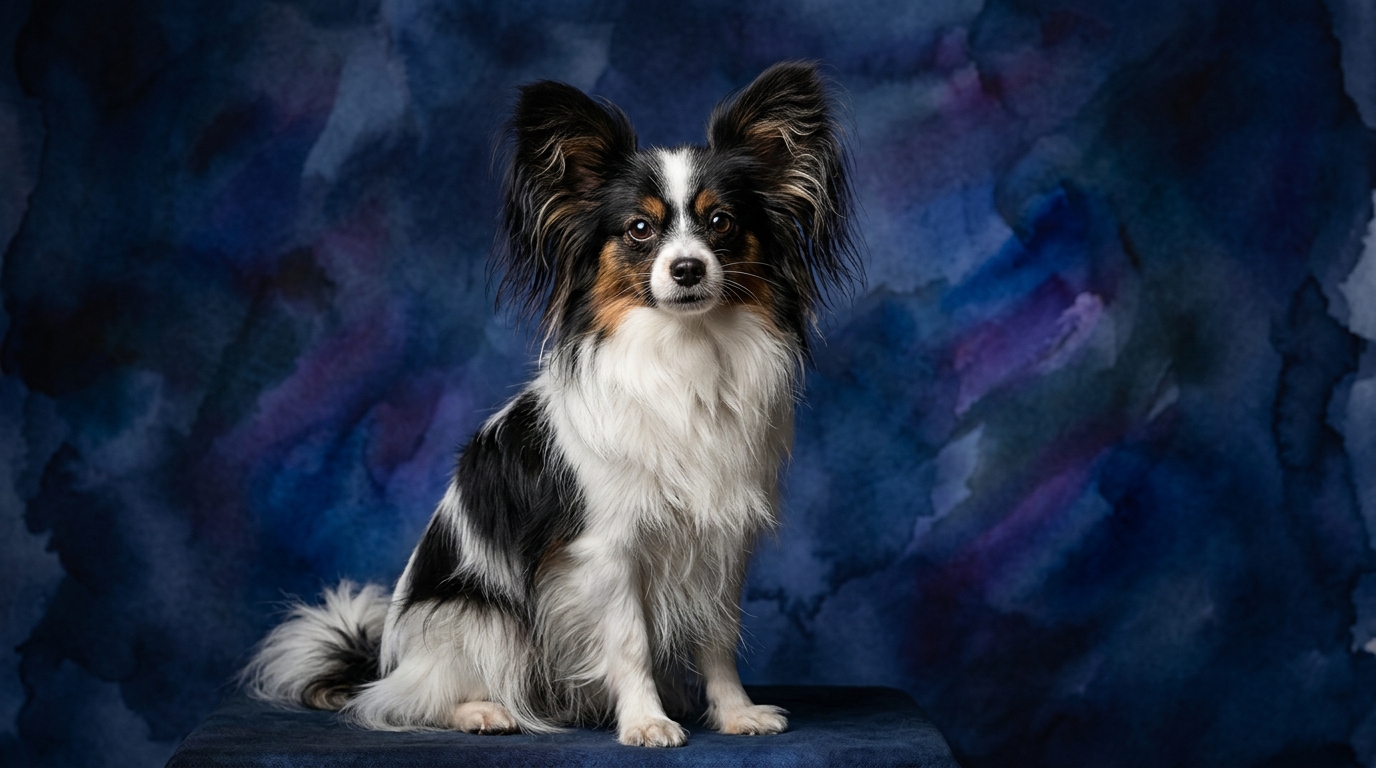
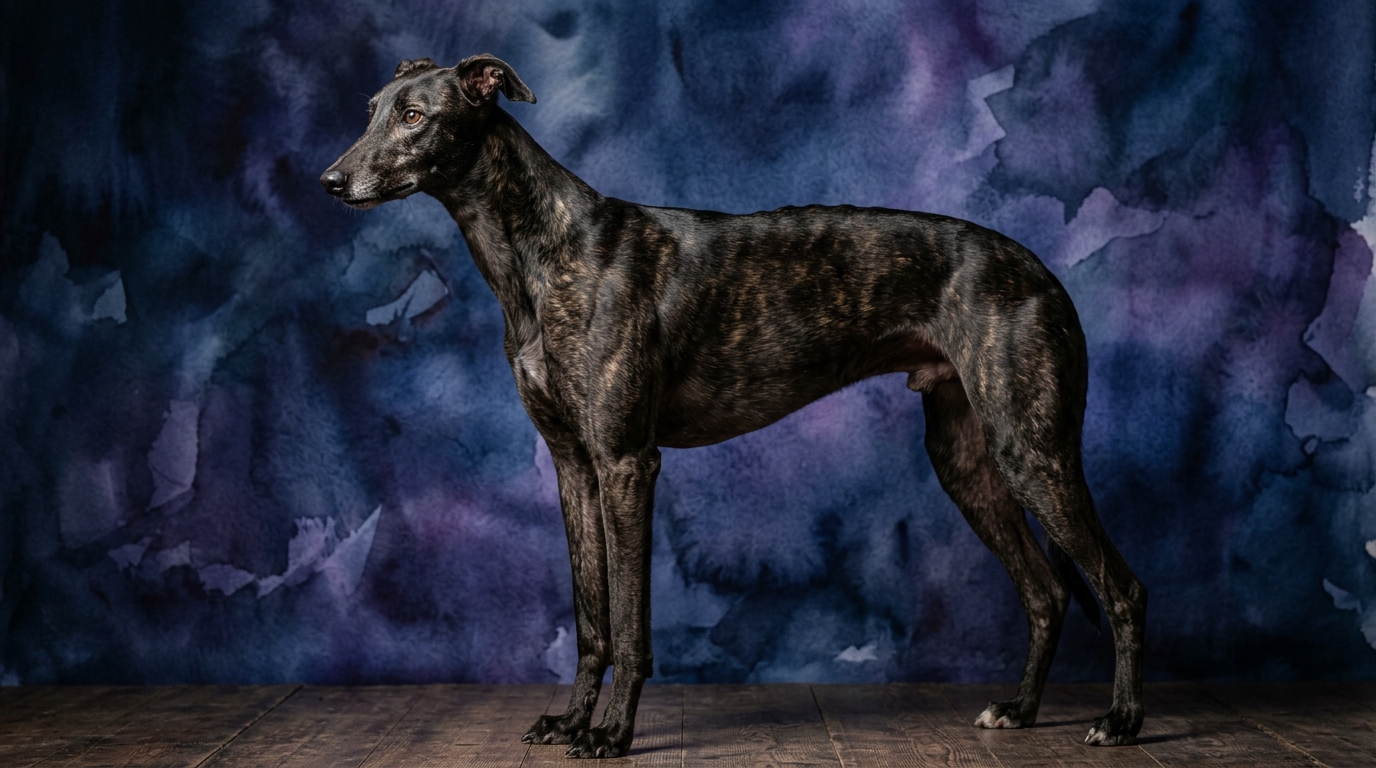
Side-by-Side IQ Profile: Papillon vs. Greyhound
The Cosmic Pet Pet IQ Lab's assessment provides a granular look at the cognitive makeup of these two distinct breeds. For the Papillon, ranked #8 by Coren, its Problem Solving ability scores a perfect 5/5, indicating an exceptional capacity to navigate novel challenges and devise creative solutions. Its Training Speed also achieves a 5/5, signifying a rapid uptake of new commands and routines, while Social Intelligence stands strong at 4/5, reflecting a keen awareness of human cues. Instinctive Drive is a moderate 3/5, suggesting other cognitive functions often take precedence, and its Memory is outstanding at 5/5, underpinning its impressive learning retention.
In contrast, the Greyhound, Coren ranked #46, presents a different cognitive blueprint. Its Problem Solving ability is rated 3/5, indicating a more direct, less analytical approach to new situations. Training Speed is a more deliberate 2/5, requiring patience and consistency. Social Intelligence is 3/5, allowing for functional bonds but perhaps less nuanced emotional interpretation. Where the Greyhound truly excels is in Instinctive Drive, hitting a perfect 5/5, highlighting its powerful, innate urges for pursuit. Its Memory is 3/5, sufficient for routines but less expansive than the Papillon's.
Where the Papillon Wins Cognitively
The Papillon distinctly surpasses the Greyhound in domains requiring abstract thought and rapid cognitive processing. Its Problem Solving score of 5/5 means these dogs are adept at figuring out complex puzzles, manipulating objects to achieve goals, and generally understanding cause-and-effect in their environment, a skill far beyond the Greyhound's more practical 3/5. This translates into a companion that often seems to be 'thinking' its way through situations, rather than merely reacting.
Furthermore, the Papillon's 5/5 Training Speed is a testament to its remarkable mental agility; they absorb new commands and concepts with astonishing quickness, often solidifying behaviors in just a few repetitions. This efficiency is powerfully supported by a 5/5 Memory, allowing them to retain a vast repertoire of learned behaviors and associations over extended periods. Their 4/5 Social Intelligence also grants them a deeper understanding of human emotions and intentions, making them exceptionally perceptive and responsive to subtle cues from their handlers, fostering a highly interactive cognitive partnership.
Where the Greyhound Wins Cognitively
The Greyhound’s cognitive strengths are rooted in a different evolutionary imperative, centering on instinct, sensory acuity, and physical prowess. Its perfect 5/5 score in Instinctive Drive is not just about raw speed, but a highly specialized cognitive function enabling unparalleled ability to detect, track, and pursue moving objects with incredible focus and precision. This involves rapid visual processing, spatial awareness, and an innate understanding of trajectory, all essential for its historical role as a sighthound.
While their Problem Solving (3/5) and Training Speed (2/5) are lower, the Greyhound's cognitive specialisation allows it to excel in tasks directly tied to its innate drives. Their memory (3/5) is entirely functional for daily routines and learned commands relevant to their life, such as recall during a run or house-training. The Greyhound demonstrates a form of practical, immediate intelligence perfectly adapted to its primary function, showcasing that cognitive excellence can manifest as highly refined instinctual behavior rather than complex abstract reasoning.
Which is Easier to Train and Why
The Papillon is unequivocally easier to train, a direct consequence of its superior Training Speed (5/5) and Memory (5/5). These dogs possess an innate eagerness to engage in learning activities and delight in working alongside their handlers. They grasp new concepts with impressive alacrity, often mastering a new command or trick within a single, short training session, motivated by positive reinforcement and the joy of interaction. Their high Social Intelligence (4/5) further enhances their trainability, making them highly attuned to their owner's moods and instructions, leading to a more cooperative and responsive training experience.
Conversely, the Greyhound, with its 2/5 Training Speed and 3/5 Memory, typically requires a more patient, consistent, and repetitive approach to training. While certainly capable of learning, their motivation is often tied to immediate, tangible rewards, and their attention can be more fleeting, especially when their powerful 5/5 Instinctive Drive is activated by potential prey or the urge to run. Training a Greyhound often means working with their independent nature and focusing on building strong, consistent habits, rather than expecting rapid conceptual leaps. Their cognitive style demands a different training methodology, one that respects their inherent drives and more deliberate learning pace.
Which Suits Active Owners vs. Relaxed Owners
For owners who define 'active' by mental engagement and structured activities, the Papillon is an exceptional choice. Their boundless curiosity, outstanding problem-solving skills, and eagerness to learn thrive on consistent mental enrichment, making them ideal partners for dog sports like agility, obedience, or even advanced trick training. They require owners who enjoy interactive play and can provide varied intellectual challenges to keep their sharp minds stimulated, regardless of their smaller physical exercise needs. Their adaptable size also makes them suitable for various living situations, provided their cognitive needs are met.
Surprisingly, despite their athletic build, the Greyhound is often better suited for more relaxed owners. While they possess an incredible burst of speed and require secure opportunities for vigorous running, they are famously known as '45 mph couch potatoes.' Their high instinctive drive (5/5) means they need an outlet for their running, but they are not typically 'busy' dogs requiring constant mental tasks or high-endurance activities. For owners who appreciate quiet companionship, a few short, intense exercise sessions, and a dog that is content to lounge and nap for much of the day, the Greyhound's calm indoor demeanor makes them a surprisingly low-maintenance and peaceful companion.
The Verdict: When to Choose Each Intelligent Companion
Choosing between a Papillon and a Greyhound ultimately depends on the specific type of cognitive interaction and lifestyle you seek in a canine companion. The Papillon is the clear choice for individuals who value a highly interactive, mentally agile dog that thrives on learning complex tasks and engaging in a variety of dog sports. Their quick wit and strong memory make them incredibly rewarding partners for owners who enjoy consistent training and a perceptive, highly responsive companion.
Conversely, the Greyhound is the ideal choice for owners who appreciate a calm, affectionate home presence that balances short, intense bursts of exercise with extensive lounging. If your lifestyle accommodates providing secure spaces for their instinctual running and you value a gentle, quiet companion whose cognitive strengths lie in their natural athletic abilities and focused instinct, the Greyhound will be a perfect fit.
The Verdict
If you seek a highly interactive, mentally agile companion eager to learn complex tasks, participate in dog sports, and thrive on consistent intellectual engagement, the Papillon is your ideal match. Their quick learning and strong memory make them rewarding partners for owners who enjoy active training and a perceptive, responsive dog.
Opt for a Greyhound if you appreciate a calm, affectionate home companion that enjoys short, intense bursts of exercise followed by extensive lounging, and whose cognitive strengths lie in instinctual pursuits rather than complex problem-solving. They are perfect for owners who can provide secure running opportunities and value a gentle, quiet presence.
🧠 Find Your Pet's IQ Score
Our Pet IQ Lab assessment covers 25+ tests across 5 cognitive dimensions — personalized to your breed.
Take the Full IQ Test →Frequently Asked Questions
Are Papillons good for first-time dog owners?
Yes, Papillons can be excellent for first-time dog owners due to their high trainability and eagerness to please, provided their mental stimulation needs are met. However, their intelligence means they require consistent engagement to prevent boredom and potential mischief, making them more suitable for owners ready to invest time in training.
Do Greyhounds need a lot of exercise?
Greyhounds need opportunities for short, intense sprints in a safe, enclosed area to satisfy their instinctive drive for running, but they are not endurance athletes. They are often referred to as '45 mph couch potatoes,' content with long naps after a burst of activity, making their overall exercise needs less demanding than some might assume.
How do their different drives manifest in daily life?
The Papillon's moderate instinctive drive means they are generally focused on their human companions and less prone to bolting or strong prey drive. The Greyhound's powerful prey drive (5/5) means they require secure leashes and fenced yards, as they will instinctively pursue anything that moves quickly, making off-leash activities in unfenced areas risky.