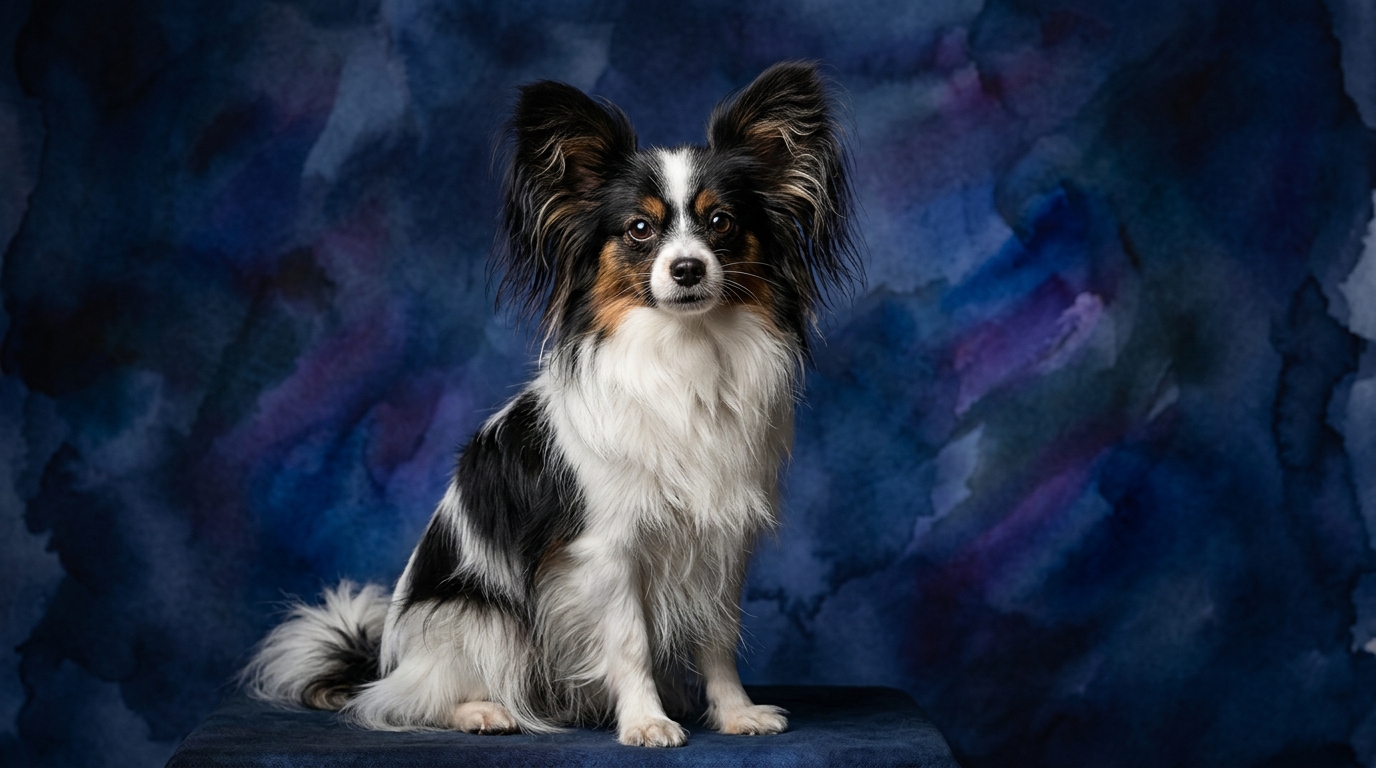
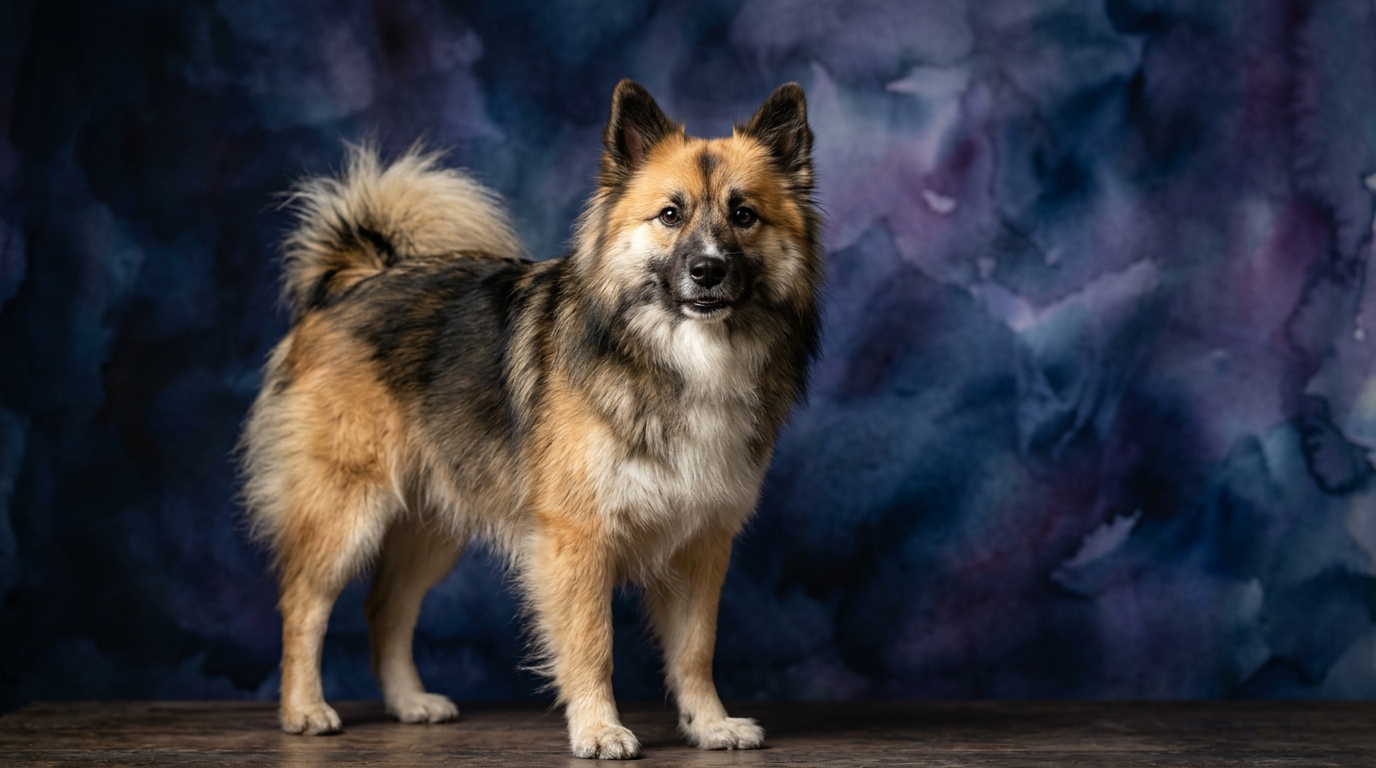
Side-by-Side IQ Profile: Papillon vs. Icelandic Sheepdog
Our Cosmic Pet Pet IQ Lab employs five key dimensions to evaluate canine cognition, offering a nuanced view beyond simple labels. For the Papillon, a breed recognized by Coren's ranking at an impressive #8, its profile paints a picture of exceptional mental agility. Problem Solving scores a perfect 5/5, indicating a capacity for abstract thought and innovative solutions. Training Speed also hits 5/5, reflecting their rapid assimilation of new commands and behaviors. Social Intelligence is a strong 4/5, showcasing their adeptness at reading human cues and forming complex bonds. Instinctive Drive, while present, registers a moderate 3/5, suggesting a balanced approach to innate behaviors. Finally, Memory stands at a stellar 5/5, highlighting their ability to retain vast amounts of information and experiences.
In contrast, the Icelandic Sheepdog, a breed not yet assessed by Coren's ranking, presents a profile rooted in its herding heritage. Across the board, this breed scores a consistent 3/5 in all five cognitive dimensions. Problem Solving at 3/5 signifies a practical, task-oriented approach to challenges rather than abstract reasoning. Training Speed at 3/5 suggests a need for consistent, patient instruction, with learning occurring through repetition and positive reinforcement. Social Intelligence at 3/5 indicates a friendly, adaptable nature, though perhaps less attuned to subtle human emotional nuances than some breeds. Instinctive Drive, also 3/5, points to a functional herding instinct that is generally manageable. Memory at 3/5 denotes a reliable recall for routines and familiar commands, though perhaps not the extensive, detailed retention seen in higher-scoring breeds.
Where the Papillon Excels Cognitively
The Papillon's cognitive strengths are evident in its exceptional scores for Problem Solving, Training Speed, and Memory, all rated 5/5. This breed demonstrates a remarkable ability to process complex information and apply it to novel situations. For instance, a Papillon can quickly discern how to manipulate intricate puzzle toys designed for much larger dogs, often figuring out multi-step mechanisms to retrieve treats. Their problem-solving isn't just about physical manipulation; it extends to understanding sequences and cause-and-effect relationships, making them formidable competitors in canine sports like agility or obedience trials where rapid decision-making is paramount.
Beyond problem-solving, the Papillon's 5/5 Training Speed means they absorb new commands with astonishing quickness, often grasping concepts in just a few repetitions. This makes them highly rewarding partners for owners interested in teaching advanced tricks, service tasks, or competitive obedience routines. Their keen focus and eagerness to engage mentally contribute to this rapid learning. Complementing this is their 5/5 Memory, which ensures that once a skill is learned, it is retained long-term. This isn't just about remembering basic commands; Papillons are known to recall specific individuals, past events, and even complex sequences of actions years after initial exposure, showcasing a profound capacity for cognitive retention.
Unique Cognitive Strengths of the Icelandic Sheepdog
While the Icelandic Sheepdog's scores of 3/5 across the board might suggest a less intricate cognitive profile than the Papillon, these ratings actually reflect a highly effective and specialized form of intelligence perfectly suited to their historical role. Their Problem Solving, rated 3/5, is characterized by practical, real-world application. They excel at devising straightforward solutions to immediate environmental challenges, such as navigating difficult terrain to gather sheep or finding the most efficient path back to their flock. This isn't about abstract puzzles; it's about robust, on-the-spot decision-making vital for survival and task completion in challenging conditions.
The Icelandic Sheepdog's 3/5 in Training Speed, though not as rapid as the Papillon's, means they are consistently trainable with patience and positive methods. They learn reliably through repetition, building a solid foundation of understanding that translates into dependable performance. Their Social Intelligence, also 3/5, manifests as a generally friendly and adaptable nature, making them excellent family companions who are good with children and other animals. They form strong, loyal bonds, and while perhaps not as overtly expressive in reading subtle human emotions as some breeds, their consistent affection and desire to be part of the family unit are unwavering. Their 3/5 Instinctive Drive is balanced, presenting a manageable herding tendency that can be channeled through appropriate activities, rather than an overwhelming compulsion. This breed's cognition prioritizes resilience, awareness, and steadfastness, making them incredibly capable in their own right.
Training Dynamics: Which Breed is Easier?
When it comes to ease of training, the Papillon clearly holds an advantage, largely due to its 5/5 Training Speed and 5/5 Memory. These breeds are often described as sponges for information, soaking up new commands and routines with minimal repetition. Their eagerness to please, combined with their sharp focus and capacity for understanding complex instructions, makes them highly responsive to positive reinforcement. Owners can engage Papillons in diverse training activities, from advanced obedience to intricate trick training, and expect quick, enthusiastic results. Their capacity to retain these lessons over time means less remedial training is typically required.
The Icelandic Sheepdog, with its 3/5 Training Speed and Memory, requires a different approach. While certainly trainable, they learn best through consistent, patient, and positive reinforcement methods. Repetition is key for an Icelandic Sheepdog to solidify a new command, and distractions can sometimes challenge their focus more readily than a Papillon. Their herding background means they possess an independent streak and an innate drive to observe and react to their environment, which can sometimes compete with an owner's commands. Training an Icelandic Sheepdog is a rewarding process that builds a strong partnership, but it demands more time, clarity, and consistency from the owner to achieve proficiency compared to the Papillon's rapid assimilation.
Matching Canine Cognition to Owner Lifestyle
Considering their distinct cognitive profiles, the Papillon and Icelandic Sheepdog cater to different owner lifestyles. The Papillon, with its high Problem Solving and Memory scores, thrives with active owners who enjoy mental engagement. These are companions who benefit immensely from regular training sessions, puzzle toys, and opportunities to learn new skills or participate in dog sports like agility or rally obedience. While their physical exercise needs are moderate due to their size, their minds require constant stimulation to prevent boredom. A Papillon can adapt to a more relaxed owner, but only if that owner is committed to providing consistent mental enrichment indoors, preventing the development of undesirable behaviors stemming from understimulation.
The Icelandic Sheepdog, on the other hand, is a sturdier breed whose cognitive strengths are best appreciated by active owners who enjoy outdoor pursuits. Their practical problem-solving and moderate instinctive drive make them excellent partners for hiking, long walks, or farm-related activities. They possess good stamina and enjoy being active members of the family, particularly in environments where they can explore and utilize their senses. While friendly and adaptable indoors, a relaxed owner who cannot provide ample physical exercise and mental engagement through exploring the world will likely find an Icelandic Sheepdog restless and potentially destructive. They are not suited to being purely ornamental pets; they are working dogs at heart, even if their 'work' is simply accompanying their human on adventures.
The Verdict
Choose a Papillon if you seek a highly responsive, mentally agile companion eager to learn complex behaviors and thrive on intricate interaction and intellectual challenges.
Opt for an Icelandic Sheepdog if you desire a sturdy, friendly, and practical canine partner who enjoys outdoor adventures and offers dependable companionship with a straightforward, resilient cognitive style.
🧠 Find Your Pet's IQ Score
Our Pet IQ Lab assessment covers 25+ tests across 5 cognitive dimensions — personalized to your breed.
Take the Full IQ Test →Frequently Asked Questions
Is the Papillon's high Coren rank indicative of superior overall intelligence?
Coren's ranking primarily assesses 'working and obedience intelligence,' heavily favoring breeds that rapidly learn and obey commands. While Papillons excel here, 'intelligence' encompasses more, including problem-solving, social cues, and instinctive drives, where different breeds shine uniquely in their own contexts.
How does the Icelandic Sheepdog's '3/5' in Problem Solving manifest practically?
Their problem-solving is practical and task-oriented, focusing on immediate environmental challenges like navigating terrain or managing livestock. They might devise simple, effective solutions for real-world situations rather than engaging in complex abstract reasoning or intricate puzzle-solving games.
Can an Icelandic Sheepdog be trained for complex tasks like a Papillon?
While capable of learning many commands and tricks, an Icelandic Sheepdog typically requires more repetition and patience than a Papillon. Their learning style prioritizes consistency and clear, positive reinforcement, making them proficient but usually slower to master intricate, multi-step sequences.