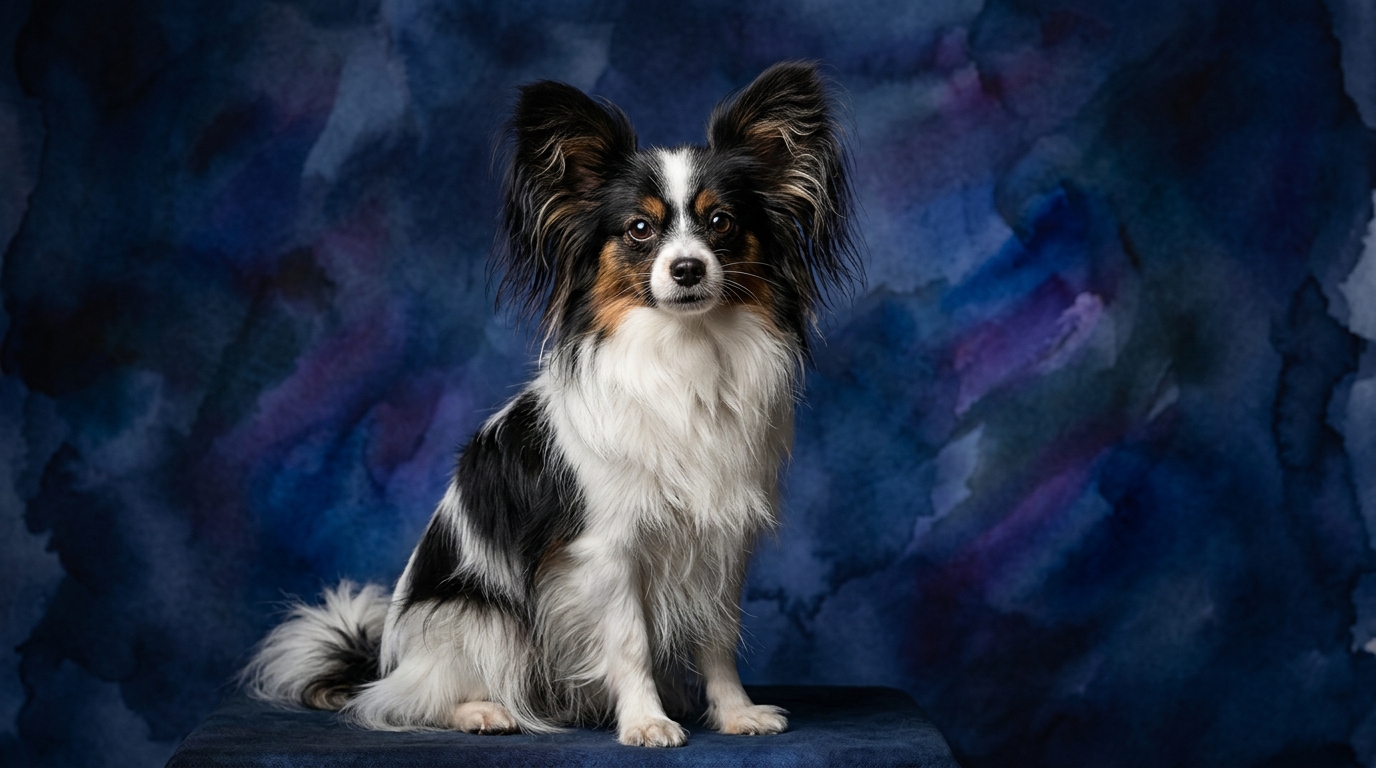
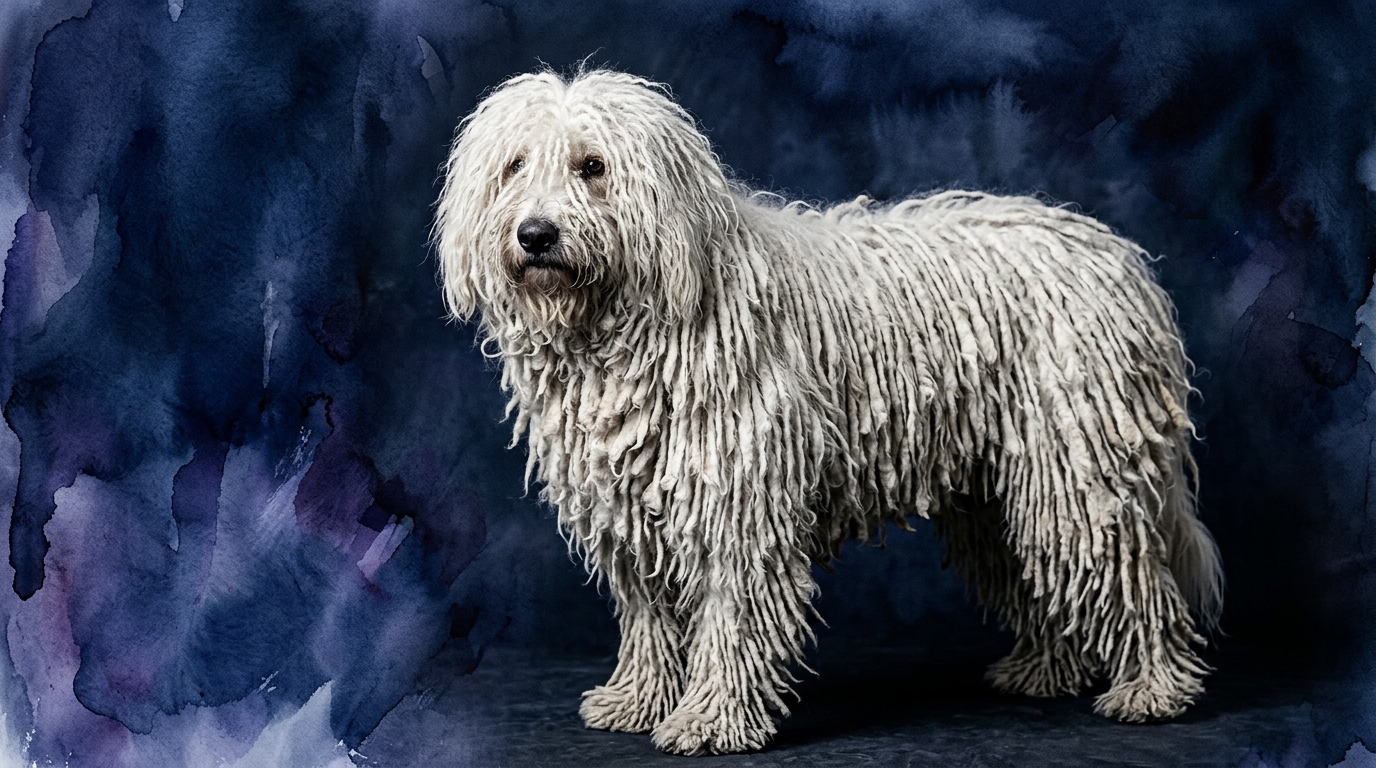
Side-by-Side Cognitive Profiles: Papillon vs. Komondor
The Cosmic Pet Pet IQ Lab offers a lens into the cognitive architecture of these two distinct breeds. The Papillon, ranking #8 on Coren's scale, exhibits a cognitive profile geared towards rapid learning and social engagement. Its Problem Solving is rated 5/5, indicating an exceptional ability to navigate novel situations, unravel complex puzzles, and strategize effectively to achieve desired outcomes. Training Speed, also at 5/5, highlights its remarkable capacity to grasp and execute new commands with minimal repetition, making it highly receptive to intricate training regimens. Social Intelligence at 4/5 means the Papillon is adept at interpreting human emotions and social cues, fostering deep, communicative bonds. While its Instinctive Drive is a moderate 3/5, often manifesting as a playful chase or curiosity, it’s not the dominant force. Its Memory, a perfect 5/5, ensures recall of vast repertoires of commands, routines, and experiences.
In stark contrast, the Komondor, positioned at #67 on Coren's scale, possesses a cognitive framework optimized for independent guardianship. Its Problem Solving is 3/5, signifying a practical intelligence focused on assessing environmental threats and making autonomous decisions rather than abstract puzzle-solving. Training Speed, also 3/5, suggests a steady but more deliberate learning pace, requiring consistent reinforcement and a clear purpose for each command. Social Intelligence at 3/5 reflects a reserved nature; while deeply bonded with its family, it approaches strangers with caution and discernment, reading intentions for potential threats rather than seeking broad social interaction. The Komondor’s Instinctive Drive, rated 3/5, is powerfully channeled into its inherent protective and territorial behaviors. Its Memory at 3/5 is robust for remembering its boundaries, its charges, and critical past events related to its duties, though perhaps less for complex, multi-step sequences.
Where the Papillon Excels Cognitively
The Papillon’s cognitive prowess shines in areas demanding mental agility and rapid processing. Its 5/5 Problem Solving means it can quickly adapt to new environments or challenges, figuring out how to open treat dispensers, navigate obstacle courses, or even manipulate situations to gain attention. This breed’s 5/5 Training Speed allows it to master advanced obedience, intricate tricks, and complex agility sequences with a swiftness that is genuinely remarkable. A Papillon often anticipates commands, learning entire routines with minimal prompting. Furthermore, its 5/5 Memory ensures these skills are retained over long periods, making it a consistent performer. Its 4/5 Social Intelligence contributes to its adaptability, allowing it to seamlessly integrate into various household dynamics and form nuanced communicative relationships with its human companions.
Where the Komondor Demonstrates Unique Cognitive Strengths
While the Komondor's scores might appear lower by conventional measures, its cognitive strengths are uniquely tailored to its ancestral role. Its 3/5 Problem Solving is a specialized form of intelligence, focused on the practicalities of livestock guarding. This involves independently assessing threats, making judgment calls on intrusion, and determining appropriate responses without human instruction. This isn't about solving a puzzle for a treat; it's about evaluating a predator's intent and formulating a defensive strategy. Its Instinctive Drive, also 3/5, is heavily weighted towards this autonomous protective behavior, requiring a deep understanding of its territory and charges. The Komondor’s 3/5 Social Intelligence, while selective, is profound within its family unit, manifesting as unwavering loyalty and discerning vigilance towards outsiders. Its 3/5 Memory is highly effective for remembering its patrol routes, the faces of its flock or family, and past threats, crucial for its role as a steadfast guardian.
Training Dynamics: A Tale of Two Approaches
The disparity in training speed between the Papillon and Komondor dictates fundamentally different approaches. The Papillon, with its 5/5 Training Speed, thrives on positive reinforcement, short, engaging sessions, and the opportunity to learn new things constantly. Its eagerness to please and quick comprehension mean it can progress rapidly from basic commands to intricate behaviors, often making training feel like a collaborative game. This breed typically enjoys the mental stimulation of learning and performing, making it a joy for owners who want to explore various dog sports or advanced obedience.
Conversely, the Komondor's 3/5 Training Speed requires immense patience, consistency, and a profound understanding of its independent nature. Bred to make decisions without human oversight, a Komondor may question a command if it doesn't perceive its purpose or aligns with its protective instincts. Training must be grounded in establishing a trusting relationship and clear leadership, focusing on practical commands vital for safety and management. Repetition, calm reinforcement, and allowing the Komondor to process information at its own pace are key; forcing compliance will likely lead to resistance. Their training is less about quick tricks and more about building a reliable, respectful partnership.
Matching Cognitive Profiles to Lifestyles
The cognitive profiles of these breeds suggest vastly different ideal living situations and owner types. The Papillon is an excellent match for active owners who relish engaging their dog in consistent mental challenges. This includes individuals keen on participating in canine sports like agility, rally obedience, or even advanced trick training, where the Papillon's rapid learning and memory can truly shine. They thrive in environments where they are regularly stimulated with new experiences, puzzle toys, and interactive play that taps into their problem-solving acumen. Their social intelligence also makes them adaptable companions for owners who enjoy bringing their dog along to various social outings.
The Komondor, on the other hand, suits owners who appreciate and can manage a dog with a strong, independent, and protective mindset. These are not dogs for casual or 'relaxed' owners in the sense of minimal engagement. Komondor owners must be confident, consistent leaders who provide clear boundaries and understand the breed's need for a defined territory and purpose. While their physical exercise needs are moderate, their mental needs revolve around vigilance and guarding duties, which can be satisfied by a secure, spacious property and a family to protect. Owners must be prepared for their reserved social nature and their tendency to make autonomous decisions, often requiring a calm, steady hand rather than constant, high-energy interaction.
The Verdict
If you seek a highly interactive companion eager for mental challenges, rapid learning, and adaptable social engagement, the Papillon offers a dynamic and rewarding partnership.
Opt for the Komondor if you value an independent, steadfast guardian with a profound sense of duty, understanding that its cognitive strengths manifest in loyalty, vigilance, and autonomous decision-making.
🧠 Find Your Pet's IQ Score
Our Pet IQ Lab assessment covers 25+ tests across 5 cognitive dimensions — personalized to your breed.
Take the Full IQ Test →Frequently Asked Questions
Can a Komondor participate in dog sports like agility?
While physically capable, a Komondor's independent nature and deliberate problem-solving mean they are less naturally inclined towards the rapid, intricate sequences of agility compared to breeds like the Papillon. Their cognitive strengths lie more in autonomous decision-making for protective roles.
Are Papillons good family dogs, especially with children?
Papillons can be wonderful family companions, forming strong bonds and enjoying interaction. However, their small size and delicate build mean that interactions with very young or boisterous children should always be supervised to ensure the dog's safety and prevent accidental injury.
How do the protective instincts of a Papillon and Komondor differ in manifestation?
A Papillon's protective instinct typically manifests as alerting its owners with barking to new arrivals or perceived threats, acting as a small but vocal sentinel. The Komondor, however, exhibits a much deeper, autonomous protective drive, capable of independently assessing and deterring threats to its family or territory, often with a formidable presence.