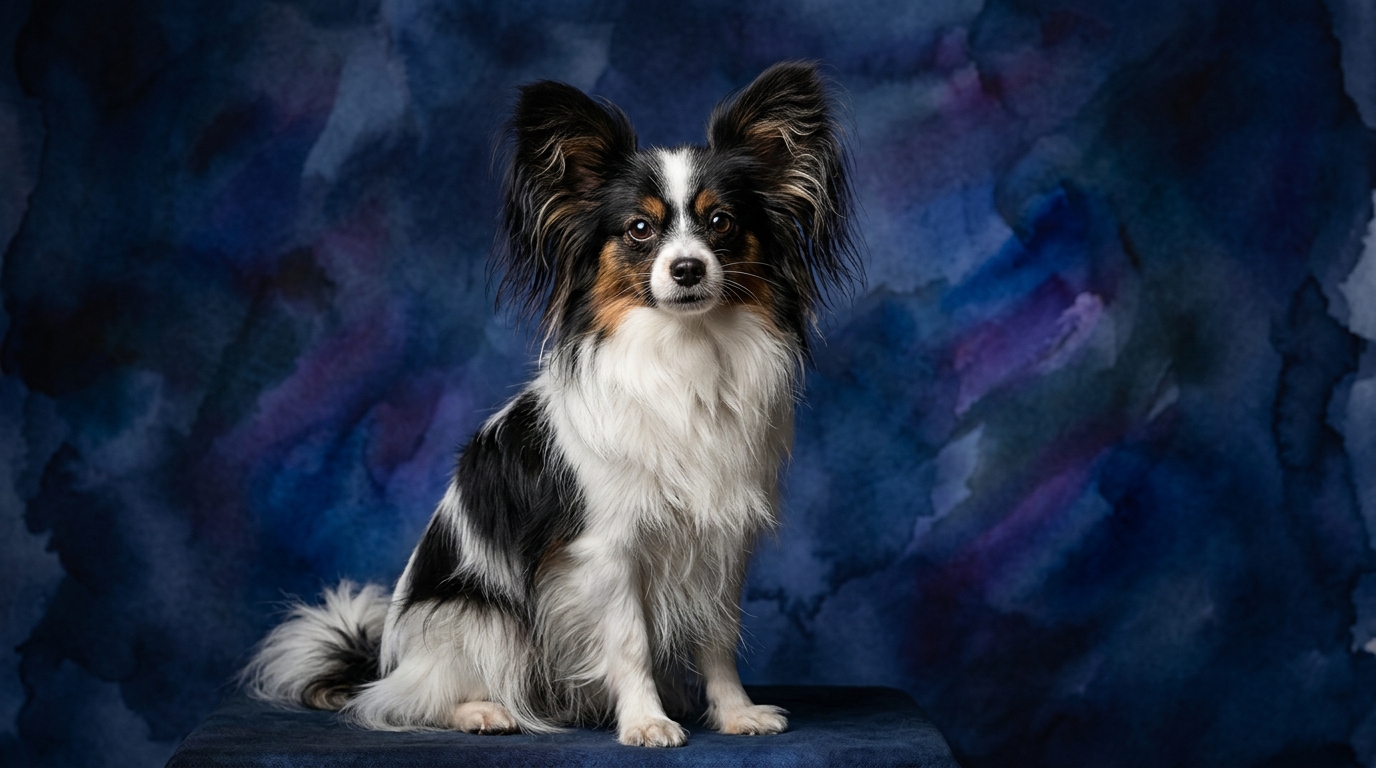
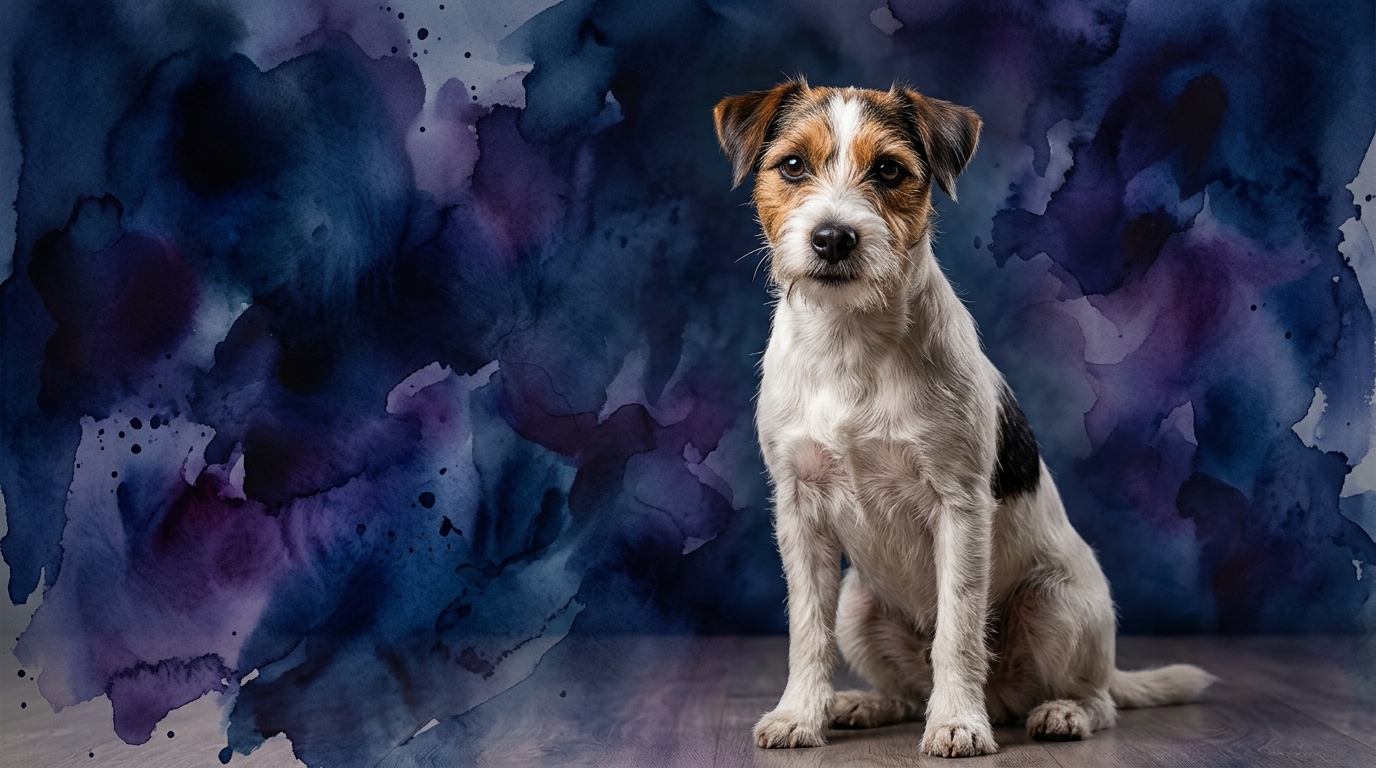
Side-by-Side: The Cosmic Pet IQ Profile
At The Cosmic Pet Pet IQ Lab, we evaluate canine intelligence across five key dimensions, offering a nuanced view beyond simple obedience. For the Papillon, a toy breed ranked #8 by Coren for working and obedience intelligence, its profile speaks to a highly adaptable and perceptive mind. Its Problem Solving is rated 5/5, indicating an exceptional capacity to navigate complex scenarios and figure out novel challenges with remarkable insight. Training Speed also scores a perfect 5/5, reflecting their rapid acquisition of new commands and routines, often requiring minimal repetitions. Social Intelligence, at 4/5, highlights their strong attunement to human emotions and social cues, fostering deep, responsive bonds. While their Instinctive Drive sits at a moderate 3/5, their Memory is an outstanding 5/5, allowing them to retain learned behaviors and intricate sequences over extended periods.
The Parson Russell Terrier, a robust terrier breed not specifically Coren-ranked, presents a contrasting cognitive blueprint. Its Problem Solving is rated 3/5, suggesting an approach often characterized by persistence and determination rather than immediate strategic insight. Training Speed also scores 3/5, meaning they are capable learners but typically require more consistent reinforcement and engaging methods compared to their Papillon counterparts. Social Intelligence is likewise 3/5, indicating a functional understanding of social dynamics, though perhaps less nuanced in interpreting subtle human emotions. Their Instinctive Drive is a focused 3/5, particularly strong in areas related to their historical purpose like hunting and digging. Finally, their Memory is rated 3/5, sufficient for practical tasks but benefiting from regular practice to maintain sharpness.
Where the Papillon's Cognition Excels
The Papillon's cognitive strengths are most evident in its unparalleled capacity for rapid acquisition and refined understanding. Their perfect 5/5 scores in Problem Solving, Training Speed, and Memory converge to create a dog that is not merely trainable, but truly a partner in learning. This isn't about simple rote performance; Papillons demonstrate an ability to grasp abstract concepts, quickly generalize learned behaviors to new contexts, and even anticipate sequences in complex tasks like agility courses. They excel in scenarios demanding quick thinking and precise execution, often outmaneuvering their peers in puzzle challenges or advanced obedience work. Their 4/5 Social Intelligence further amplifies this, allowing them to interpret subtle human cues—a slight shift in tone, a glance—and adjust their behavior accordingly, making them incredibly responsive and seemingly intuitive companions. This keen awareness contributes to their success in performance events where synchronization with their handler is paramount, from rally obedience to freestyle.
Where the Parson Russell Terrier's Cognition Shines
The Parson Russell Terrier’s cognitive profile, while different from the Papillon's, possesses its own distinct advantages, particularly in areas demanding resilience and independent drive. Their 3/5 Problem Solving isn't a deficit in ability but rather a reflection of their tenacious, often trial-and-error approach. When faced with a challenge, a Parson Russell Terrier is less likely to give up, instead applying sustained effort and an unyielding will until a solution is found. This persistence is invaluable in tasks requiring sustained focus and a strong work ethic, such as scent discrimination, tracking, or earthdog activities where their inherent Instinctive Drive (3/5, but highly focused on quarry) is fully engaged. They demonstrate a practical, results-oriented intellect that thrives on purpose-driven work. Their determination allows them to overcome obstacles that might deter a more sensitive breed, making them formidable partners in activities where grit and independence are more crucial than instantaneous insight. This breed's cognitive strengths are rooted in their heritage as working terriers, where an independent mind and unwavering drive were essential for success in challenging environments.
Training Dynamics: Papillon vs. Parson Russell Terrier
When it comes to ease of training, the Papillon offers a distinctly smoother journey, primarily due to its exceptional Training Speed (5/5) and Memory (5/5). These dogs are often described as "eager to please" and absorb new commands with astonishing quickness, frequently mastering a new cue in just a handful of repetitions. Their high Social Intelligence (4/5) means they are highly attuned to their owner's feedback, making them responsive and cooperative partners in the training process. Papillons thrive on positive reinforcement, finding the act of learning itself to be intrinsically rewarding, which makes them ideal candidates for advanced obedience, complex trick training, and dog sports where precision and rapid learning are key. Their consistent recall and ability to retain a vast repertoire of behaviors over time make them a joy to train for both novice and experienced handlers.
The Parson Russell Terrier, with its 3/5 in both Training Speed and Memory, presents a more nuanced training experience. While certainly capable of learning, they require more patience, consistency, and creative motivation. Their independent terrier spirit means they are less inherently driven by a desire to please and more by their own strong instincts and curiosity. Training a Parson Russell Terrier often demands engaging sessions that tap into their innate drives, using games and real-world scenarios rather than purely repetitive drills. They can be prone to "selective hearing" if bored or if they perceive a more interesting distraction, necessitating a handler who can maintain their focus and make training consistently rewarding. While they might take longer to master a command, once a Parson Russell Terrier understands the 'why' and is motivated, they can perform with impressive determination. However, their behaviors may require more frequent reinforcement to remain sharp, distinguishing them from the Papillon's remarkable long-term retention.
Lifestyle Match: Active vs. Relaxed Owners
The ideal owner for each breed diverges significantly based on lifestyle and activity level. The Papillon, despite its small stature, is not a sedentary companion. Its exceptional cognitive abilities necessitate consistent mental stimulation; these dogs thrive on learning new things, solving puzzles, and engaging in interactive play. An active owner who enjoys dog sports like agility, rally, or canine freestyle will find a willing and highly capable partner in a Papillon, leveraging its rapid learning and memory for complex routines. While their physical exercise needs are moderate—daily walks and vigorous play sessions are usually sufficient—neglecting their mental needs can lead to boredom and potential behavioral issues. A more relaxed owner can certainly enjoy a Papillon, provided they commit to daily mental enrichment through training refreshers, puzzle toys, and interactive games, preventing mental stagnation.
In stark contrast, the Parson Russell Terrier is unequivocally suited for highly active owners who can match its boundless energy and robust instinctive drives. Their 3/5 Instinctive Drive, particularly for hunting, digging, and exploring, combined with a tireless disposition, demands substantial daily physical exertion. These dogs need long, brisk walks, vigorous runs, off-leash exploration in secure environments, and opportunities to engage their natural instincts through earthdog trials, scent work, or extensive outdoor play. Owners who embrace hiking, trail running, or other demanding outdoor adventures will find an enthusiastic and enduring companion in a Parson Russell Terrier. A relaxed owner, or one unable to provide consistent, high-intensity physical and mental outlets, would likely find a Parson Russell Terrier challenging to manage. Their pent-up energy can manifest as destructive behaviors, excessive barking, or an inability to settle indoors, making them an unsuitable fit for a quiet, low-key household. Their cognitive strengths, while not in rapid absorption, are in persistent application and determination, which require an owner ready to channel that drive productively and consistently.
The Verdict
Opt for the Papillon if you seek a highly responsive, eager-to-please companion that excels in rapid learning and sophisticated problem-solving. They are an ideal choice for owners passionate about dog sports, trick training, or anyone desiring a companion that truly thrives on mental engagement and provides a relatively smooth training experience.
Select the Parson Russell Terrier if you are an experienced, active owner ready to embrace a dog with robust instincts, boundless energy, and an independent spirit. They are best suited for individuals who can provide consistent, high-intensity physical outlets and enjoy channeling a dog's tenacious drive into purposeful activities like earthdog or scent work.
🧠 Find Your Pet's IQ Score
Our Pet IQ Lab assessment covers 25+ tests across 5 cognitive dimensions — personalized to your breed.
Take the Full IQ Test →Frequently Asked Questions
Are Papillons difficult to groom given their coat?
Despite their elegant long coat, Papillons are surprisingly low-maintenance groomers. Regular brushing a few times a week is usually sufficient to prevent mats and keep their coat healthy. They do not have an undercoat, which means less shedding compared to many other long-haired breeds.
Do Parson Russell Terriers get along with other pets?
Parson Russell Terriers can coexist with other pets, especially if socialized from a young age. However, their strong prey drive, rated 3/5, means that small, fast-moving animals like hamsters or pet birds might trigger their hunting instincts, requiring careful supervision. They generally do well with other dogs if properly introduced.
Which breed is better for apartment living?
The Papillon is generally better suited for apartment living due to its smaller size and more manageable physical exercise requirements, provided its significant mental stimulation needs are met. The Parson Russell Terrier's high energy and strong drives make it a challenging apartment dweller unless its owners are exceptionally committed to extensive daily outdoor exercise and enrichment.