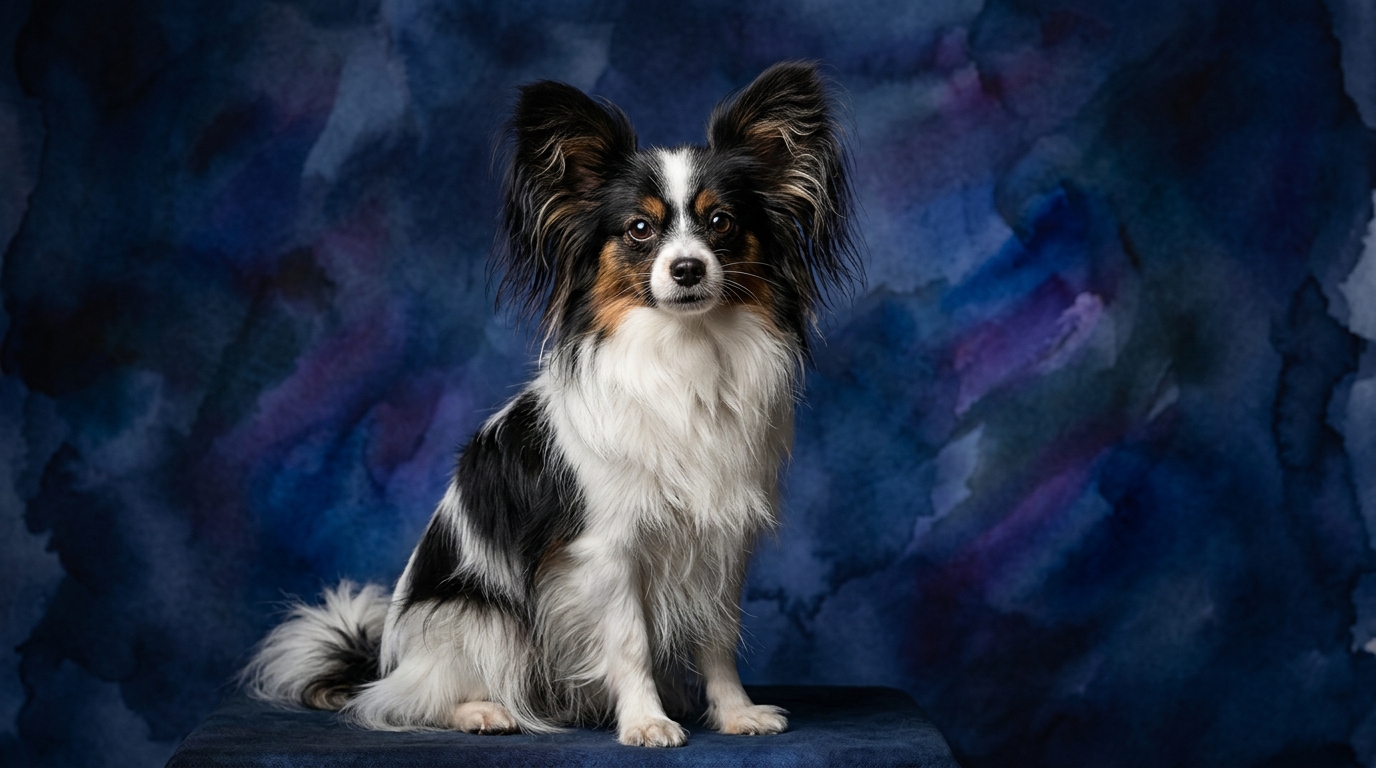

Side-by-Side Cognitive Profiles: Papillon vs. Rat Terrier
The Papillon, often ranking among the most capable breeds in cognitive studies, boasts an impressive Coren rank of #8. Its problem-solving ability is rated 5/5, indicating a profound capacity to navigate complex tasks, decode novel situations, and understand multi-step challenges with remarkable insight. This breed also achieves a perfect 5/5 in training speed, absorbing new commands and routines with minimal repetition, making them exceptionally responsive. Social intelligence for the Papillon stands at a strong 4/5, reflecting their adeptness at interpreting human emotional cues and adapting their behavior accordingly, fostering deep, communicative bonds. Their instinctive drive is a moderate 3/5, present but generally manageable, and their memory is an outstanding 5/5, ensuring long-term retention of learned behaviors and experiences. This comprehensive profile paints a picture of a dog built for intricate learning and close partnership.
The Rat Terrier, while not included in Coren's standardized rankings, presents a distinct cognitive blueprint shaped by its working heritage. Its problem-solving score is 3/5, suggesting practical intelligence focused on immediate environmental challenges, particularly those related to its historical role in vermin control, rather than abstract puzzles. Training speed for the Rat Terrier is also 3/5, indicating a steady, consistent learning pace that benefits from clear, repetitive instruction. Social intelligence is rated 3/5; these dogs are certainly capable of forming bonds and understanding social dynamics, but they may exhibit more independence compared to breeds with higher scores, often prioritizing their own interests or tasks. Their instinctive drive, also 3/5, is often pronounced in its focus on prey, translating into a strong urge to chase and investigate. Finally, their memory is a solid 3/5, sufficient for retaining daily routines and learned commands, though perhaps not with the same nuanced detail as a breed like the Papillon. This combination of traits highlights a clever, task-oriented dog with a keen awareness of its physical surroundings.
Where the Papillon's Cognition Excels
The Papillon undeniably shines in areas requiring abstract thought and rapid cognitive processing. With a perfect 5/5 in problem-solving, these dogs excel at tasks that demand more than just instinct; they can extrapolate, strategize, and apply learned principles to entirely new scenarios. This manifests in their ability to master complex puzzle toys designed to challenge even human minds, or to quickly understand the mechanics of new environments and obstacles. Their capacity to generalize learning makes them incredibly adaptable, allowing them to excel in diverse training disciplines without needing to relearn concepts from scratch.
Furthermore, the Papillon's exceptional training speed, also 5/5, allows them to acquire new commands and intricate sequences with astonishing alacrity. Where many breeds might require dozens of repetitions, a Papillon might grasp a new cue in just a handful of tries, eager to please and quick to form associations. This rapid acquisition of knowledge is coupled with a 5/5 memory score, meaning once a Papillon learns something, it tends to stick. This long-term retention is a significant cognitive advantage, ensuring that advanced skills, complex obedience routines, or even simple house rules are remembered consistently over time, even after extended breaks from training. This cognitive synergy makes them prime candidates for advanced obedience, agility, or even competitive trick training, where precision and recall are paramount.
Where the Rat Terrier's Cognition Stands Out
While the Papillon excels in abstract cognitive domains, the Rat Terrier demonstrates a distinct, practical brilliance rooted in its working heritage. Their 3/5 problem-solving score, though lower, reflects a highly effective, real-world intelligence. These dogs are masters of situational awareness and tactical thinking when it comes to their instinctive drives. For instance, in pursuing a scent trail or cornering small vermin, a Rat Terrier will exhibit impressive strategic planning, using terrain, scent, and sound to their advantage. This isn't about solving a geometric puzzle, but about navigating a dynamic, sensory-rich environment to achieve a specific, instinctive goal. This practical problem-solving also extends to their environmental cunning, where they can quickly assess their surroundings for potential opportunities or threats, a trait refined over generations of working on farms.
Moreover, the Rat Terrier's instinctive drive, rated 3/5, while sometimes perceived as a challenge, is a significant cognitive strength when channeled appropriately. This tenacity fuels an unwavering focus on tasks that align with their natural inclinations, such as scent work or earthdog trials. Once engaged, a Rat Terrier will exhibit remarkable persistence and concentration, sifting through distractions to achieve its objective. This sustained effort, driven by their innate purpose, is a powerful cognitive asset, allowing them to excel in activities that demand endurance and single-minded dedication, far beyond mere rote learning. Their ability to remain acutely aware of subtle environmental cues, vital for their historical role, showcases a sensory intelligence that is both sharp and highly functional.
Trainability: Which Breed Presents a Smoother Journey?
When evaluating ease of training, the Papillon holds a distinct advantage, primarily due to its perfect 5/5 training speed, 5/5 memory, and robust 4/5 social intelligence. These qualities combine to create a dog that is not only quick to understand what is being asked but also deeply motivated to comply. Their high social intelligence means they are acutely attuned to human feedback, making them eager to please and highly responsive to praise and positive reinforcement. A Papillon often thrives on the mental engagement of training sessions, viewing them as opportunities for interaction and learning, rather than mere chores. They quickly form strong associations between commands and actions, and their excellent memory ensures these associations are retained over the long term, reducing the need for constant reteaching. This makes them ideal for owners who enjoy teaching complex sequences, advanced obedience, or competitive dog sports where rapid learning and consistent performance are key.
In contrast, the Rat Terrier, with 3/5 scores across training speed and memory, requires a more patient and strategic approach. While certainly capable of learning, they may take more repetitions to solidify new commands and might not retain them with the same immediate recall as a Papillon. Their independence, stemming from their working background, means they can sometimes prioritize their own interests – such as a captivating scent – over a handler's command. Training a Rat Terrier often necessitates finding creative ways to make the process engaging and relevant to their natural drives, perhaps by incorporating elements of chase or scent work. Consistency is paramount, and owners must be prepared to be persistent and clear in their communication, understanding that a Rat Terrier's intelligence is more about practical application and self-directed problem-solving than an inherent desire for human validation in the same way a Papillon exhibits.
Matching Canine Cognition to Owner Lifestyles
For owners seeking a companion whose primary exercise needs are met through mental engagement and moderate physical activity, the Papillon offers a versatile fit. While they certainly enjoy walks and play, their profound cognitive abilities mean that a 'relaxed' owner who prioritizes daily puzzle games, trick training, or short, stimulating training sessions will find a content and well-behaved Papillon. They thrive on mental challenges and intellectual partnership, making them excellent companions for individuals who enjoy teaching and interacting in cognitively rich ways, even if the physical exertion is not extreme. An owner who enjoys dog sports like rally obedience, freestyle, or agility, but isn't necessarily a marathon runner, would find the Papillon an ideal partner. However, a truly sedentary owner who offers minimal mental stimulation might find their Papillon becomes bored, potentially leading to undesirable behaviors like excessive barking or destructive chewing.
The Rat Terrier, conversely, is unequivocally better suited for active owners. Their 3/5 instinctive drive, often manifesting as a strong prey drive and high energy, demands consistent physical outlets and opportunities to engage their senses. These are dogs that thrive on vigorous daily exercise, such as long walks, runs, or structured play sessions that mimic hunting behaviors. Owners who enjoy hiking, trail running, or participating in dog sports like agility, earthdog trials, or scent work will find the Rat Terrier an enthusiastic and indefatigable partner. Their practical intelligence and tenacity are best utilized when given a 'job' or an outlet for their natural inclinations. A relaxed or sedentary owner who cannot provide sufficient physical and mental stimulation for a Rat Terrier is likely to encounter a dog that becomes restless, frustrated, and prone to digging, escaping, or exhibiting other behaviors born of unspent energy and unengaged intellect. These dogs need purpose and movement to truly flourish.
The Verdict
Choose a Papillon if you are seeking a highly trainable, intensely intelligent companion eager for complex mental challenges, dog sports, and a deep, communicative bond, thriving on nuanced interaction and rapid learning.
Opt for a Rat Terrier if you are an active owner desiring a robust, tenacious partner with a keen practical intelligence and strong working drives, willing to provide consistent exercise and outlets for their natural instincts in a more independent, task-oriented canine relationship.
🧠 Find Your Pet's IQ Score
Our Pet IQ Lab assessment covers 25+ tests across 5 cognitive dimensions — personalized to your breed.
Take the Full IQ Test →Frequently Asked Questions
Are Papillons good for first-time dog owners?
Yes, their eagerness to please, high trainability, and strong social intelligence often make Papillons suitable for first-time dog owners, provided they understand the breed's significant need for consistent mental stimulation and gentle handling due to their delicate build.
Do Rat Terriers need a lot of exercise?
Yes, Rat Terriers are energetic dogs with a strong instinctive drive and require substantial daily physical exercise, such as long walks or runs, combined with mental engagement like scent games, to prevent boredom and potential behavioral issues like digging or restlessness.
Which breed is better with children?
Both breeds can coexist well with children with proper socialization and supervision, but their suitability differs. Papillons are delicate and need children to be taught gentle interaction, while Rat Terriers are sturdier but may have a higher play drive that requires management to ensure appropriate behavior around younger, less predictable children.