Side-by-Side Cognitive Profiles
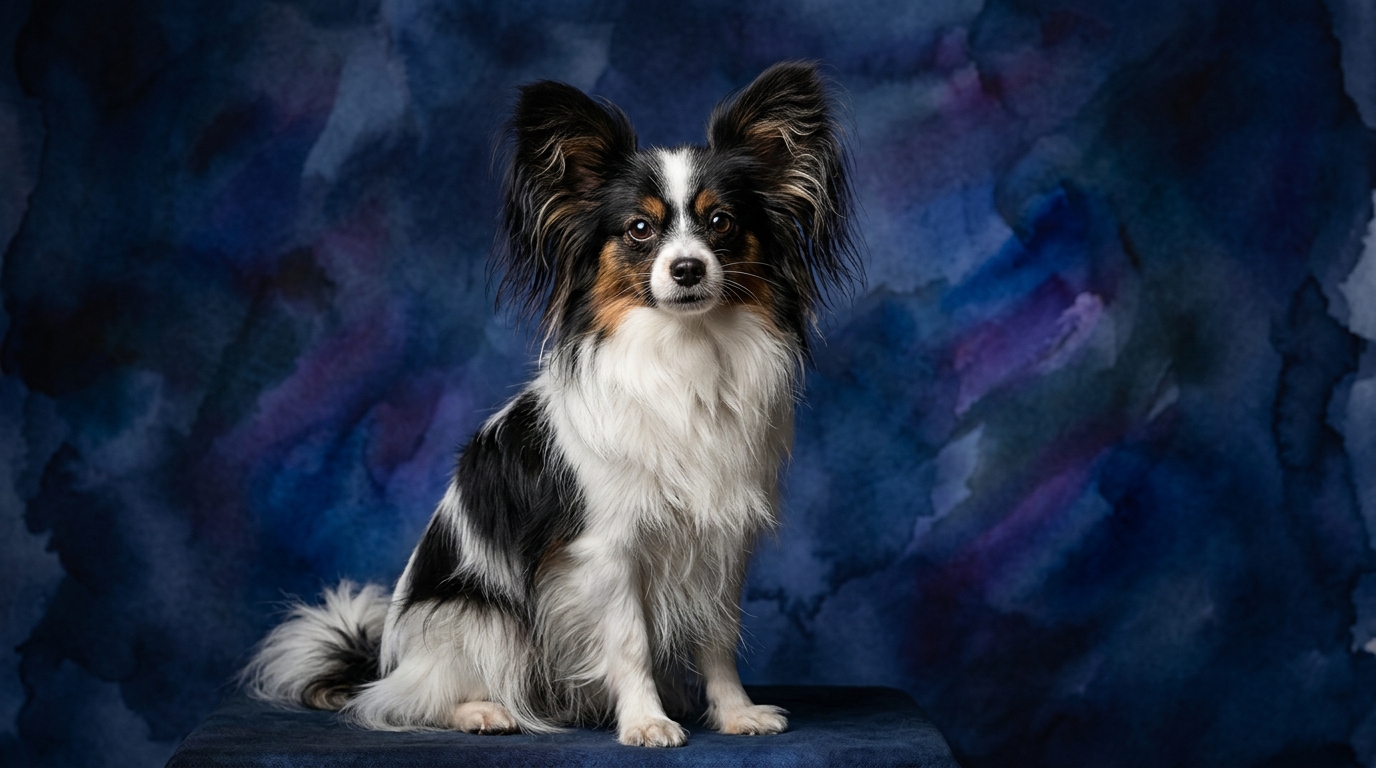
The Cosmic Pet Pet IQ Lab employs a five-dimensional framework to map canine cognition, revealing the unique mental architecture of each breed. For the Papillon, a breed recognized by Stanley Coren as the 8th most capable of learning and retaining commands, its profile shines with exceptional scores. Its problem-solving acumen stands at a perfect 5/5, indicating a dog capable of intricate puzzle navigation and abstract thought. Training speed also achieves a 5/5, reflecting an almost immediate grasp of new instructions and concepts. Social intelligence, crucial for harmonious living, registers a robust 4/5, demonstrating an acute sensitivity to human emotions and social structures. The instinctive drive, while present, is a moderate 3/5, focusing more on companionship than primal urges. Finally, memory is another perfect 5/5, ensuring that learned behaviors and experiences are retained over extensive periods.
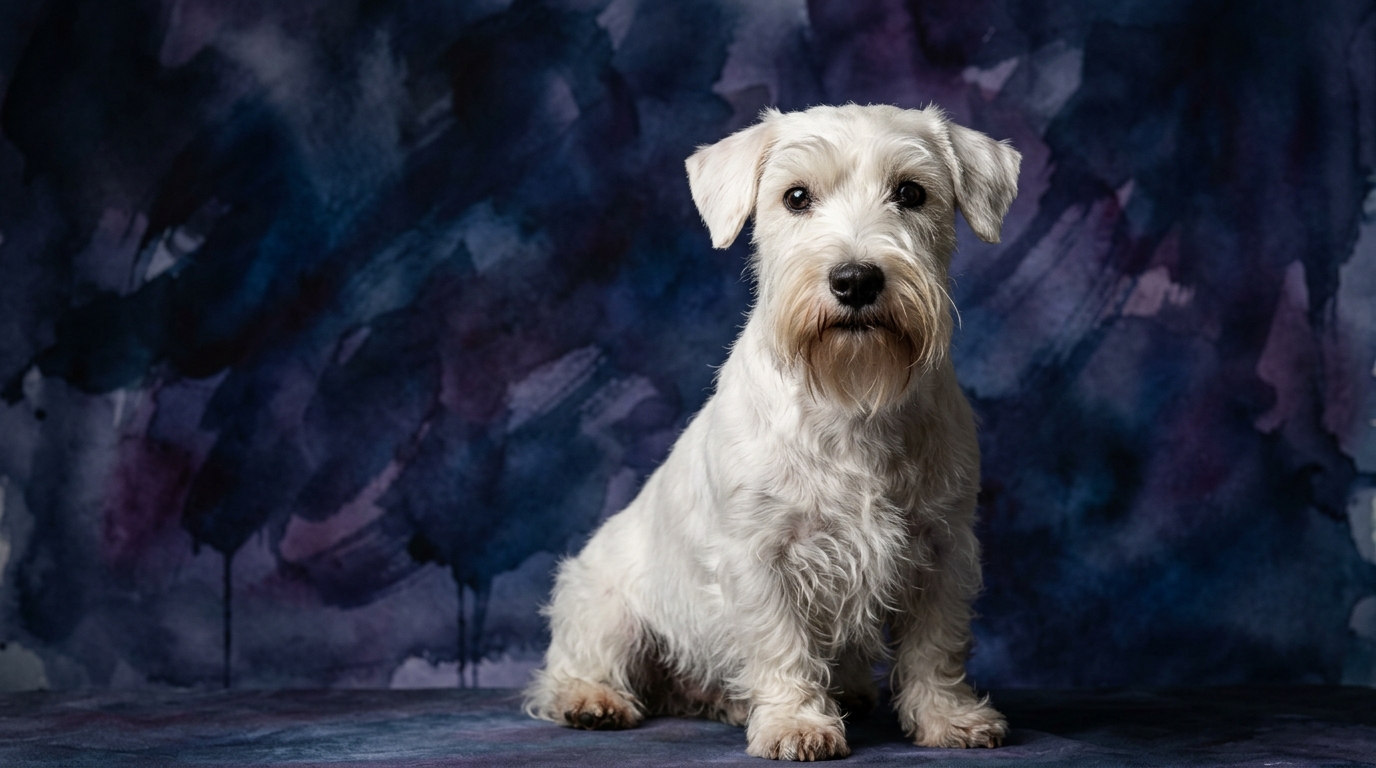
In contrast, the Sealyham Terrier, a breed not yet assessed on Coren's broader ranking, presents a profile rooted in its working terrier heritage. Its problem-solving ability scores a practical 3/5, geared towards real-world tasks like navigating tight spaces or locating hidden objects rather than abstract challenges. Training speed also sits at a 3/5, suggesting a steady learning pace that requires consistent engagement and motivation. Social intelligence, while present for forming strong bonds, is rated 3/5, indicating a more reserved or selective approach to social interactions compared to the Papillon. The instinctive drive is a significant 3/5, manifesting as a tenacious focus on scent and pursuit, characteristic of its original purpose. Memory for the Sealyham Terrier is a solid 3/5, sufficient for retaining routines and basic commands, though perhaps requiring more reinforcement for complex sequences over time.
Where the Papillon Excels Cognitively
The Papillon's cognitive strengths make it an exceptional candidate for complex mental endeavors. Its perfect 5/5 in problem-solving means it can effortlessly discern the mechanics of a new puzzle toy, figuring out multi-step sequences to retrieve a treat, or even learning to open simple latches around the house. This isn't just about trial and error; it's about genuine understanding of cause and effect. Owners often report their Papillons anticipating next steps in routines, like knowing 'walk' means grabbing the leash and heading to the door, even before the word is fully uttered, a testament to their superior memory.
The Papillon's 5/5 training speed is another profound advantage. They absorb new commands with remarkable alacrity, often requiring only a handful of repetitions before a behavior is solidified. This rapid acquisition extends beyond basic obedience to advanced tricks and dog sports, where their ability to link multiple cues and actions into a fluid routine is breathtaking. Their 4/5 social intelligence further amplifies this, allowing them to read subtle shifts in an owner's posture or tone, adjusting their responses accordingly, and facilitating a deeply intuitive partnership in training and daily life. They remember specific people, places, and learned actions with impressive longevity, rarely forgetting a skill once mastered, even after a long hiatus.
Where the Sealyham Terrier Shines Cognitively
While not scoring as high in abstract problem-solving, the Sealyham Terrier's cognitive strengths are deeply practical and purpose-driven. Its 3/5 problem-solving ability is perfectly suited to its terrier heritage, enabling it to efficiently navigate challenging physical environments, like burrowing through a pile of blankets to find a squeaky toy, or strategically maneuvering around obstacles in a yard. This isn't about solving human-designed puzzles, but about effectively overcoming real-world physical impediments to achieve a goal, often driven by its innate curiosity and determination. They demonstrate a pragmatic intelligence, finding the most direct route to what they desire.
The Sealyham's 3/5 instinctive drive is a defining feature of its cognitive makeup, translating into a tenacious focus and resilience. When engaged in a task that taps into its natural instincts, such as scent work or 'hunting' for a hidden toy, its concentration is formidable. This persistence, often perceived as stubbornness in other contexts, is a cognitive asset in situations requiring sustained effort and independence. They possess a robust spatial memory for their immediate environment, remembering where they buried a prized bone or where a particular scent trail leads. Their social intelligence, while not overtly expressive, allows for deep, loyal bonds with their chosen family, demonstrating an understanding of pack dynamics within their home.
Training: Papillon's Eagerness vs. Sealyham's Independence
Training a Papillon is often a joyful and swift experience, primarily due to their exceptional 5/5 training speed and 5/5 memory. They possess an inherent eagerness to please and a profound capacity to grasp new concepts, making them highly receptive to positive reinforcement. Their 4/5 social intelligence means they are attuned to their handler's cues, often anticipating what is expected of them and responding with enthusiasm. They thrive on mental stimulation and view training as an engaging game, quickly linking verbal commands to actions and retaining them with minimal repetition. This makes them ideal for intricate obedience routines, agility courses, and learning a vast repertoire of tricks, showcasing their remarkable cognitive flexibility.
Training a Sealyham Terrier, on the other hand, requires a different approach, largely influenced by their 3/5 training speed and a strong, independent instinctive drive. While capable of learning, they are not as inherently driven to please as a Papillon; instead, they need to be convinced that the training task is worth their while. Their focus can be intense when their instinctive drive is engaged, but this can also lead to selective hearing if a more compelling scent or activity presents itself. Successful Sealyham training involves consistency, patience, and making sessions highly engaging and rewarding, often incorporating their natural drive into the learning process. Unlike the Papillon's swift assimilation, the Sealyham benefits from breaking tasks into smaller steps and celebrating each success to build their motivation and reinforce memory.
Active Owners vs. Relaxed Owners: Matching Canine Minds
For owners with an active lifestyle or those seeking a highly interactive companion for dog sports, the Papillon is an exceptional match. Their high scores in problem-solving (5/5), training speed (5/5), and memory (5/5) make them ideal for activities like agility, rally obedience, and freestyle dancing, where complex sequences and rapid learning are paramount. They thrive on consistent mental engagement, enjoying puzzle toys, learning new tricks, and participating in brain games that challenge their keen intellect. A Papillon can also adapt to a more relaxed owner, provided their need for mental stimulation is met through daily interactive play, short training sessions, and varied enrichment activities, preventing boredom that can lead to undesirable behaviors.
The Sealyham Terrier suits owners who appreciate a robust, independent companion with a practical, tenacious spirit. While they require regular physical exercise to satisfy their terrier instincts, such as sniffing and digging in a securely fenced area, they may not demand constant interactive engagement in the same way a Papillon does. They are often content to explore their environment independently after their exercise needs are met, or to settle down for a quiet afternoon. Owners who enjoy outdoor adventures, especially those that involve scent work or 'earthdog' type activities, will find a devoted and capable partner in the Sealyham. Their cognitive profile suggests they are well-suited to individuals who value a dog with grit and a discerning loyalty, rather than one constantly seeking to perform or please.
The Verdict
Opt for a Papillon if you seek a highly interactive companion eager for complex mental challenges and rapid skill acquisition, thriving on consistent engagement and sophisticated communication.
Select a Sealyham Terrier if you appreciate a resilient, independent spirit with a pragmatic mind, valuing a dog that combines robust outdoor activity with a discerning loyalty.
🧠 Find Your Pet's IQ Score
Our Pet IQ Lab assessment covers 25+ tests across 5 cognitive dimensions — personalized to your breed.
Take the Full IQ Test →Frequently Asked Questions
Is the Papillon easily distracted during training?
While possessing exceptional training speed, the Papillon's keen awareness means they can be momentarily diverted by novel stimuli in a busy environment. However, their high focus and desire to engage with their handler typically allow for quick re-engagement and sustained attention in a well-structured training setting.
How does the Sealyham Terrier's instinctive drive impact daily life?
The Sealyham's natural drive for tracking and digging means they benefit from secure yards and engaging activities that satisfy these urges, like scent games or supervised digging pits. This drive, when channeled appropriately through training and appropriate outlets, forms the basis of their tenacious and determined character, making them excellent companions for specific tasks.
Can a Sealyham Terrier excel in dog sports despite its Coren ranking?
Absolutely. While not Coren-ranked, a Sealyham Terrier can excel in sports like Earthdog trials, barn hunt, or even some forms of obedience and agility, especially with a handler who understands their independent nature and motivates them through positive, engaging methods. Their persistence and practical problem-solving are significant assets in these specialized fields.