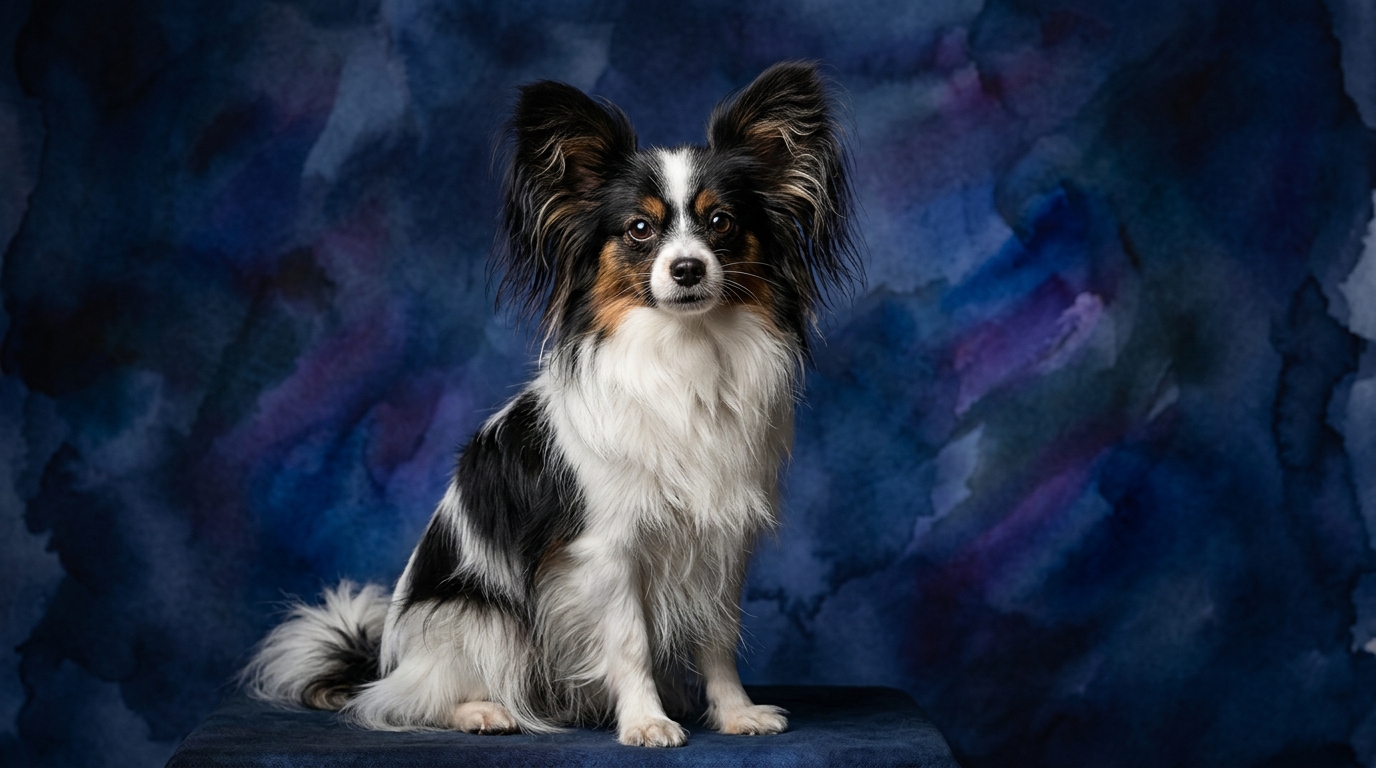

Side-by-Side IQ Profile: Papillon vs. Soft Coated Wheaten Terrier
The Papillon, a Toy breed, stands out with a Coren rank of #8, reflecting a remarkable cognitive aptitude. Its Problem Solving score of 5/5 indicates an exceptional capacity to navigate novel situations and figure out solutions quickly, often without extensive guidance. Training Speed also registers a perfect 5/5, meaning these dogs grasp new commands and routines with astonishing swiftness, often requiring very few repetitions. Social Intelligence, at 4/5, suggests a strong ability to read human cues and adapt to social situations, making them highly responsive companions. Their Instinctive Drive, rated 3/5, is moderate, focusing less on primal hunting or herding behaviors and more on companionship. Finally, a Memory score of 5/5 means the Papillon retains learned information and experiences for extended periods, contributing to their rapid training and consistent behavior.
The Soft Coated Wheaten Terrier, a Terrier breed, does not have a Coren rank, but its cognitive profile offers a balanced set of attributes. Its Problem Solving ability is rated 3/5, indicating a respectable capacity to tackle challenges, though perhaps with a more deliberate or independent approach compared to breeds with higher scores. Training Speed also sits at 3/5, meaning Wheatens learn new tasks at a steady pace, requiring consistent and engaging methods rather than instant comprehension. Social Intelligence, at 3/5, points to a generally agreeable nature, capable of forming strong bonds and interacting appropriately, though perhaps not with the same nuanced sensitivity as some other breeds. Their Instinctive Drive, like their problem-solving and training speed, is also 3/5, suggesting a moderate expression of typical terrier traits such as chasing or digging, but not overwhelmingly so. A Memory score of 3/5 means they retain information adequately, but might benefit from periodic refreshers to solidify learned behaviors over time.
Where the Papillon Wins Cognitively
The Papillon clearly demonstrates cognitive advantages in several key areas. Its perfect 5/5 in Problem Solving means it will likely be the first to figure out how to open a child-proof gate or retrieve a dropped toy from an awkward spot, often using trial-and-error with remarkable efficiency. This breed excels at puzzle toys, quickly mastering complex mechanisms that might frustrate other dogs. The 5/5 Training Speed is a significant win, translating into a dog that picks up new tricks, obedience commands, or even intricate agility sequences with minimal repetition, making them a joy for advanced dog sports or for owners who appreciate rapid learning. Furthermore, its 5/5 Memory ensures that once a concept is learned, it's rarely forgotten, leading to highly consistent performance in obedience and daily routines. This exceptional recall and retention means less time spent re-teaching behaviors and more time enjoying a well-behaved companion.
Where the Soft Coated Wheaten Terrier Wins Cognitively
While the Soft Coated Wheaten Terrier's scores are consistently 3/5, this balanced profile presents its own distinct cognitive strengths. A 3/5 in Instinctive Drive, for example, means they possess enough terrier tenacity to engage with tasks and show persistence, without being overly driven by prey instincts that could make off-leash control challenging. Their 3/5 Social Intelligence indicates a robust, generally outgoing demeanor that allows them to interact well with various people and animals, often with a cheerful resilience that might be less prone to anxiety than more sensitive breeds. This moderate social acumen can translate into a dog that is friendly and adaptable without being overly demanding of social interaction. Their 3/5 Problem Solving, while not top-tier, reflects a practical intelligence that allows them to navigate everyday challenges competently, often relying on a blend of learned behaviors and a sturdy, unfussy approach. They might not invent a new solution, but they will reliably apply what they know, embodying a steadfast cognitive reliability.
Which is Easier to Train and Why
Without question, the Papillon is the easier breed to train, primarily due to its exceptional 5/5 Training Speed and 5/5 Memory. These dogs are eager to please and possess a profound ability to absorb new information rapidly, often understanding a new command after just a few repetitions. Their keen observational skills and attentiveness to human cues, supported by their 4/5 Social Intelligence, mean they are highly responsive to their trainers. For instance, a Papillon might learn a complex multi-step trick in a single session, retaining it for weeks. In contrast, the Soft Coated Wheaten Terrier, with its 3/5 Training Speed and 3/5 Memory, requires more patience and consistency. Wheatens are intelligent, but their learning curve is more gradual, and they may exhibit a characteristic terrier independence or stubbornness that necessitates engaging, positive reinforcement methods and shorter, more frequent training sessions. While a Wheaten will certainly learn, it might take more repetitions and a more persistent approach from the owner to solidify behaviors, as their recall of less frequently practiced commands might fade more quickly.
Which Suits Active Owners vs. Relaxed Owners
The choice between these two breeds also depends significantly on an owner's lifestyle. The Papillon, despite its small size, is not a sedentary lap dog; its high cognitive scores, especially in problem-solving and memory, mean it thrives on mental stimulation. An active owner for a Papillon is someone who enjoys teaching tricks, engaging in dog sports like agility or obedience, and providing regular puzzle toys and interactive play. While their physical exercise needs are moderate for a small dog, their minds demand constant engagement. A relaxed owner might find a Papillon's need for mental activity overwhelming if not prepared to fulfill it.
Conversely, the Soft Coated Wheaten Terrier suits an active owner in a more traditional sense. Their terrier heritage means they possess a robust physical drive and require consistent, vigorous exercise to be content. They enjoy long walks, runs, playful romps in a secure yard, and activities that allow them to use their natural energy. While they benefit from mental engagement, their physical needs are often more pronounced than their smaller counterpart. A relaxed owner might struggle with a Wheaten's energy levels, potentially leading to boredom-induced behaviors if not adequately exercised. For the Wheaten, an 'active owner' means someone ready for daily outdoor adventures, not just intellectual games.
The Verdict
Choose the Papillon if you seek a highly trainable, cognitively agile companion eager to learn complex tasks and excel in dog sports, thriving on mental challenges and consistent intellectual engagement.
Choose the Soft Coated Wheaten Terrier if you desire a cheerful, sturdy companion with a balanced cognitive profile and a strong physical drive, who thrives on consistent exercise and a steadfast, patient training approach.
🧠 Find Your Pet's IQ Score
Our Pet IQ Lab assessment covers 25+ tests across 5 cognitive dimensions — personalized to your breed.
Take the Full IQ Test →Frequently Asked Questions
Is the Papillon easily frustrated if it can't solve a problem quickly?
Not typically. With a 5/5 in Problem Solving, Papillons usually approach challenges with enthusiasm and persistence, often trying different methods until they succeed rather than giving up easily. They enjoy the process of figuring things out.
Do Soft Coated Wheaten Terriers get bored easily with repetitive training?
Yes, Wheatens, with their 3/5 Training Speed and terrier independence, can become disengaged with overly repetitive or unrewarding training. Keep sessions short, positive, and varied to maintain their interest and progress.
How do their social intelligence scores impact their suitability for families with children?
A Papillon's 4/5 Social Intelligence suggests they can be very good with respectful children, often adapting well to family dynamics. A Wheaten's 3/5 indicates they are generally friendly and can be good family dogs, but their exuberance and physical play style might require more supervision with very young children.