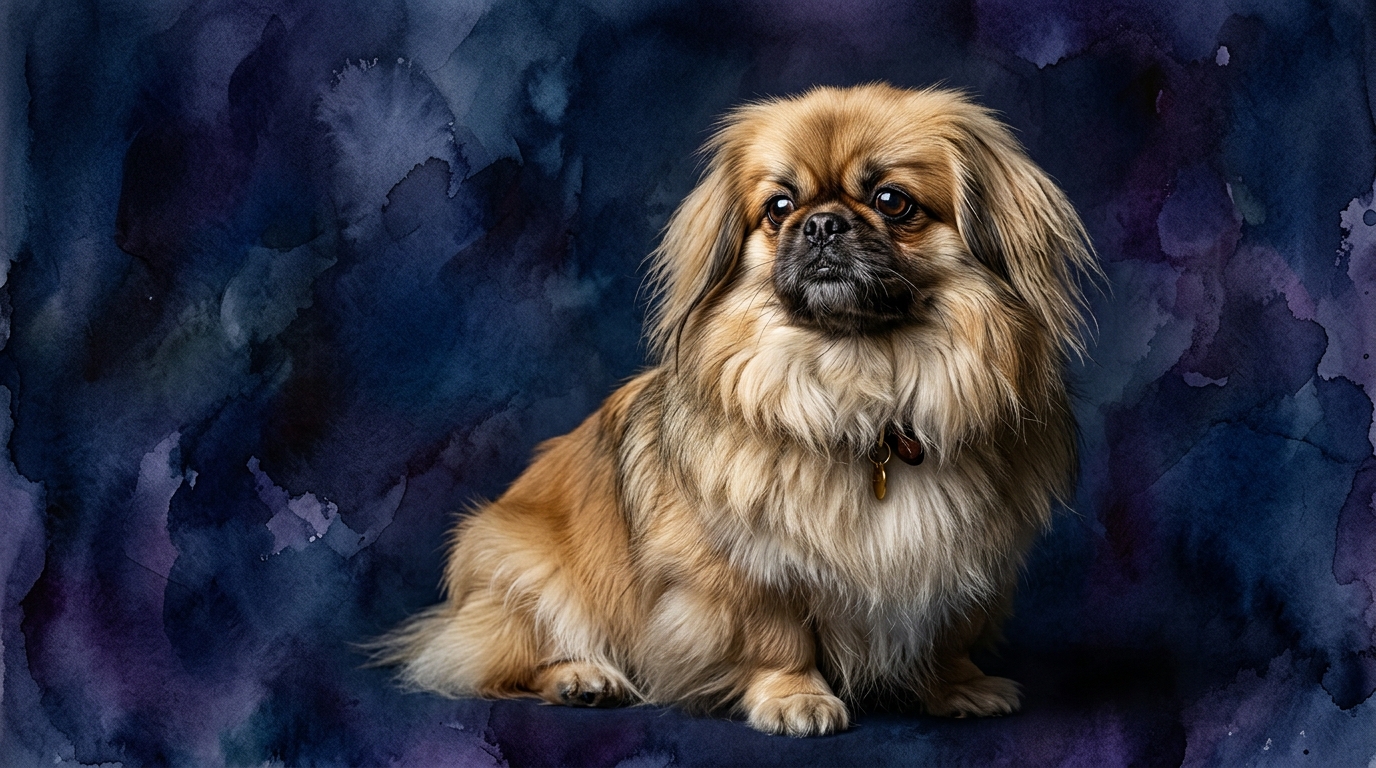
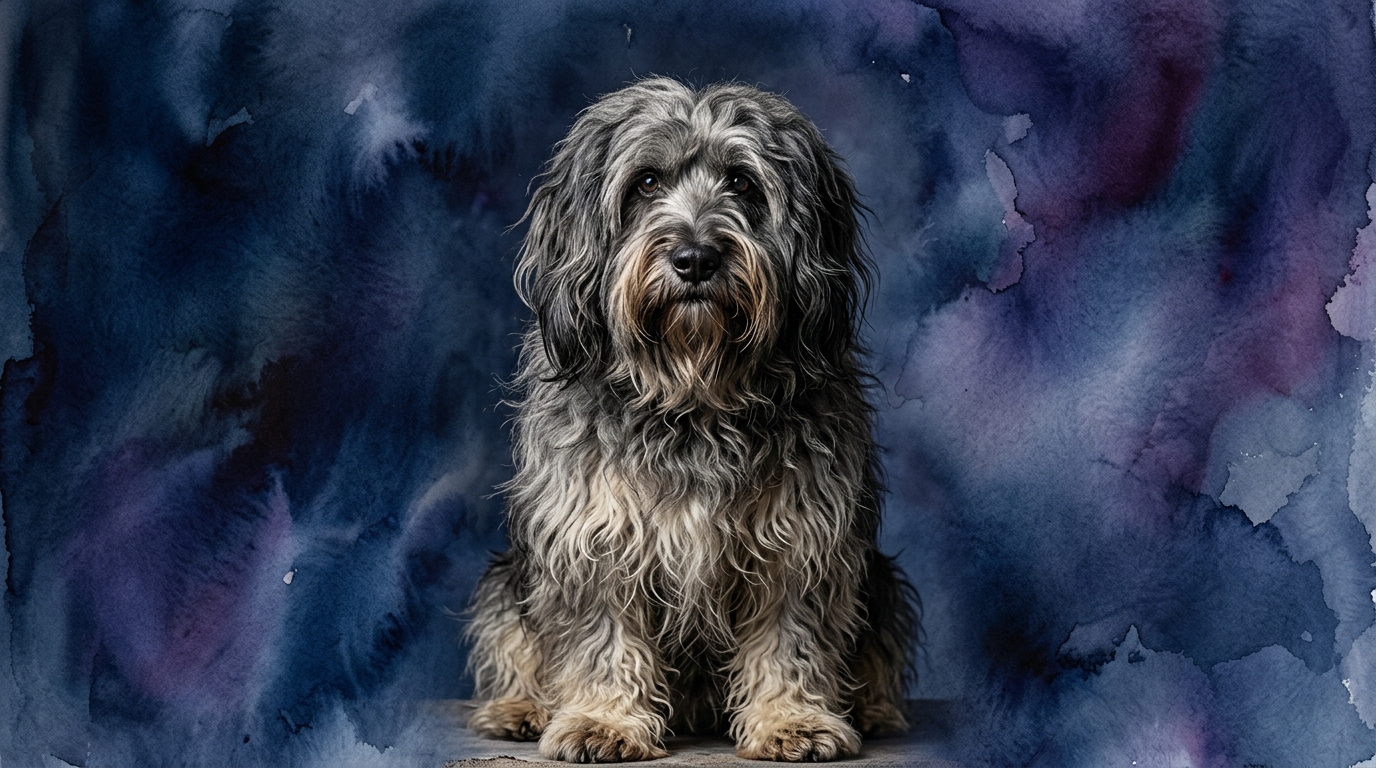
Side-by-Side IQ Profile: Pekingese vs. Polish Lowland Sheepdog
The Pet IQ Lab assesses five key cognitive dimensions, and interestingly, both the Pekingese and the Polish Lowland Sheepdog achieve a consistent score of 3/5 across the board. However, the application and manifestation of these scores are profoundly influenced by each breed's historical role and inherent predispositions. Understanding this context is crucial to appreciating their distinct cognitive landscapes.
For the **Pekingese (Toy Group, Coren Rank #77)**, a 3/5 in **Problem Solving** indicates a practical aptitude for navigating their immediate domestic world, such as strategically positioning themselves for maximum comfort or figuring out how to access favored toys. Their cognitive efforts are often directed towards personal advantage within a stable home environment. Their **Training Speed** (3/5) suggests they learn new commands at a moderate pace; while capable of understanding instructions, their independent and sometimes self-assured nature means consistent, patient, and highly rewarding training methods are essential, often requiring a clear incentive to engage fully. **Social Intelligence** (3/5) for the Pekingese manifests as a focused social awareness, deeply attuned to the moods and routines of their primary human companions, enabling them to form strong, intimate bonds and communicate needs through subtle cues. Their **Instinctive Drive** (3/5) appears in behaviors like guarding their chosen human or prized possessions, and a subtle, selective prey drive often directed at small, squeaky objects, focusing on immediate interests. Finally, their **Memory** (3/5) is well-suited to retaining established household routines, favored resting spots, and the specific preferences of their human family members, contributing to their smooth integration into a companion lifestyle.
The **Polish Lowland Sheepdog (Herding Group, Not Coren-ranked)** also scores 3/5 across the dimensions, but their interpretation is rooted in their working heritage. Their **Problem Solving** (3/5) reflects their capacity for independent assessment and resolution of challenges encountered during traditional herding duties, analyzing dynamic situations like managing livestock movements or navigating varied terrain without constant human oversight. Their **Training Speed** (3/5) means they learn new tasks at a moderate pace, often requiring mental engagement beyond simple repetition; their inherent independence, crucial for autonomous work, means they respond best to training that provides purpose and allows them to understand the 'why' behind a command. **Social Intelligence** (3/5) is finely tuned to understanding group dynamics, both within a flock and a human family, adept at reading subtle cues from animals and people to maintain order. Their **Instinctive Drive** (3/5) represents a functional, persistent herding instinct, providing the internal motivation to gather and manage livestock with focused energy. Their **Memory** (3/5) is crucial for a working breed, enabling them to recall complex routes, specific commands, the layout of their territory, and the individual characteristics of their charges, fundamental for long-term effectiveness in demanding roles.
Where the Pekingese Wins Cognitively
The Pekingese, despite its moderate scores, demonstrates unique cognitive strengths tailored to its role as a cherished companion. One area where they excel is **Optimizing Personal Comfort and Attention (Specific Problem Solving)**. They apply their 3/5 problem-solving to maximize personal comfort and secure human attention within a home, strategically placing themselves in sunbeams, maneuvering household items to create a favored sleeping spot, or employing a specific vocalization or gaze to prompt a desired human response. This showcases a nuanced understanding of their domestic leverage.
Another cognitive win for the Pekingese is their **Subtle Communication of Needs and Desires (Refined Social Intelligence)**. Their 3/5 social intelligence is often expressed through a sophisticated, almost regal, ability to convey their preferences and displeasure with minimal effort. A slight turn of the head, a specific blink, or a barely audible sigh can transmit a wealth of information to their attuned human, fostering a deep, non-verbal connection that is highly effective for their companion role.
Finally, their **Memory for Intimate Routines and Comfort Zones** is a notable strength. While both breeds score 3/5 for memory, the Pekingese's recall is particularly sharp for established household routines, the specific timing of meals, and the precise location of every comfortable cushion or favorite toy. This cognitive strength allows them to anticipate daily rhythms and navigate their personal environment with serene confidence, optimizing their comfort and sense of security.
Where the Polish Lowland Sheepdog Wins Cognitively
The Polish Lowland Sheepdog's cognitive strengths are deeply intertwined with its working heritage, manifesting in ways distinct from the Pekingese. They particularly shine in **Independent Tactical Problem Solving in Dynamic Environments**. Their 3/5 problem-solving is evident in situations requiring autonomous tactical decisions, especially in unpredictable outdoor settings. They can assess a straying animal, predict its movement, and execute a herding maneuver without direct human command, showcasing a practical, on-the-spot intelligence crucial for their traditional work.
Their **Reading and Influencing Group Dynamics (Broader Social Intelligence)** is another area of cognitive advantage. Their 3/5 social intelligence extends beyond individual interaction to encompass the complex dynamics of a group, whether a flock of sheep or a human family. They are adept at discerning social hierarchies, identifying potential conflicts, and subtly influencing behavior to maintain order and cohesion, a more expansive application of social awareness compared to a purely companion breed's focus.
Moreover, their **Spatial Memory for Expansive, Changing Territories** is a significant cognitive asset. The Polish Lowland Sheepdog's 3/5 memory is specifically adapted for retaining detailed mental maps of large, often varied territories, including the fluctuating positions of livestock and natural obstacles. This isn't merely recalling a favorite spot, but maintaining a dynamic cognitive representation of their working environment, vital for effective and safe herding across wide-ranging areas.
Which is Easier to Train and Why
Both breeds score 3/5 for training speed, yet the *approach* to training and perceived ease differs significantly. The Pekingese, with its independent spirit and lower inherent drive to perform complex tasks for human approval, can present a unique challenge. Their historical role did not emphasize extensive obedience, meaning their cognitive preference often leans towards self-direction within a comfortable home. Training often requires immense patience, highly valued rewards, and a focus on making the task appealing to them, as they might learn a command but choose whether or not to execute it based on their current mood or perceived benefit. Their self-assured nature means they need to be convinced of the task's worth.
In contrast, the Polish Lowland Sheepdog, while also independent, often possesses an underlying desire for purpose and mental engagement rooted in its working heritage. They tend to be receptive to learning tasks that provide mental stimulation and a 'job,' even if they deliberate before acting. Their herding instincts, when channeled through structured activities like agility or advanced obedience, can make them highly engaged students. Owners who can provide clear direction and consistent, stimulating tasks may find the Polish Lowland Sheepdog more readily embraces the training process, seeking to understand and fulfill a role, making them potentially easier to train for complex, multi-step behaviors.
Which Suits Active Owners vs. Relaxed Owners
For those seeking a more relaxed pace of life, the Pekingese is an ideal companion. They are generally content with short, leisurely walks, indoor play, and ample time spent in comfortable, familiar surroundings. Their cognitive needs are primarily met through close social interaction with their family, consistent daily routines, and exploring the nuances of their immediate home environment. They are not built for strenuous physical activity or complex, prolonged mental work outside of their comfort zone, preferring a calm, predictable existence where they can observe and participate on their own terms.
Conversely, the Polish Lowland Sheepdog thrives with active owners who can provide consistent physical exercise and, crucially, robust mental stimulation that engages their problem-solving and social intelligence. Despite their 3/5 instinctive drive, their herding background means they require a 'job' or purpose to feel fulfilled. Owners who can offer opportunities for structured activities, such as advanced obedience, agility, nose work, or even just long, varied walks incorporating scent games and novel challenges, will find this breed flourishes, channeling their cognitive abilities productively and happily. They require an owner willing to invest time in their mental and physical engagement.
The Verdict
Opt for a Pekingese if your lifestyle favors a devoted companion who excels at subtle communication within a relaxed home environment and whose cognitive needs are met by consistent routines and close social bonds. They thrive with owners who appreciate their independent spirit and nuanced expressions of affection, valuing comfort and companionship above all else.
Select a Polish Lowland Sheepdog if you're an active owner seeking a cognitive partner for structured activities, whose independent problem-solving and social intelligence flourish with regular physical and mental challenges. They are best suited for environments where their innate drive can be channeled into purposeful engagement, providing them with a fulfilling role and ample mental stimulation.
🧠 Find Your Pet's IQ Score
Our Pet IQ Lab assessment covers 25+ tests across 5 cognitive dimensions — personalized to your breed.
Take the Full IQ Test →Frequently Asked Questions
Do Pekingese and Polish Lowland Sheepdogs have similar cognitive potential?
While both breeds score 3/5 across the Pet IQ Lab's five dimensions, their cognitive potential manifests differently due to their distinct histories. The Pekingese applies its problem-solving and social intelligence to intimate companion dynamics within a domestic setting, while the Polish Lowland Sheepdog channels similar scores into independent decision-making and group management in a working context.
How does a "3/5" for problem-solving differ between these two breeds?
For a Pekingese, 3/5 problem-solving often involves figuring out how to manipulate household objects for personal gain or comfort, like finding a sunbeam or securing a favored treat. For a Polish Lowland Sheepdog, the same 3/5 score translates to assessing dynamic outdoor situations, such as managing livestock or navigating varied terrain, requiring a different application of cognitive resources and a broader scope.
Is one breed more adaptable to new situations than the other?
The Polish Lowland Sheepdog, with its herding background, often demonstrates a functional adaptability to changing environmental conditions and tasks, as required by its working role and need for independent decision-making. The Pekingese, while capable, typically prefers established routines and may show more reserve when faced with significant deviations from their familiar, comfortable settings, preferring predictability.