Side-by-Side Cognitive Profiles
At The Cosmic Pet Pet IQ Lab, we analyze canine intelligence across five key dimensions, revealing how each breed’s history shapes its cognitive strengths.
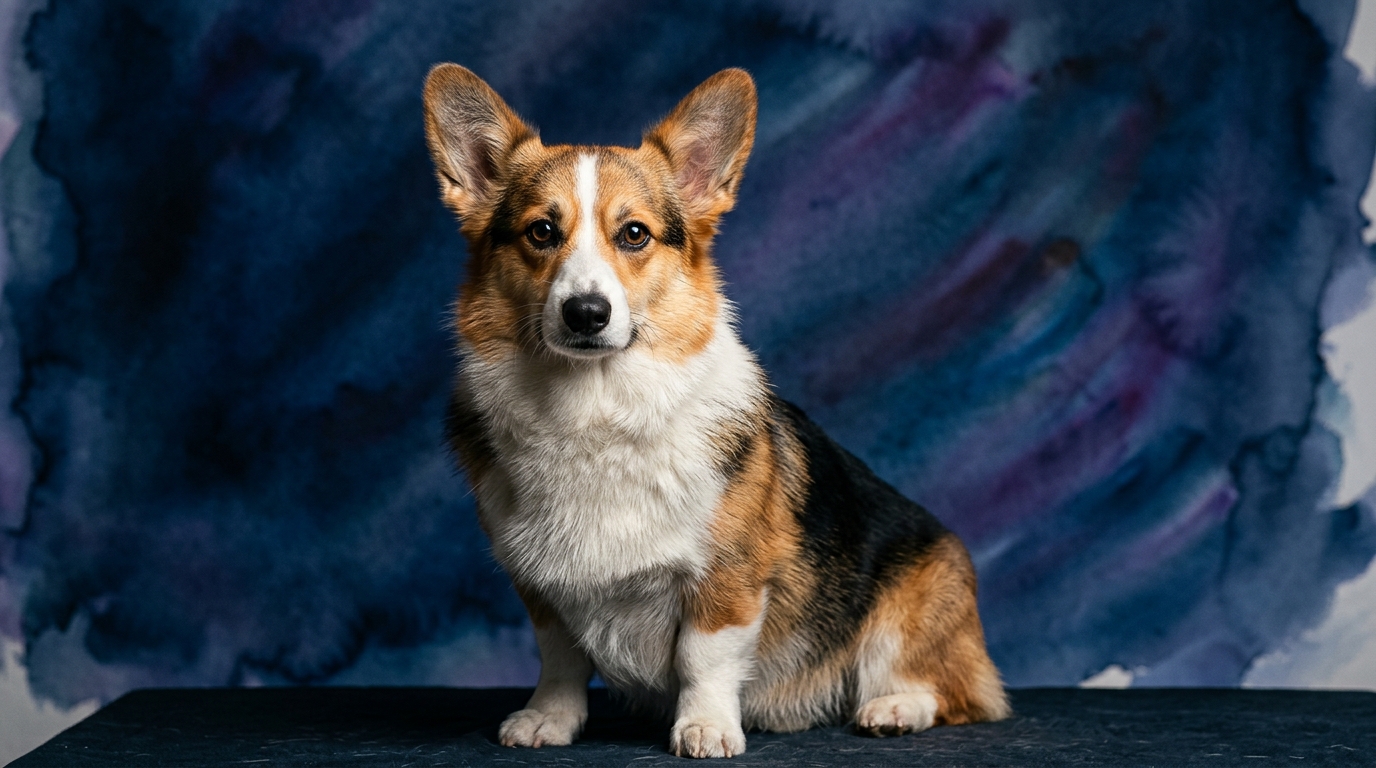
The Pembroke Welsh Corgi, a Herding breed ranked #11 by Coren, exhibits a robust cognitive profile tailored for cooperative work. Their Problem Solving is rated 4/5, indicating an aptitude for navigating complex situations and strategizing, such as maneuvering livestock or deciphering puzzle toys. Their Training Speed is an exceptional 5/5, reflecting a rapid ability to grasp new commands and a strong desire to respond to instruction, a hallmark of their close working relationship with humans. Social Intelligence scores 4/5, demonstrating a keen understanding of human cues and social dynamics, allowing them to form strong bonds and often anticipate handler intentions. An Instinctive Drive of 5/5 means they possess a powerful herding impulse, manifesting as a desire to gather and control, often applied to family members or other pets, alongside high motivation for purposeful activity. Finally, their Memory is 4/5, enabling them to retain learned behaviors and routines efficiently, remembering commands, routes, and positive or negative associations over extended periods.
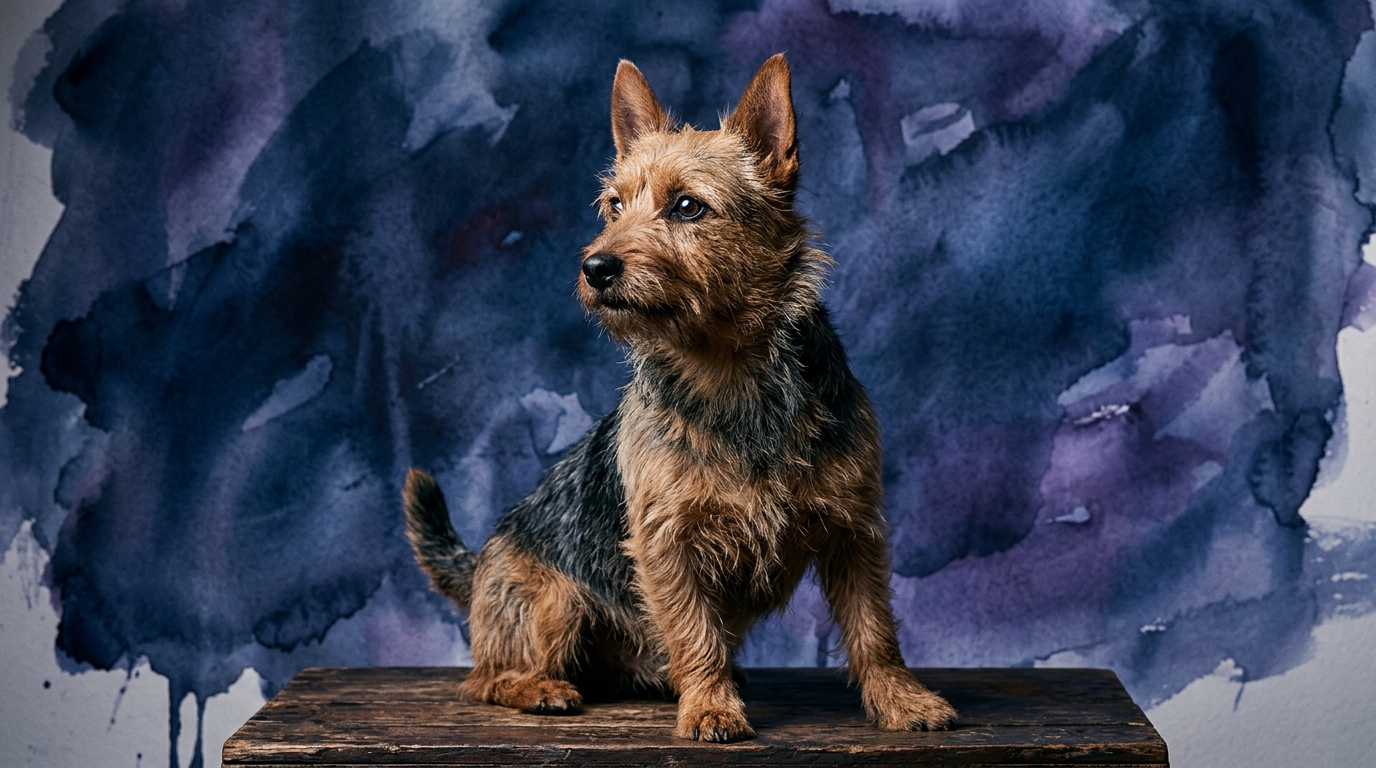
In contrast, the Australian Terrier, a Terrier breed not specifically Coren-ranked, presents a distinct set of cognitive attributes focused on independent action. Their Problem Solving is 3/5, indicating a capability for figuring out challenges, particularly those related to their prey drive like finding hidden objects or escaping enclosures, often employing direct and persistent solutions. Training Speed is 3/5, suggesting they learn at a moderate pace and require consistent, engaging methods, often displaying a more independent approach to learning new commands. Social Intelligence also rates 3/5; they form strong bonds with their immediate family but can be more discerning or reserved with strangers, understanding social hierarchies within their pack. Their Instinctive Drive is 3/5, primarily centered on their terrier instinct for hunting small vermin, which manifests as digging, chasing, and exploring, with a focus on independent pursuit rather than collaborative efforts. Their Memory is 3/5, allowing them to retain information adequately for daily routines and basic commands, though complex sequences might require more repetition compared to breeds with higher scores in this dimension.
Where the Pembroke Welsh Corgi Excels Cognitively
The Pembroke Welsh Corgi's cognitive strengths are particularly evident in their superior Training Speed (5/5) and their potent Instinctive Drive (5/5), both deeply ingrained from their herding heritage. This breed exhibits a remarkable eagerness to engage with human instruction, rapidly associating commands with actions due to generations of selective breeding for cooperative work alongside shepherds. Their Problem Solving (4/5) frequently manifests in a structured, strategic approach, whether it involves outmaneuvering a stubborn sheep or logically deciphering a new puzzle toy.
This structured thinking, combined with their strong Social Intelligence (4/5), allows Corgis to process complex environmental cues and human directives with greater precision and adaptability in varied learning scenarios. Their Memory (4/5) further reinforces these abilities, ensuring that learned behaviors are retained and readily recalled, contributing significantly to their reputation as a highly trainable and reliable companion.
Where the Australian Terrier Demonstrates Unique Cognitive Strengths
While the Australian Terrier's numerical scores might appear lower, their cognitive profile represents a distinct, highly effective set of skills honed for their specific purpose. Their Instinctive Drive (3/5), though numerically lower than the Corgi's, is intensely focused on independent pursuit and elimination of small prey, a critical survival trait. This manifests as a specialized form of Problem Solving (3/5) involving tenacity, resourcefulness, and acute spatial awareness, particularly in navigating tight spaces or digging tunnels to locate quarry.
The Australian Terrier's cognitive strength lies in their unwavering determination and ability to operate autonomously, often requiring less direct human instruction in their primary “work” of hunting. This independence, while sometimes perceived as stubbornness in training contexts, is a hallmark of their self-reliant hunting strategy, demonstrating a focused, persistent cognitive approach to achieving their specific goals. Their Social Intelligence (3/5), while not as broadly adaptable as the Corgi's, is highly effective within their immediate family unit, fostering devoted, watchful bonds with those they consider their pack.
Trainability: Corgi vs. Australian Terrier
When it comes to ease of training, the Pembroke Welsh Corgi unequivocally holds an advantage, primarily due to their exceptional Training Speed (5/5) and their cooperative Instinctive Drive (5/5). Corgis were selectively bred to work closely with shepherds, necessitating a high degree of attentiveness to human commands and a rapid assimilation of complex action sequences for livestock management. This genetic predisposition means they often pick up new cues in fewer repetitions and possess an inherent desire to please their handler, making positive reinforcement techniques remarkably effective.
Their strong Social Intelligence further aids this process, as Corgis are adept at reading human body language and vocal tones, which facilitates nuanced communication during training sessions. In contrast, the Australian Terrier, with a Training Speed of 3/5 and an Instinctive Drive of 3/5 geared towards independent hunting, requires a more patient and creative training approach. Their terrier nature means they can be more easily distracted by environmental stimuli related to prey and possess a streak of self-determination. While perfectly capable of learning, they may not exhibit the same eagerness to comply or the rapid grasp of abstract commands as a Corgi. Training an Australian Terrier often involves making sessions fun and varied, tapping into their prey drive through engaging games, and establishing clear, consistent leadership to channel their independent spirit constructively and effectively.
Matching Breeds to Owner Lifestyles
The Pembroke Welsh Corgi, despite their short stature, is a surprisingly energetic breed best suited for active owners who can provide consistent mental and physical engagement. Their high Instinctive Drive (5/5) and strong Problem Solving abilities (4/5) demand daily outlets beyond just backyard access. They thrive on activities like herding games, agility, obedience trials, or long, exploratory walks that tap into their innate desire for purposeful activity. Owners who enjoy structured training, puzzle toys, and interactive play will find a Corgi a deeply rewarding and engaged companion. A relaxed owner might find a Corgi's unmet cognitive and physical needs manifesting as undesirable behaviors like nipping at heels (a residual herding instinct) or excessive barking, indicating boredom.
The Australian Terrier, while possessing a terrier's zest for life, can be more adaptable to moderately active or relaxed owners who understand their specific, focused needs. Their Instinctive Drive (3/5) for hunting means they benefit greatly from opportunities to chase, dig, and explore safely within a secure environment. While they certainly enjoy walks and play, their energy can often be satisfied with focused bursts of activity rather than the sustained, high-intensity exercise typical of a working herding dog. Owners who appreciate a dog with a strong personality, enjoy short, engaging play sessions, and can provide mental stimulation through scent games or supervised digging will find the Australian Terrier a delightful fit. They are less likely to require constant, structured “work” compared to a Corgi, but still need consistent engagement to prevent boredom and channel their independent spirit.
The Verdict
Opt for a Pembroke Welsh Corgi if you seek a highly trainable, cooperative companion eager to engage in structured learning and activity. Their adaptable social intelligence and strong drive for purposeful tasks make them ideal for owners who enjoy consistent training and interactive mental challenges.
Select an Australian Terrier if you appreciate a resilient, independent spirit with a focused drive for exploration and pursuit, even if it means a more patient training journey. They are best suited for owners who can channel their natural terrier instincts into engaging activities and value a loyal, watchful companion.
🧠 Find Your Pet's IQ Score
Our Pet IQ Lab assessment covers 25+ tests across 5 cognitive dimensions — personalized to your breed.
Take the Full IQ Test →Frequently Asked Questions
Does Coren's ranking reflect all aspects of intelligence?
Coren's rankings primarily assess "working and obedience intelligence," focusing on trainability and command following, which aligns with the Corgi's #11 position. They do not fully encompass other cognitive dimensions like problem-solving in natural environments, social learning from peers, or specialized instinctive drives crucial to many breeds.
How does a dog's "instinctive drive" impact their daily life?
Instinctive drive dictates a dog's inherent motivations and behaviors, such as a Corgi's desire to herd or an Australian Terrier's urge to chase and dig. Understanding this drive is crucial for providing appropriate enrichment, preventing behavioral issues, and training effectively by channeling these natural tendencies into constructive outlets.
Can an Australian Terrier be trained to the same level as a Corgi?
While an Australian Terrier may not achieve the same rapid acquisition of complex obedience commands as a Corgi, they are certainly capable of learning and becoming well-behaved companions with consistent, positive reinforcement. Their training might require more patience and creativity, often benefiting from methods that tap into their independent problem-solving and prey drive.