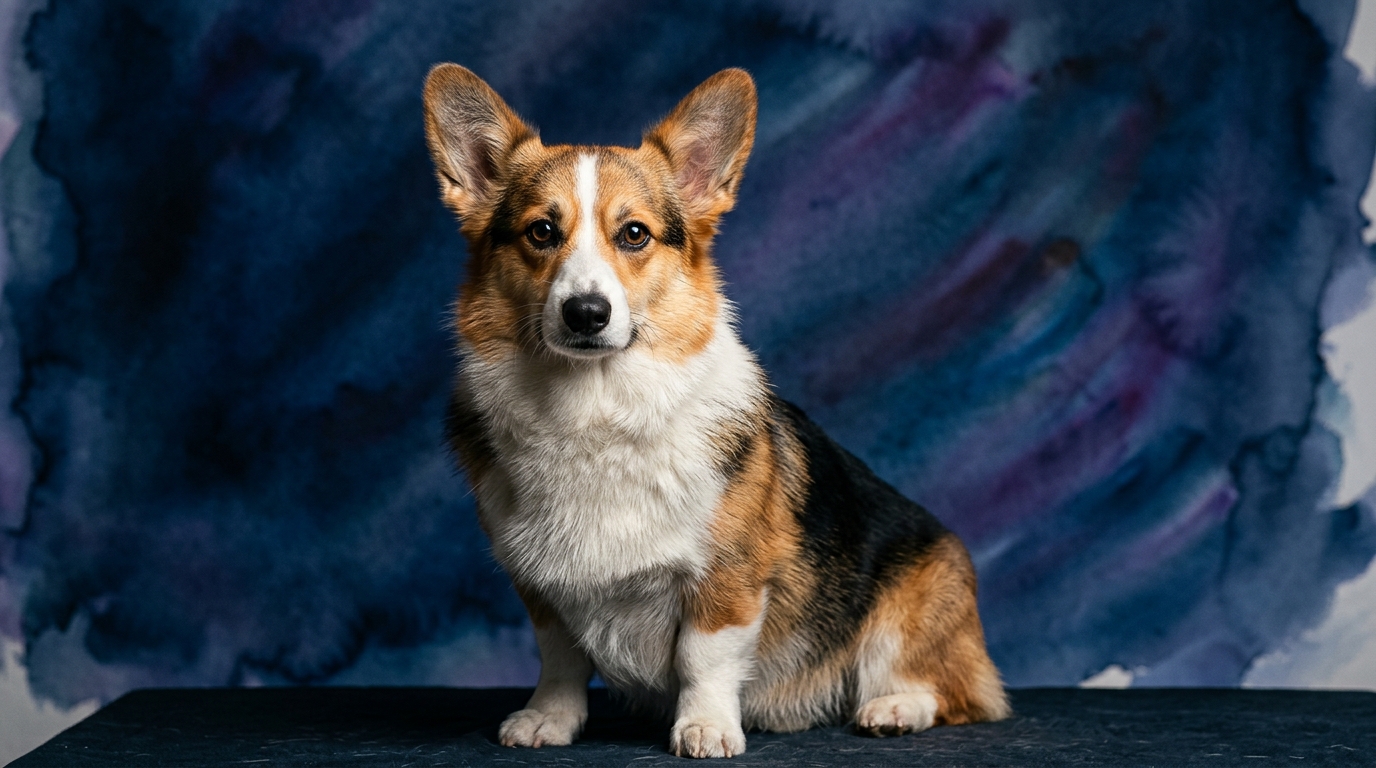

Side-by-Side IQ Profile: Pembroke Welsh Corgi
The Pembroke Welsh Corgi, a Herding breed, consistently ranks high in general working intelligence, holding a Coren rank of #11. Their cognitive profile reflects this, showcasing adaptability and a strong drive for engagement. Their Problem Solving is rated 4/5, indicating a strong capacity for navigating complex situations, a trait honed by their ancestral role in intelligently maneuvering livestock. They quickly assess environmental changes and devise effective solutions, whether it's outsmarting a stubborn sheep or figuring out how to retrieve a toy from under furniture.
Their Training Speed is a remarkable 5/5, meaning this breed picks up new commands and routines with impressive alacrity. Their eagerness to engage and their inherent drive to work alongside humans translate into rapid learning, making them highly responsive to consistent training methods. Social Intelligence stands at 4/5, as Corgis excel at reading human cues and understanding social dynamics within a family unit. They often form strong bonds, adapting their behavior to interact effectively with various individuals and demonstrating a nuanced understanding of household routines and expectations.
The Corgi's Instinctive Drive is a powerful 5/5, with their herding instinct manifesting as a persistent desire to gather and manage. This drive can be channeled into various activities, from actual herding to agility or even simply 'herding' family members, providing a strong motivator for engagement. Finally, their Memory is rated 4/5; with a robust recall, Corgis retain learned behaviors, commands, and experiences over long periods, contributing significantly to their trainability and their ability to navigate their environment effectively, remembering routes, people, and past interactions.
Side-by-Side IQ Profile: Basset Hound
The Basset Hound, a distinguished Hound breed, occupies a Coren rank of #71, reflecting a specialized cognitive focus rather than a broad general intelligence. Their IQ profile highlights their unique strengths rooted in their scent-tracking heritage. Their Problem Solving is 3/5, as Basset Hounds approach challenges with a different methodology, often relying primarily on their sense of smell rather than abstract reasoning. While adept at scent-related puzzles, their general problem-solving might appear slower or less adaptable to non-olfactory tasks compared to breeds with a more generalized cognitive focus.
Training Speed for the Basset Hound is 3/5. They can learn, but their pace is often tempered by their independent nature and powerful olfactory distractions. They require patient, consistent, and reward-based training, as their motivation is often internal, driven by scent, rather than solely by a desire to please. Social Intelligence is also 3/5; Basset Hounds are generally amiable and good-natured, forming affectionate bonds with their families. However, their social engagement might be less about subtle human cues and more about their comfortable, tolerant presence, often engaging on their own terms.
The Basset's Instinctive Drive is 3/5, overwhelmingly centered on scent. Once a compelling scent is detected, their focus becomes singular and intense, often overriding other directives. This specialized drive, while powerful for their original purpose, can make them seem less generally driven by human instruction in other contexts. Their Memory is rated 3/5; Bassets possess a strong recall for scent trails and familiar environments. While they retain commands and routines, their memory might be less about complex sequences or rapid recall and more about a consistent, comfortable familiarity with their surroundings and established patterns.
Where the Pembroke Welsh Corgi Wins Cognitively
The Pembroke Welsh Corgi clearly outpaces the Basset Hound in several cognitive domains, particularly due to their high Coren rank of #11, reflecting their general working intelligence. Their Problem Solving score of 4/5 means they quickly learn from experience, adapting strategies to overcome obstacles like navigating a new agility course or figuring out how to open a child-proof gate. The Corgi’s Training Speed, rated at a perfect 5/5, is a significant advantage; they absorb new commands and complex sequences almost effortlessly, making them prime candidates for advanced obedience, trick training, or dog sports.
Furthermore, their Instinctive Drive of 5/5, rooted in centuries of herding, translates into an energetic engagement with tasks and a persistent focus on objectives, whether it’s gathering livestock or participating in competitive events. This drive, coupled with their 4/5 Social Intelligence, allows them to anticipate human intentions and respond proactively, fostering a highly collaborative partnership that thrives on mutual understanding and clear communication. Corgis demonstrate a broader, more generalized cognitive flexibility, enabling them to excel in diverse environments and learn a wide array of skills efficiently.
Where the Basset Hound Wins Cognitively
While the Basset Hound's Coren rank of #71 suggests a more specialized cognitive profile, they exhibit unique strengths that are a direct result of their historical purpose. Their Instinctive Drive, rated 3/5, is singularly focused on olfaction, making them unparalleled in scent detection tasks. When presented with a compelling scent, a Basset Hound displays an unwavering determination and persistence that few breeds can match; their entire cognitive apparatus becomes dedicated to following that trail, demonstrating a unique form of problem-solving tailored to their nose. This specialized drive allows them to 'win' in scenarios requiring intense, sustained focus on a sensory input, often ignoring distractions that would deter other breeds.
Their Memory, also 3/5, excels in retaining complex scent patterns and spatial information related to tracking, allowing them to retrace steps or recognize specific odors with remarkable accuracy over time. This makes them exceptional for activities like scent work, where their methodical, unyielding approach is an asset rather than a drawback, revealing a deep, albeit narrow, cognitive specialization. Their cognitive strength lies not in general adaptability, but in profound dedication to their primary sensory input, leading to a unique kind of success within their domain.
Which is Easier to Train and Why
Without question, the Pembroke Welsh Corgi is significantly easier to train than the Basset Hound, a difference clearly reflected in their respective Training Speed scores of 5/5 versus 3/5. Corgis possess an intrinsic eagerness to please their humans and a strong work ethic derived from their herding background. They quickly grasp new concepts and commands, often requiring fewer repetitions and responding readily to positive reinforcement. Their 4/5 Social Intelligence also means they are attuned to human body language and vocal cues, making communication during training more fluid and effective, fostering a responsive partnership.
In contrast, the Basset Hound's training journey is often characterized by patience and persistence from the owner. Their independent nature, coupled with their overwhelming Instinctive Drive for scent, means that once a captivating odor is detected, their focus on human commands can wane dramatically. While Bassets are capable of learning, their motivation often needs to be more profoundly linked to high-value rewards, and training sessions must compete with their powerful olfactory world, often requiring creative methods to maintain engagement and mitigate distractions. Their 3/5 Problem Solving means they might not generalize learned behaviors as quickly to new situations, necessitating more consistent practice across varied environments to solidify understanding.
Which Suits Active Owners vs. Relaxed Owners
The choice between a Corgi and a Basset Hound significantly depends on an owner's lifestyle and energy levels. The Pembroke Welsh Corgi, with its high Problem Solving (4/5) and Instinctive Drive (5/5), thrives with active, engaged owners who can provide consistent mental and physical stimulation. They require regular exercise beyond a simple walk, enjoying activities like agility, obedience, herding games, or puzzle toys that challenge their quick minds. Owners who appreciate a dog that is always ready for an adventure, eager to learn new tricks, and enjoys being the center of attention will find a Corgi a rewarding companion. Their Social Intelligence (4/5) also means they enjoy being involved in family activities and can become bored or mischievous if under-stimulated, suggesting a need for consistent interaction.
Conversely, the Basset Hound is a better fit for relaxed owners who appreciate a calm, laid-back companion. While they do require daily walks to stay healthy and manage their weight, their energy bursts are typically shorter, and they are content to lounge and observe. Owners who understand and respect the Basset's independent, scent-driven nature and are prepared for a dog that might follow its nose rather than a command will find a loyal, affectionate friend. They are less demanding in terms of constant mental engagement but still benefit from occasional scent games that tap into their natural talents, without requiring intense physical exertion or complex problem-solving from the owner. Their lower Social Intelligence (3/5) means they might be less attuned to subtle human desires for interaction, preferring a more self-directed companionship.
The Verdict
Choose a Pembroke Welsh Corgi if you are an active owner seeking a highly trainable, engaged companion eager for mental challenges and dog sports, thriving on collaborative tasks and consistent interaction.
Opt for a Basset Hound if you prefer a calm, independent companion with a specialized scent drive, ideal for relaxed home life and owners who appreciate a dog's unique, often methodical, approach to the world.
🧠 Find Your Pet's IQ Score
Our Pet IQ Lab assessment covers 25+ tests across 5 cognitive dimensions — personalized to your breed.
Take the Full IQ Test →Frequently Asked Questions
Are Pembroke Welsh Corgis prone to destructive behavior if not mentally stimulated?
Yes, with their high Problem Solving and Instinctive Drive, Corgis require consistent mental engagement. Without adequate outlets, their energy and intelligence can manifest as unwanted behaviors like excessive barking, chewing, or attempting to 'herd' family members or objects within the home.
How does a Basset Hound's strong scent drive impact their recall training?
A Basset Hound's powerful instinctive drive for scent can significantly challenge recall, as their nose often overrides all other stimuli. Consistent, high-value reward-based training in varied environments is crucial, and off-leash excursions should only occur in securely fenced areas or after extensive, reliable recall is established.
Can Basset Hounds participate in dog sports, given their lower training speed?
Basset Hounds can participate in certain dog sports, particularly those leveraging their exceptional sense of smell like scent work, tracking, or even barn hunt. While their training speed is slower, their persistence and dedication to a scent trail make them formidable competitors in these specialized areas, often requiring a patient and understanding handler to guide them.