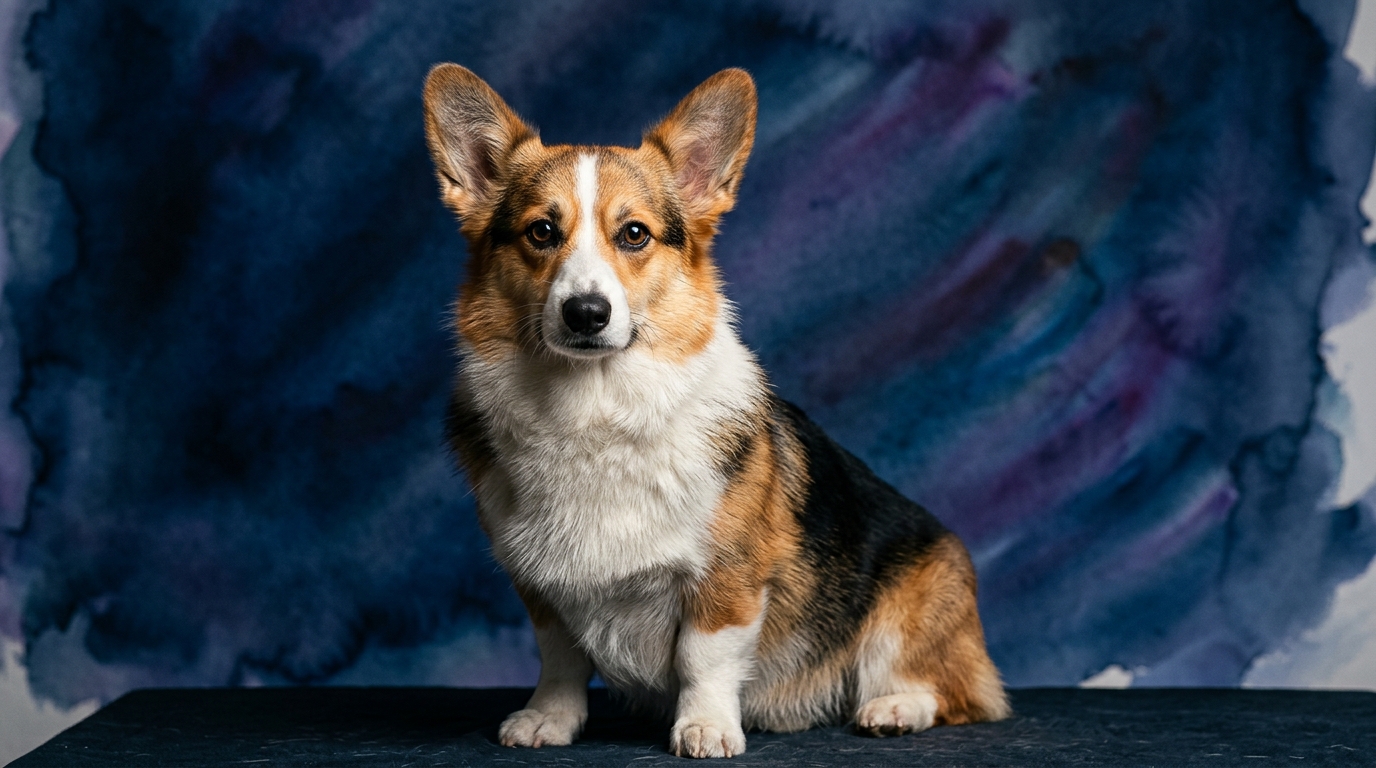
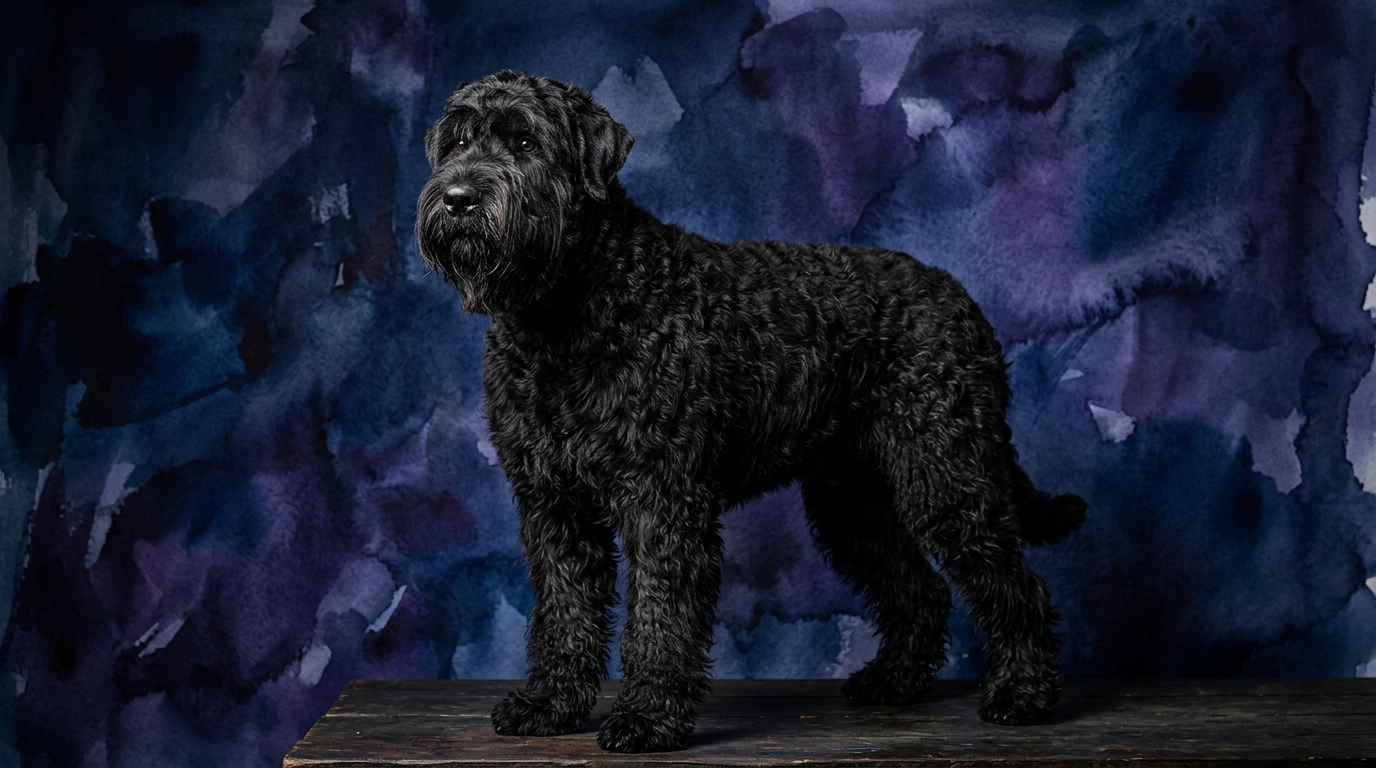
Side-by-Side Cognitive Profile: Corgi vs. BRT
The Cosmic Pet Pet IQ Lab provides a structured lens through which we can compare the cognitive abilities of the Pembroke Welsh Corgi and the Black Russian Terrier across five key dimensions. The Pembroke Welsh Corgi, a Herding breed, consistently shows elevated scores, reflecting its historical role and inherent tendencies. Its Problem Solving is rated 4/5, indicating a strong capacity for independent thought and strategic action, while its Training Speed reaches an exceptional 5/5, highlighting its rapid grasp of new commands. Social Intelligence for the Corgi stands at 4/5, suggesting a keen understanding of human cues, and its Instinctive Drive is a robust 5/5, channeling its herding heritage into focused engagement. Memory for the Corgi is also strong at 4/5, ensuring retention of learned behaviors.
In contrast, the Black Russian Terrier, a Working breed, presents a different cognitive landscape. Its Problem Solving capability is rated 3/5, indicating a competent but perhaps less spontaneous approach to novel challenges. Training Speed for the BRT is 3/5, suggesting a steady learning pace that requires consistent methods. Social Intelligence also scores 3/5, meaning they are attuned to their immediate family but may be more reserved in broader social contexts. Their Instinctive Drive is 3/5, primarily focused on protective duties rather than constant task engagement, and their Memory is likewise 3/5, reliable for core routines but perhaps not for a vast array of incidental details. These scores paint a picture of two distinct cognitive styles.
Where the Pembroke Welsh Corgi Excels Cognitively
The Pembroke Welsh Corgi demonstrates clear cognitive advantages, particularly in areas demanding quick adaptation and nuanced social interaction. Its 4/5 Problem Solving and 5/5 Training Speed significantly surpass the Black Russian Terrier's 3/5 in both categories. This means Corgis are adept at figuring out complex tasks, like manipulating puzzle toys or navigating intricate agility courses, and they absorb new commands and routines with remarkable speed, often requiring fewer repetitions. Their herding background has honed an ability to make rapid, independent decisions and learn quickly from environmental feedback, making them highly receptive students.
Furthermore, the Corgi's 4/5 Social Intelligence outpaces the BRT's 3/5, indicating a greater aptitude for understanding and responding to human social cues. They are often highly perceptive companions, capable of anticipating needs or moods, and they navigate household dynamics with a sophisticated awareness. This makes them remarkably responsive to their human family members, fostering a deeper, more expressive bond built on mutual understanding.
Where the Black Russian Terrier Shines Cognitively
While the Black Russian Terrier’s individual IQ scores are numerically lower than the Corgi’s, its cognitive profile is uniquely suited for specific roles, particularly those demanding steadfastness and independence. The BRT's 3/5 Instinctive Drive, though not as high as the Corgi's, is intensely focused on guarding and protection. This means their cognitive resources are primarily channeled towards vigilance, assessing potential threats, and maintaining an unwavering loyalty to their family and territory. This specialized drive creates a dog that is exceptionally purposeful in its primary function, a cognitive strength in its own right.
The BRT's 3/5 Problem Solving and Training Speed, combined with its focused instinctive drive, point to a more self-reliant and resolute cognitive approach. Unlike the Corgi's inherent eagerness to please and rapid learning across varied tasks, the BRT's intelligence thrives in situations requiring an independent guardian capable of making sound judgments without constant human direction. Their cognitive processes are less about learning a wide array of new tricks and more about the steadfast, reliable execution of their core protective purpose, making them remarkably effective in their intended role.
Training Dynamics: Which Breed is Easier to Train?
Based on their IQ profiles, the Pembroke Welsh Corgi is generally easier to train. With a 5/5 Training Speed, Corgis are exceptionally quick to grasp new commands and routines, often requiring minimal repetitions. Their 4/5 Problem Solving and 5/5 Instinctive Drive mean they are highly motivated by positive reinforcement and naturally enjoy having a 'job,' whether it's learning complex obedience sequences, participating in agility, or simply mastering new tricks. Their inherent desire to engage and respond to direction makes them highly receptive to varied training methods and typically eager students.
The Black Russian Terrier, with a 3/5 Training Speed, requires a more patient and consistent approach. While fully capable of learning, they may not exhibit the same immediate enthusiasm or rapid retention as a Corgi. Their independent nature and strong guarding instincts mean training needs to prioritize clear boundaries and solid obedience to ensure control, particularly in social settings or around strangers. BRTs respond best to firm, fair, and consistent methods, understanding their role within the family structure. Owners should be prepared to provide more motivation and repetition, as their compliance might be more driven by respect and purpose rather than an inherent eagerness to please for varied tasks.
Matching Owners: Active Engagement vs. Structured Purpose
The Pembroke Welsh Corgi, with its 5/5 instinctive drive and 4/5 problem-solving, flourishes with owners who can provide consistent, varied mental and physical engagement. They excel in activities like canine sports, advanced obedience, or even just daily 'jobs' around the house that tap into their herding instincts and quick learning ability. Their cognitive makeup demands regular stimulation to prevent boredom and channel their considerable energy constructively. Owners who enjoy teaching new things, engaging in interactive play, and participating in dog sports will find a Corgi a wonderfully cooperative and stimulating companion, thriving on the partnership of varied activities.
The Black Russian Terrier, while requiring ample physical exercise, suits owners who prefer a more structured, purposeful approach to activity. Their 3/5 instinctive drive, focused on guarding, means they benefit from routines that reinforce their protective role and provide a clear sense of purpose. This might involve extensive walks, secure off-leash play, and consistent obedience training, but perhaps less emphasis on constantly learning new, complex tricks compared to a Corgi. Their cognitive needs revolve around stability, clear leadership, and fulfilling their inherent guardian role. Owners who appreciate a dog with a strong, focused presence and are prepared to provide consistent structure and management will find the BRT a loyal and formidable partner.
The Verdict
Choose the Pembroke Welsh Corgi if you seek a highly trainable, socially perceptive companion eager for diverse mental challenges and rapid learning, thriving on interactive engagement. They are ideal for owners ready to channel their keen intellect and energetic drive into varied activities.
Opt for the Black Russian Terrier if you desire a steadfast, protective companion whose intelligence is geared towards vigilance and loyalty, and you are prepared for consistent, structured training to manage their formidable presence. They suit owners who appreciate a dog with a clear purpose and independent judgment.
🧠 Find Your Pet's IQ Score
Our Pet IQ Lab assessment covers 25+ tests across 5 cognitive dimensions — personalized to your breed.
Take the Full IQ Test →Frequently Asked Questions
Is the Corgi truly smarter than the BRT based on these scores?
The Corgi scores higher across all five IQ dimensions, suggesting a generally quicker cognitive processing speed and adaptability across a wider range of tasks. However, 'smarter' is nuanced; the BRT's intelligence is highly specialized for its protective role, which these metrics don't fully capture in a comparative sense.
What training challenges might a BRT owner face due to their IQ profile?
BRT owners might encounter a need for greater patience and consistency due to their 3/5 training speed. Their independent nature and protective drive mean they may require stronger motivation and clear purpose in training, rather than simply eager compliance, especially for tasks outside their core instincts.
How does the Corgi's herding background influence its problem-solving abilities?
The Corgi's 4/5 problem-solving ability is deeply rooted in its herding heritage, which demands quick, independent decision-making and adapting to dynamic situations. This translates into an aptitude for figuring out novel challenges, whether it's navigating complex environments or solving puzzle toys, by applying strategic thought.