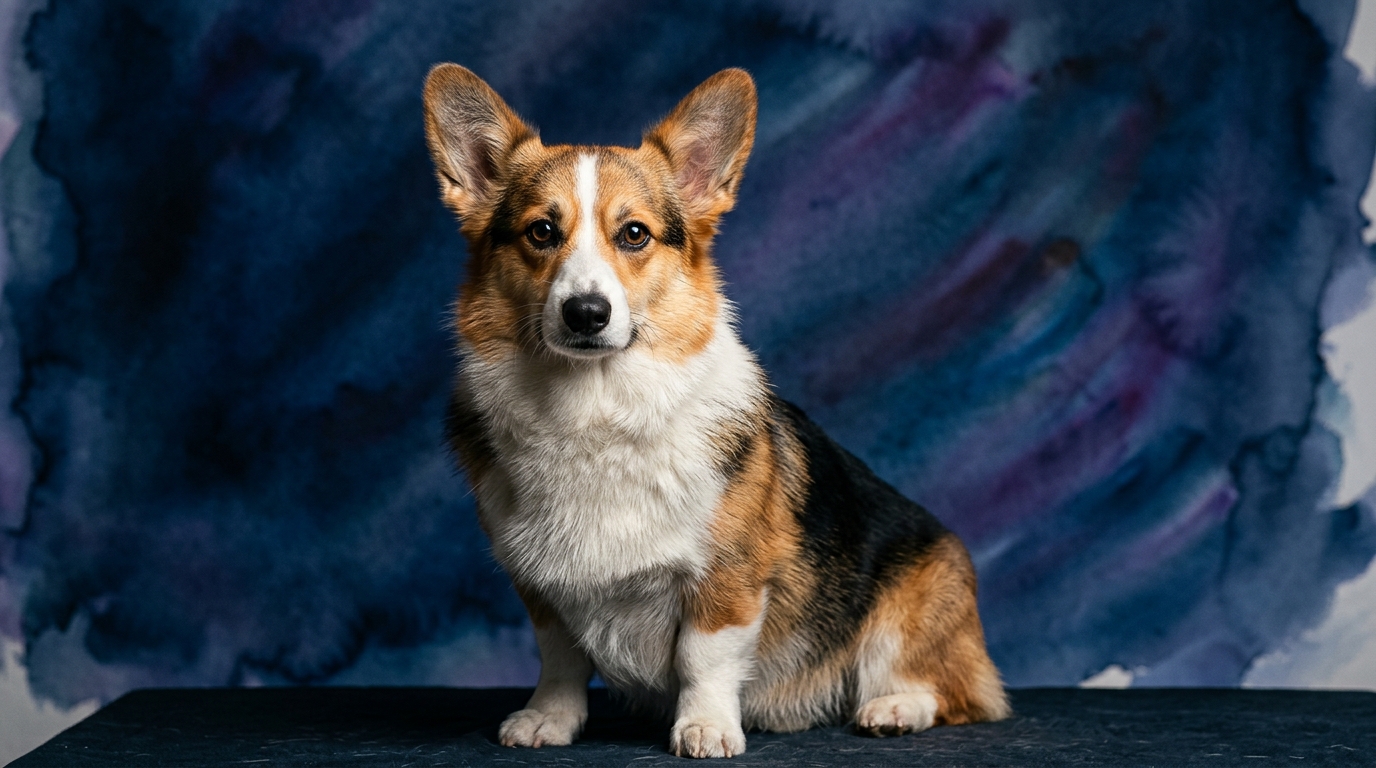
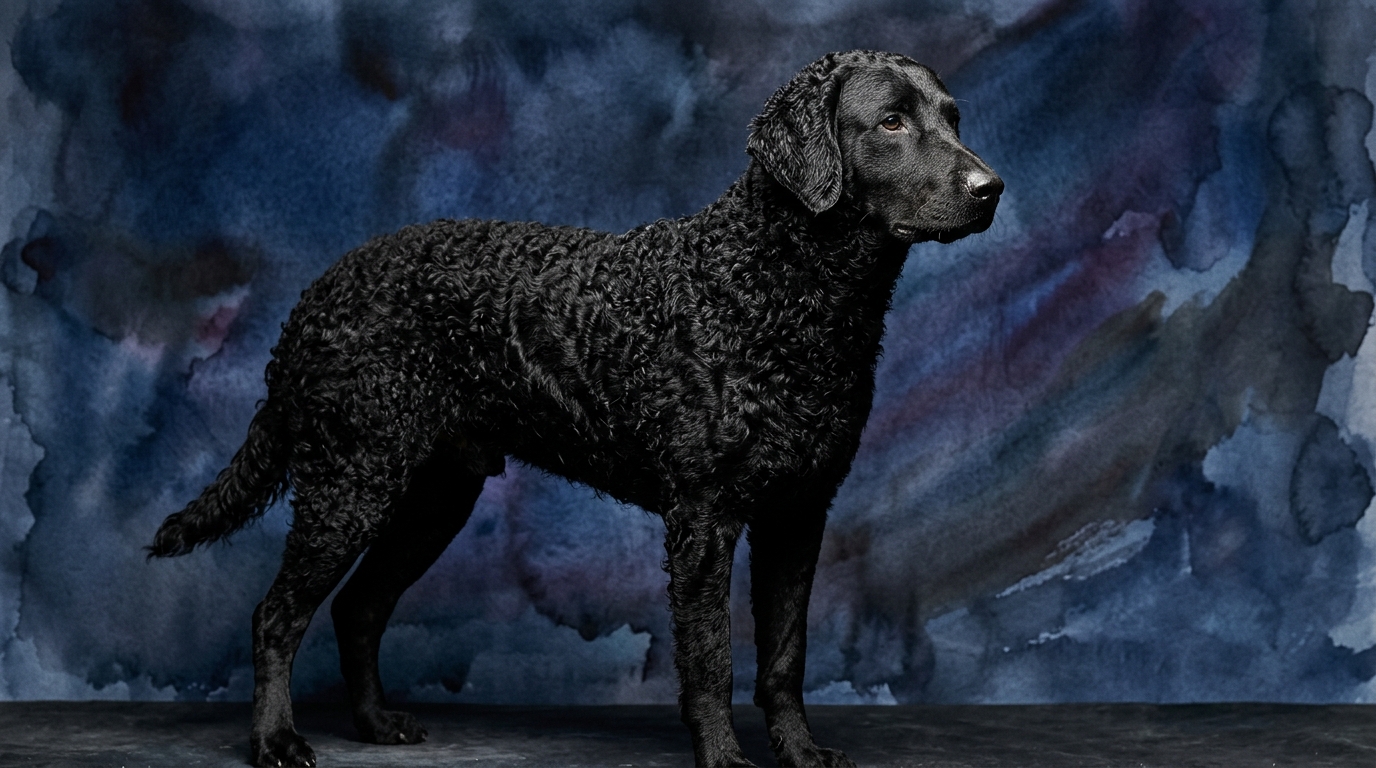
Side-by-Side IQ Profile: Corgi vs. Curly-Coat
The Pembroke Welsh Corgi, with a Coren ranking of #11, demonstrates a cognitive makeup geared towards quick responsiveness and independent thought. Their Problem Solving is rated 4/5, reflecting an aptitude for figuring out novel situations and adapting strategies, a trait honed by their history of managing livestock with minimal human direction. Training Speed is an impressive 5/5, meaning Corgis typically grasp new commands with remarkable rapidity, requiring few repetitions to solidify learning. Social Intelligence stands at 4/5, indicating a strong ability to interpret human cues and adapt their behavior accordingly, fostering effective communication within a family unit. An Instinctive Drive of 5/5 highlights their profound innate urge to herd, which translates into a persistent inclination to gather and direct, often manifesting in various activities beyond traditional herding. Finally, their Memory is 4/5, showing a solid capacity for retaining learned behaviors and routines over extended periods, contributing to their consistency in performance.
In contrast, the Curly-Coated Retriever, ranked #41 by Coren, presents a cognitive profile emphasizing steadfastness and methodical learning. Their Problem Solving is 3/5; while capable, Curly-Coats approach new challenges with a more measured, less spontaneous style, often relying on established patterns rather than innovative solutions. Training Speed is 3/5, suggesting they require a moderate number of repetitions to master new commands, indicating a steady learning pace that benefits from consistent and patient instruction. Social Intelligence is 3/5, allowing them to form connections, but they may not always pick up on subtle human emotional shifts as readily as some other breeds. Their Instinctive Drive is 3/5, representing a present but often tempered drive to retrieve, which requires encouragement and structured training to fully activate, distinguishing it from the relentless focus seen in some other sporting breeds. Crucially, the Curly-Coat's Memory is 4/5, a robust capacity for retaining skills and commands effectively once they are thoroughly learned, which is paramount for their working roles in the field.
Where Pembroke Welsh Corgi Wins Cognitively
The Pembroke Welsh Corgi demonstrates a clear cognitive advantage in areas demanding quick uptake and proactive engagement. Their Training Speed (5/5) is a standout feature, allowing them to process and integrate new information almost immediately, often requiring only a handful of repetitions to solidify a command. This rapid learning curve is invaluable for owners interested in advanced obedience, trick training, or dog sports where precision and speed are paramount. Furthermore, their superior Problem Solving (4/5) allows them to independently assess and navigate complex situations, a trait stemming from their historical role in making quick decisions while herding livestock. For instance, a Corgi might more readily figure out how to open a childproof gate or devise a strategy to retrieve a toy from an awkward space, rather than simply waiting for human intervention. This proactive mental approach, combined with a strong Instinctive Drive (5/5), means they are consistently looking for opportunities to engage their minds and bodies, often seeking out 'work' even in a domestic setting. This innate motivation for engagement translates into a dog that is often eager to participate in mental challenges and learning opportunities. Their Social Intelligence (4/5) also contributes to their cognitive edge, making them highly attuned to human moods and intentions, which facilitates smoother communication and cooperation in training and daily life. They are adept at reading subtle cues, making them highly responsive partners.
Where Curly-Coated Retriever Wins Cognitively
While the Curly-Coated Retriever may not match the Corgi's sheer speed of learning, their cognitive strengths lie in areas demanding endurance, resilience, and a consistent, methodical approach, particularly when it comes to retaining information over the long term. Their Memory (4/5) is a significant asset, ensuring that once a command or skill is thoroughly taught, it sticks. This robust retention is critical for a working retriever who needs to remember specific retrieve patterns, scent trails, or hand signals over vast distances and varied terrain, often under pressure. Unlike the Corgi's quick, often independent problem-solving, the Curly-Coat's Problem Solving (3/5) is more about applying learned solutions methodically, which can be an advantage in tasks requiring patience and persistence rather than immediate innovation. For instance, a Curly might systematically search an area for a hidden dummy, relying on ingrained patterns and scent work, rather than attempting a novel shortcut. Their Instinctive Drive (3/5), while not as overwhelming as the Corgi's herding impulse, is a steady and focused desire to retrieve, making them reliable partners for tasks demanding sustained effort in the field or water. This drive needs careful nurturing but, once engaged, provides a durable motivation for their specific working purpose. The Curly-Coat's cognitive profile emphasizes reliability and steadfastness, qualities that are paramount for a dog expected to perform consistent tasks over extended periods, often in challenging environments, distinguishing them as partners of enduring competence.
Which is Easier to Train and Why
The Pembroke Welsh Corgi generally presents as the easier breed to train, primarily due to their exceptional Training Speed (5/5) and high Instinctive Drive (5/5). Corgis often grasp new commands in fewer repetitions, sometimes within just one or two sessions, making initial obedience training a relatively swift process. This rapid comprehension is coupled with a strong innate desire to engage and work, a legacy of their herding background. They thrive on having a job to do, and training provides that mental stimulation. For example, a Corgi will likely learn "sit" or "stay" with minimal effort, and then eagerly move on to more complex tasks like weaving through poles or finding hidden objects. Their Social Intelligence (4/5) also plays a role, as they are adept at reading human body language and vocal tones, allowing for clearer communication during training sessions. Conversely, the Curly-Coated Retriever, with a Training Speed (3/5), requires more patience and consistency. They learn steadily but not with the same lightning-fast acquisition as the Corgi. A Curly might need ten or more repetitions to fully internalize a new command, and they can sometimes exhibit a more independent streak, which requires a trainer to be engaging and persistent. Their Instinctive Drive (3/5), while present for retrieving, is not as all-encompassing as the Corgi's herding drive, meaning they may not always be as intrinsically motivated by training for training's sake. A Curly-Coat might need more tangible rewards or a clear purpose for the training exercise to stay focused. For owners seeking a dog that will quickly pick up a wide array of commands and tricks, the Corgi’s cognitive wiring offers a more straightforward path.
Which Suits Active Owners vs. Relaxed Owners
When considering lifestyle compatibility, the cognitive profiles of these two breeds guide different ownership experiences. The Pembroke Welsh Corgi, with its profound Instinctive Drive (5/5) and high Problem Solving (4/5), is better suited for active owners who can provide ample mental and physical engagement. These dogs thrive when given tasks, whether it's participating in agility, herding trials, advanced obedience, or even complex puzzle toys. A Corgi that isn't sufficiently challenged can become bored, potentially leading to undesirable behaviors like excessive barking or nipping, channeling their herding instincts inappropriately. They require an owner who understands their need for consistent mental stimulation and is prepared to channel their quick wit and boundless energy. For instance, an active owner might enjoy teaching a Corgi a new trick every week or enrolling them in a dog sport class.
The Curly-Coated Retriever, while certainly not a couch potato, can be a better fit for owners whose activity levels are consistent but perhaps less intensely focused on constant mental challenges. Their Instinctive Drive (3/5) for retrieving means they enjoy regular outdoor activities like long walks, runs, swimming, or retrieving games, but they don't necessarily demand the same level of intricate mental work as a Corgi. A Curly-Coat appreciates a routine that includes physical exercise and opportunities to engage their retrieving instincts, but they are often content to relax quietly once their needs are met. Their more moderate Problem Solving (3/5) suggests they are less likely to seek out independent 'projects' of mischief if left unstimulated, making them potentially more forgiving for owners who have a less structured approach to daily mental enrichment. A relaxed owner who enjoys regular, predictable outdoor adventures and a calm home environment would find a suitable companion in the Curly-Coated Retriever, provided those physical needs are met.
The Verdict
Choose the Pembroke Welsh Corgi if you are an active, engaged owner seeking a responsive partner for various dog sports and mental challenges, valuing rapid learning and a keen problem-solving mind.
Opt for the Curly-Coated Retriever if you appreciate a steadfast companion for consistent outdoor activities, valuing their reliable memory and calm demeanor after sufficient exercise.
🧠 Find Your Pet's IQ Score
Our Pet IQ Lab assessment covers 25+ tests across 5 cognitive dimensions — personalized to your breed.
Take the Full IQ Test →Frequently Asked Questions
Is the Corgi truly smarter than the Curly-Coated Retriever?
The Corgi generally exhibits faster learning and more proactive problem-solving, placing it higher in Coren's rankings, but the Curly-Coat excels in memory and sustained focus for specific tasks. "Smarter" depends on the cognitive dimension being evaluated and the task at hand.
Do Curly-Coated Retrievers make good family pets despite their lower training speed?
Yes, Curly-Coated Retrievers can be excellent family pets; their steady learning pace simply means owners need to be patient and consistent with training. Their good memory ensures that once skills are learned, they are retained, leading to a well-behaved companion.
How much mental stimulation does a Pembroke Welsh Corgi need daily?
A Pembroke Welsh Corgi benefits from at least 30-60 minutes of dedicated mental engagement daily, which can include training sessions, puzzle toys, scent work, or interactive games. Their high problem-solving and instinctive drives necessitate consistent mental work to prevent boredom.