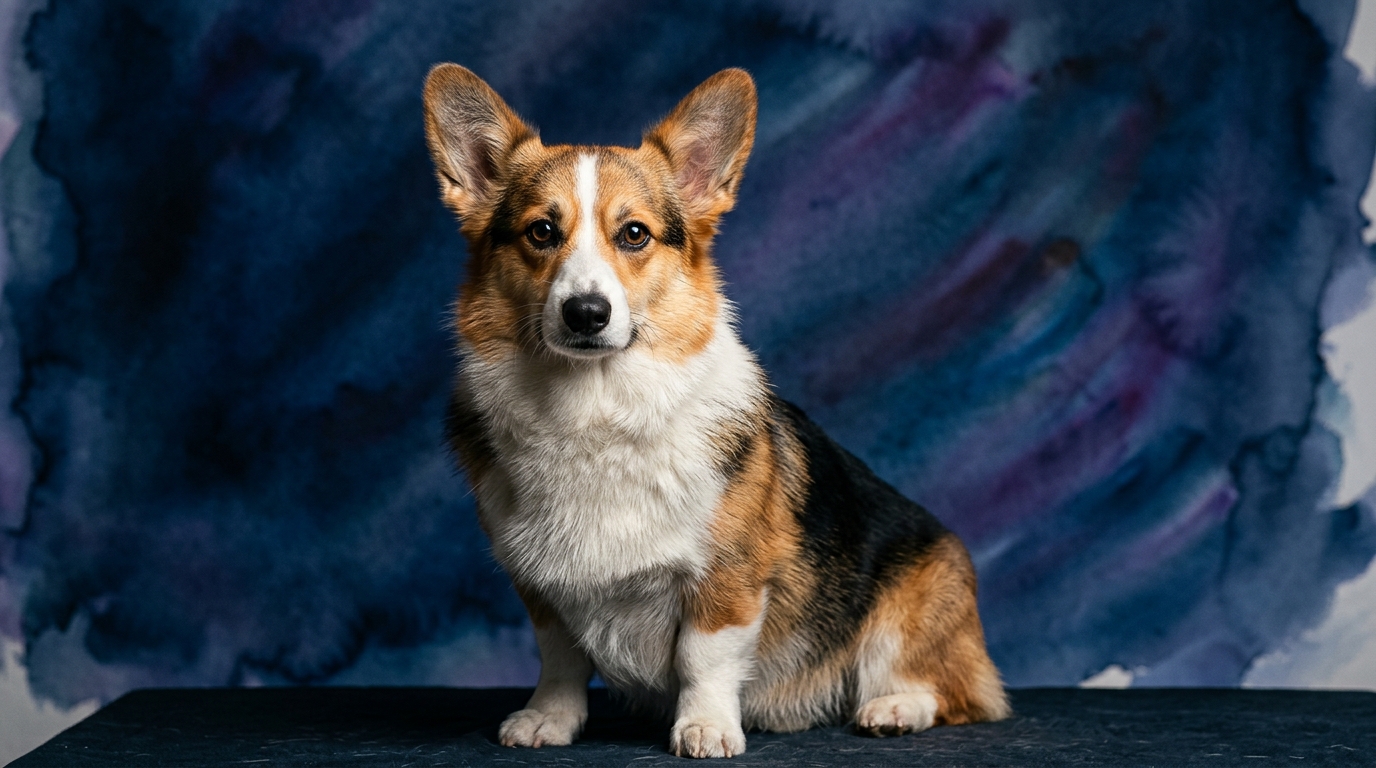

Side-by-Side Cognitive Profile: Pembroke Welsh Corgi vs. English Foxhound
**Pembroke Welsh Corgi:** This herding breed, ranked #11 by Coren, showcases cognitive strengths honed for working alongside humans. Their Problem Solving (4/5) reflects a capacity for figuring out novel situations, such as manipulating latches or strategically moving objects. Training Speed (5/5) indicates exceptional ability to grasp new commands rapidly and retain them with minimal repetition, eager for structured learning. Social Intelligence (4/5) allows them to keenly observe and interpret human cues, often anticipating intentions and forming communicative bonds. An Instinctive Drive (5/5) highlights strong herding impulses, manifesting in a desire to gather and control. Their Memory (4/5) ensures recall of complex routines, commands, and experiences with considerable accuracy.
**English Foxhound:** As a hound breed, the English Foxhound possesses a distinct cognitive makeup, not typically assessed on Coren's scale. Their Problem Solving (3/5) often relies on their primary sense—scent—to navigate challenges, rather than abstract reasoning. Training Speed (3/5) means they can learn, but requires more patience, consistency, and motivation, as their independent, scent-focused nature often overrides human-directed compliance. Social Intelligence (3/5) indicates amiable pack animals, but their focus can be strongly external, prioritizing environmental stimuli over subtle human interaction. Their Instinctive Drive (3/5) is powerfully geared towards tracking and pursuit, driven by an unyielding desire to follow a scent trail. Memory (3/5) is robust for recalling scent pathways and environmental landmarks, but less so for arbitrary commands, requiring frequent reinforcement.
Where the Pembroke Welsh Corgi Wins Cognitively
The Pembroke Welsh Corgi's cognitive strengths primarily lie in their adaptability and human-centric problem-solving. Their 4/5 Problem Solving means they are adept at navigating complex domestic environments, figuring out how to open cabinets or retrieve specific items. This is amplified by their 4/5 Social Intelligence, enabling them to quickly interpret human body language and vocal tones, allowing for nuanced communication and understanding of household rules. Their high Training Speed (5/5) translates into rapid acquisition of new skills, from complex obedience to agility, making them highly responsive partners. This blend of quick learning, social attunement, and resourceful thinking allows them to excel in roles requiring close collaboration and mental agility, demonstrating a profound capacity for learning and adaptation.
Where the English Foxhound Wins Cognitively
The English Foxhound's cognitive prowess is overwhelmingly concentrated in their specialized sensory intelligence and remarkable persistence. Their superior olfactory processing allows them to follow a cold scent trail for miles with unwavering focus, a feat few breeds can match. While general Problem Solving is 3/5, within tracking, their ability to "puzzle out" a lost scent, differentiate faint odors, and navigate varied terrain purely by smell is a sophisticated form of intelligence. Their 3/5 Instinctive Drive, intensely channeled into pursuit, grants them an endurance and single-mindedness to push through fatigue. This relentless determination, combined with their strong memory for scent patterns, means they excel in tasks requiring sustained, independent work driven by their nose, connected to their ancestral purpose.
Which is Easier to Train, and Why?
The Pembroke Welsh Corgi is demonstrably easier to train due to converging cognitive factors. Their exceptional Training Speed (5/5) means they pick up new commands with remarkable quickness, requiring fewer repetitions. This rapid learning is bolstered by their 4/5 Social Intelligence, making them highly attentive to human instructors, eager to please, and adept at understanding expectations. Corgis thrive on interaction and mental engagement, viewing training as collaborative. In contrast, the English Foxhound, with 3/5 Training Speed and Social Intelligence, presents a greater training challenge. Their strong, independent scent drive means attention is often externalized, making focus on human tasks difficult. They can learn, but require significantly more patience, consistency, and high-value rewards, as their persistence can translate into stubbornness if instincts are not aligned.
Suitability for Active vs. Relaxed Owners
The choice between these breeds for active versus relaxed owners hinges significantly on their inherent drives and exercise needs. The Pembroke Welsh Corgi, with a high 5/5 Instinctive Drive for herding, is adaptable in energy expression. They require consistent mental stimulation and regular exercise, met with vigorous walks, engaging play, and indoor puzzle toys. Corgis can thrive with moderately active owners providing structured engagement, and even relaxed owners prioritizing mental enrichment over extensive physical exertion. The English Foxhound, however, is unequivocally suited for highly active owners. Their 3/5 Instinctive Drive is intensely focused on long-distance tracking and running, demanding immense stamina and extensive physical outlets, ideally involving scent work or free running in secure areas. A truly relaxed owner unable to commit to daily, prolonged, vigorous exercise will find an English Foxhound challenging, as unmet physical needs lead to restless behaviors. They suit owners leading an active outdoor lifestyle, incorporating their dog into long hikes or runs.
The Verdict
Choose the Pembroke Welsh Corgi if you seek a highly trainable, socially intelligent dog eager for collaborative mental challenges and adaptable to a variety of living situations with consistent engagement.
Opt for the English Foxhound if your life involves significant outdoor activity, you appreciate a dog driven by ancient instincts, and you are prepared to manage a strong scent drive with patience and ample physical outlets.
🧠 Find Your Pet's IQ Score
Our Pet IQ Lab assessment covers 25+ tests across 5 cognitive dimensions — personalized to your breed.
Take the Full IQ Test →Frequently Asked Questions
Can English Foxhounds be trained for obedience despite their lower training speed?
Yes, English Foxhounds can certainly learn obedience, but it requires more consistent effort, patience, and highly motivating rewards than breeds with higher training speeds. Their independent, scent-driven nature means training sessions must be engaging and frequent to overcome their natural inclination to follow their nose.
Are Pembroke Welsh Corgis prone to herding children or other pets?
With their 5/5 instinctive drive for herding, Pembroke Welsh Corgis often display this behavior by attempting to "round up" family members, including children and other pets, sometimes nipping at heels. Consistent training and redirection are crucial to manage this innate tendency and ensure appropriate interactions.
How does the "not Coren-ranked" status of the English Foxhound impact our understanding of its intelligence?
The absence of a Coren rank for the English Foxhound doesn't imply a lack of intelligence, but rather that Coren's methodology primarily assesses "working and obedience intelligence" in a human-centric context. Foxhounds possess a highly specialized intelligence geared towards scent detection and persistent tracking, which Coren's ranking system does not fully capture.