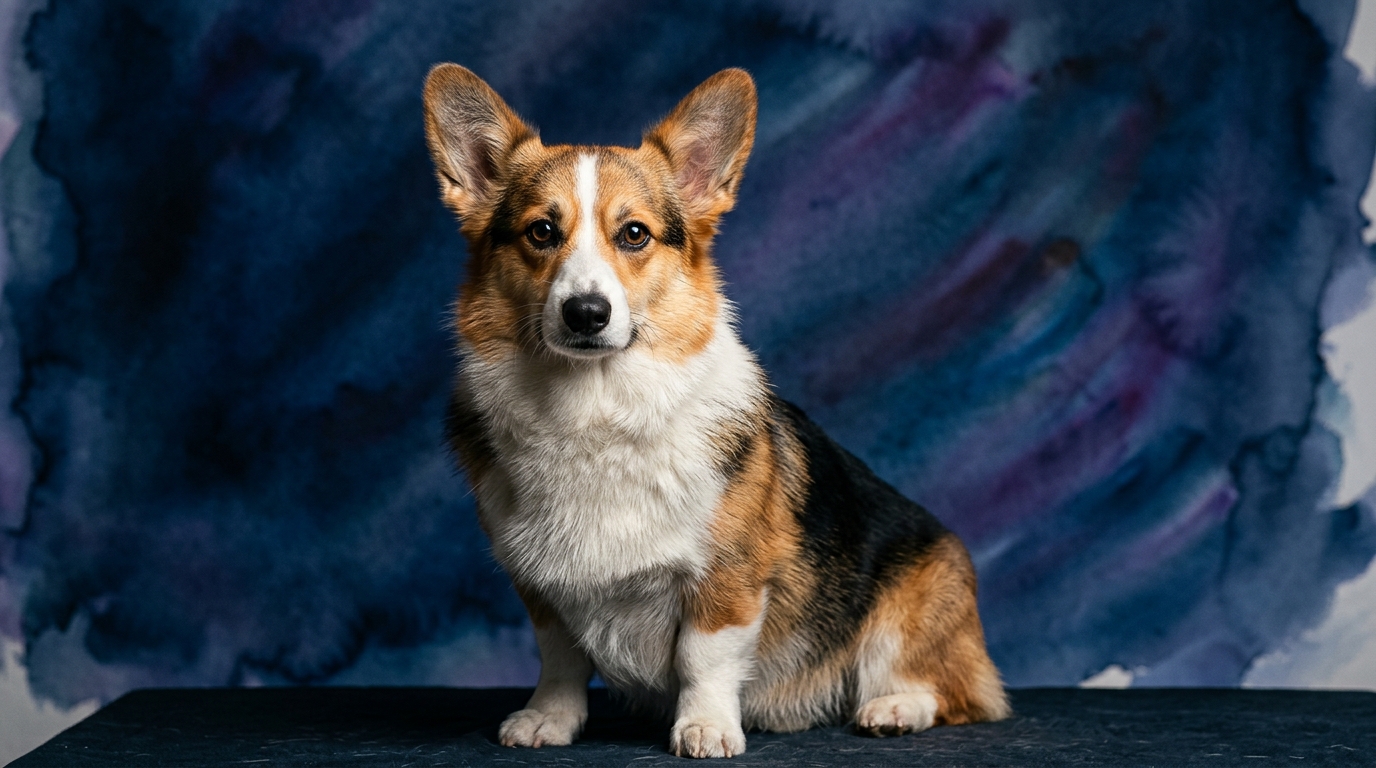
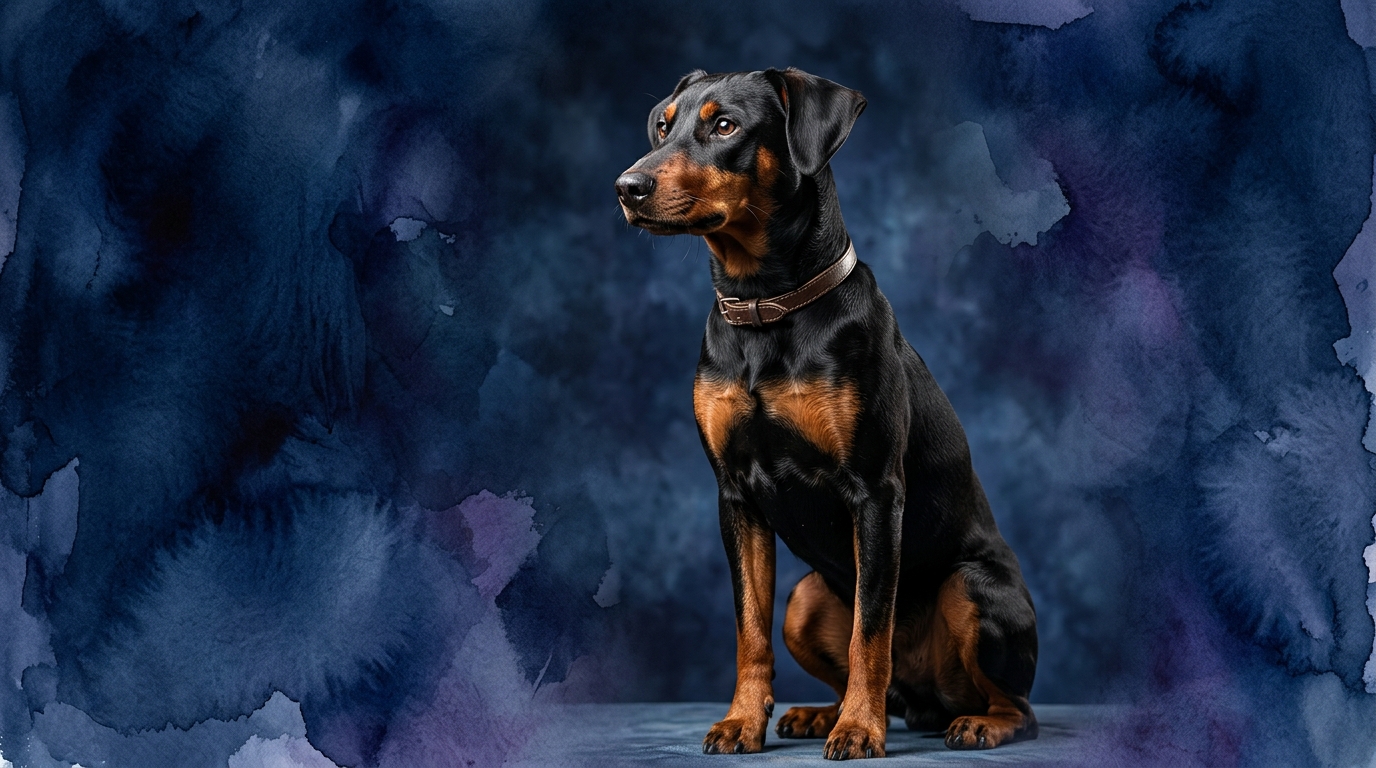
Side-by-Side Cognitive Profiles: Corgi vs. Pinscher
The Cosmic Pet Pet IQ Lab employs a comprehensive five-dimensional framework to assess canine intelligence, moving beyond simple 'smartness' to evaluate specific cognitive strengths. For the Pembroke Welsh Corgi, a breed historically tasked with managing livestock, its profile is marked by high scores reflecting its demanding heritage. Its Problem Solving ability is rated at a robust 4/5, indicating a strong capacity for independent thought and figuring out novel situations, a necessity for a dog working semi-autonomously. Training Speed stands at an exceptional 5/5, showcasing an eagerness and quickness to absorb new commands and behaviors, a hallmark of many herding breeds designed to respond rapidly to handler cues. Social Intelligence is also impressive at 4/5, meaning these dogs are often adept at reading human intentions and social dynamics, making them highly interactive companions. Their Instinctive Drive is a powerful 5/5, reflecting their inherent herding tendencies, vigilance, and a strong work ethic. Finally, their Memory is rated 4/5, allowing them to retain complex sequences and learned behaviors over time, crucial for intricate herding patterns or advanced training.
In contrast, the German Pinscher, a working breed known for its vermin control and guarding capabilities, presents a more balanced, moderate cognitive profile across the board. Its Problem Solving ability is rated 3/5, suggesting a capable but perhaps less consistently innovative approach to novel challenges compared to the Corgi. Training Speed also sits at 3/5, indicating an average pace of learning that requires consistent, clear instruction but is certainly trainable. Social Intelligence is likewise 3/5; while they can connect with their families, they might not always be as overtly tuned into subtle human cues as their Corgi counterparts, often exhibiting a more independent streak. Their Instinctive Drive is rated 3/5, pointing to a moderate level of inherent urges like prey drive and territoriality, present but typically not as intensely focused as the Corgi’s herding drive. Memory is also 3/5, meaning they retain information adequately, but perhaps require more reinforcement to solidify complex lessons than a breed with higher memory scores.
Where the Pembroke Welsh Corgi Excels Cognitively
The Pembroke Welsh Corgi's cognitive strengths are particularly evident in its rapid acquisition of new skills and its profound instinctive drive. With a Training Speed of 5/5, Corgis typically pick up commands and routines with remarkable alacrity, often anticipating their owner's next instruction. This quick learning makes them exceptionally rewarding for advanced obedience, agility, or rally sports, where precision and speed are paramount. Their Problem Solving score of 4/5 further complements this, allowing them to not only learn tasks but also adapt them to changing environments or figure out how to achieve a desired outcome independently, such as opening a gate or finding a hidden toy. This combination of swift learning and resourceful thinking means a Corgi is often a step ahead, requiring consistent mental engagement to prevent them from applying their problem-solving skills to less desirable activities.
Furthermore, the Corgi's Instinctive Drive, rated at a powerful 5/5, is a significant cognitive advantage for owners who appreciate a dog with purpose. This drive manifests as a strong desire to work, to herd, and to be engaged in tasks, translating into incredible focus and determination when properly channeled. Their Memory (4/5) ensures that these learned behaviors and problem-solving strategies are retained, building a robust foundation for ongoing training and complex tasks. This comprehensive cognitive package makes the Corgi a formidable learner and a highly capable participant in dog sports or any activity that demands a quick, thinking, and driven partner.
Where the German Pinscher's Cognitive Profile Offers Different Advantages
While the German Pinscher's cognitive scores are more moderate, these traits offer distinct advantages for certain lifestyles and owner preferences. Their Instinctive Drive, rated 3/5, signifies a present but not overwhelming drive compared to the Corgi's intense 5/5. This means that while they possess natural guarding instincts and a prey drive, these urges are often more manageable and less prone to obsessive behaviors, potentially leading to a more balanced daily temperament for owners who aren't seeking to channel extreme working drives. This moderate drive can translate to a dog that is less constantly 'on' and less demanding in terms of requiring an outlet for highly specialized instincts, making them well-suited for a family life that includes regular activity but not necessarily intense, high-stakes work.
The German Pinscher's 3/5 Social Intelligence and 3/5 Problem Solving also contribute to a unique cognitive advantage: a strong sense of independence. They are capable of learning and interacting, but their moderate social inclination means they often possess a self-reliant demeanor, capable of entertaining themselves and less prone to separation anxiety than breeds with higher social dependence. Their problem-solving, while not top-tier, is still effective enough for daily life, and combined with their independent nature, they can be resourceful without constantly seeking human input. This makes them a good fit for owners who appreciate a dog with a distinct personality and a certain self-possession, rather than one that is constantly seeking direction or validation.
Trainability: Corgi's Eagerness vs. Pinscher's Consistency
When it comes to trainability, the Pembroke Welsh Corgi clearly holds an edge due to its exceptional Training Speed (5/5) and high Instinctive Drive (5/5). Corgis are inherently eager to please and quick to grasp new concepts, often requiring fewer repetitions to master a command. Their herding background means they are accustomed to working in cooperation with a handler, responding to subtle cues and showing a strong desire to be engaged. This translates into a dog that often makes training feel like a partnership, thriving on mental challenges and excelling in complex sequences. They are motivated by praise, food, and play, and their quick memory ensures lessons stick. However, this same drive means they can quickly learn undesirable behaviors if not consistently guided, necessitating early and ongoing positive reinforcement.
The German Pinscher, with a Training Speed of 3/5, requires a different approach. They are certainly trainable, but they won't pick up new commands with the same lightning speed as a Corgi. Their independence, stemming from their working background and moderate social intelligence, means they can be more discerning and sometimes require more patience and consistency. They respond best to clear, firm, and fair training methods that leverage positive reinforcement. Repetition is key, and owners should be prepared for a longer learning curve for complex tasks. While they might not be as overtly eager to please as a Corgi, their loyalty, once earned, makes them dedicated partners who will perform reliably once a behavior is thoroughly understood and reinforced. Their training requires an owner who appreciates steady progress and strong leadership.
Lifestyle Suitability: Active Engagement vs. Balanced Companionship
The cognitive profiles of these two breeds naturally lead to different lifestyle recommendations. The Pembroke Welsh Corgi, with its high Problem Solving (4/5), Training Speed (5/5), and Instinctive Drive (5/5), is an ideal match for active owners who are prepared to provide significant mental and physical engagement. These dogs thrive on activities like agility, obedience trials, herding games, or simply long, varied walks that involve exploration and problem-solving. Their quick minds and strong drive demand consistent mental stimulation to prevent boredom, which can manifest as undesirable behaviors. Owners who enjoy teaching new tricks, engaging in dog sports, or who have a dynamic household with plenty of interaction will find the Corgi a fulfilling and enthusiastic partner. They are not content to be couch potatoes; their cognitive makeup requires an outlet for their intelligence and energy.
The German Pinscher, characterized by more moderate scores across the board (3/5 for most dimensions), suits owners who appreciate a balanced and moderately active companion. While they are energetic and require regular exercise – daily walks, playtime, and opportunities to run – their Instinctive Drive (3/5) is less intense than the Corgi's, meaning they might not demand the same level of specialized 'work' or constant high-intensity mental challenges. They are well-suited for owners who can offer consistent training, socialization, and an active family life without necessarily participating in highly competitive dog sports. Their independence means they can be content with a strong bond and a clear routine, appreciating downtime as much as active periods. They are good for owners who can provide structure and moderate activity, appreciating a dog that is self-assured and loyal without being overly demanding in its cognitive needs.
The Verdict
Choose the Pembroke Welsh Corgi if you're an active owner seeking a highly trainable, quick-witted, and driven companion for dog sports, advanced obedience, or a dynamic household that can provide ample mental stimulation. Their exceptional learning speed and intense instinctive drive thrive on consistent engagement and purpose.
Opt for the German Pinscher if you appreciate an independent, loyal, and moderately active dog that is capable but requires consistent training and clear leadership. Their balanced cognitive profile makes them a robust companion for owners who can provide a structured, active family life without needing to channel extreme working drives.
🧠 Find Your Pet's IQ Score
Our Pet IQ Lab assessment covers 25+ tests across 5 cognitive dimensions — personalized to your breed.
Take the Full IQ Test →Frequently Asked Questions
Is a Pembroke Welsh Corgi difficult to manage due to its high instinctive drive?
A Corgi's high instinctive drive (5/5) means they have a strong urge to herd and be active. While this can be channeled positively into training or sports, it does require consistent mental and physical engagement to prevent boredom and potential undesirable behaviors like nipping at heels or excessive barking. They are not 'difficult' if their needs are met, but they are demanding.
How does the German Pinscher's moderate social intelligence affect its family life?
The German Pinscher's moderate social intelligence (3/5) often translates to a more independent nature. While they form strong bonds with their families, they might not be as overtly 'needy' or constantly seeking attention as some breeds. They appreciate their space and can be more reserved with strangers, making early socialization crucial for developing well-adjusted behavior.
Which breed is better for a first-time dog owner looking for an easily trained dog?
For a first-time owner prioritizing ease of training, the Pembroke Welsh Corgi (Training Speed 5/5) generally presents an easier learning curve due to its eagerness and quick grasp of commands. However, the Corgi's high drive also requires a commitment to consistent mental stimulation. A German Pinscher (Training Speed 3/5) can be a good choice for a first-timer who is prepared for a more independent learner and is committed to consistent, patient training.