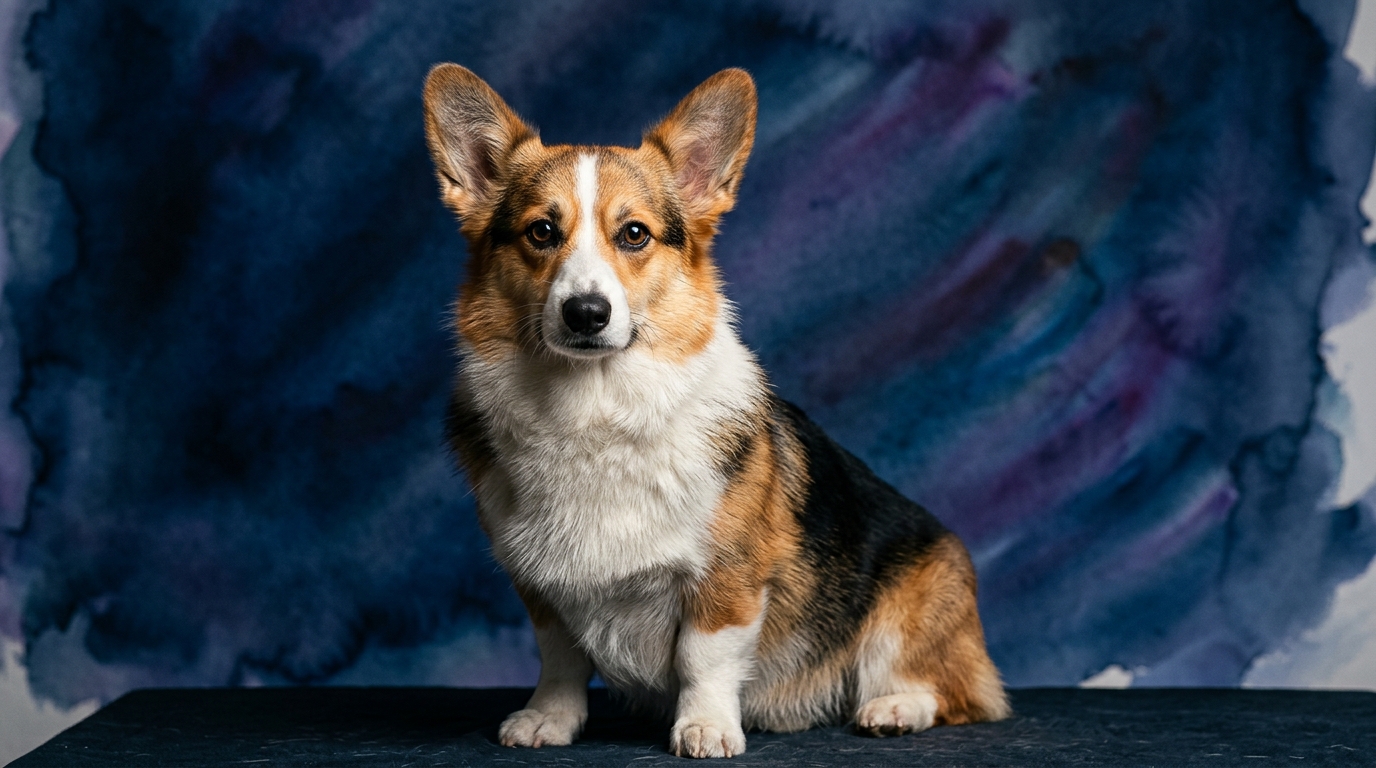
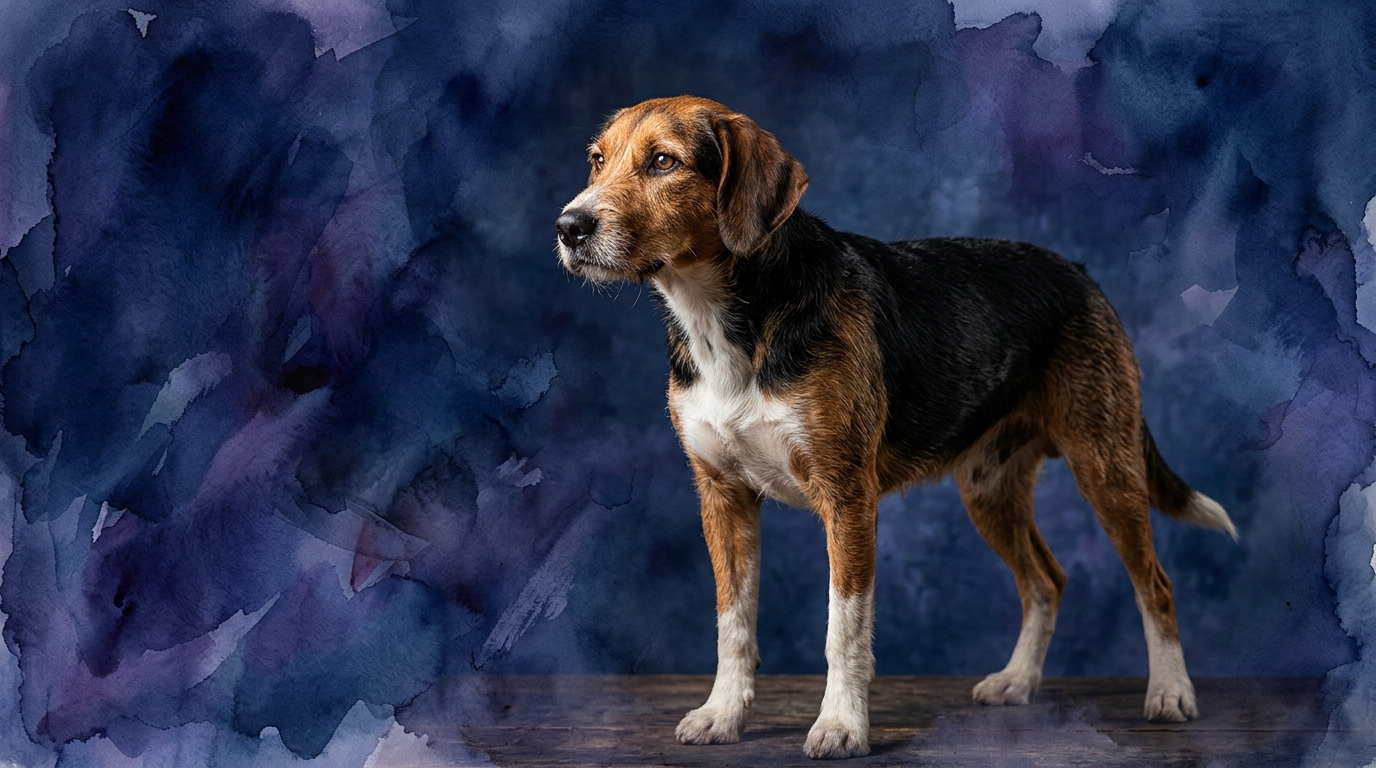
Side-by-Side IQ Profile: Corgi vs. Harrier
The Pembroke Welsh Corgi, notably ranked #11 by Stanley Coren, presents a formidable cognitive toolkit tailored for partnership and problem-solving. Its Problem Solving score of 4/5 reflects an aptitude for navigating complex situations, whether managing livestock or deciphering puzzle toys. A Training Speed of 5/5 highlights the Corgi's exceptional eagerness to learn and retain commands, making them highly responsive to guidance. Social Intelligence, rated 4/5, indicates a strong attunement to human cues and social dynamics, fostering deep connections. The Instinctive Drive, a perfect 5/5, is profoundly rooted in its herding heritage, manifesting as a persistent urge to gather and control, even within a family setting. Memory, at 4/5, underpins its rapid training and ability to recall past experiences and learned behaviors effectively.
In contrast, the Harrier, a member of the Hound group and not appearing on Coren's traditional ranking, possesses a cognitive profile exquisitely specialized for its primary function: tracking game. Its Problem Solving at 3/5 suggests competence in navigating environmental challenges, particularly those related to intricate scent work, though perhaps less emphasis on abstract human-centric puzzles. Training Speed, also 3/5, points to a more independent learning curve; while capable of learning, the Harrier often prioritizes its own instincts over immediate human directives. Social Intelligence at 3/5 indicates an ability to interact effectively within a pack and with humans, but it often exhibits a more self-reliant social style compared to the Corgi's focused partnership. Instinctive Drive, at 3/5, is powerfully expressed through its relentless pursuit of scent, requiring substantial outlets for this natural urge. Memory, rated 3/5, robustly supports its ability to recall scent trails and hunting patterns, though it might not be as readily applied to remembering a vast repertoire of tricks.
Where the Pembroke Welsh Corgi Wins Cognitively
The Pembroke Welsh Corgi's cognitive strengths shine particularly in areas requiring collaboration and quick assimilation of human instruction. Its Training Speed score of 5/5 is a significant advantage, meaning Corgis typically grasp new commands and routines with remarkable alacrity, making them highly receptive to formal obedience and advanced skill training. This biddability, coupled with a 4/5 in Problem Solving, allows Corgis to not only learn tasks but also to adapt and strategize within those tasks, such as finding creative ways to 'herd' children or toys. Their 5/5 Instinctive Drive, while powerful, is often directed towards purposeful work, giving them a strong motivation to engage in activities that mimic their herding past, providing an inherent drive for structured activity. Furthermore, a 4/5 in Social Intelligence means they are adept at reading human emotions and intentions, fostering a deeper bond and making them intuitive companions, often anticipating their owner's next move.
Where the Harrier Wins Cognitively
While the Harrier's overall scores might appear lower in a human-centric comparison, its cognitive profile is exquisitely specialized for its intended purpose. The Harrier's 3/5 Instinctive Drive, though numerically lower than the Corgi's, represents an unparalleled dedication to scent work and endurance. This drive fuels a highly focused problem-solving ability (3/5) when it comes to tracking complex scent trails over varied terrain, a challenge far removed from typical household puzzles. Their memory (3/5) is particularly potent for recalling intricate scent patterns and geographical layouts encountered during a hunt, allowing them to return to a specific area or pick up a lost trail. The Harrier's social intelligence (3/5), while less focused on individual human partnership, is finely tuned for pack cohesion and communication. They thrive in environments where they can work alongside other dogs, exhibiting a different, but equally valid, form of social understanding rooted in cooperative hunting behaviors. Their cognitive strengths are less about pleasing a single human and more about mastering their natural environment through sensory information.
Which is Easier to Train and Why
Based on their respective IQ profiles, the Pembroke Welsh Corgi is generally considered easier to train than the Harrier. The Corgi's Training Speed of 5/5 indicates a strong desire to please and a quick grasp of new concepts, making them highly responsive to positive reinforcement. Their herding background instilled a need to work closely with humans, resulting in a natural inclination towards following commands and maintaining focus on their handler. Conversely, the Harrier's Training Speed of 3/5, combined with its profound instinctive drive for scent, means training requires more patience and understanding of its breed-specific motivations. Harriers are independent thinkers, bred to follow a scent trail for miles, often tuning out other stimuli. This means that while they are certainly trainable, their attention can easily be hijacked by an interesting smell, and they may require consistent, engaging training methods that tap into their innate drives rather than solely relying on biddability. Their selective hearing when "on the nose" is a real behavioral difference that impacts training efficacy.
Which Suits Active Owners vs. Relaxed Owners
The choice between a Pembroke Welsh Corgi and a Harrier largely depends on an owner's lifestyle and activity level. A Pembroke Welsh Corgi, despite its short stature, requires a moderately active owner. Its 5/5 Instinctive Drive means it needs mental stimulation and regular physical exercise to prevent boredom and destructive behaviors. Daily walks, engaging play, and opportunities to "herd" (even if it's just toys) are essential. However, after their exercise, Corgis are generally content to relax indoors with their family, making them suitable for active owners who also appreciate downtime. The Harrier, on the other hand, is unequivocally suited for highly active owners. Its 3/5 Instinctive Drive for scent work translates into a profound need for extensive physical activity and mental engagement outdoors. These dogs possess incredible stamina and are happiest when allowed to run freely in secure areas, following their noses. A relaxed owner who cannot commit to significant daily exercise and mental challenges for their Harrier will likely find themselves with a bored, potentially destructive, and vocal companion.
The Verdict
Choose a Pembroke Welsh Corgi if you seek a highly trainable, socially astute companion eager to participate in family activities and structured training, offering a blend of playful energy and calm companionship.
Opt for a Harrier if you are a dedicated, active individual or family prepared to channel its powerful scent drive and endurance into adventurous outdoor pursuits, valuing an independent, robust partner.
🧠 Find Your Pet's IQ Score
Our Pet IQ Lab assessment covers 25+ tests across 5 cognitive dimensions — personalized to your breed.
Take the Full IQ Test →Frequently Asked Questions
Are Harriers difficult to train because of their lower IQ scores?
Harriers are not difficult to train in an absolute sense, but they require a different approach. Their 3/5 Training Speed and strong instinctive drive mean they often prioritize scent over human commands. Training must be consistent, engaging, and often needs to incorporate their natural tracking abilities to be most effective.
Do Pembroke Welsh Corgis require a lot of exercise despite their small size?
Yes, Pembroke Welsh Corgis, despite their short legs, are working dogs with a 5/5 instinctive drive rooted in herding. They require regular, moderate exercise, including brisk walks and play sessions, along with mental stimulation to keep them happy and prevent boredom-related behaviors.
How do the social intelligence scores (Corgi 4/5, Harrier 3/5) translate to family life?
A Corgi's 4/5 social intelligence typically means they are highly attuned to family dynamics, eager to interact, and often form deep bonds, making them very integrated family members. A Harrier's 3/5 social intelligence, while still allowing for affection, might manifest as more independence; they are often content within a family but might not be as constantly seeking human interaction, particularly if their scent drive is engaged.