
Side-by-Side IQ Profile
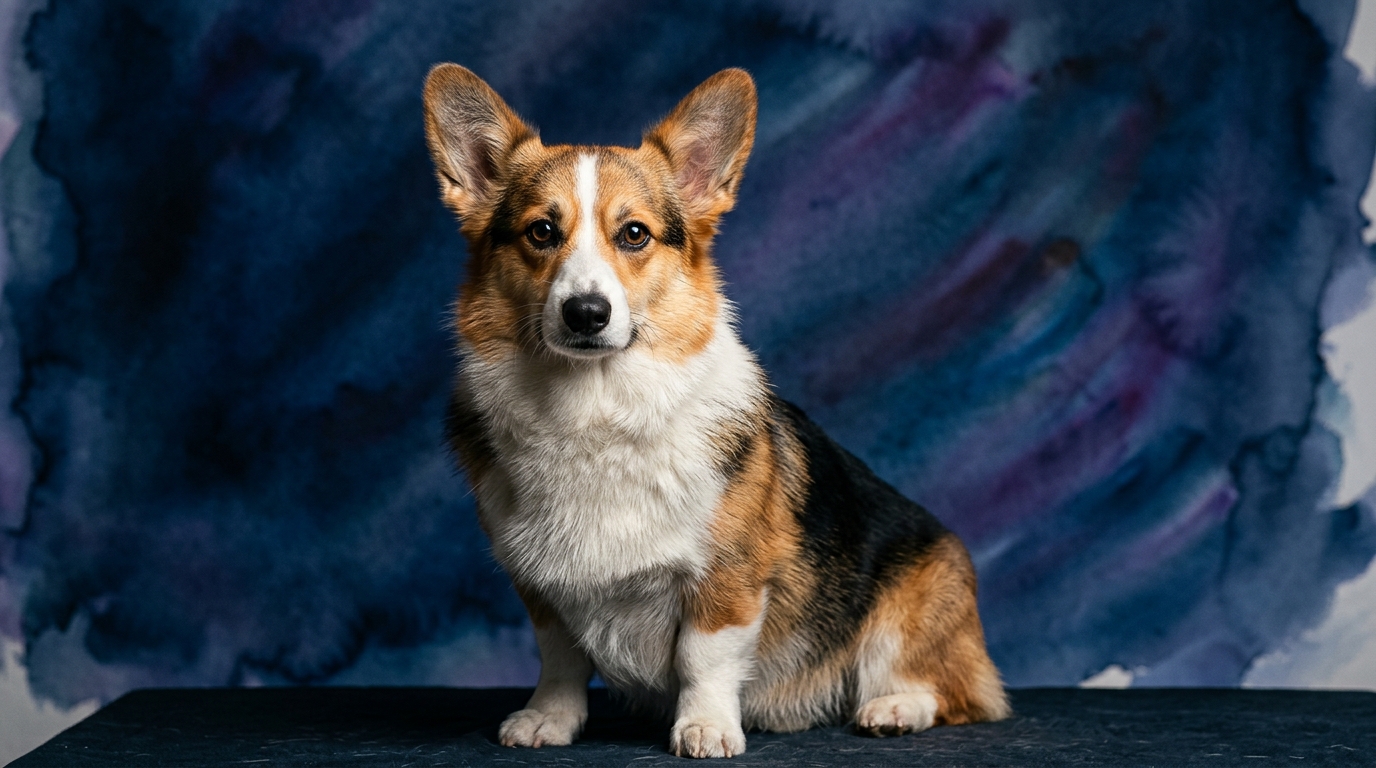
The Pembroke Welsh Corgi, a Herding group member ranked #11 by Coren, demonstrates significant problem-solving (4/5), quickly assessing novel situations and devising solutions. Their training speed is exceptional (5/5), absorbing new commands with remarkable efficiency. Social intelligence (4/5) is strong, allowing them to understand human cues and social hierarchies, crucial for managing livestock. Their instinctive drive (5/5) is powerfully geared towards herding, manifesting as a persistent desire to organize, while memory (4/5) supports complex strategies and recall.
The Pointer, a Sporting group member, has a cognitive profile specialized for hunting. Their problem-solving (3/5) focuses on practical game detection rather than abstract challenges. Training speed (3/5) is moderate, requiring consistent repetition. Social intelligence (3/5) is sufficient for handler cooperation, but less nuanced than a herding breed. Their instinctive drive (3/5) centers on scent work, pointing, and retrieving, exhibiting a persistent, singular focus. Memory (3/5) is adequate for recalling hunting patterns and handler signals.
Where Pembroke Welsh Corgi Wins Cognitively
The Corgi's cognitive profile consistently outshines the Pointer in several key areas. Their superior problem-solving (4/5) means they are adept at navigating complex environments, figuring out how to open gates, or devising clever ways to get attention, showcasing a proactive approach to mental challenges. This quick mental agility stems from their herding heritage, where they needed to outmaneuver and manage livestock independently, requiring rapid decision-making.
Furthermore, the Corgi's exceptional training speed (5/5) allows them to grasp new concepts with remarkable swiftness, translating into a broad repertoire of learned behaviors for various training disciplines. Their strong social intelligence (4/5) also contributes, as they are often more tuned into human intentions and subtle cues, facilitating a smoother, more responsive training dynamic.
Where Pointer Wins Cognitively
While the Pointer's general cognitive scores may appear lower, their specialized intelligence for their intended purpose is a significant "win" in specific contexts. Their instinctive drive (3/5), though numerically lower, is intensely focused on the hunt, demonstrating unwavering determination to locate and point game. This singular focus allows them to excel without the cognitive 'distractions' of a multi-faceted herding breed. Their problem-solving (3/5) is highly practical within their domain, enabling efficient tracking of scents, navigation, and understanding wind patterns to find game, a specific type of intelligence not captured by abstract puzzles.
The Pointer's cognitive architecture prioritizes endurance and consistency in repetitive tasks. Their memory (3/5) is perfectly adequate for recalling vast fields, scent patterns, and specific handler signals over long periods, essential for sustained hunting. This breed's strengths lie in steadfast dedication to a profound purpose, exhibiting deep, enduring focus.
Which is Easier to Train and Why
Based on their IQ profiles, the Pembroke Welsh Corgi is generally easier to train than the Pointer. The Corgi's training speed (5/5) means they pick up new commands with very few repetitions, leading to quick progress in obedience or tricks. Their higher problem-solving (4/5) and social intelligence (4/5) further aid this, as Corgis are adept at understanding requests and finding the quickest path to a reward. They often anticipate commands, making training sessions highly productive.
In contrast, the Pointer's training speed (3/5) suggests a more moderate pace. While trainable, Pointers typically require more consistent repetition to solidify behaviors. Their instinctive drive (3/5) is powerful but often singularly focused on scent, which can challenge attention redirection during training, especially in stimulating environments. Their problem-solving (3/5) and social intelligence (3/5) are sufficient but offer less quick adaptability, meaning training often progresses more deliberately.
Which Suits Active Owners vs Relaxed Owners
The choice between a Pembroke Welsh Corgi and a Pointer significantly hinges on an owner's activity level. A Pembroke Welsh Corgi, despite its compact size, requires an owner who can provide consistent mental stimulation and moderate physical activity. Their high instinctive drive (5/5) for herding means they thrive on having a "job," whether learning tricks, participating in dog sports, or engaging with puzzle toys. Owners who enjoy interactive play and consistent training will find the Corgi rewarding. They are active dogs benefiting from regular walks and play, but content to relax indoors once needs are met.
The Pointer, conversely, is unequivocally suited for highly active owners who can meet substantial physical demands. Their instinctive drive (3/5) demands extensive exercise, particularly off-leash running, to satisfy their need to explore and scent. A Pointer thrives with owners enjoying long-distance running, hiking, or field sports, requiring significant daily time for vigorous outdoor activity. They need expansive spaces and prolonged exertion, making them less suitable for relaxed or sedentary owners.
The Verdict
Choose the Pembroke Welsh Corgi if you seek a highly trainable, mentally agile companion eager to engage in diverse cognitive challenges and social interactions, thriving on a consistent balance of mental stimulation and moderate physical activity.
Choose the Pointer if you are a highly active individual or family seeking a devoted, enduring companion for extensive outdoor pursuits, especially those involving long runs, hiking, or field sports, valuing their focused, specialized drive.
🧠 Find Your Pet's IQ Score
Our Pet IQ Lab assessment covers 25+ tests across 5 cognitive dimensions — personalized to your breed.
Take the Full IQ Test →Frequently Asked Questions
Are Pembroke Welsh Corgis prone to behavioral issues due to their herding instincts?
Corgis' strong instinctive drive for herding (5/5) can manifest as nipping at heels or attempting to "herd" family members or other pets; however, with early socialization and consistent training, these behaviors can be effectively managed and redirected into constructive activities.
How do Pointers adapt to living in an urban environment?
Pointers can adapt to urban living, but it requires significant owner commitment to provide extensive daily exercise, often necessitating access to large, fenced parks or open spaces for running, as their high energy and instinctive drive demand a substantial physical outlet beyond city streets.
Do Pembroke Welsh Corgis and Pointers get along well with children?
Both breeds can be good with children; Corgis, with their social intelligence (4/5), often enjoy being part of family activities but may try to herd small children, while Pointers are generally gentle and tolerant but require proper socialization and supervision, especially given their high energy levels which might accidentally overwhelm very young children.