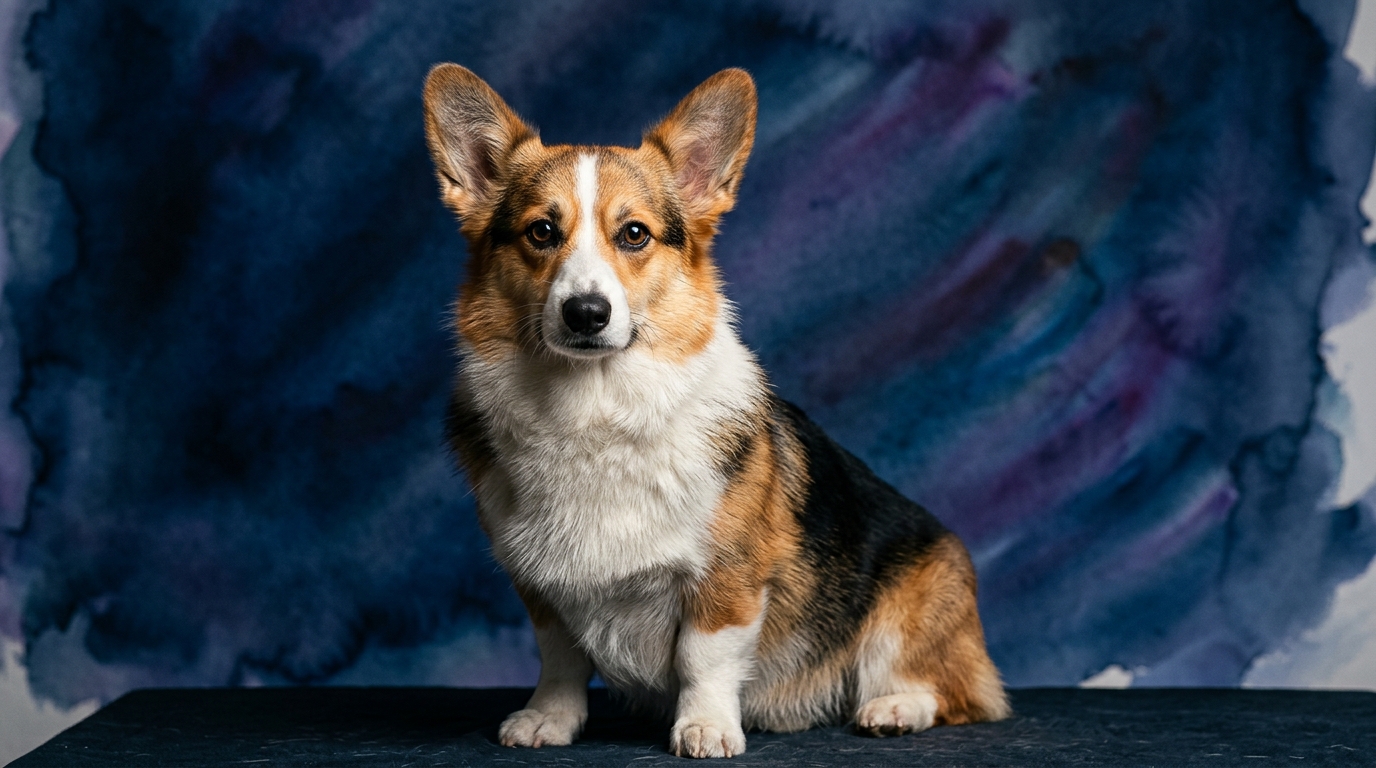

Side-by-Side Cognitive Profile: Pembroke Welsh Corgi vs. Rat Terrier
**Pembroke Welsh Corgi (Herding Group, Coren Rank #11):** These dogs exhibit a remarkable blend of cooperative intelligence and strategic thinking, honed by their ancestral role in managing livestock.
**Problem Solving (4/5):** Pembroke Welsh Corgis display a robust capacity for cognitive problem-solving. They quickly assess situations, devise multi-step plans to achieve goals, and often excel at tasks requiring sequential thought, such as navigating complex agility courses or figuring out how to open latches. Their herding background necessitates strategic thinking to manage livestock.
**Training Speed (5/5):** These dogs are remarkably quick learners, absorbing new commands and routines with impressive efficiency. Their strong desire to cooperate and inherent biddability, honed by generations of working alongside humans, makes them highly receptive to instruction, often picking up new concepts after only a few repetitions.
**Social Intelligence (4/5):** Corgis possess a keen ability to interpret human moods, intentions, and body language. They form deep attachments and are adept at understanding social dynamics within a household, often adjusting their behavior to maintain harmony or elicit desired responses from their human companions.
**Instinctive Drive (5/5):** Their powerful herding instinct is a defining cognitive trait. This drive manifests as a desire to gather, control movement, and even 'nip' at heels, reflecting their ancestral role. This inherent motivation can be channeled productively into various dog sports or tasks requiring focused attention and direction.
**Memory (4/5):** Corgis demonstrate excellent long-term memory for learned commands, routines, and even specific people or places. Once a behavior is established, they reliably recall it, contributing significantly to their trainability and consistency in performance.
**Rat Terrier (Terrier Group, Not Coren-ranked):** Agile and determined, the Rat Terrier's intellect is sharply focused on efficiency and self-reliance, reflecting their history as independent hunters.
**Problem Solving (3/5):** Rat Terriers display a practical, immediate style of problem-solving. They are adept at figuring out how to access small prey, navigate tight spaces, or overcome physical obstacles in their environment. Their solutions are often direct and driven by instinct, rather than complex, abstract reasoning.
**Training Speed (3/5):** These terriers learn at a moderate pace, typically requiring more consistent repetition and varied reinforcement methods than their Corgi counterparts. Their independent nature and occasional single-minded focus on environmental stimuli can sometimes extend the training period for new commands.
**Social Intelligence (3/5):** Rat Terriers understand basic human cues and intentions but may prioritize their own immediate interests or instincts, particularly when their strong prey drive is activated. While affectionate, their social interactions can sometimes be more transactional, focusing on what benefits them directly.
**Instinctive Drive (3/5):** The Rat Terrier's primary instinctive drive is rooted in hunting and vermin control. This drive is characterized by tenacity, a strong desire to dig, and an intense focus on small, moving objects. It is a powerful, self-directed motivation that defines much of their cognitive approach to the world.
**Memory (3/5):** Rat Terriers possess a functional memory for practical information, such as the location of favorite toys or familiar routes. While they retain learned behaviors, complex sequences or abstract commands may require more frequent reinforcement to maintain consistency compared to breeds with higher memory scores.
Where the Pembroke Welsh Corgi Wins Cognitively
The Pembroke Welsh Corgi's cognitive strengths shine in areas demanding cooperative intellect and structured learning. Their Coren rank of #11 underscores their proficiency in understanding and executing novel commands quickly, a clear advantage over the unranked Rat Terrier. This superior **training speed (5/5)** means Corgis grasp complex sequences and multi-step tasks with remarkable efficiency, making them highly adaptable to various training disciplines, from obedience to advanced trick training. Furthermore, their **problem-solving (4/5)** capabilities extend beyond immediate, instinctual responses, allowing them to engage with more abstract challenges, such as intricate puzzle toys or strategic navigation through novel environments. This capacity for planning and strategic thought is a direct legacy of their herding ancestry, where managing livestock required foresight. Their **social intelligence (4/5)** also provides a distinct edge, enabling them to pick up on subtle human emotional cues and adjust their behavior, fostering a deeper, more nuanced partnership. This makes them exceptionally responsive to human guidance and emotionally attuned.
Where the Rat Terrier Wins Cognitively
While the Rat Terrier may not excel in the same cooperative, structured learning domains as the Corgi, their cognitive profile is uniquely optimized for their ancestral purpose. The Rat Terrier's **problem-solving (3/5)**, though rated lower, is highly specialized and exceptionally effective in practical, immediate scenarios related to hunting and evasion. They demonstrate an unparalleled ability to quickly assess and exploit environmental weaknesses to access perceived 'prey' or navigate confined spaces with precision and determination. Their **instinctive drive (3/5)**, intensely focused on prey detection and pursuit, is a powerful cognitive advantage in its specific context. This tenacity allows them to persist at a task, like locating a scent or digging, with singular, unwavering focus, often outlasting other breeds. This direct, persistent drive makes them exceptionally effective at independent, self-motivated task completion for vermin control. Their cognitive strength lies in their self-reliance and highly specialized, tenacious approach to problem-solving in a hunting capacity, making quick, independent decisions without constant human direction.
Which is Easier to Train and Why
The Pembroke Welsh Corgi is generally easier to train, a difference rooted in their behavioral predispositions and cognitive makeup. Their exceptional **training speed (5/5)** means they learn new commands and routines with impressive quickness, often requiring fewer repetitions. This is a direct result of generations bred to take direction from a shepherd, executing intricate movements and responding to complex cues. Their high **social intelligence (4/5)** means Corgis are inherently keen to understand and comply with human expectations, actively seeking to please and cooperate. Even their strong herding drive, while powerful, is fundamentally about control and cooperation, making it highly channelable into structured activities like obedience, agility, or even advanced trick training. They thrive on having a 'job' and excel when given clear, consistent direction, retaining information reliably due to their solid **memory (4/5)**.
Conversely, the Rat Terrier, while capable in its own right, presents more training challenges. Their **training speed (3/5)** is moderate, and their independent nature, coupled with a more moderate **social intelligence (3/5)**, means they can sometimes prioritize their own agenda or instincts over human commands. This is particularly evident when their powerful **instinctive drive (3/5)** for prey is triggered; a squirrel or rodent scent can easily override practiced commands, making consistent recall or impulse control more difficult to instill. Training a Rat Terrier often requires greater patience, creative motivation, and an understanding of their terrier tenacity, focusing on consistent, positive reinforcement to overcome their independent streak and channel their natural drives constructively.
Which Suits Active Owners vs. Relaxed Owners
Neither the Pembroke Welsh Corgi nor the Rat Terrier are ideal for truly relaxed owners, as both breeds possess significant energy and strong innate drives that require active engagement. However, they suit different *types* of active owners.
The **Pembroke Welsh Corgi** is an excellent match for owners who enjoy structured activities and consistent mental stimulation. Their strong **instinctive drive (5/5)** for herding and their robust **problem-solving (4/5)** abilities mean they thrive on having a purpose. Owners who are keen on participating in dog sports like agility, obedience, rally, or even herding trials will find a Corgi an eager and capable partner. They need regular, engaging exercise beyond just a walk around the block, benefiting from opportunities to use their quick minds and bodies in a directed manner. A Corgi will happily join an owner for long, stimulating walks, hikes, or puzzle-solving sessions indoors.
The **Rat Terrier** also demands an active owner, but one who appreciates and can provide outlets for a different kind of energy and drive. Their tenacious **instinctive drive (3/5)** for hunting requires activities that allow them to explore, sniff, and 'work' independently. Owners who enjoy adventurous outdoor exploration, Earthdog trials, barn hunt, or scent work will find a Rat Terrier deeply satisfied. They are nimble, athletic, and possess incredible stamina for their size. While they can be affectionate companions, their ideal owner understands their need for vigorous, often self-directed, physical and mental stimulation that taps into their prey drive, rather than solely structured obedience.
The Verdict
For owners seeking a highly trainable, socially astute companion eager to participate in structured activities and advanced obedience, choose the Pembroke Welsh Corgi. They thrive with clear direction and a 'job,' whether it's herding, agility, or simply being a well-mannered family member who enjoys mental challenges and cooperative problem-solving.
For owners who appreciate an independent, tenacious spirit and can provide outlets for a strong prey drive through activities like scent work, barn hunt, or adventurous outdoor exploration, choose the Rat Terrier. They suit those who value an agile, persistent companion capable of making quick, self-reliant decisions in a practical context, often with a good sense of humor.
🧠 Find Your Pet's IQ Score
Our Pet IQ Lab assessment covers 25+ tests across 5 cognitive dimensions — personalized to your breed.
Take the Full IQ Test →Frequently Asked Questions
How do the Corgi's and Rat Terrier's training capabilities differ in practice?
Corgis generally learn faster and are more eager to please, making them responsive to structured training and complex commands. Rat Terriers, while capable, often require more patience, repetition, and creative motivation due to their independent streak and strong, easily triggered prey drive.
What kind of mental stimulation is best for each breed?
Corgis thrive on puzzle toys, obedience training, agility, and activities that challenge their strategic problem-solving and cooperative nature. Rat Terriers benefit from scent work, barn hunt, Earthdog trials, and opportunities for vigorous, independent exploration that tap into their natural hunting instincts.
Can a Rat Terrier be a good family dog despite its strong hunting drive?
Yes, with proper socialization, training, and outlets for their energy, Rat Terriers can be affectionate and loyal family members. Their strong prey drive means they may not be ideal for homes with small rodent pets, but with consistent guidance, they can integrate well into active families.