Side-by-Side Cognitive Profiles
The Cosmic Pet Pet IQ Lab provides a unique lens through which to examine the distinct, yet often similar, cognitive capabilities of the Pembroke Welsh Corgi and the Shetland Sheepdog. Both breeds, rooted in the demanding work of herding, demonstrate a robust mental toolkit, though with subtle but impactful divergences.
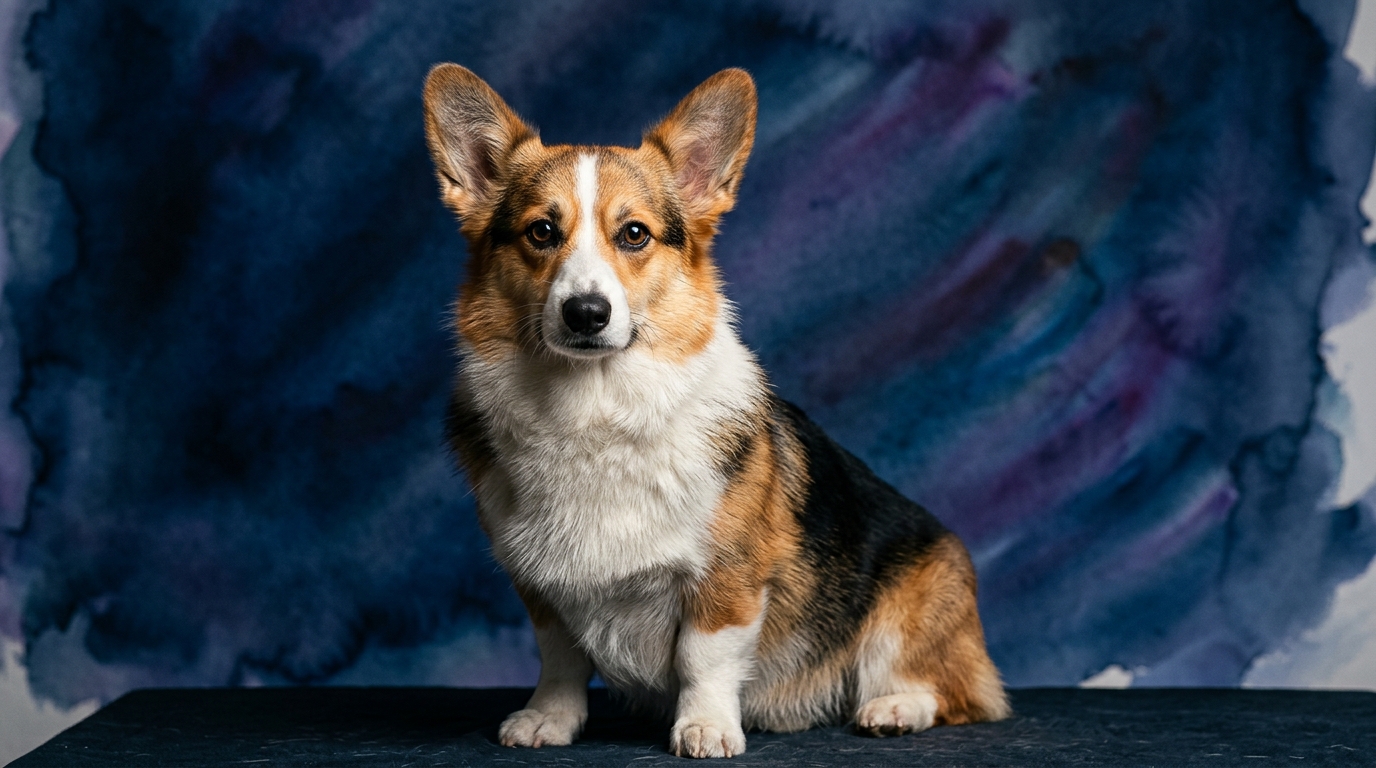
The Pembroke Welsh Corgi, with a Coren ranking of #11, exhibits a Problem Solving score of 4/5, indicating an ability to independently figure out novel situations with reasonable success. Its Training Speed is an impressive 5/5, suggesting a rapid grasp of new commands and routines. Social Intelligence rates at 4/5, reflecting a solid capacity for understanding and responding to human cues and social dynamics. Instinctive Drive, crucial for a herding breed, stands strong at 5/5, showcasing a powerful internal motivation to herd and work. Memory for the Corgi is rated at 4/5, meaning it retains learned information effectively over time.
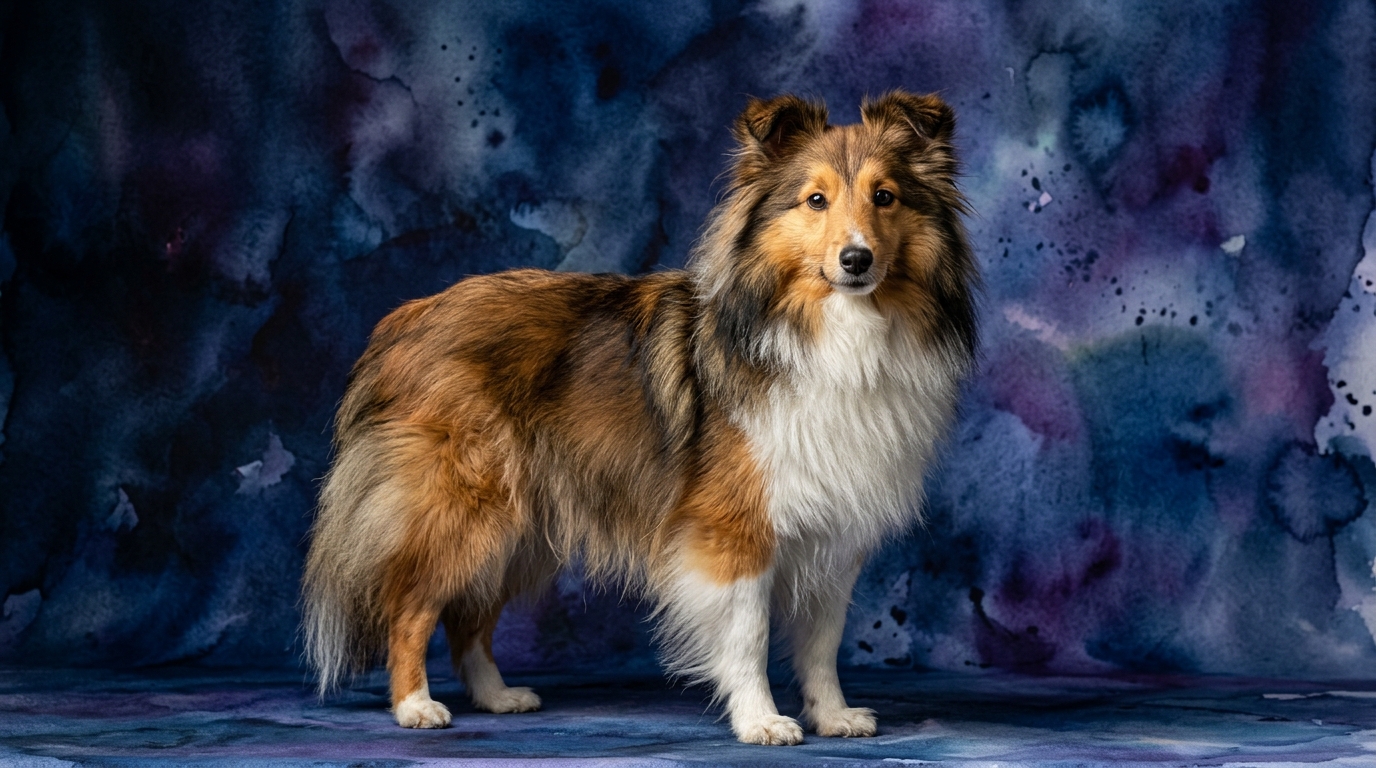
In comparison, the Shetland Sheepdog, holding a higher Coren ranking of #6, matches the Corgi across several key cognitive dimensions. It also scores 4/5 in Problem Solving, demonstrating an equivalent aptitude for independent thought and resolution of dilemmas. Training Speed is likewise 5/5, indicating an equally swift uptake of new instructions. Social Intelligence is also 4/5, pointing to a similar depth in interpreting and engaging with social contexts. Its Instinctive Drive is a perfect 5/5, reflecting a powerful and intrinsic motivation for herding work, much like its Corgi counterpart. The critical difference emerges in Memory, where the Shetland Sheepdog achieves a perfect 5/5, indicating a superior capacity for long-term retention of complex sequences and details.
Where the Pembroke Welsh Corgi Stands Out Cognitively
While the numerical IQ scores might suggest parity in many cognitive dimensions, the Pembroke Welsh Corgi’s particular blend of these traits, combined with its unique physical attributes, carves out specific cognitive strengths. The Corgi's 4/5 Problem Solving, paired with its 5/5 Instinctive Drive, often manifests as a tenacious, low-to-the-ground strategist in navigating obstacles or managing livestock. They excel at figuring out how to get around or under barriers, leveraging their short stature to their advantage in ways a taller breed might not consider. This practical problem-solving is often tied directly to their foundational herding method of nipping at heels, requiring precision and quick wit in dynamic situations.
Their perfect 5/5 Training Speed, combined with a strong 4/5 Social Intelligence, allows Corgis to adapt remarkably quickly to varied environments and family routines. They absorb household rules and behavioral expectations with impressive alacrity, making them fast learners for basic obedience and house training. A Corgi's instinctive drive, while shared with the Sheltie, often expresses itself with a particular boldness and confidence that enables them to take charge in a domestic setting, sometimes even directing human family members with subtle cues or persistent 'nudges.' This assertive application of their cognitive abilities, particularly their social understanding and drive, can be a distinguishing feature.
Furthermore, the Corgi's 4/5 Memory, while one point lower than the Sheltie, is still robust enough to build extensive repertoires of tricks and commands. Their memory allows them to recall specific locations of favored toys or hidden treats, and to retain routines for years. This enduring recall, combined with their training speed, means a Corgi can become a well-versed companion, capable of executing a wide array of learned behaviors reliably.
Where the Shetland Sheepdog Shines Cognitively
The Shetland Sheepdog's cognitive profile reveals distinct advantages, particularly in areas requiring extensive recall and nuanced understanding, reflected in its higher Coren rank of #6. The most striking cognitive superiority for the Sheltie is its perfect 5/5 Memory score, surpassing the Corgi's 4/5. This enhanced memory translates into an exceptional ability to learn and retain complex sequences of commands, elaborate multi-step tasks, and intricate agility courses. A Sheltie is more likely to remember a long string of instructions or the detailed layout of a new environment after fewer repetitions, making them highly adept at advanced obedience, competitive dog sports, and even service roles where precise, sequential actions are paramount.
The Sheltie's equally impressive 5/5 Training Speed, coupled with this superior memory, means that not only do they grasp new concepts quickly, but they integrate them into a vast, easily accessible knowledge base. This allows for rapid progression through different levels of training, from basic manners to highly specialized tasks. Their 4/5 Social Intelligence ensures they are highly attuned to human body language and vocal tone, enabling them to pick up on subtle cues that might be missed by a dog with a lesser social acumen. This sensitivity, combined with their robust memory, allows for a more nuanced and responsive working relationship.
Their 4/5 Problem Solving and 5/5 Instinctive Drive manifest as an intelligent, agile problem-solver, often excelling in situations that require strategic thinking and precise execution. A Sheltie might excel at navigating complex mazes or figuring out how to retrieve an out-of-reach item by remembering previous attempts or observed solutions. This combination of strong cognitive traits, particularly the memory edge, positions the Shetland Sheepdog as a highly adaptable and versatile companion for a wide range of mental challenges.
Training Aptitude: Who is Easier and Why?
Both the Pembroke Welsh Corgi and the Shetland Sheepdog are considered remarkably quick learners, both scoring a perfect 5/5 in Training Speed. This indicates that owners of either breed can expect a swift initial grasp of new commands. However, the nuances of their cognitive profiles and typical behavioral tendencies introduce differences in their overall 'ease' of training, particularly as training advances.
The Shetland Sheepdog's superior 5/5 Memory gives it a significant advantage in retaining a larger repertoire of commands and more complex sequences over the long term. While a Corgi will learn 'sit' and 'stay' quickly, a Sheltie is more likely to excel in intricate obedience routines, multi-stage agility courses, or jobs requiring a sustained chain of learned behaviors. Their higher Coren rank also suggests a broader capacity for understanding and retaining working commands. Additionally, Shelties often possess a more eager-to-please temperament and can be more sensitive to handler feedback, which translates to a highly responsive and often more compliant student. Their herding drive, while strong (5/5), is frequently channeled into focused work with their handler.
The Pembroke Welsh Corgi, despite its 5/5 Training Speed, can present different challenges. Its equally strong 5/5 Instinctive Drive, coupled with a bold and sometimes independent nature, means a Corgi might quickly learn a command but then decide whether to execute it based on its own priorities in the moment. Their herding style involves nipping at heels and a determined, assertive approach, which can translate into a stubborn streak if not managed with consistent, positive reinforcement from a young age. While they learn fast, maintaining focus and ensuring consistent compliance can require more patience and creative motivation. Their strong vocal tendencies, a part of their herding communication, can also be a training consideration, requiring specific attention to quiet commands.
Family Pet Suitability: Active vs. Relaxed Owners
Choosing between a Pembroke Welsh Corgi and a Shetland Sheepdog as a family pet largely depends on an owner's lifestyle, particularly their activity levels and willingness to engage in mental stimulation. Both breeds are working herding dogs, meaning neither is a suitable choice for truly 'relaxed' or sedentary owners without significant commitment to enrichment.
For **active owners**, both breeds present excellent opportunities, but with different emphases. The Shetland Sheepdog, with its 5/5 Memory and high energy, thrives on activities that combine physical exertion with complex mental challenges. They are exceptional candidates for agility, flyball, advanced obedience, and even canine freestyle, where their ability to remember long sequences of moves truly shines. An active owner who enjoys engaging in dog sports or intricate training will find a Sheltie to be an enthusiastic and highly capable partner. Their desire to please and respond to nuanced cues makes them rewarding for owners who appreciate a dog that can master advanced skills. They require consistent mental engagement to prevent boredom.
The Pembroke Welsh Corgi also suits **active owners**, particularly those who appreciate a more grounded, sturdy companion for brisk walks, hiking on varied terrain, or even urban exploration. Their 5/5 Instinctive Drive makes them excellent for canine good citizen work, rally obedience, or even urban herding activities, where their natural drive can be channeled. While they enjoy learning tricks (4/5 Memory, 5/5 Training Speed), their physical structure might make them less suited for the high-flying demands of some agility courses compared to the Sheltie. Active owners who prefer a dog with a confident, sometimes cheeky personality, and who can provide consistent mental and physical outlets for their strong herding drive, will find a Corgi a lively and endearing companion. They can be prone to mischievous problem-solving if left under-stimulated.
The Verdict
Choose the Pembroke Welsh Corgi if you seek a bold, tenacious companion that learns quickly and applies its problem-solving and social intelligence with a confident, sometimes assertive, flair. They are ideal for owners who appreciate a sturdy, witty dog for consistent engagement and can manage a strong herding drive.
Opt for the Shetland Sheepdog if your lifestyle allows for extensive mental and physical engagement, valuing a highly responsive, sensitive companion with superior memory for intricate training and advanced dog sports. They excel with owners who cherish nuanced communication and enjoy challenging their dog's cognitive limits.
🧠 Find Your Pet's IQ Score
Our Pet IQ Lab assessment covers 25+ tests across 5 cognitive dimensions — personalized to your breed.
Take the Full IQ Test →Frequently Asked Questions
Do Corgis or Shelties bark more?
Both breeds can be vocal, a trait stemming from their herding lineage used to communicate with livestock. However, Corgis are generally considered more prone to barking as an alert or attention-seeking behavior, while Shelties often use barking for guarding or expressing excitement, sometimes with a more piercing tone.
Which breed adapts better to apartment living?
While both can adapt to apartment living with sufficient daily exercise and mental stimulation, the Pembroke Welsh Corgi might be slightly more adaptable due to its smaller size and lower intensity bursts of energy. However, its tendency to bark and strong herding instincts still necessitate proactive training and engagement to prevent nuisance behaviors in close quarters.
Are Corgis or Shelties better with children?
Both breeds can be excellent family pets with children when properly socialized and trained from a young age. Shelties are often described as more gentle and sensitive, while Corgis can be playful but also prone to 'herding' children by nipping at heels, requiring supervision and teaching children to respect their space. Introduction and supervision are key for both.