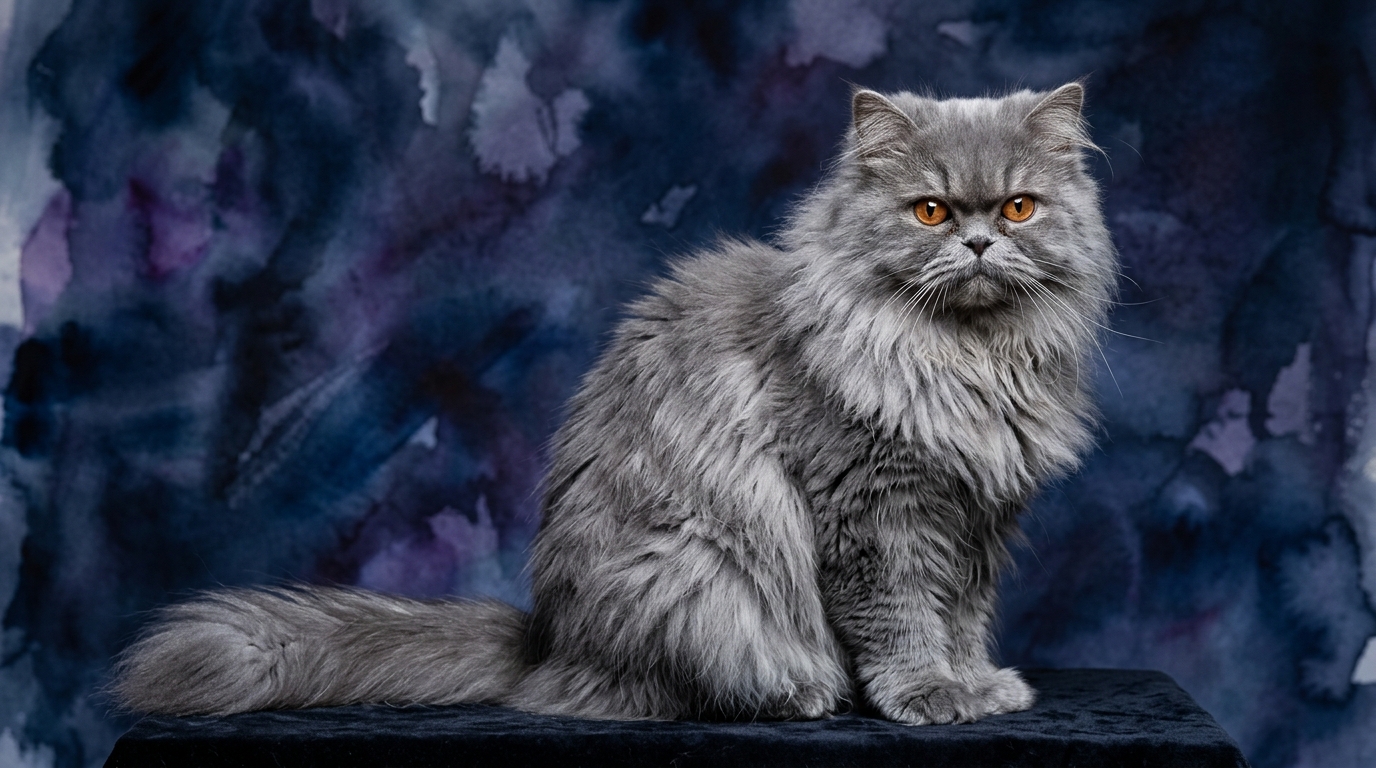
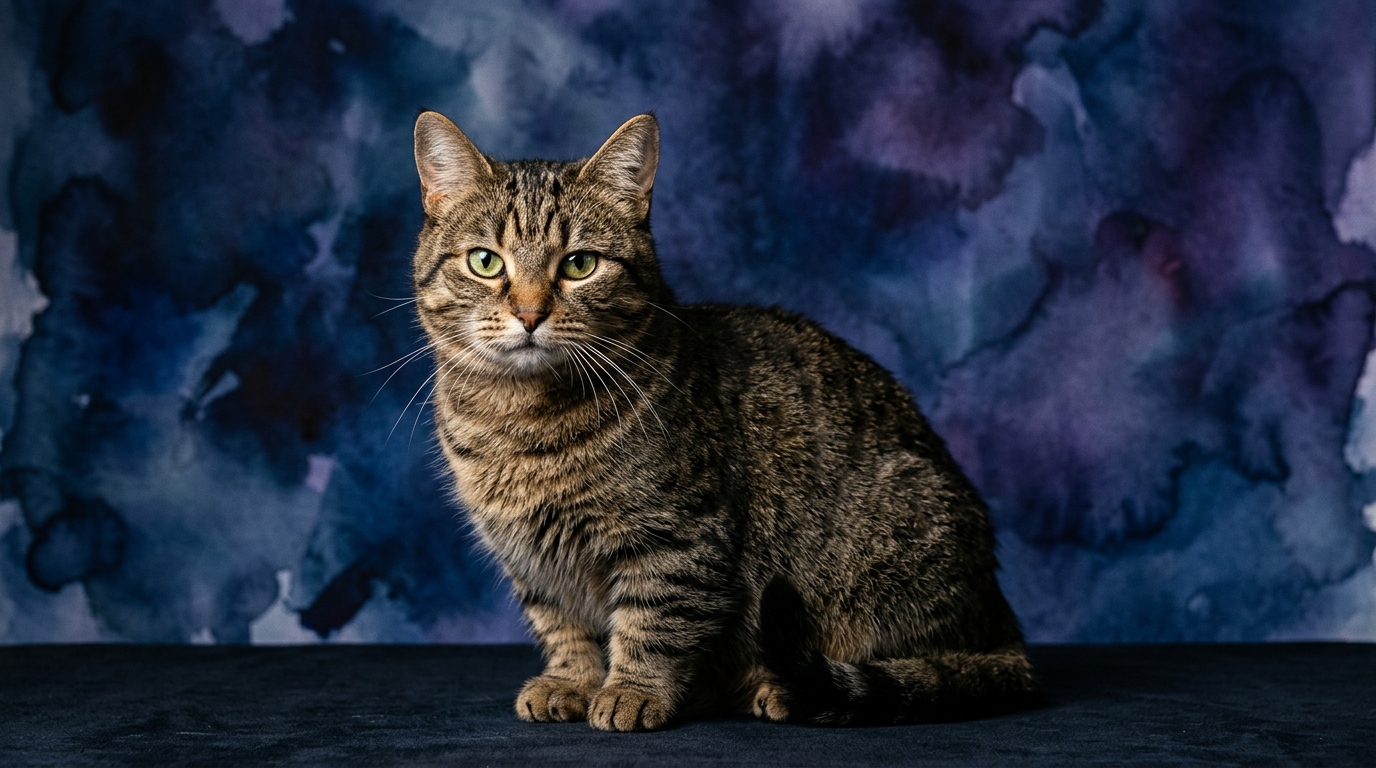
Side-by-Side Cognitive Profile: Persian vs. Munchkin
To truly understand the mental faculties of these two beloved breeds, we turn to The Cosmic Pet Pet IQ Lab's detailed assessment across five crucial dimensions of feline cognition. These scores provide a specific framework to compare their inherent capabilities and tendencies.
The Persian cat's cognitive profile emphasizes stability and gentle interaction. Their Problem Solving score of 2/5 indicates a tendency to approach novel situations with a contemplative, unhurried methodology. They might not quickly solve complex puzzle feeders, preferring simpler interactions or observation before acting. Their problem-solving often leans towards efficiency within established routines rather than actively seeking out new challenges. For Training Speed, a score of 2/5 suggests that while capable of learning, the Persian's pace for acquiring new commands or tricks is typically unhurried, requiring consistent, patient reinforcement, often motivated by comfort or affection rather than an inherent drive to perform quickly. Their learning curve is steady. With a Social Intelligence score of 3/5, Persians exhibit moderate social awareness, forming strong, though sometimes selective, bonds with their human companions. They interpret human moods and respond with gentle affection, often seeking quiet interaction, with social cues that are subtle, preferring calm environments. Their Instinctive Drive, at 2/5, signifies generally lower inherent hunting and exploratory drives; they are content with sedentary activities, observing from a comfortable perch rather than actively pursuing prey or exploring extensively, with play often involving less vigorous chasing. Finally, a Memory score of 3/5 means Persians demonstrate solid capacity for memory, recalling routines, preferred people, and locations with accuracy, which aids in maintaining their calm, predictable lifestyle within a familiar environment.
The Munchkin cat, despite its unique physical traits, presents a more actively engaged cognitive profile. Their Problem Solving score of 3/5 indicates a more active and curious approach. Their distinctive short legs don't deter them from figuring out how to reach desired objects or navigate obstacles, often employing clever, unconventional methods, making them more inclined to experiment with puzzle toys. For Training Speed, a score of 3/5 means that with a quicker grasp of new concepts and a higher eagerness to engage, Munchkins generally learn commands and tricks at a faster rate than Persians. Their playful nature and active curiosity make them receptive to positive reinforcement training. Their Social Intelligence also stands at 3/5, sharing a similar moderate social intelligence with Persians, adept at reading human cues and forming affectionate bonds. They are often described as outgoing, enjoying interactive play and readily engaging with their families, with their social engagement often being more demonstrative. A robust Instinctive Drive of 3/5, despite their unique physique, means Munchkins possess a notable inherent drive, often displaying a keen interest in chasing, pouncing, and exploring. Their curiosity fuels a desire to investigate new spaces and objects, making them active participants in their environment. Lastly, their Memory score of 3/5 indicates good memory, retaining information about their environment, routines, and the people they interact with, supporting their ability to navigate their world effectively and remember favorite toys or meal times.
Where the Persian's Cognitive Profile Shines
While the Munchkin generally scores higher in several cognitive dimensions, the Persian's unique profile offers distinct advantages, particularly in areas emphasizing stability and nuanced interaction. The Persian’s consistent 3/5 score in Social Intelligence and Memory, despite lower scores in more active cognitive functions like problem-solving and training speed, highlights its strengths in forming deep, reliable bonds and maintaining a predictable, comforting presence. Their solid memory, combined with moderate social intelligence, means they consistently remember their preferred humans and routines, contributing to a calm household dynamic. Unlike breeds driven by constant novelty, Persians find contentment in established patterns, making them excellent companions for those who appreciate a gentle, predictable presence. This steadfastness in memory and social connection can be seen as a cognitive win for owners seeking a tranquil, deeply bonded feline.
Where the Munchkin Excels Cognitively
The Munchkin clearly demonstrates cognitive advantages in several key areas, painting a picture of a more actively engaged and adaptable feline. With a Problem Solving score of 3/5 compared to the Persian's 2/5, Munchkins display a more inventive and persistent approach to navigating their environment and overcoming challenges. This means they are more likely to figure out how to retrieve a hidden toy or master a new puzzle feeder, showcasing a greater cognitive flexibility and curiosity. Their higher Training Speed (3/5 vs. 2/5) further underlines their quicker learning curve and greater enthusiasm for interactive sessions, suggesting they are more receptive to acquiring new behaviors and commands. Additionally, the Munchkin's 3/5 Instinctive Drive, surpassing the Persian's 2/5, indicates a stronger inherent curiosity and desire to explore and hunt. These combined strengths position the Munchkin as a cognitively more dynamic and versatile companion.
Ease of Training: Behavioral Differences Unpacked
Based on The Cosmic Pet Pet IQ Lab's assessment, the Munchkin breed is generally easier to train compared to the Persian, a difference rooted in their distinct cognitive profiles. The Munchkin's higher Training Speed (3/5) indicates a quicker grasp of new concepts and a greater willingness to participate in learning sessions. This is often observed in their readiness to engage with clicker training for basic commands like 'sit' or 'come,' or even more complex behaviors. Their elevated Problem Solving score (3/5) also contributes to this, as they are more adept at understanding the connection between an action and a reward, making the training process more intuitive for them. For example, a Munchkin might quickly associate the sound of a specific toy with an upcoming play session and respond promptly.
In contrast, the Persian's Training Speed score of 2/5 suggests a more leisurely approach to learning. While certainly trainable, they may require more repetition and patience, often responding best to calm, consistent reinforcement rather than high-energy sessions. Their lower Problem Solving score (2/5) means they might take longer to grasp the mechanics of certain training games or puzzle toys, potentially becoming disengaged if the task is too complex too quickly. For example, a Persian might prefer a familiar, simple interaction rather than figuring out a new trick. Therefore, for owners prioritizing ease and speed in training, the Munchkin's cognitive makeup offers a more direct and rewarding experience, while training a Persian demands a more patient and understanding methodology, focusing on comfort and routine.
Matching Cognitive Profiles with Owner Lifestyles
The cognitive profiles of the Persian and Munchkin breeds offer clear guidance for matching them with owner lifestyles. For individuals who lead a more relaxed, tranquil life and seek a calm, affectionate companion, the Persian's cognitive characteristics are often a perfect fit. Their lower Instinctive Drive (2/5) means they are less inclined towards constant exploration or energetic play, preferring quiet companionship and predictable routines. A Persian thrives in an environment where they can observe from a comfortable spot, engaging in gentle interactions rather than demanding intense physical or mental stimulation. Their moderate Social Intelligence (3/5) and solid Memory (3/5) ensure they form strong, consistent bonds without requiring constant, high-energy engagement.
Conversely, the Munchkin's cognitive strengths make them more suitable for active owners who enjoy interactive play, mental challenges, and a more dynamic pet presence. Their higher Instinctive Drive (3/5) means they possess a greater innate curiosity and a desire to explore, making them ideal for homes that can provide engaging toys, regular play sessions, and opportunities for safe investigation. Coupled with their superior Problem Solving (3/5) and Training Speed (3/5), Munchkins benefit from owners who are willing to teach tricks, use puzzle feeders, and engage in stimulating games. They thrive on interaction and can keep pace with a more energetic household, making them a vibrant addition for those seeking a playful and mentally agile feline companion.
The Verdict
Choose a Persian if you value a serene, predictable companion who offers quiet affection and thrives in a calm, stable environment, appreciating gentle interactions over active mental challenges.
Opt for a Munchkin if you desire an inquisitive, playful cat eager to learn and engage in interactive games, perfect for owners who enjoy providing consistent mental and physical stimulation.
🧠 Find Your Pet's IQ Score
Our Pet IQ Lab assessment covers 25+ tests across 5 cognitive dimensions — personalized to your breed.
Take the Full IQ Test →Frequently Asked Questions
Are Persian cats difficult to train?
Persian cats are not difficult to train, but they do have a slower training speed (2/5) compared to some other breeds. They respond best to patient, consistent methods and positive reinforcement, often motivated by comfort and affection rather than a strong drive to learn complex tricks quickly. Focusing on routine and gentle encouragement yields the best results.
Do Munchkin cats need a lot of mental stimulation?
Yes, Munchkin cats benefit significantly from mental stimulation due to their higher problem-solving (3/5) and instinctive drive (3/5) scores. They enjoy puzzle toys, interactive games, and learning new tricks, thriving in environments that provide opportunities to explore and engage their curiosity. Regular engagement helps keep them happy and prevents boredom.
Which breed is more affectionate, Persian or Munchkin?
Both Persian and Munchkin cats score equally in social intelligence (3/5), indicating they are capable of forming strong, affectionate bonds with their human companions. Persians tend to express affection more subtly, preferring calm proximity, while Munchkins might be more overtly playful and demonstrative in their interactions. The expression of affection can vary by individual cat within each breed.