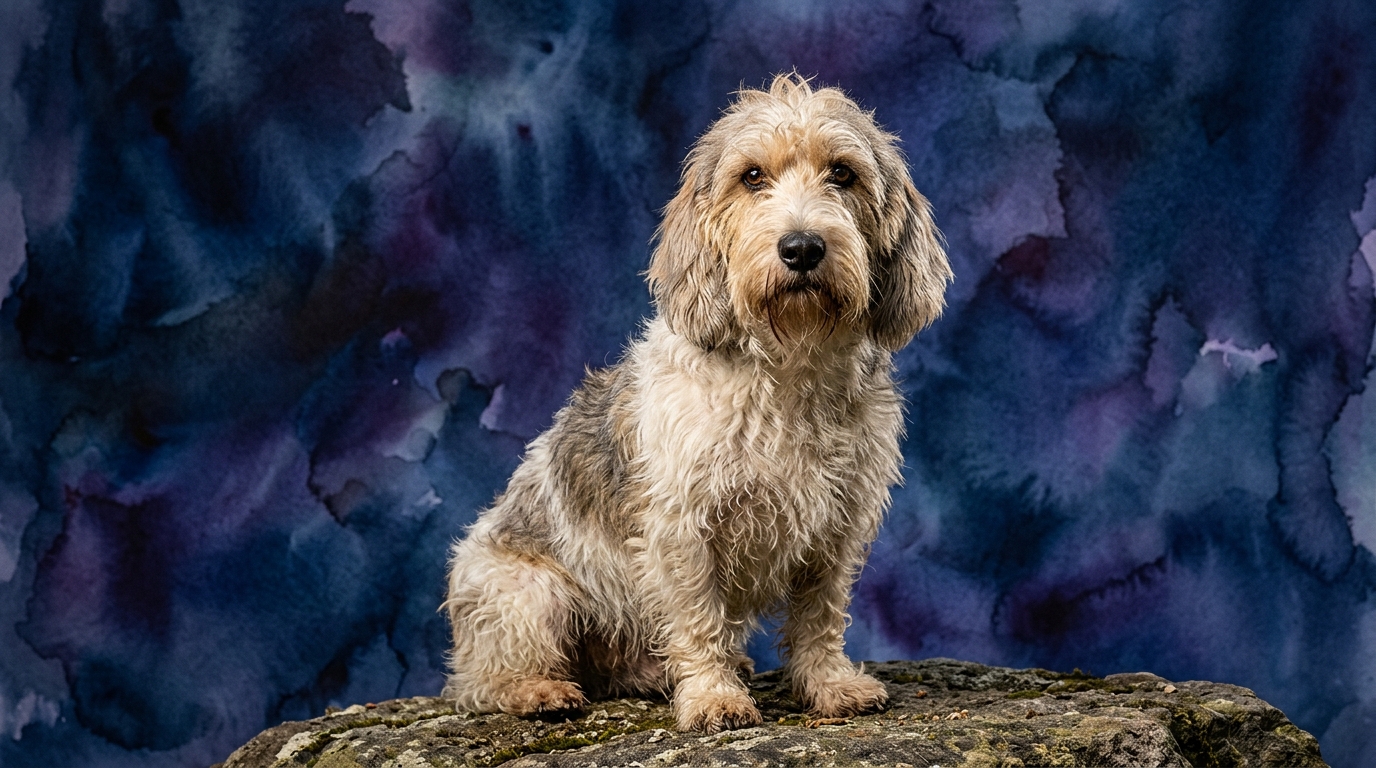
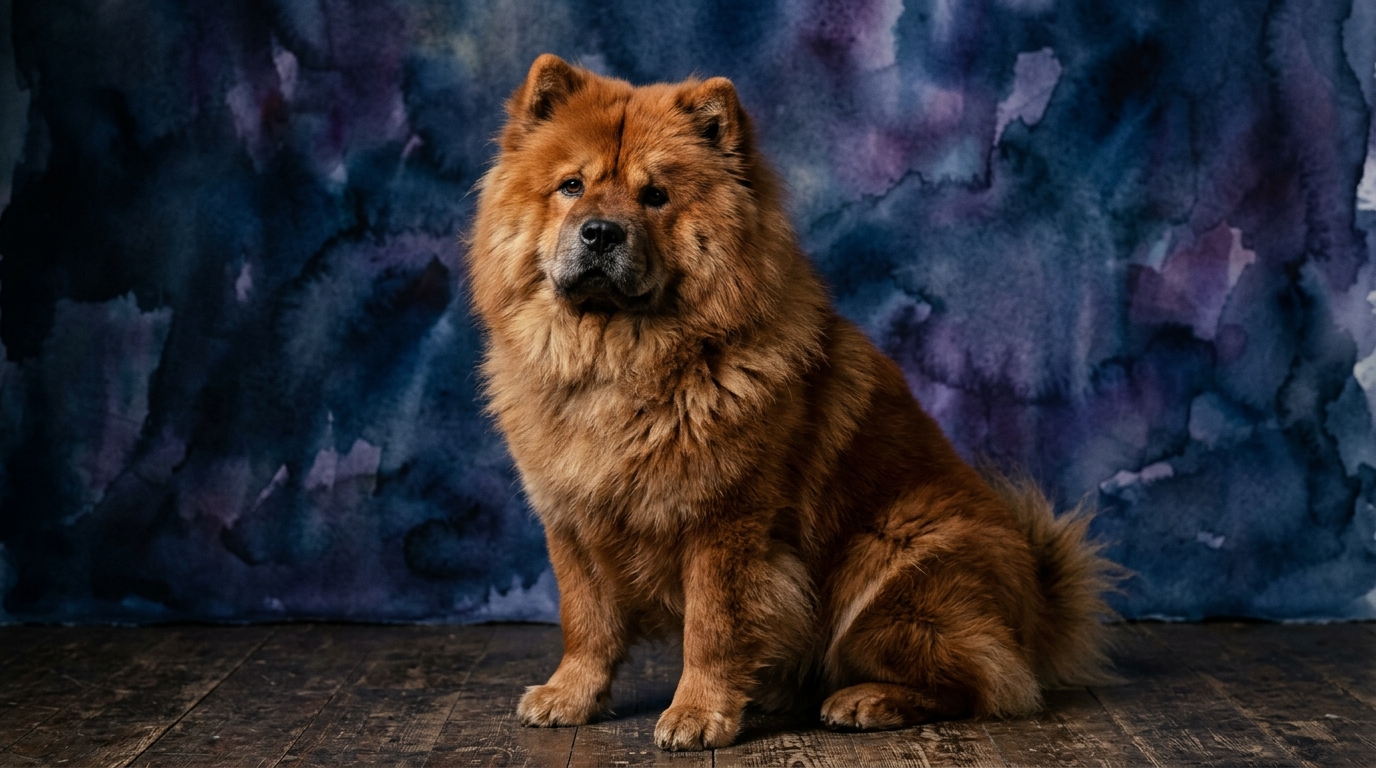
Side-by-Side Cognitive Profile: Petit Basset Griffon Vendéen vs. Chow Chow
The Cosmic Pet Pet IQ Lab assesses five key dimensions of canine intelligence, and while both the Petit Basset Griffon Vendéen (PBGV) and the Chow Chow receive a consistent 3/5 rating across the board, the manifestation of these cognitive traits is strikingly different due to their breed-specific histories and temperaments.
For the Petit Basset Griffon Vendéen, Problem Solving (3/5) is deeply intertwined with their hound heritage; they excel at figuring out how to navigate complex scent trails, overcome obstacles to reach a perceived 'quarry,' or creatively access interesting smells. Their Training Speed (3/5) is moderate, yet their independent, scent-driven nature means consistency can be a challenge, often requiring engaging, reward-based methods to maintain focus amidst distractions. Social Intelligence (3/5) for PBGVs generally presents as friendly adaptability, reading human cues well in group settings, and understanding pack dynamics, despite their sometimes boisterous enthusiasm. Their Instinctive Drive (3/5) is predominantly scent-hunting, hardwired to track, vocalize, and persistently pursue compelling odors in the environment. Finally, their Memory (3/5) is strong for routines, people, and places, particularly those associated with positive experiences or successful scenting adventures.
In contrast, the Chow Chow's Problem Solving (3/5) often involves managing their personal space and environment with a strategic, observational approach; they might subtly manipulate situations to their advantage or figure out how to avoid unwanted interactions. Their Training Speed (3/5) is also moderate, but their inherent independence and occasional stubbornness demand a patient, consistent trainer who respects their self-assured nature, responding best to clear, fair expectations rather than forceful tactics. The Chow Chow's Social Intelligence (3/5) is nuanced and highly discerning; they are profoundly devoted to their immediate family, keenly observing and differentiating friends from strangers, processing social cues to maintain their dignified boundaries without overt displays. Their core Instinctive Drive (3/5) is guardianship and aloof self-preservation, manifesting as a strong protective instinct towards their home and family, coupled with a natural wariness of unfamiliar individuals. Their Memory (3/5) is robust for routines, boundaries, and past experiences, whether positive or negative, allowing them to recall who belongs in their inner circle and specific training cues, even if they don't always choose immediate compliance.
Where the Petit Basset Griffon Vendéen Wins Cognitively
The Petit Basset Griffon Vendéen truly shines in cognitive tasks that leverage its keen olfactory senses and innate curiosity. Their problem-solving isn't just about figuring out how to get a treat from a puzzle toy; it's about dissecting a complex scent trail, piecing together environmental cues to locate an origin point, and persistently working through distractions to achieve their goal. This persistent, focused pursuit, driven by scent, showcases a specific type of mental stamina and analytical processing that is unparalleled in many other breeds. Their adaptability in new environments, particularly those rich with novel smells, demonstrates a flexible cognitive approach to navigating the unknown, often with a cheerful resilience that allows them to bounce back from minor setbacks quickly. Unlike breeds that might shut down when overstimulated, the PBGV is more likely to engage with the sensory overload, trying to make sense of it through their nose, making them excellent partners for scent work or exploration.
Where the Chow Chow Wins Cognitively
The Chow Chow's cognitive strengths lie in their independent thought, discernment, and profound memory for social hierarchies and boundaries. Their problem-solving often involves strategic observation and an almost regal patience, rather than boisterous trial-and-error. A Chow might 'solve' the problem of an unwelcome visitor by simply staring them down or positioning themselves to block access, a subtle yet effective display of their guardian intellect. Their social intelligence, while not outwardly effusive, is exceptionally attuned to who belongs and who doesn't, remembering the nuances of family members versus acquaintances with remarkable precision. This discerning memory for social roles and past interactions makes them excellent judges of character, even if they don't express it in a way that’s immediately obvious. Their ability to maintain a consistent, independent demeanor even in novel situations speaks to a strong internal cognitive compass, less swayed by external pressures and more by their own considered judgment.
Training Dynamics: Petit Basset Griffon Vendéen vs. Chow Chow
While both breeds share a 3/5 training speed rating, the *nature* of their training challenges differs significantly, making the PBGV generally easier to train for a wider range of activities. The PBGV's primary 'difficulty' stems from its strong hound instincts; a compelling scent can override any command, leading to selective hearing. However, their generally jovial nature and desire to engage with their humans mean they are often eager to please when you can capture their attention. Training a PBGV involves understanding and redirecting their natural drives, using positive reinforcement, engaging games, and ensuring a secure environment where their nose won't lead them astray. They respond well to enthusiastic praise and playful interaction, making training a fun, albeit sometimes distracting, endeavor.
In contrast, the Chow Chow's challenge lies in its inherent independence and aloofness. They are not driven by an intense desire to please but rather by their own will and perceived logic. Training a Chow requires immense patience, consistency, and building a relationship based on mutual respect, where the Chow *chooses* to comply. They are less likely to respond to enthusiastic praise and more to calm, firm, and fair handling. Their strong memory means they will recall past corrections or unfair treatment, making trust paramount. While they can learn complex commands, their response time and willingness to perform are often dictated by their mood and whether they deem the request worthwhile, rather than a simple desire for a treat or praise. Forceful methods will only lead to resentment and resistance, highlighting the need for a nuanced, understanding approach to their training.
Lifestyle Match: Active vs. Relaxed Owners
For owners who thrive on activity and enjoy outdoor adventures, the Petit Basset Griffon Vendéen is the clear choice. Their hound heritage demands regular, engaging exercise that stimulates both their body and their incredible nose. They are energetic companions for long hikes, scent work games, or even agility, provided the owner understands their independent streak and potential to follow a compelling smell. They excel with owners who can provide consistent mental enrichment through puzzle toys, training sessions, and opportunities to explore safe, interesting environments, channeling their natural curiosity and drive. Their boisterous nature means they integrate well into active family settings where they can be included in various activities.
Conversely, the Chow Chow is better suited for more relaxed owners who appreciate a dignified, less overtly demanding companion. While they require daily walks for health and mental stimulation, their exercise needs are moderate, and they are generally content with a quiet home life. Their ideal owner understands and respects their independent nature, providing clear boundaries and consistent routines without expecting constant effusive interaction. They are not a breed for dog parks or off-leash adventures where they might encounter unknown dogs or people, preferring the calm predictability of their own space and trusted companions. Their reserved demeanor means they thrive in a household that values quiet companionship and respects their personal boundaries.
The Verdict
Choose the Petit Basset Griffon Vendéen if you desire an energetic, curious companion who thrives on scent-driven activities and outdoor adventures, and you are prepared for a dog with an independent, sometimes boisterous, hound personality that requires consistent engagement.
Opt for the Chow Chow if you appreciate a dignified, independent, and loyal companion who prefers a calm environment and respects clear boundaries, and you are willing to invest in patient, consistent training without expecting overt displays of affection.
🧠 Find Your Pet's IQ Score
Our Pet IQ Lab assessment covers 25+ tests across 5 cognitive dimensions — personalized to your breed.
Take the Full IQ Test →Frequently Asked Questions
Do Petit Basset Griffon Vendéens need a lot of mental stimulation?
Yes, PBGVs, with their strong scent drive and curious nature, require significant mental stimulation. Activities like scent work, puzzle toys, and exploring new environments where they can use their nose are crucial to prevent boredom and destructive behaviors, keeping their sharp minds engaged.
Are Chow Chows good with children or other pets?
Chow Chows can be good with children and other pets if raised with them from a young age and properly socialized, but their natural aloofness and protective instincts mean supervision is always necessary, especially with unfamiliar children or animals. Their tolerance depends heavily on individual temperament and early, consistent training.
How do their grooming needs compare?
The PBGV has a coarse, shaggy coat that requires regular brushing to prevent matting and occasional hand-stripping to maintain its texture and health. The Chow Chow has a dense double coat, which can be either rough or smooth, demanding frequent and thorough brushing, especially during shedding seasons, to manage loose hair and prevent skin issues, often requiring specialized tools.