Side-by-side IQ Profile
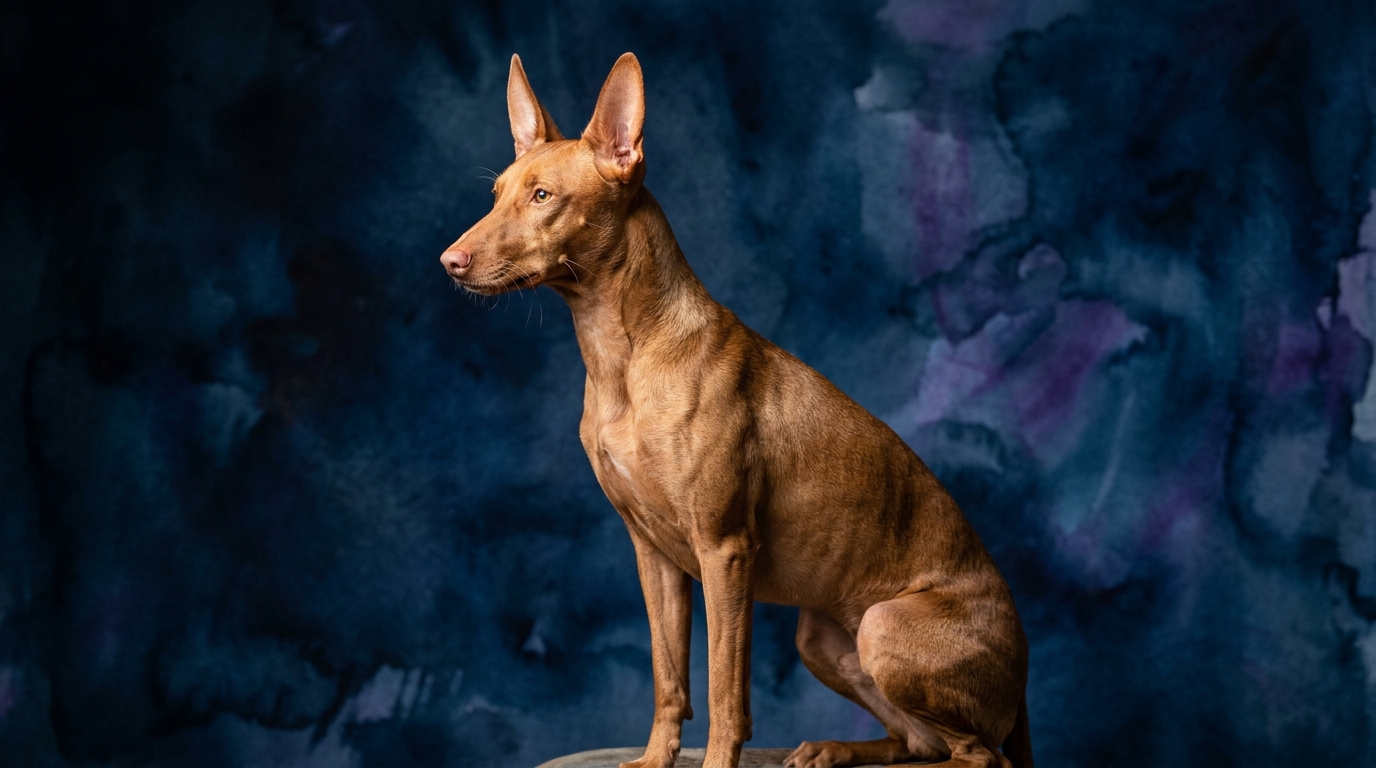
**Pharaoh Hound:** These elegant sighthounds demonstrate a practical, pursuit-oriented problem-solving style (3/5), often focused on navigating open terrain to track or intercept moving targets. Their solutions tend to be direct, leveraging their speed and visual acuity to overcome environmental obstacles in their path. For example, they might quickly assess the most efficient route across a field to follow a scent or visual cue.
Pharaoh Hounds absorb new commands at a moderate pace, reflected in their Training Speed (3/5), but their independent nature means consistent, engaging methods are crucial for retention and compliance. They respond best to positive reinforcement that makes training feel like a collaborative game rather than strict obedience, as their inherent drive can often overshadow a desire to please. With their human families, Pharaoh Hounds exhibit a warm, sensitive social intelligence (3/5), often forming deep, loyal bonds and being perceptive to household moods. However, they can be reserved with strangers, preferring to observe from a distance, indicating a selective social engagement rather than broad sociability. Their strong instinctive drive (3/5) is predominantly a visual prey drive, compelling them to chase anything that moves quickly. This instinct is deeply ingrained, reflecting their ancient role as hunting companions, and requires careful management in modern environments. Pharaoh Hounds possess a solid memory (3/5), particularly for routines, familiar people, and the layout of their home and walking routes. They can recall past experiences and learned associations, contributing to their adaptability within a stable environment.
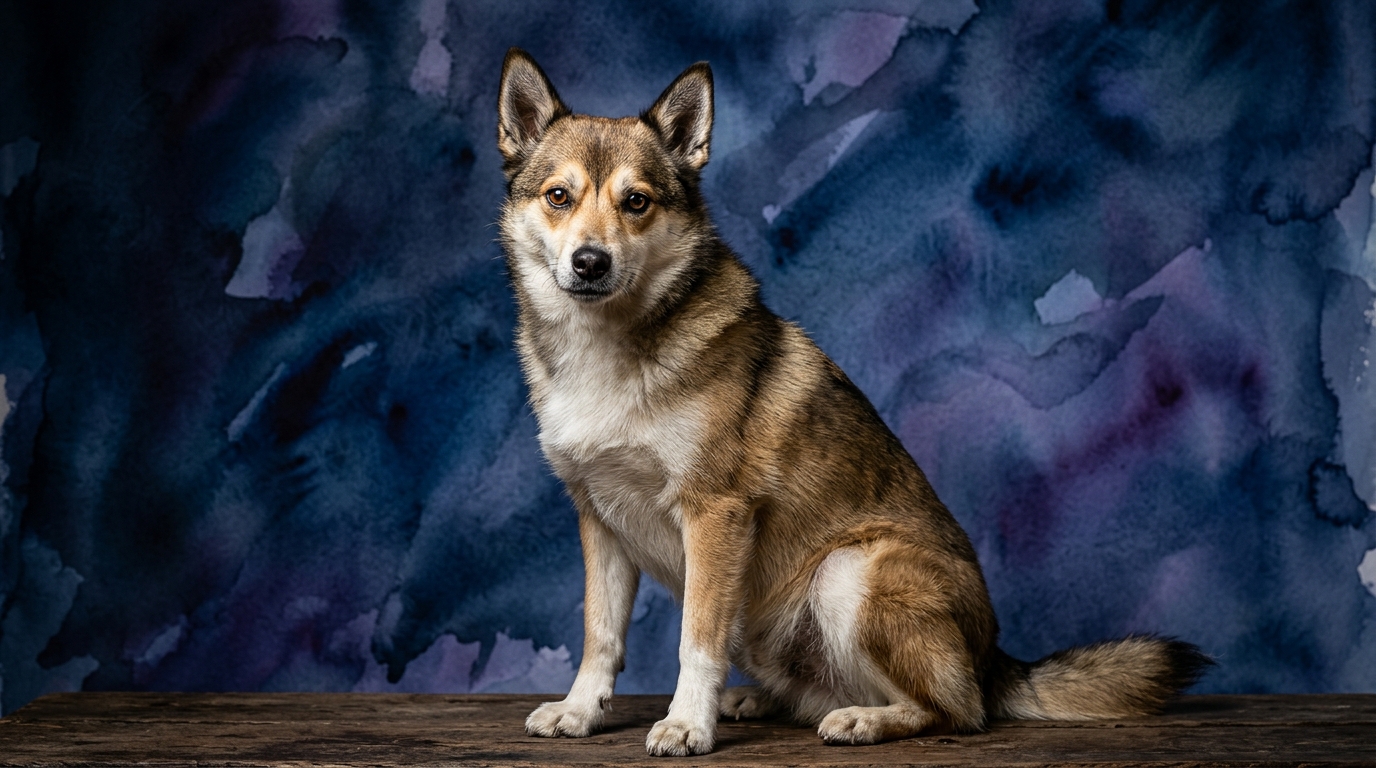
**Norwegian Lundehund:** The Norwegian Lundehund approaches problem-solving (3/5) with remarkable physical ingenuity, often involving navigating complex, confined spaces like rock crevices or climbing structures. Their solutions are often multi-faceted, utilizing their unique flexibility and agility to overcome physical barriers, such as figuring out how to reach a high vantage point or extract an object from a tight spot.
Lundehunds learn new tasks at a moderate rate, reflected in their Training Speed (3/5), but their strong independence and historical role as self-directed hunters mean they often evaluate a command's utility before complying. Training benefits from high-value rewards, short sessions, and incorporating challenges that appeal to their natural curiosity and desire to “figure things out.” Lundehunds display a focused social intelligence (3/5), forming intense bonds with their immediate family members and often showing a quirky, playful affection. They can be quite wary of strangers and new situations, preferring to assess the environment and individuals on their own terms before engaging, prioritizing security over immediate social interaction. Their instinctive drive (3/5) is profoundly tied to hunting small prey and exploring, manifesting as a persistent curiosity and a desire to investigate every nook and cranny. This drive includes a strong inclination to dig and climb, reflecting their ancestral job of hunting puffins in challenging coastal environments. Lundehunds demonstrate a robust memory (3/5), especially for complex routes, hidden caches, and the locations of interesting smells or previously explored areas. This memory aids their adventurous spirit, allowing them to confidently navigate and re-explore their world.
Where Pharaoh Hound Wins Cognitively
While both breeds share a 3/5 rating across the board, the Pharaoh Hound's cognitive strengths often shine in scenarios demanding focused pursuit and environmental awareness within broader, more open settings. Their problem-solving, though rated equally, is more geared towards efficient navigation and strategic tracking over distances, making them adept at quickly assessing and reacting to visual stimuli across expansive landscapes. This translates into a remarkable ability to read the terrain for subtle changes that might indicate prey movement or a clear path.
Furthermore, their social intelligence, while selective, allows for a specific kind of bond that can be deeply intuitive with their core family. They often pick up on subtle human cues and routines with an almost quiet understanding, anticipating daily patterns. This refined perception within their trusted circle can make them highly attuned companions who respond to changes in their human's mood or environment with a sensitive awareness that is less about active engagement and more about empathetic observation. Their memory for established routines and preferred paths also gives them an edge in predictable, structured environments, allowing for seamless integration into a stable home life.
Where Norwegian Lundehund Wins Cognitively
The Norwegian Lundehund's cognitive advantages become apparent in situations demanding exceptional physical and mental adaptability within confined, intricate environments. Their problem-solving, also rated 3/5, is uniquely expressed through their ability to strategize and execute complex physical maneuvers to access difficult areas, a direct legacy of their puffin-hunting ancestry. This involves an intrinsic understanding of spatial relationships and how their own flexible bodies can be used to overcome obstacles, such as squeezing through narrow gaps or climbing precarious surfaces.
Their instinctive drive, while equally rated, is characterized by an almost insatiable curiosity and persistence in exploration, making them formidable investigators. This drive fuels their capacity for independent thought and action, allowing them to tirelessly pursue a task or unravel an environmental puzzle without constant human direction. The Lundehund's memory is particularly strong for intricate, three-dimensional routes and the locations of hidden objects or interesting scents, supporting their adventurous and investigative nature. This allows them to effectively map out and recall complex environments, making them adept at navigating challenging or changing landscapes.
Which is Easier to Train and Why
Determining which breed is “easier” to train between the Pharaoh Hound and the Norwegian Lundehund is less about inherent cognitive capacity and more about managing their distinct motivational drivers and historical roles. Both breeds are rated 3/5 for Training Speed, indicating a moderate pace of learning, but their independence presents different challenges. The Pharaoh Hound, as a sighthound, often possesses a strong desire to run and chase, meaning that while they grasp commands, their compliance can be overridden by a compelling visual stimulus. Training requires consistent reinforcement and a deep understanding of their sighthound instincts, often focusing on recall and impulse control in distracting environments. They are generally responsive to positive methods, but success hinges on making training more rewarding than the pursuit of a fleeting rabbit.
The Norwegian Lundehund, conversely, presents a challenge rooted in their extreme independence and historical role as self-directed hunters of puffins. They are natural problem-solvers who often prefer to figure things out for themselves rather than simply follow a command. This means training requires immense patience, creativity, and high-value rewards to convince them that cooperating with a human is more beneficial than pursuing their own agenda. Their unique physical capabilities also mean they might “problem-solve” ways around obstacles or commands, such as climbing over fences. Therefore, while both require dedicated effort, the Pharaoh Hound might be considered marginally “easier” for owners who can harness their prey drive with compelling alternatives, whereas the Lundehund's deep-seated independence often demands a more nuanced and persistent approach to engagement.
Which Suits Active Owners vs Relaxed Owners
Both the Pharaoh Hound and the Norwegian Lundehund require active engagement, making neither an ideal choice for truly relaxed, sedentary owners. However, the *nature* of their activity differs significantly. The Pharaoh Hound thrives with owners who can provide ample opportunities for running and sprinting in secure environments. Their need for physical exertion is primarily about engaging their sighthound instincts — a good, long run or a chance to chase a lure in a fenced area is paramount. They enjoy active participation in family life but are also content to relax indoors after their exercise needs are met, often becoming elegant, calm companions. An active owner for a Pharaoh Hound is someone who enjoys outdoor activities that involve bursts of speed and open spaces.
The Norwegian Lundehund, while also active, requires a different kind of engagement. Their activity needs are rooted in exploration, climbing, and mental stimulation. Owners need to provide opportunities for varied physical challenges, puzzle-solving, and safe environments where they can investigate and “hunt” for toys or treats. They are not typically suited for just a long run; they need their minds engaged in navigating and discovering. A Lundehund might be better suited for an owner who enjoys hiking, agility, or creating intricate home environments that stimulate their problem-solving and exploratory drives. A truly relaxed owner would struggle with either breed's inherent energy and cognitive demands, but the Pharaoh Hound's activity is more predictable and linear, while the Lundehund's is more dynamic and investigative.
The Verdict
Choose the Pharaoh Hound if you appreciate a noble, sensitive companion whose cognitive strengths lie in focused pursuit and graceful adaptation to a stable, active lifestyle, and you can provide secure spaces for their powerful running instincts.
Opt for the Norwegian Lundehund if you are fascinated by a tenacious, independent explorer with unique physical and mental agility, and you are prepared to engage their ceaseless curiosity and problem-solving through varied, stimulating activities.
🧠 Find Your Pet's IQ Score
Our Pet IQ Lab assessment covers 25+ tests across 5 cognitive dimensions — personalized to your breed.
Take the Full IQ Test →Frequently Asked Questions
Do Pharaoh Hounds and Norwegian Lundehunds have similar intelligence levels?
Based on The Cosmic Pet Pet IQ Lab, both breeds are rated 3/5 across all cognitive dimensions, including problem-solving, training speed, social intelligence, instinctive drive, and memory. While their numerical scores are identical, their historical roles mean these cognitive abilities manifest in distinct ways, tailored to their specific breed functions.
How does their "Instinctive Drive" manifest differently despite the same score?
For the Pharaoh Hound, a 3/5 instinctive drive primarily means a strong visual prey drive, compelling them to chase moving objects at high speed. The Norwegian Lundehund's 3/5 drive, on the other hand, is characterized by an intense desire to explore, climb, dig, and "hunt" for small objects in complex environments, reflecting their puffin-hunting heritage.
Are these breeds suitable for first-time dog owners?
Both Pharaoh Hounds and Norwegian Lundehunds present unique challenges due to their independence and specific needs, making them less ideal for first-time dog owners. Their moderate training speed and strong instinctive drives require an owner with patience, consistency, and a deep understanding of breed-specific motivations to ensure successful integration and training.