
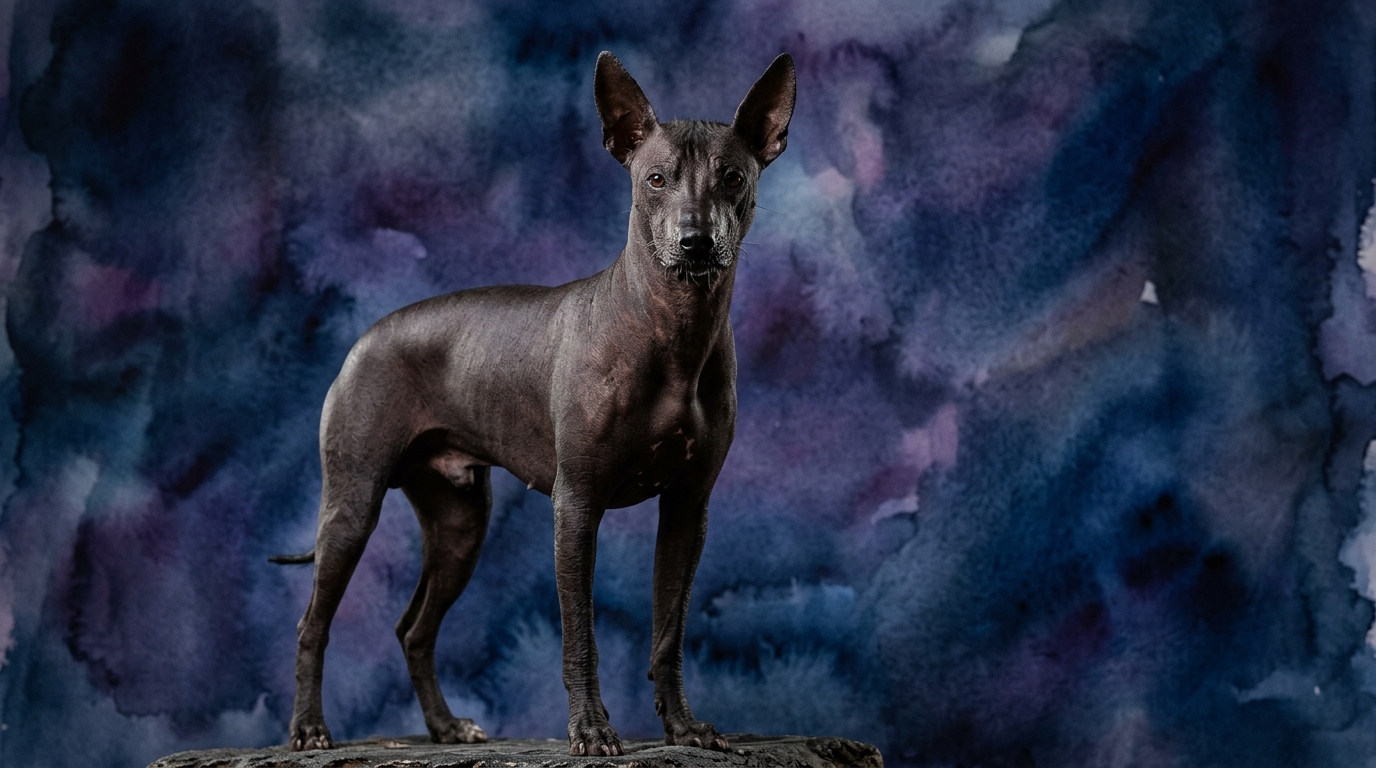
Side-by-Side IQ Profile: Plott Hound vs. Xoloitzcuintli
The Cosmic Pet Pet IQ Lab assesses five crucial dimensions of canine intelligence. For both the Plott Hound and the Xoloitzcuintli, all five dimensions are rated at 3 out of 5. However, understanding their breed-specific manifestations reveals distinct cognitive landscapes.
For the **Plott Hound**:
Problem Solving (3/5): Their problem-solving is specialized, focused on unraveling complex scent trails over varied terrain, requiring persistence and strategic navigation during the hunt. This cognitive effort is directed at real-world tracking puzzles.
Training Speed (3/5): They learn quickly when tasks align with their hunting drive, like tracking commands. However, their independent nature and focus on scent can make general obedience training appear slower if not intrinsically motivating.
Social Intelligence (3/5): Plott Hounds exhibit functional social intelligence within a pack or family, understanding handler cues during hunts and responding to household routines, though less nuanced than companion breeds.
Instinctive Drive (3/5): This score reflects their powerful, unwavering urge to hunt, track, and bay. It's a fundamental, relentless aspect of their being, driving their endurance and determination in pursuit.
Memory (3/5): Their memory is robust for hunting-related information, recalling intricate scent patterns, terrain layouts, and handler signals, serving their working function efficiently.
For the **Xoloitzcuintli**:
Problem Solving (3/5): Xolos apply problem-solving to their immediate environment, figuring out comfort, subtly communicating needs, and navigating household dynamics, often geared towards security and companionship.
Training Speed (3/5): They learn at a moderate pace, responding well to positive reinforcement and consistency, especially when tasks build on their desire for companionship. Sensitivity means harsh methods are counterproductive.
Social Intelligence (3/5): They possess deep social intelligence focused on family, observing human emotions and household moods, forming profound, intuitive bonds with their chosen people while reserved with strangers.
Instinctive Drive (3/5): Their drives are primarily protective and companion-oriented, with a natural guarding instinct. While they have moderate prey drive, it's secondary to their strong desire for human company and security.
Memory (3/5): A Xolo's memory is tied to routines, significant events, and family emotions, influencing future interactions and contributing to their consistent behavior and deep attachment to their home.
Where the Plott Hound Wins Cognitively
The Plott Hound's cognitive strengths distinctly lie in its specialized sensory processing and sustained focus on a singular, demanding task. Their olfactory problem-solving is unparalleled in this comparison; they excel at dissecting and following complex scent trails over vast distances and varied landscapes, a feat requiring immense mental stamina and associative memory. This isn't merely sniffing; it's a sophisticated cognitive process of discrimination, mapping, and prediction based on scent data. Their ability to maintain intense focus on a distant, unseen quarry for hours, filtering out countless distractions, demonstrates a cognitive tenacity that is a hallmark of their breed. This deep, instinct-driven cognitive specialization for tracking gives them an edge in real-world, dynamic environmental puzzle-solving.
Where the Xoloitzcuintli Wins Cognitively
The Xoloitzcuintli's cognitive advantages manifest in their nuanced social perception and environmental awareness within a domestic setting. They exhibit a keen observational intelligence, often learning by watching their human companions and adapting their behavior to household norms with minimal explicit training. Their sensitivity allows them to pick up on subtle emotional shifts in their family, displaying a sophisticated form of empathy and responsiveness. While Plott Hounds excel in the wild, Xolos demonstrate a superior capacity for integrating seamlessly into human family life, understanding complex social dynamics, and anticipating needs based on non-verbal cues. Their quiet vigilance and ability to "read the room" suggest a cognitive focus on social harmony and security that surpasses the Plott Hound's more task-oriented social intelligence.
Which is Easier to Train and Why
Determining which breed is "easier" to train depends heavily on the training goals and the trainer's approach. Plott Hounds, with their powerful instinctive drive, can be highly trainable for tasks that align with their hunting nature. They learn commands related to tracking, baying, and working cooperatively in a pack relatively quickly, driven by their inherent motivation. However, their independent nature and strong scent focus can make general obedience challenging; if a compelling scent is present, their cognitive attention will be almost entirely consumed by it, making them appear distracted. They require patient, consistent training that understands and channels their drives rather than trying to suppress them.
The Xoloitzcuintli, conversely, often responds well to training that emphasizes positive reinforcement and builds on their desire for companionship. Their sensitivity means they do not tolerate harsh methods, which can lead to withdrawal or resistance. They are typically eager to please their family and learn routines quickly, especially if it leads to comfort, security, or attention. While they may not possess the Plott Hound's singular focus on a scent trail, their general adaptability and attentiveness to their human's cues can make them more amenable to a broader range of obedience and trick training in a domestic environment. Their training speed benefits from their close family bond and their desire to be a well-integrated member of the household. Therefore, for general companion dog training, the Xoloitzcuintli might be perceived as easier, provided their trainer is gentle and consistent.
Which Suits Active Owners vs. Relaxed Owners
For active owners seeking a canine partner for challenging outdoor pursuits, the Plott Hound is an ideal match. Their robust physical endurance, combined with their relentless problem-solving in tracking, makes them excellent companions for hiking, trail running, or engaging in scent work and competitive tracking sports. These dogs thrive when given a "job" that engages both their bodies and their highly specialized cognitive abilities. An owner who can provide consistent mental and physical stimulation, ideally involving their natural scenting instincts, will find the Plott Hound to be a deeply rewarding and engaged companion.
The Xoloitzcuintli, while capable of activity, generally suits owners who prefer a more relaxed pace of life but still appreciate interactive companionship. They are content with moderate daily walks, playtime in a secure yard, and ample indoor cuddle time. Their cognitive needs are often met through social interaction, observing their environment, and engaging in calm, routine-based activities with their family. They are excellent for individuals or families who value a loyal, attentive presence and are willing to invest in their social integration and provide a secure, comforting home environment. Their quiet vigilance and preference for close proximity make them a good fit for those seeking a devoted, less demanding canine presence.
The Verdict
Choose a Plott Hound if you are an active, outdoors-oriented individual or family who thrives on engaging a dog's powerful tracking instincts and providing consistent, challenging mental and physical work.
Opt for a Xoloitzcuintli if you seek a deeply loyal, observant companion who will integrate closely into family life, offering quiet vigilance and appreciating a more relaxed, routine-driven lifestyle.
🧠 Find Your Pet's IQ Score
Our Pet IQ Lab assessment covers 25+ tests across 5 cognitive dimensions — personalized to your breed.
Take the Full IQ Test →Frequently Asked Questions
Do Plott Hounds or Xoloitzcuintli make better family pets?
Both can be excellent family pets, but in different ways; Plott Hounds are affectionate but need substantial exercise and mental engagement to prevent restlessness, while Xoloitzcuintli are devoted to their family, though often reserved with strangers and sensitive to household dynamics. The "better" choice depends on the family's lifestyle and ability to meet the breed's specific needs for activity or quiet companionship.
Are Plott Hounds and Xoloitzcuintli difficult to socialize?
Plott Hounds, especially if raised for hunting, require early and consistent socialization to broaden their experiences beyond the chase, helping them adapt to various people and environments. Xoloitzcuintli are naturally reserved with strangers and benefit significantly from early, positive socialization experiences to help them develop confidence and comfort in new situations without becoming overly timid or reactive.
What kind of mental stimulation do these breeds need?
Plott Hounds require mental stimulation that taps into their powerful scenting and problem-solving abilities, such as scent work, tracking games, or challenging puzzle toys that involve finding hidden treats. Xoloitzcuintli benefit from interactive play with their family, learning new tricks, and observational learning within their home environment, which satisfies their social and environmental curiosity.