
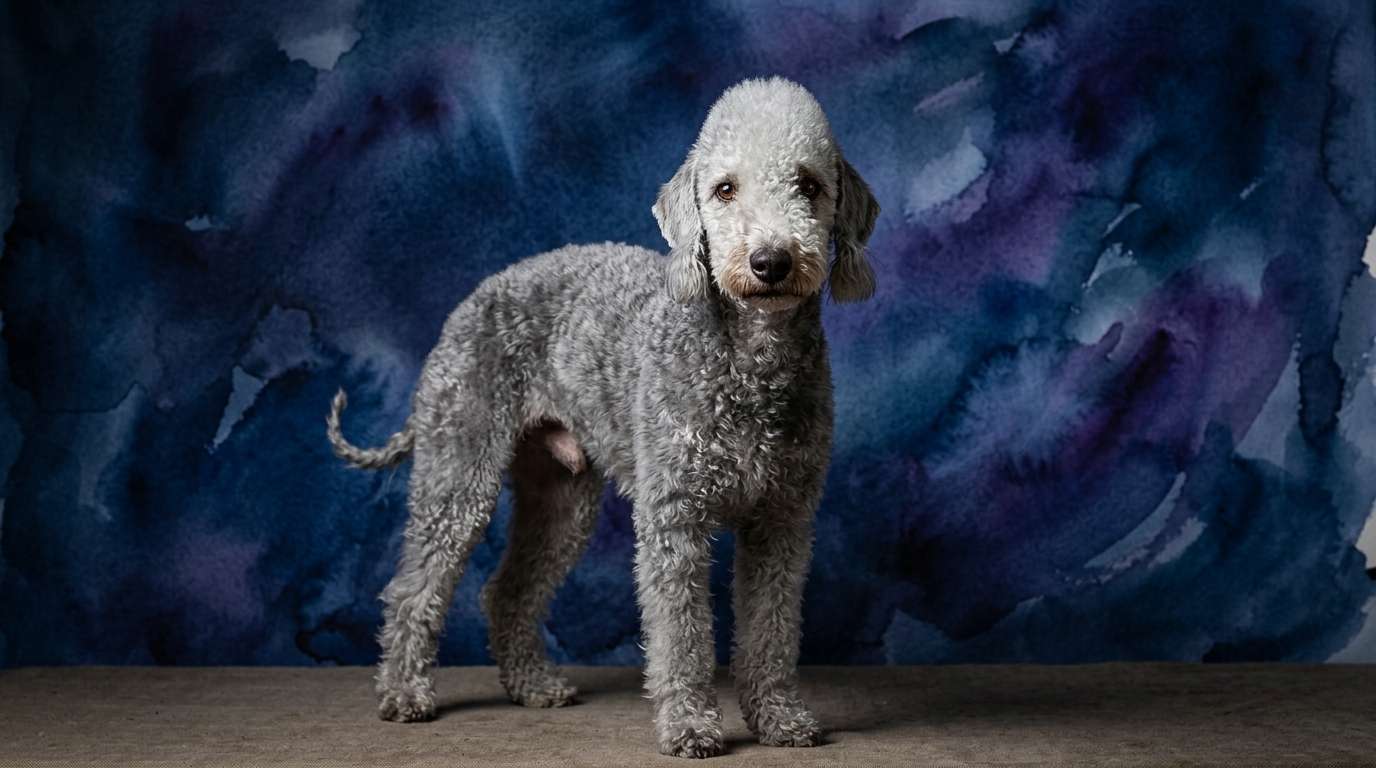
Side-by-Side IQ Profile: Unpacking Identical Scores
While both the Pointer and the Bedlington Terrier register a 3/5 in all five cognitive dimensions, their breed origins dictate vastly different applications of these aptitudes. Understanding these nuances requires looking beyond the numbers to the historical roles each breed was developed to fulfill.
The Pointer, a member of the Sporting Group, was meticulously bred for the specific task of locating game birds and 'pointing' to their presence, requiring a high degree of cooperation and focus in expansive environments. Their intelligence is geared towards partnership and directed action.
Conversely, the Bedlington Terrier, from the Terrier Group, was developed to hunt vermin, often independently, in challenging, confined spaces. Their cognitive strengths lean towards self-reliance, tenacity, and quick, decisive action.
For the Pointer, Problem Solving (3/5) shines in the field, navigating varied terrain, interpreting wind direction for scent, and strategically locating hidden game. This involves a methodical, focused approach to a specific, often complex, outdoor task, requiring endurance and concentration. Their Training Speed (3/5) reflects a readiness to learn, especially when the training involves partnership and a clear purpose, making them receptive to commands. Social Intelligence (3/5) in Pointers primarily manifests in their attunement to their human handler, understanding subtle cues and working in close concert. Their Instinctive Drive (3/5) is powerfully channeled into scent work and the characteristic 'point'—a controlled, purposeful action. Lastly, Memory (3/5) for Pointers is strong for learned routines, commands, and especially for scent trails and productive hunting grounds, aiding their effectiveness in repetitive field work.
The Bedlington Terrier’s Problem Solving (3/5) excels at tasks requiring independent thought and tenacity, such as outmaneuvering small prey in tight spaces or finding creative ways to overcome obstacles. Their approach is often more opportunistic and driven by an innate desire to 'get the job done' without constant human direction. Their Training Speed (3/5) indicates they are capable learners, but their independent and spirited nature means training requires engaging, varied methods to maintain their interest, as they might assess the value of a command before complying. Social Intelligence (3/5) for Bedlington Terriers is typically devoted to their families, exhibiting a strong bond, but often includes a discerning wariness towards strangers and potential assertiveness with other animals. Their Instinctive Drive (3/5) is centered around chasing, digging, and dispatching vermin, typically intense and self-directed. Memory (3/5) for Bedlington Terriers is good for established boundaries, routines, and past experiences, particularly those involving success in their 'terrier' pursuits or specific rewards.
Where the Pointer Wins Cognitively
The Pointer's cognitive strengths are particularly evident in scenarios demanding sustained cooperation and focused attention on a shared objective. They demonstrate a superior capacity for cooperative problem-solving, especially when the task involves a clear goal and human partnership, such as navigating complex hunting scenarios or excelling in canine sports that require precise teamwork. Their ability to maintain sustained focus on a single, handler-directed task over extended periods, interpreting subtle human body language and vocal cues, often outshines the Bedlington Terrier’s more independent approach. Furthermore, Pointers exhibit a robust memory for large-scale environmental details, including terrain, wind patterns, and scent distribution, which are critical for expansive work and long-term recall of productive areas.
Where the Bedlington Terrier Wins Cognitively
The Bedlington Terrier's cognitive advantages manifest in situations requiring independent thought, agility, and a tenacious spirit. They often surpass Pointers in independent problem-solving within novel or challenging environments, especially those demanding cleverness, resourcefulness, or adaptability in confined spaces. Their self-motivation and unwavering tenacity in pursuing a goal, even without direct human oversight, are hallmarks of their intellect, allowing them to persist where a more cooperative breed might await direction. Bedlington Terriers also show a particular aptitude for memory of practical, immediate details relevant to their independent pursuits, such as the best escape routes, hidden caches, or the precise location of a perceived threat, reflecting their self-reliant hunting heritage.
Which is Easier to Train and Why?
When considering ease of training, the Pointer generally presents a more straightforward experience due to their inherent desire for partnership and purpose-driven focus. Their strong inclination to work with a handler and their natural drive to hunt in cooperation make them highly receptive to traditional obedience training. Pointers respond well to clear direction and positive reinforcement, finding deep satisfaction in pleasing their human companion. Their cooperative spirit often means they are more forgiving of handler errors and quicker to generalize commands across different situations, as long as those commands align with their innate drive to engage in purposeful activities.
Training a Bedlington Terrier, while certainly achievable, requires a more nuanced and patient approach. While they are capable learners, their independent, sometimes stubborn, terrier nature means that training must be highly engaging, consistent, and varied to maintain their interest. Bedlington Terriers are prone to assessing the necessity or immediate benefit of a command before complying, showcasing a distinct terrier willfulness that demands a creative and persistent trainer. Their strong prey drive and self-directed problem-solving tendencies mean they can be more easily distracted by environmental stimuli, requiring extra effort to maintain focus and proof commands in diverse settings. They thrive on positive reinforcement and short, fun sessions that cater to their cleverness, but they are less inclined to simply 'obey' without understanding the 'why' or if a more enticing alternative presents itself.
Which Suits Active Owners vs. Relaxed Owners?
For owners with an active lifestyle, the Pointer is an ideal companion. Their energy levels demand significant daily exercise and mental stimulation that taps into their natural hunting instincts. They thrive on long runs, extensive hikes, field sports, or advanced scent work. Pointers are happiest in environments where they can stretch their legs and engage in purposeful, high-energy activity, making them perfect for individuals or families who lead an energetic, outdoor-oriented life. A Pointer will likely become restless, bored, and potentially exhibit undesirable behaviors if their substantial need for physical and mental engagement is not consistently met.
The Bedlington Terrier can adapt to a slightly less intensely active owner compared to the Pointer, but still requires regular, vigorous exercise to manage their spirited energy. While they enjoy lively play sessions, brisk walks, and securely fenced yard activities, their needs can often be met with varied daily engagement rather than continuous, expansive exertion. They are well-suited for owners who appreciate a dog with distinct character and are prepared for their independent streak, but who may not be dedicated to extensive field sports or long-distance running. After their exercise needs are met, Bedlington Terriers are often content to curl up indoors, making them a good fit for owners who enjoy both periods of activity and quieter, companionable moments at home.
The Verdict
Choose the Pointer if you seek a highly cooperative, focused canine partner for active outdoor pursuits and appreciate a dog whose intelligence is geared towards working in harmony with you on expansive tasks.
Opt for the Bedlington Terrier if you admire independent problem-solving, a spirited companion with a strong personality, and are prepared for a dog whose cleverness is often expressed through tenacious, self-directed endeavors.
🧠 Find Your Pet's IQ Score
Our Pet IQ Lab assessment covers 25+ tests across 5 cognitive dimensions — personalized to your breed.
Take the Full IQ Test →Frequently Asked Questions
Do both breeds have similar energy levels?
While both are active, the Pointer generally requires more extensive, sustained exercise, often involving long runs or field work. The Bedlington Terrier, though energetic, can often have its needs met with varied daily activities and vigorous play, making its energy demands somewhat more adaptable.
Are Pointers and Bedlington Terriers good with children?
Pointers are typically gentle and patient, making them good family dogs, especially with active children who can engage them in play. Bedlington Terriers are devoted to their families but their spirited terrier nature means they might be better suited to homes with older, respectful children who understand how to interact with a dog that can be sensitive to rough handling.
What are the key differences in their grooming needs?
Pointers have a short, dense coat that requires minimal grooming, primarily regular brushing to remove loose hair. Bedlington Terriers have a distinctive, curly, non-shedding coat that needs regular professional grooming or diligent home care to prevent matting and maintain their unique lamb-like appearance.