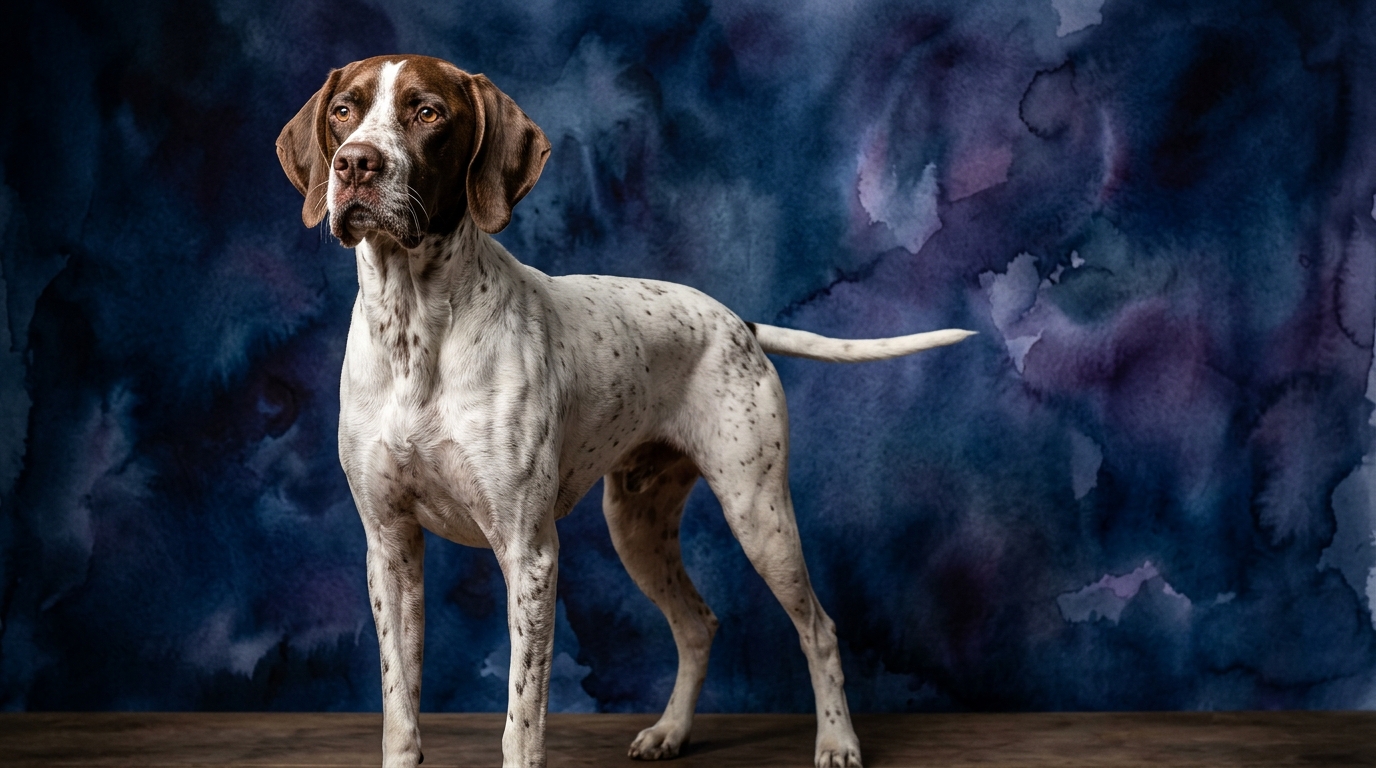
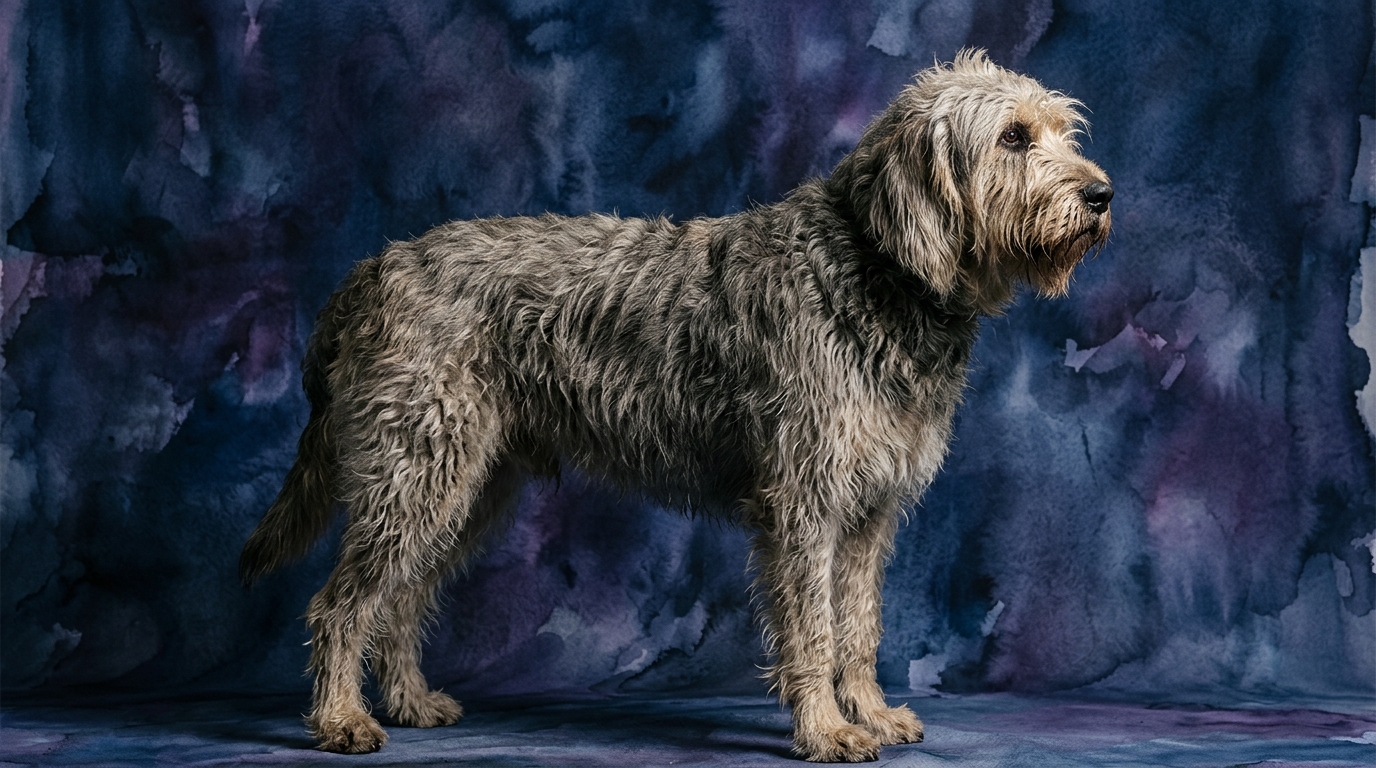
Side-by-Side Cognitive Profiles
In The Cosmic Pet Pet IQ Lab, both the Pointer and the Otterhound register a consistent 3 out of 5 across all five measured cognitive dimensions, suggesting a robust and adaptable intellect rather than a specialized one. For Problem Solving, a 3/5 indicates they are capable of navigating moderate challenges, learning from experience, and devising solutions to achieve their goals, though perhaps not with the lightning speed or intricate strategy of a true canine genius. This level of problem-solving allows them to adapt to new situations and learn complex tasks without becoming overwhelmed.
Their Training Speed of 3/5 reflects a steady learning curve, meaning they absorb new commands and routines at a competent pace, neither frustratingly slow nor exceptionally quick. This score suggests an amenable nature to instruction, provided the training methods are clear, consistent, and engaging. Social Intelligence at 3/5 implies a good understanding of human cues and canine interactions, allowing them to integrate well into families and interact appropriately with other dogs. They can read body language and respond to emotional states, fostering strong bonds.
An Instinctive Drive of 3/5 points to a well-developed set of natural behaviors, deeply rooted in their breed's heritage, that are neither overwhelming nor understated. For the Pointer, this manifests in a clear, focused hunting instinct; for the Otterhound, a powerful scenting and tracking drive. Finally, a Memory score of 3/5 indicates a reliable capacity to recall learned behaviors, past experiences, and important associations over time. They retain training well and remember routines, making them dependable companions once taught.
While these numerical scores are identical, the *expression* of these cognitive traits varies significantly, shaped by centuries of selective breeding for distinct purposes.
Where the Pointer's Cognition Shines
The Pointer's cognitive strengths are deeply intertwined with its role as a gun dog, demanding focused attention and cooperative intelligence. Their 3/5 Problem Solving manifests as a direct, task-oriented approach; when faced with a challenge in the field, such as locating hidden game or navigating dense cover, they tend to employ efficient, learned strategies rather than extensive experimentation. This directness makes them proficient at their job, quickly assessing and acting.
In terms of Instinctive Drive, the Pointer's 3/5 is perfectly channeled into its iconic 'point.' This isn't just a physical stance; it's a cognitive act of intense focus, freezing mid-stride to indicate game without disturbing it. This requires exceptional self-control and an understanding of the handler's expectations, showcasing their social intelligence in a highly specialized context. Their memory excels in retaining complex field patterns and hand signals, allowing for precise, remote direction from a hunter, demonstrating a sophisticated application of their 3/5 memory score.
The Pointer's cognitive profile is geared towards a highly attentive, responsive partnership. Their social intelligence, while rated 3/5, often appears more finely tuned to human direction and collaboration during tasks, making them appear particularly 'in tune' with their handler's intentions in a working capacity.
Where the Otterhound's Cognition Excels
The Otterhound's cognitive strengths are rooted in its historical purpose as a robust, independent hunter of otters, requiring endurance, persistence, and a keen sense of smell. Their 3/5 Problem Solving often takes a more methodical, scent-driven approach. When tracking, they excel at unraveling complex scent trails, demonstrating a relentless, sequential problem-solving process that relies heavily on their olfactory senses rather than visual cues or direct commands. This persistence allows them to overcome obstacles and follow a faint trail for miles.
The Otterhound's 3/5 Instinctive Drive is overwhelmingly directed towards scent work, manifesting as an almost obsessive dedication to following a trail. This drive can be incredibly powerful, sometimes overriding other stimuli. Their memory, also a 3/5, is particularly adept at recalling intricate scent patterns and the topography of a hunting ground, allowing them to retrace steps or pick up a lost trail with surprising accuracy. This olfactory memory is a cornerstone of their working intelligence.
Social Intelligence in the Otterhound, while also 3/5, tends to be expressed through their gregarious 'pack' mentality. They are often boisterous and affectionate with their family, displaying a robust understanding of social dynamics within their home. This manifests as a desire for companionship and a playful interaction style, rather than the focused cooperative intelligence seen in the Pointer. Their cognitive strengths are those of an independent, persistent tracker with a strong social bond to its immediate 'pack.'
Training: A Question of Motivation and Focus
Despite identical 3/5 Training Speed scores, real-world behavioral differences make the Pointer generally perceived as easier to train for obedience and precise tasks. Pointers typically possess a strong 'eager-to-please' disposition and a natural inclination to work cooperatively with a handler. Their attention is often more easily held, and they are less prone to independent decision-making during training sessions. This means that while they learn at a competent pace, their willingness to focus on the instructor and desire for approval can make the training process feel smoother and more rewarding for the owner, particularly in structured environments.
Otterhounds, conversely, bring a unique set of challenges to training, even with their 3/5 Training Speed. Their powerful 3/5 Instinctive Drive for scent often makes them easily distracted by interesting smells, turning a training session into an impromptu tracking exercise. They are more independent thinkers, bred to make decisions far from their handler in pursuit of a scent, which means they may require more patience and creative motivation to convince them that 'sit' is more rewarding than a fascinating whiff. While they learn commands competently, their strong-willed nature and independent streak often demand more consistent, engaging, and positively reinforced training to maintain focus and compliance, especially outdoors.
Lifestyle Match: Active Engagement vs. Robust Companionship
For active owners, both breeds offer robust companionship, but their activity profiles diverge. The Pointer thrives with owners who enjoy structured outdoor activities, such as long runs, hiking, or field work. Their 3/5 Instinctive Drive and Problem Solving are best engaged through activities that require focused attention and cooperation, like agility, advanced obedience, or actual bird hunting. They benefit immensely from a consistent routine and a 'job' that challenges their cooperative intelligence. An active owner who can provide this structured engagement will find a highly responsive and devoted companion, whose energy is channeled productively.
For more relaxed owners, the Otterhound might present a surprising fit, provided their unique needs are met. While they are a large, robust breed with a 3/5 Instinctive Drive that demands exercise, their activity can be less structured than a Pointer's. They enjoy long, rambling walks where they can follow scents, explore, and simply 'be a dog.' Their affectionate 3/5 Social Intelligence makes them wonderful, boisterous family companions, content to lounge indoors after sufficient exercise. However, 'relaxed' does not mean sedentary; they still require significant daily exercise to prevent boredom and destructive behaviors. The key is that their exercise can be more about exploration and independent scenting rather than highly disciplined tasks, making them suitable for owners who prefer less formal engagement but can commit to consistent, lengthy outdoor adventures.
The Verdict
Choose the Pointer if you seek a highly attentive, responsive companion eager for structured activities and cooperative training, thriving on shared purpose and precise direction.
Opt for the Otterhound if you appreciate an independent, persistent, and boisterous companion who loves exploring the world through scent, valuing robust outdoor adventures and a strong family bond over strict obedience.
🧠 Find Your Pet's IQ Score
Our Pet IQ Lab assessment covers 25+ tests across 5 cognitive dimensions — personalized to your breed.
Take the Full IQ Test →Frequently Asked Questions
Do Pointers and Otterhounds learn at the same rate?
According to our Pet IQ Lab, both breeds have a Training Speed of 3/5, indicating they learn at a competent, steady pace. However, the Pointer's eagerness to please often makes the training process feel smoother for the handler, while the Otterhound's independence and scent drive can introduce more distractions, requiring greater patience.
Which breed is better at solving problems?
Both breeds score 3/5 in Problem Solving, meaning they are equally capable of navigating moderate challenges. The Pointer tends to approach problems with a direct, task-oriented focus, while the Otterhound often employs a more persistent, scent-driven methodology, reflecting their different historical roles.
How does their social intelligence differ with identical scores?
With a 3/5 Social Intelligence, both breeds understand human cues and integrate well. The Pointer's social intelligence often manifests as keen attentiveness and cooperation with a handler during tasks, whereas the Otterhound's is expressed through a gregarious, boisterous affection and strong 'pack' bonds within the family, highlighting different facets of social interaction.